
Raymond Bial
Author of The Underground Railroad
About the Author
Works by Raymond Bial
Urbana A Pictorial History 1 copy
Blue Moon 1985 1 copy
Country Store to Corner Market: Alabama, Louisiana, and Mississippi (America Through Time) (2021) 1 copy
What's Bugging You? 1 copy
Tagged
Common Knowledge
- Birthdate
- 1948-11-05
- Gender
- male
- Occupations
- librarian
photographer
biographer
children's book author
non-fiction author - Nationality
- USA
- Associated Place (for map)
- USA
Members
Reviews
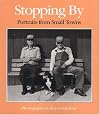
I was disappointed with this collection. I hardly see these portraits as representative of small-town Illinois or even representative of the people in the portraits.
Judging by the captions it's clear the photographer arrived in town and visited the same places every time: barbershops, garages, cafes. Male bastions. It's mostly men in the photographs (with women waitresses and a few wandering boys thrown in). Now it's possible -- as described in the foreword -- "that's all there is" in these show more towns. Really? In towns with as many as 3000 people? No schools, parks, town squares, libraries, houses, churches, government offices? His one public official was photographed in a cafe. I'm guessing it was just happenstance that the photographer found him there.
And judging by the nearly universal pose (i.e., standing against the wall, straight, and staring into the camera) it suggests to me that most people were feeling awkward and just getting their picture taken to please the guy with the camera. I see WTH? in most of their faces. These portraits tell me more about the photographer than about the subjects. The foreword says he wanted them in "natural" stances; "sincere" rather than "revelatory" or "mysterious". But the opposite is true. Back against a wall and looking straight into a camera is not natural; it's artificial. The effect is exaggerated in black & white. The compositions are almost all the same. Even in a small town, people are individuals, but they appear here as the photographer wanted them. Colorless. He stripped them of personality (save for the clothes they happened to be wearing that day). As a sad man's photo essay of people caught off guard by a stranger in dying small towns, he succeeded, but that's a pretty crummy way to treat people.
The photographer's collection might have been better if he had caught THEIR personality, not his.
Find more of my reviews at Mostly NF. show less
Judging by the captions it's clear the photographer arrived in town and visited the same places every time: barbershops, garages, cafes. Male bastions. It's mostly men in the photographs (with women waitresses and a few wandering boys thrown in). Now it's possible -- as described in the foreword -- "that's all there is" in these show more towns. Really? In towns with as many as 3000 people? No schools, parks, town squares, libraries, houses, churches, government offices? His one public official was photographed in a cafe. I'm guessing it was just happenstance that the photographer found him there.
And judging by the nearly universal pose (i.e., standing against the wall, straight, and staring into the camera) it suggests to me that most people were feeling awkward and just getting their picture taken to please the guy with the camera. I see WTH? in most of their faces. These portraits tell me more about the photographer than about the subjects. The foreword says he wanted them in "natural" stances; "sincere" rather than "revelatory" or "mysterious". But the opposite is true. Back against a wall and looking straight into a camera is not natural; it's artificial. The effect is exaggerated in black & white. The compositions are almost all the same. Even in a small town, people are individuals, but they appear here as the photographer wanted them. Colorless. He stripped them of personality (save for the clothes they happened to be wearing that day). As a sad man's photo essay of people caught off guard by a stranger in dying small towns, he succeeded, but that's a pretty crummy way to treat people.
The photographer's collection might have been better if he had caught THEIR personality, not his.
Find more of my reviews at Mostly NF. show less

This book is a good encapsulation of the history of Ellis Island, and a recounting of some of the trials and troubles that immigrants throughout that history have been escaping – and some they have come running to. The book is full of quotes and stories from immigrants, immigration agents, and others. These quotes speak to the hardships of the Atlantic voyage, and the hard work of entering and becoming successful in America – such as one Italian immigrant’s musing that the streets in show more American were not paved at all, let alone with gold, and that he was expected to pave them (44). The historical narrative is accompanied by a wealth of beautiful contemporary and historical photography, historical documents, and artist renderings which really breathe some life into the text. The text is well researched, and contains a good suggested reading section at the end. I can see this book being particularly useful in middle school social studies rooms, but it would not be at all out of place in a high school history class as a tool to spark a discussion about, say, the history of immigration and the ways the immigrant experiences mentioned in the book relate to contemporary immigration issues. Were I to come across a copy of this book, I would include it in my classroom library. show less

A wonderful introduction to the excellent work of what the ASPCA, HSUS, and other animal welfare organizations do to protect dogs from exploitation, abuse, and neglect, as well as the work shelters and rescue leagues do to educate the public and place them in loving homes. A great book to use for humane education.

It's an eye awakening book for young readers. The United States has always been known as the land of opportunities where dreams come true. However, that hasn't always been the case and until this day still keeps on being proven wrong. It just comes to show, that in order to get where you want to be, one needs to overcome any obstacles presented in ones way. One needs, not to give up on the ultimate goal and ones dreams. A great book to compare with today's New York. New York back in the show more 1880's to New York present, so much has changed. show less
Lists
Awards


You May Also Like


Statistics
- Works
- 92
- Members
- 1,553
- Popularity
- #16,586
- Rating
- 3.8
- Reviews
- 46
- ISBNs
- 139