
Baldassare Castiglione (1478–1529)
Author of The Book of the Courtier
About the Author
Baldassare Castiglione is chiefly known for his prose dialogues titled The Book of the Courtier, which passed through more than 40 editions in the century after its original publication in 1528. Written in Italian based on Dante's Tuscan, it helped to establish Tuscan as the national literary show more language. The book was celebrated throughout Europe as a manual of courtly manners. However, the attentive reader senses the peculiarly Italian atmosphere that envelops the four main participants in the dialogue as they avoid talking of the political realities that had prompted Machiavelli to write The Prince just a few years before. (Bowker Author Biography) show less
Image credit: Image from Courts & Camps of the Italian Renaissance (1908) by Christopher Hare
Series
Works by Baldassare Castiglione
La seconda redazione del Cortegiano — Author — 3 copies
Il cortegiano e Opere minori 2 copies
Le Courtisan 1 copy
The Courtier 1 copy
Lettere inedite e rare 1 copy
Opere 1 copy
Associated Works
Tagged
Common Knowledge
- Canonical name
- Castiglione, Baldassare
- Other names
- Castiglione, Baldesar
- Birthdate
- 1478-12-06
- Date of death
- 1529-02-02
- Gender
- male
- Occupations
- diplomat
courtier
author
poet
aristocrat - Short biography
- Baldassare Castiglione was born in Casatico in the province of Mantua to a noble and illustrious Lombard family. After receiving a classical education, he served first at the court of Lodovico Sforza, Duke of Milan, then entered the service of Francesco Gonzaga, Duke of Mantua, and then Guidobaldo da Montefeltro at Urbino. Castiglione's service in Urbino gave him an entree to the court of Pope Julius II, where he became a friend of the artist Raphael. He was sent as ambassador to King Henry VII of England in 1513. A few years later, Castiglione married, but became a cleric in 1521 after the death of his wife. In 1524 he was sent by Pope Clement VII as ambassador to the Emperor Charles V. Castiglione's "Book of the Courtier,"published in 1528, was a huge and immediate success. It quickly became the most important book of etiquette for both the bourgeoisie and the aristocracy in Italy and beyond. The work helped spread the values of Italian humanism throughout western Europe. Of particular note, still prized today, were the ideal courtier's qualities of grace and nonchalance, which Castiglione called "sprezzatura."
- Nationality
- Italy
- Birthplace
- Casatico (now Italy)
- Places of residence
- Mantua, Italy
Urbino, Italy
Milan, Italy - Place of death
- Toledo, Spain
- Map Location
- Italy
Members
Reviews

The Book of the Courtier
There really was a Camelot. But it was in Italy, Urbino in northern Italy to be exact, in the 1500s. Perched on top of a couple of hills in the region Le Marche, Urbino was ruled by the Montefeltro family. From 1444 to 1482 Federigo de Montefeltro skillfully steered his tiny domain through the rough storms of Italian Renaissance realpolitik. Federigo was a successful soldier of fortune yet maintained one of the largest libraries in Italy, spoke Latin, read Aristotle, show more helped orphans and in general earned the love of his people. He built a beautiful fairy-tale palace and had Paolo Uccello and Piero della Francesca decorate it.
His less fortunate son Guidobaldo inherited this charming and well-run dukedom. Guidobaldo married the cultivated Elisabetta of the Gonzaga family from Mantua. He was an invalid and not made of his father’s stern military stuff. A victim of the brilliant military campaigns of Cesare Borgia that so enchanted Machiavelli, Guidobaldo was temporarily deposed. When the Borgias (Cesare and his father Pope Alexander VI) died, the people of Urbino rose up, drove out Borgia’s soldiers and cheered Guidobaldo and Elisabetta upon their return.
For the next few years the court of Elisabetta and Guidobaldo was the most beautiful, enlightened, genteel place on earth. They attracted musicians, scholars and artists. Conversation was honed into a fine art. Into this paradise strode our Lancelot, Baldasare Castiglione, a diplomat descended from minor Italian nobility. He loved Elisabetta, but as far as we know the devotion remained platonic
It is because of Castiglione that we believe we have a sense of what the court of Montefeltro was like, or at least how they would have like to have been remembered. His “The Book of the Courtier” (Il Cortigiano) painstakingly analyzes the attributes of a gentleman through conversations (probably highly idealized) of refined visitors to Urbino.
It’s a long, slow, but thoroughly enjoyable book. It is a window into the renaissance mind. It does not describe how the Italians of the sixteenth century were, Machiavelli and Cellini are probably more useful there. But it tells how they wanted to be. The book was read and studied by nobility all over Europe.
It’s also how I wanted them to be. Urbino is one of my favorite places. It’s a crowded student city now. But on a quiet morning when only a few people are about and the sun has made its way over the hills from the Adriatic, I can imagine that I can see the ghosts of Elisabetta and Guidobaldo walking on the cobbled streets outside their beautiful palace. Fussy, snobbish, yet kind and gentle Castiglione and his wonderful book help make that fantasy more real. show less
There really was a Camelot. But it was in Italy, Urbino in northern Italy to be exact, in the 1500s. Perched on top of a couple of hills in the region Le Marche, Urbino was ruled by the Montefeltro family. From 1444 to 1482 Federigo de Montefeltro skillfully steered his tiny domain through the rough storms of Italian Renaissance realpolitik. Federigo was a successful soldier of fortune yet maintained one of the largest libraries in Italy, spoke Latin, read Aristotle, show more helped orphans and in general earned the love of his people. He built a beautiful fairy-tale palace and had Paolo Uccello and Piero della Francesca decorate it.
His less fortunate son Guidobaldo inherited this charming and well-run dukedom. Guidobaldo married the cultivated Elisabetta of the Gonzaga family from Mantua. He was an invalid and not made of his father’s stern military stuff. A victim of the brilliant military campaigns of Cesare Borgia that so enchanted Machiavelli, Guidobaldo was temporarily deposed. When the Borgias (Cesare and his father Pope Alexander VI) died, the people of Urbino rose up, drove out Borgia’s soldiers and cheered Guidobaldo and Elisabetta upon their return.
For the next few years the court of Elisabetta and Guidobaldo was the most beautiful, enlightened, genteel place on earth. They attracted musicians, scholars and artists. Conversation was honed into a fine art. Into this paradise strode our Lancelot, Baldasare Castiglione, a diplomat descended from minor Italian nobility. He loved Elisabetta, but as far as we know the devotion remained platonic
It is because of Castiglione that we believe we have a sense of what the court of Montefeltro was like, or at least how they would have like to have been remembered. His “The Book of the Courtier” (Il Cortigiano) painstakingly analyzes the attributes of a gentleman through conversations (probably highly idealized) of refined visitors to Urbino.
It’s a long, slow, but thoroughly enjoyable book. It is a window into the renaissance mind. It does not describe how the Italians of the sixteenth century were, Machiavelli and Cellini are probably more useful there. But it tells how they wanted to be. The book was read and studied by nobility all over Europe.
It’s also how I wanted them to be. Urbino is one of my favorite places. It’s a crowded student city now. But on a quiet morning when only a few people are about and the sun has made its way over the hills from the Adriatic, I can imagine that I can see the ghosts of Elisabetta and Guidobaldo walking on the cobbled streets outside their beautiful palace. Fussy, snobbish, yet kind and gentle Castiglione and his wonderful book help make that fantasy more real. show less
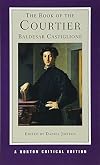
The English translation of this book made in 1561 was subtitled "Very necessary and profitable for young gentlemen and gentlewomen abiding in Court Palace or Place. A Courtier is a person who was in attendance at the Court of a King, Duke or other Royal personages. The Court would also serve as the centre of government and so the work of the Courtiers was usually a round the clock job, as their political and social life was inextricably mixed. Courtiers were not all nobles as the usual show more business of government would be undertaken by an army of clerks, soldiers, clergy and secretaries, however it was the inner circle of mostly nobles who were closest to the King or Duke and it was from this group that important and lucrative government positions were held. Promotion and advancement could be rapid and so there was a keen competitive edge amongst this group. Castiglione's Book of the Courtier was incredibly successful; during the first century of its publication in 1528 there were over 110 editions; 60 in Italian and 50 in other languages. It could be considered as a sort of 16th century "Courtiership for Dummies" manual, however the way that Castiglione has approached his subject has provided the modern reader with an intimate view of life and society at the sophisticated Court of the Duke of Urbino (Italy) in the early sixteenth century. It contains plenty of instruction, but also stories, snapshots of lives, anecdotes, philosophy, politics and jokes and finishes with a sublime discourse by Pietro Bembo on beauty and love and how the individual through a contemplative life can achieve a certain godlike perfection or fulfilment.
Castiglione was a Courtier to The Duke Guidobaldo of Urbino whose court was considered as one of the most elegant and refined of it's time, attracting artists and men of letters to its circle. Castiglione first started making notes for his book in 1508 but there was a twenty year gestation period before his tome was eventually published. It went through many drafts before it's final edition consisting of four books. During its gestation Castiglione had copied drafts sent to various writers and notables including those who were featured in his book, asking for their comments and observations and probably this has resulted in adding to the feel of authenticity that hangs around the whole project. Each of the four books is reputed to be a record of conversations of an inner circle of courtiers over a four night period who are discussing the requirements for the perfect courtier. It is proposed by the Duchess as a sort of game or amusement and she or her lady in waiting preside over the debate. The Duke who was in effect an invalid has retired to bed and so this group is at liberty to let rip with their views, but always aware that their prime occupation is to serve the Duke. Castiglione presents us with a dialogue that is usually carried by one main speaker, who is interrupted at times by others either in disagreement or asking for clarification on points raised, this rhetoric has the effect of putting both sides of the argument and it is Catiglione's skill in presenting to us a lively debate which has all the competitive edge that would be familiar to the participants; points are scored, reputations tarnished, the battle of the sexes is rehearsed and jokes are made, but the overall impression is of a delightful eloquence in the exposition of the points made.
Book one starts with the more traditional skills expected of the courtier, the necessity of being a master in the art of war, having excellent proficiency in weapons and be able to display skills in horsemanship at the highest level, it also propounds the necessity to be skilled in reading, writing and an appreciation of the arts as well as a certain ability as a musician. Amongst all this emerges the important concept of sprezzatura which all are in agreement as being absolutely essential for the courtier to possess. Sprezzatura is an art that hides art, the cultivated ability to perform any act or gesture with an insouciant or careless mastery, almost nonchalantly displaying a skill that promises hidden talents. This is the highest art of the courtier, which breeds confidence in others of ones innate abilities and which will impress the Duke, but almost as importantly provide you with an edge over other competitors. However this introduces a more shadowy aspect; that of being and seeming and leads to an idea of deceit, which emerges as just as important in the armoury of the courtier. Questions are raised about affectation and early in book 2 their emerges the more deceitful side to courtiership as when dealing with this question Frederico Fregosa who is holding the chair replies:
Then Frederico laughed and said: "If you will remember the Count wished the chief business of the Courtier to be arms, and spoke at length of the way in which he should apply himself to that, therefore we will not repeat this. Yet you may also take it to be implied in our rule that whenever the Courtier chances to be engaged in a skirmish or an action or a battle in the field, or the like, he should discreetly withdraw from the crowd, and do the outstanding and daring things that he has to do in as small a company as possible and in the sight of the most noble and respected men in the army and especially in the presence of and, if possible before the very eyes of the king or prince he serves,,,,,,,,,,,,,,,,,And I recall that in the past I have known men who, though very able, were stupid on this score, and would risk their lives as much to capture a flock of sheep as to be first to scale the walls of a besieged town - which is something our courtier will not do, if he will but keep in mind the motive that leads him to war, which is nothing except honor.
Book 2 carries on in the same vein as the first book, with issues arising out of youth verses age, but also the speakers become increasingly circumspect about the need to please their Prince. Their is a section on pleasantries and then the speakers attempt to outdo each other in telling the best jokes, some of which are amusing. Throughout this section a tension seems to be brewing around the worth of women at court until the "enfant terrible" of the group Gaspar Pallavicino bursts out with "women are beyond the pale of reason." This leads the group onto the next nights topic which is to discuss the qualities needed for a lady courtier. This soon develops into a battle between the misogynists on one side and the defenders of women on the other. It develops into a discussion and anecdotal history of famous women from the past. Amongst all this a sensible view prevails on the qualities needed for a woman to be successful at court, however this is mixed in with remnants of issues resulting from the still relevant ideas on courtly love.
Book 4 and the climax to the book does not disappoint, this seems to be the book that caused Castiglione the most problems. Here the courtiers come off the shovel and discuss the issues that are at the heart of their occupation. What they should or should not do to please their prince; in this case the Duke. Should they follow blindly his orders, even when they know them to be wrong, in error, or what is worse dishonourable. Should they commit murder on his behalf, what should happen if they were forced to serve an evil ruler. This leads them to see themselves as educators: they should be on hand to guide their Prince in the right direction. They then go on to discuss various forms of government and their are supporters of a republican type of government, however the whole tenor of the book has been built around how courtiers should serve a despotic prince, because that is the reality of their situation. The book ends with Pietro Bembo's ideas on Neo-Platonist idealism and platonic love, but that enfant terrible Gaspar Pallavicino cannot stop himself from interjecting and almost has the last word. At the end of Pietro's discourse signora Emilia says "Take care messer Pietro that with these thoughts your soul does not leave your body" Pietro has indeed taken the reader on a flight of fancy, but much here is relevant to Renaissance ideas on divine love. This is humanistic in thought, which is a feature throughout the book; the pagan thoughts of the ancients are almost an accepted fact; clergical Christianity hardly gets mentioned.
The Norton critical edition has an excellent introduction and I particularly enjoyed the essays of criticism that follows the text. They are all relevant and added to my thoughts and enjoyment immensely. James Hawkins essay on Renaissance philosophy was particularly enlightening and so was David Quits on Courtier, Prince, Lady where he poses questions about the interrelations of male and female courtiers and asked whether these mirror relations with the prince. This book is essential reading for anyone interested in the Renaissance, it is an authentic slice of renaissance life albeit a rather rarefied one. I think it would appeal to most lovers of history and even the general reader. An important book and a five star read. show less
Castiglione was a Courtier to The Duke Guidobaldo of Urbino whose court was considered as one of the most elegant and refined of it's time, attracting artists and men of letters to its circle. Castiglione first started making notes for his book in 1508 but there was a twenty year gestation period before his tome was eventually published. It went through many drafts before it's final edition consisting of four books. During its gestation Castiglione had copied drafts sent to various writers and notables including those who were featured in his book, asking for their comments and observations and probably this has resulted in adding to the feel of authenticity that hangs around the whole project. Each of the four books is reputed to be a record of conversations of an inner circle of courtiers over a four night period who are discussing the requirements for the perfect courtier. It is proposed by the Duchess as a sort of game or amusement and she or her lady in waiting preside over the debate. The Duke who was in effect an invalid has retired to bed and so this group is at liberty to let rip with their views, but always aware that their prime occupation is to serve the Duke. Castiglione presents us with a dialogue that is usually carried by one main speaker, who is interrupted at times by others either in disagreement or asking for clarification on points raised, this rhetoric has the effect of putting both sides of the argument and it is Catiglione's skill in presenting to us a lively debate which has all the competitive edge that would be familiar to the participants; points are scored, reputations tarnished, the battle of the sexes is rehearsed and jokes are made, but the overall impression is of a delightful eloquence in the exposition of the points made.
Book one starts with the more traditional skills expected of the courtier, the necessity of being a master in the art of war, having excellent proficiency in weapons and be able to display skills in horsemanship at the highest level, it also propounds the necessity to be skilled in reading, writing and an appreciation of the arts as well as a certain ability as a musician. Amongst all this emerges the important concept of sprezzatura which all are in agreement as being absolutely essential for the courtier to possess. Sprezzatura is an art that hides art, the cultivated ability to perform any act or gesture with an insouciant or careless mastery, almost nonchalantly displaying a skill that promises hidden talents. This is the highest art of the courtier, which breeds confidence in others of ones innate abilities and which will impress the Duke, but almost as importantly provide you with an edge over other competitors. However this introduces a more shadowy aspect; that of being and seeming and leads to an idea of deceit, which emerges as just as important in the armoury of the courtier. Questions are raised about affectation and early in book 2 their emerges the more deceitful side to courtiership as when dealing with this question Frederico Fregosa who is holding the chair replies:
Then Frederico laughed and said: "If you will remember the Count wished the chief business of the Courtier to be arms, and spoke at length of the way in which he should apply himself to that, therefore we will not repeat this. Yet you may also take it to be implied in our rule that whenever the Courtier chances to be engaged in a skirmish or an action or a battle in the field, or the like, he should discreetly withdraw from the crowd, and do the outstanding and daring things that he has to do in as small a company as possible and in the sight of the most noble and respected men in the army and especially in the presence of and, if possible before the very eyes of the king or prince he serves,,,,,,,,,,,,,,,,,And I recall that in the past I have known men who, though very able, were stupid on this score, and would risk their lives as much to capture a flock of sheep as to be first to scale the walls of a besieged town - which is something our courtier will not do, if he will but keep in mind the motive that leads him to war, which is nothing except honor.
Book 2 carries on in the same vein as the first book, with issues arising out of youth verses age, but also the speakers become increasingly circumspect about the need to please their Prince. Their is a section on pleasantries and then the speakers attempt to outdo each other in telling the best jokes, some of which are amusing. Throughout this section a tension seems to be brewing around the worth of women at court until the "enfant terrible" of the group Gaspar Pallavicino bursts out with "women are beyond the pale of reason." This leads the group onto the next nights topic which is to discuss the qualities needed for a lady courtier. This soon develops into a battle between the misogynists on one side and the defenders of women on the other. It develops into a discussion and anecdotal history of famous women from the past. Amongst all this a sensible view prevails on the qualities needed for a woman to be successful at court, however this is mixed in with remnants of issues resulting from the still relevant ideas on courtly love.
Book 4 and the climax to the book does not disappoint, this seems to be the book that caused Castiglione the most problems. Here the courtiers come off the shovel and discuss the issues that are at the heart of their occupation. What they should or should not do to please their prince; in this case the Duke. Should they follow blindly his orders, even when they know them to be wrong, in error, or what is worse dishonourable. Should they commit murder on his behalf, what should happen if they were forced to serve an evil ruler. This leads them to see themselves as educators: they should be on hand to guide their Prince in the right direction. They then go on to discuss various forms of government and their are supporters of a republican type of government, however the whole tenor of the book has been built around how courtiers should serve a despotic prince, because that is the reality of their situation. The book ends with Pietro Bembo's ideas on Neo-Platonist idealism and platonic love, but that enfant terrible Gaspar Pallavicino cannot stop himself from interjecting and almost has the last word. At the end of Pietro's discourse signora Emilia says "Take care messer Pietro that with these thoughts your soul does not leave your body" Pietro has indeed taken the reader on a flight of fancy, but much here is relevant to Renaissance ideas on divine love. This is humanistic in thought, which is a feature throughout the book; the pagan thoughts of the ancients are almost an accepted fact; clergical Christianity hardly gets mentioned.
The Norton critical edition has an excellent introduction and I particularly enjoyed the essays of criticism that follows the text. They are all relevant and added to my thoughts and enjoyment immensely. James Hawkins essay on Renaissance philosophy was particularly enlightening and so was David Quits on Courtier, Prince, Lady where he poses questions about the interrelations of male and female courtiers and asked whether these mirror relations with the prince. This book is essential reading for anyone interested in the Renaissance, it is an authentic slice of renaissance life albeit a rather rarefied one. I think it would appeal to most lovers of history and even the general reader. An important book and a five star read. show less

It's difficult to read because the sentences are excessively elegant and artificially pleasing. After several failed attempts I began to read aloud and then I was able to break through to the style and demeanor of the author and subject.
It is divided into 4 books were members of the court of Urbino discuss the qualities that make for a successful courtier.
Some, but not all of the qualities are ability to dance, play an instrument, give good advice to the Prince, compete in mock battles, and show more compete in real battles.
The second book is full of short entertaining stories that they find amusing. Occasionally they are funny and the stories are a good representation of comedy in the 1500s.
There are many examples of poor behavior and what the courtier should avoid.
There are examples of a successful female in court and how she should behave. One gentleman criticises women. His criticisms are valid and and he is fiercely scolded. I suspect the author included the excoriation in order to please his female readers.
The last book concerns love and raises the discourse to a lofty level concerning the value of love. show less
It is divided into 4 books were members of the court of Urbino discuss the qualities that make for a successful courtier.
Some, but not all of the qualities are ability to dance, play an instrument, give good advice to the Prince, compete in mock battles, and show more compete in real battles.
The second book is full of short entertaining stories that they find amusing. Occasionally they are funny and the stories are a good representation of comedy in the 1500s.
There are many examples of poor behavior and what the courtier should avoid.
There are examples of a successful female in court and how she should behave. One gentleman criticises women. His criticisms are valid and and he is fiercely scolded. I suspect the author included the excoriation in order to please his female readers.
The last book concerns love and raises the discourse to a lofty level concerning the value of love. show less

Etwas altmodisch und in der Dialogform deshalb schwer zu lesen, aber dafür, dass das Original erstmalig 1528 veröffentlicht wurde, ist es teilweise immer noch erstaunlich aktuell. Zum Beispiel gibt es ein interessantes Zwiegespräch zur Gleichberechtigung der Frau, dass erstaunlicherweise pro Gleichberechtigung endet. Dass Tjostieren heute nicht mehr so wichtig ist, überrascht stattdessen kaum.
Kurzum - alles was man schon immer über Grandezza wissen sollte! "Dort sei man die wahre Kunst, show more wo man die Kunst nicht sieht!" show less
Kurzum - alles was man schon immer über Grandezza wissen sollte! "Dort sei man die wahre Kunst, show more wo man die Kunst nicht sieht!" show less
Lists
Awards


You May Also Like


Associated Authors
Statistics
- Works
- 29
- Also by
- 3
- Members
- 2,889
- Popularity
- #8,871
- Rating
- 3.5
- Reviews
- 19
- ISBNs
- 100
- Languages
- 13
- Favorited
- 6
