
Stevie Davies
Author of The Brontë Sisters: Selected Poems of Charlotte, Emily, and Anne Brontë
About the Author
Stevie Davies is a Fellow of the Royal Society of Literature and the Welsh Academy, and Director Of Creative Writing at Swansea University.
Disambiguation Notice:
Stevie Davies is a single author of literary fiction and nonfiction. Please do not split her into separate authors unless you are sure of what you are doing.
Image credit: from author's webpage
Works by Stevie Davies
The Brontë Sisters: Selected Poems of Charlotte, Emily, and Anne Brontë (1976) — Editor; Introduction — 54 copies
Regresso ao Suez 1 copy
A Century of Troubles 1 copy
Associated Works
Tagged
Common Knowledge
- Canonical name
- Davies, Stevie
- Birthdate
- 1946
- Gender
- female
- Education
- University of Manchester (BA, MA, PhD)
- Occupations
- Director of Creative Writing, University of Wales, Swansea
- Organizations
- Royal Society of Literature
Academi Gymreig
Arts Council of Wales - Awards and honors
- Royal Society of Literature (Fellow)
- Nationality
- UK
- Birthplace
- Salisbury, Wiltshire, England, UK
- Places of residence
- Swansea, Wales, UK
Egypt
Morriston, Swansea, Wales, UK - Map Location
- UK
- Disambiguation notice
- Stevie Davies is a single author of literary fiction and nonfiction. Please do not split her into separate authors unless you are sure of what you are doing.
Members
Reviews
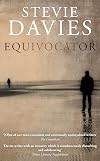
‘Equivocator’ is a brief yet dense novella. It follows an academic named Sebastian through a few days in his life. During this short and emotionally intense period he visits his mother, attends a tiresome conference, attempts to keep his boyfriend, and discovers some unexpected things about his mysterious lost father. Sebastian is a first person protagonist who remains slightly distant from the reader, suggesting a guarded personality. His interactions with friends, family, lovers, and show more acquaintances are subtly revealing, without building to any grand denouement. Each scene feels carefully observed and grounded in an ongoing relationship, deftly illustrated by flashbacks and recounted anecdotes. It’s a difficult feeling to capture on the page, that two characters who you haven’t encountered before the scene share many years of experience and memories. Considering the book’s length, I thought this was done especially well.
Although I wouldn’t call ‘Equivocator’ funny, there are some amusing moments at the academic conference:
Much of the narrative is emotionally moving, with Sebastian’s dynamic with his elderly mother Elise especially notable in this regard:
‘Equivocator’ is a beautifully written and delicately observed little portrait of difficult relationships past and present. show less
Although I wouldn’t call ‘Equivocator’ funny, there are some amusing moments at the academic conference:
"God, these conferences,” she says and yawns extravagantly. Mary doesn’t mind who hears and her voice is carrying. Heads swivel; her serial yawn starts others off. The yawns go round and the paroxysmic speaker at the top table passes his hand over his gaping mouth and drones on.
Much of the narrative is emotionally moving, with Sebastian’s dynamic with his elderly mother Elise especially notable in this regard:
“How are you, darling?”
“I’m fine, Sebastian, why shouldn’t I be?”
Colomendy’s privacy policy has offered Elise the chance of a self-contained, dignified life, with support. She had a horror of being herded into a television room to play skittles with the addled ancientry. I think she felt her mind crumbling. Flakes fell away in episodes of confusion; caves opened up that she sought to prop - and the props quakes. Intermittently, the light must have guttered. Fear enhanced confusion.
For still the damage remains minor. The great brain keeps its wits about it. It knows how to compensate. Its defensive structure holds.
‘Equivocator’ is a beautifully written and delicately observed little portrait of difficult relationships past and present. show less
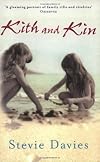
Mara Evans specialises in 'phantom pain', a phenomenon which happens when someone has lost a part of their body but still feels pain (sometimes very intense) in the lost limb. Like her patients, a part of Mara is missing, and has been for the decades since her beloved cousin Francesca died. Unlike them, she has successfully blocked out any pain by pretending the hole is not there - at least until she has to return to South Wales and confront her memories.
Mara, Francesca and another cousin, show more Aaron, grew up together, intensely close. Their three branches of the family were both tight-knit and warring, with divisions between the branches, within each family, and between the generations - particularly as the sixties turned the world upside down and the youngest members discovered idealism and rejected convention. Sadly, they also experienced the real dark side of the hippy dream (I could understand quite easily why Mara might want to block the memories out) - but even so, looking back, Mara is tensely conscious of how much she has accepted the compromises of adult life.
This is a complex book, in both its densely layered themes and its view of human nature. One of the most remarkable things was its ability to portray the tugs and contradictions of family love - the fluidity of the feelings you have for those who are closest to you. I really enjoyed reading it. show less
Mara, Francesca and another cousin, show more Aaron, grew up together, intensely close. Their three branches of the family were both tight-knit and warring, with divisions between the branches, within each family, and between the generations - particularly as the sixties turned the world upside down and the youngest members discovered idealism and rejected convention. Sadly, they also experienced the real dark side of the hippy dream (I could understand quite easily why Mara might want to block the memories out) - but even so, looking back, Mara is tensely conscious of how much she has accepted the compromises of adult life.
This is a complex book, in both its densely layered themes and its view of human nature. One of the most remarkable things was its ability to portray the tugs and contradictions of family love - the fluidity of the feelings you have for those who are closest to you. I really enjoyed reading it. show less
(29 November 2014 – from Laura)
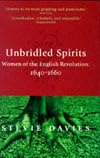
A study of women of the English Revolution, mainly, for obvious reasons, those who wrote and published, or were written about, that, although published in 1998, seems to have a ring of the earlier works of ‘herstory’ that came out in the late 80s and early 90s, both in the subject matter, reclaiming the lives and words of women from the margins, and in the language it’s written in, which is harder to quantify by definitely half way between polemical and show more academic writing, with a twist of pro-women language and a consciously partisan way of writing.
It uses women’s own words where possible, and links sets of women together – early Quaker women (this was fascinating, as I didn’t have a grasp of the role of women in forming the Quaker movement), women who preached, women who prophesised, the active and trouble-making wives of men who were imprisoned, etc. Davies brings their stories into the foreground and pulls the threads together, celebrating them in a readable work that does an important job. show less
A study of women of the English Revolution, mainly, for obvious reasons, those who wrote and published, or were written about, that, although published in 1998, seems to have a ring of the earlier works of ‘herstory’ that came out in the late 80s and early 90s, both in the subject matter, reclaiming the lives and words of women from the margins, and in the language it’s written in, which is harder to quantify by definitely half way between polemical and show more academic writing, with a twist of pro-women language and a consciously partisan way of writing.
It uses women’s own words where possible, and links sets of women together – early Quaker women (this was fascinating, as I didn’t have a grasp of the role of women in forming the Quaker movement), women who preached, women who prophesised, the active and trouble-making wives of men who were imprisoned, etc. Davies brings their stories into the foreground and pulls the threads together, celebrating them in a readable work that does an important job. show less
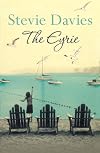
The main characters are three women living in flats in a converted mansion in Swansea, Wales.
Dora is 92 and has been a committed socialist all her life. She is furious at the Labour government over its betrayal of the working class and the Iraq war. She looks back at her life and misses her daughter, who died 40 years ago.
Eirlys seems more conventional and motherly, but she too has a past of going to prison for her political beliefs (in her case Welsh nationalism), which Dora doesn't even show more know about.
Young Hannah in her mid 20s has left a stifling marriage and is trying to make a new life for herself.
This shortish novel is another character study, lots of thoughts, feelings, reflections, events mainly used to reveal more such stuff. I quite like stories about really old people looking back over their lives and I enjoyed this one.
I did have a few quibbles about the portrayal of Dora, mainly little mistakes which anyone with no knowledge of the minutiae of far left politics wouldn't notice. First, there is a reference to obituaries in the Daily Worker and the Morning Star - the Daily Worker became the Morning Star at some point (the British Communist Party's newspaper). Second, Dora refers to herself as an ex-Communist and an ex-Trotskyite - Trotskyite and other political words ending in -ite are derogatory and she would call herself a Trotskyist - and she probably doesn't consider herself ex anything as her political views haven't changed, it's just she's dropped out of activism.
This is never going to be a bestseller but I really liked it and want to go back to her other novels. show less
Dora is 92 and has been a committed socialist all her life. She is furious at the Labour government over its betrayal of the working class and the Iraq war. She looks back at her life and misses her daughter, who died 40 years ago.
Eirlys seems more conventional and motherly, but she too has a past of going to prison for her political beliefs (in her case Welsh nationalism), which Dora doesn't even show more know about.
Young Hannah in her mid 20s has left a stifling marriage and is trying to make a new life for herself.
This shortish novel is another character study, lots of thoughts, feelings, reflections, events mainly used to reveal more such stuff. I quite like stories about really old people looking back over their lives and I enjoyed this one.
I did have a few quibbles about the portrayal of Dora, mainly little mistakes which anyone with no knowledge of the minutiae of far left politics wouldn't notice. First, there is a reference to obituaries in the Daily Worker and the Morning Star - the Daily Worker became the Morning Star at some point (the British Communist Party's newspaper). Second, Dora refers to herself as an ex-Communist and an ex-Trotskyite - Trotskyite and other political words ending in -ite are derogatory and she would call herself a Trotskyist - and she probably doesn't consider herself ex anything as her political views haven't changed, it's just she's dropped out of activism.
This is never going to be a bestseller but I really liked it and want to go back to her other novels. show less
Lists
Awards


You May Also Like


Associated Authors
Statistics
- Works
- 33
- Also by
- 4
- Members
- 507
- Popularity
- #48,897
- Rating
- 3.9
- Reviews
- 10
- ISBNs
- 82
- Languages
- 2
- Favorited
- 2
