
S. N. Behrman (1893–1973)
Author of Duveen
About the Author
Image credit: Sélection du Reader's Digest
Works by S. N. Behrman
4 ( Four ) Plays By S. N. Behrman: the Second Man, Biography, Rain From Heaven, End of Summer (1952) 8 copies
The pirate (1943) 1 copy
Four Plays (Hardcover) 1 copy
The Talley Method 1 copy
The Second Man 1 copy
Brief Moment 1 copy
Me and the Colonel 1 copy
Duveen și milionarii, BDA 70 1 copy
Associated Works
The New Yorker Book of War Pieces: London, 1939 to Hiroshima, 1945 (1947) — Contributor — 114 copies, 2 reviews
25 best plays of the Modern American Theatre : Early Series : 1916-1929 (1949) — Contributor — 31 copies
Tagged
Common Knowledge
- Canonical name
- Behrman, S. N.
- Legal name
- Behrman, Samuel Nathaniel
- Birthdate
- 1893-06-09
- Date of death
- 1973-09-09
- Gender
- male
- Education
- Harvard University (BA)
Columbia University (MA|1918) - Occupations
- playwright
screenwriter
journalist
biographer - Organizations
- The New Yorker
- Awards and honors
- American Academy of Arts & Sciences (1959)
- Relationships
- Baker, George Pierce (teacher)
Gelb, Barbara (stepchild)
Behrman, David (son) - Nationality
- USA
- Birthplace
- Worcester, Massachusetts, USA
- Places of residence
- New York, New York, USA
- Place of death
- New York, New York, USA
- Associated Place (for map)
- New York, USA
Members
Reviews
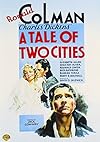
The one and only version to watch (and I've seen pretty much all of them); this is an annual view in our house and every year we hope maybe this time he won't go to the guillotine... and every year we cry. Special chops to Isabel Jewell, whose little seamstress breaks your heart in two (like this story needs more heartbreak!). And no one will EVER be Madame Defarge like Blanche Yurka. though I'd like to see Helena Bonham-Carter take a crack at it.
It's okay
I watched this one night after watching the 1989 James Wilby version, and in several ways I found it superior to that more recent one. The mob scenes in Paris had people stretching as far as the eye can see instead of topping out at maybe 30 or 40 rather harmless looking individuals. The muddy Dover road and the filthy Paris street where the wine cask broke seemed more authentic. I thought that both Stryver and Cruncher were more interesting in the 1935 version, and Colman's Carton show more definitely came across more sympathetically than Wilby's.
Nevertheless, I felt this movie was a pale imitation of the novel. Here are some the reasons:
1) The movie felt too American (almost like a Western) and too permeated with a chipper attitude.
2) While it's nice not to have Carton sulking throughout the movie, I think Colman's portrayal goes too far in the opposite direction. I feel that the Carton that Dickens created needed that night wandering the streets of Paris pondering life and death and salvation to give him the strength to go through with his sacrifice. The closing episode between Carton and the seamstress is one of the most powerful in literature, and it's disappointing that that episode loses so much power when translated to the screen.
3) I've got nothing against Christmas, but I disagree with the filmmaker's decision to turn this into a Christmas movie (complete with anachronistic Christmas carols).
4) Dickens was not just a good storyteller; he had a remarkable mastery of the English language. Of necessity, his text needs to be cut and pared in order to make a movie of reasonable length, but most dramatizations of his work seem to go far beyond what's necessary in replacing the author's words with words that the screenwriter/director/producer like better. I felt that this film didn't preserve as much of the author's magical phrasing as it might have. show less
I watched this one night after watching the 1989 James Wilby version, and in several ways I found it superior to that more recent one. The mob scenes in Paris had people stretching as far as the eye can see instead of topping out at maybe 30 or 40 rather harmless looking individuals. The muddy Dover road and the filthy Paris street where the wine cask broke seemed more authentic. I thought that both Stryver and Cruncher were more interesting in the 1935 version, and Colman's Carton show more definitely came across more sympathetically than Wilby's.
Nevertheless, I felt this movie was a pale imitation of the novel. Here are some the reasons:
1) The movie felt too American (almost like a Western) and too permeated with a chipper attitude.
2) While it's nice not to have Carton sulking throughout the movie, I think Colman's portrayal goes too far in the opposite direction. I feel that the Carton that Dickens created needed that night wandering the streets of Paris pondering life and death and salvation to give him the strength to go through with his sacrifice. The closing episode between Carton and the seamstress is one of the most powerful in literature, and it's disappointing that that episode loses so much power when translated to the screen.
3) I've got nothing against Christmas, but I disagree with the filmmaker's decision to turn this into a Christmas movie (complete with anachronistic Christmas carols).
4) Dickens was not just a good storyteller; he had a remarkable mastery of the English language. Of necessity, his text needs to be cut and pared in order to make a movie of reasonable length, but most dramatizations of his work seem to go far beyond what's necessary in replacing the author's words with words that the screenwriter/director/producer like better. I felt that this film didn't preserve as much of the author's magical phrasing as it might have. show less
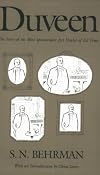
Elegantly written New Yorker profile, an account of the art dealer who realized that Europeans had fine collections of art but needed cash, while American millionaires would pay good money for art that would give them class and that they they could leave as their legacy. He carefully groomed his buyers and made sure they understood he was the only dealer who could get them the finest works. I grew up going to the Huntington Library in San Marino so I especially enjoyed the account of how show more Duveen obtained it for H. E. Huntington, after he saw a reproduction of it and realized he had to own it. Duveen just happened to have contacts who let him know that the Duke of Westminster might be persuaded to sell..... show less

Engaging, genial and gentle book about the artist and author Sir Max Beerbohm, from the point of view of writer and humourist Behrman. The structure of the book surrounds a handful of visits Behrman made to Beerbohm's estate at Rapollo, Italy in the early 1950s, and there's much cause for looking back at some of Beerbohm's works. We also get some shrewd observations as to how Max ran his life in his final few years. The treat, of course, is in the copious selection of illustrations scattered show more throughout the book. It's always a joy to see Beerbohm's work. One nugget I enjoyed was Beerbohm's habit of amending and editing copies of books with his own artwork. Definitely a book for cartoon-lovers. show less
Lists
Awards


You May Also Like


Associated Authors
Statistics
- Works
- 50
- Also by
- 16
- Members
- 897
- Popularity
- #28,560
- Rating
- 3.9
- Reviews
- 13
- ISBNs
- 53
- Languages
- 3
- Favorited
- 2