
Michel Chion
Author of Audio-Vision: Sound on Screen
About the Author
Series
Works by Michel Chion
Tagged
Common Knowledge
- Birthdate
- 1947
- Gender
- male
- Occupations
- compositor
professor - Nationality
- França
- Birthplace
- Creil, França
Members
Reviews
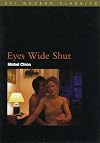
Chion always finds novel and interesting ways in which he can approach a film (read also his superb analysis of Terrence Malick’s The Thin Red Line) that strike you as logical and simple, but that somehow it managed to elude every other critic. If you have any doubts about Eyes Wide Shut’s qualities, better read this.
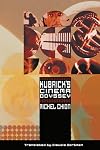
The single best volume on Kubrick. Chion, a renowned French artist and critic, is brilliant and his analysis manages to shed light in places where others have invariably failed. A particularly fascinating section is the discussion of the use of music in 2001. The close reading of every scene is also very enlightening. Works extremely well a companion piece to Jerome Agel’s The Making of Kubrick’s 2001.
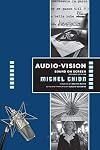
Michel Chion’s landmark Audio-Vision has exerted significant influence on our understanding of sound-image relations since its original publication in 1994. Chion argues that sound film qualitatively produces a new form of perception. Sound in audiovisual media does not merely complement images. Instead, the two channels together engage audio-vision, a special mode of perception that transforms both seeing and hearing. We don’t see images and hear sounds separately―we audio-view a show more trans-sensory whole.
In this updated and expanded edition, Chion considers many additional examples from recent world cinema and formulates new questions for the contemporary media environment. He takes into account the evolving role of audio-vision in different theatrical environments, considering its significance for music videos, video art, commercial television, and the internet, as well as conventional cinema. Chion explores how multitrack digital sound enables astonishing detail, extending the space of the action and changing practices of scene construction. He demonstrates that speech is central to film and television and shows why “audio-logo-visual” is a more accurate term than “audiovisual.” Audio-Vision shows us that sound is driving the creation of a sensory cinema.
This edition includes a glossary of terms, a chronology of several hundred significant films, and the original foreword by sound designer, editor, and Oscar honoree Walter Murch. show less
In this updated and expanded edition, Chion considers many additional examples from recent world cinema and formulates new questions for the contemporary media environment. He takes into account the evolving role of audio-vision in different theatrical environments, considering its significance for music videos, video art, commercial television, and the internet, as well as conventional cinema. Chion explores how multitrack digital sound enables astonishing detail, extending the space of the action and changing practices of scene construction. He demonstrates that speech is central to film and television and shows why “audio-logo-visual” is a more accurate term than “audiovisual.” Audio-Vision shows us that sound is driving the creation of a sensory cinema.
This edition includes a glossary of terms, a chronology of several hundred significant films, and the original foreword by sound designer, editor, and Oscar honoree Walter Murch. show less
Chion always finds novel and interesting ways in which he can approach a film (read also his superb analysis of Terrence Malick’s The Thin Red Line) that strike you as logical and simple, but that somehow it managed to elude every viewer and critic. If you have any doubts about Eyes Wide Shut’s qualities, better read this.
Awards


You May Also Like


Statistics
- Works
- 47
- Members
- 729
- Popularity
- #34,829
- Rating
- 3.7
- Reviews
- 8
- ISBNs
- 111
- Languages
- 7