
Thomas Crow
Author of The Rise of the Sixties: American and European Art in the Era of Dissent
About the Author
Thomas Crow is Director of the Getty Research Institute, Los Angeles, and teaches art history at the University of Southern California
Works by Thomas Crow
The Artist in the Counterculture: Bruce Conner to Mike Kelley and Other Tales from the Edge (2023) 10 copies, 1 review
Associated Works
Jasper Johns to Jeff Koons: Four Decades of Art from the Broad Collections (2001) — Contributor — 65 copies
Tagged
Common Knowledge
- Canonical name
- Crow, Thomas
- Birthdate
- 1948
- Gender
- male
- Education
- Pomona College (BA|1969)
University of California, Los Angeles (MA|1975)
University of California, Los Angeles (PhD|1978) - Occupations
- art historian
art critic
professor
contributing editor - Organizations
- California Institute of the Arts
University of Chicago
Princeton University
University of Michigan
University of Sussex
Yale University (show all 9)
University of Southern California
Getty Research Institute
New York University - Nationality
- USA
- Birthplace
- Chicago, Illinois, USA
- Places of residence
- Chicago, Illinois, USA (birth)
San Diego, California, USA - Associated Place (for map)
- USA
Members
Reviews
The Artist in the Counterculture : Bruce Conner to Mike Kelley and other tales from the edge by Thomas Crow
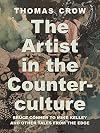
How California’s counterculture of the 1960s to 1980s profoundly shaped—and was shaped by—West Coast artists.
The 1960s exert a special fascination in modern art. But most accounts miss the defining impact of the period’s youth culture, largely incubated in California, on artists who came of age in that decade. As their prime exemplar, Bruce Conner, reminisced, “I did everything that everybody did in 1967 in the Haight-Ashbury… . I would take peyote and walk out in the streets.” show more And he vividly channeled those experiences into his art, while making his mark on every facet of the psychedelic movement—from the mountains of Mexico with Timothy Leary to the rock ballrooms of San Francisco to the gilded excesses of the New Hollywood. In The Artist in the Counterculture, Thomas Crow tells the story of California art from the 1960s to the 1980s—some of the strongest being made anywhere at the time—and why it cannot be understood apart from the new possibilities of thinking and feeling unleashed by the rebels of the counterculture.
Crow reevaluates Conner and other key figures—from Catholic activist Corita Kent to Black Panther Emory Douglas to ecological witness Bonnie Ora Sherk—as part of a generational cohort galvanized by resistance to war, racial oppression, and environmental degradation. Younger practitioners of performance and installation carried the mindset of rebellion into the 1970s and 1980s, as previously excluded artists of color moved to the forefront in Los Angeles. Mike Kelley, their contemporary, remained unwaveringly true to the late countercultural flowering he had witnessed at the dawn of his career.
The result is a major new account of the counterculture’s enduring influence on modern art. show less
The 1960s exert a special fascination in modern art. But most accounts miss the defining impact of the period’s youth culture, largely incubated in California, on artists who came of age in that decade. As their prime exemplar, Bruce Conner, reminisced, “I did everything that everybody did in 1967 in the Haight-Ashbury… . I would take peyote and walk out in the streets.” show more And he vividly channeled those experiences into his art, while making his mark on every facet of the psychedelic movement—from the mountains of Mexico with Timothy Leary to the rock ballrooms of San Francisco to the gilded excesses of the New Hollywood. In The Artist in the Counterculture, Thomas Crow tells the story of California art from the 1960s to the 1980s—some of the strongest being made anywhere at the time—and why it cannot be understood apart from the new possibilities of thinking and feeling unleashed by the rebels of the counterculture.
Crow reevaluates Conner and other key figures—from Catholic activist Corita Kent to Black Panther Emory Douglas to ecological witness Bonnie Ora Sherk—as part of a generational cohort galvanized by resistance to war, racial oppression, and environmental degradation. Younger practitioners of performance and installation carried the mindset of rebellion into the 1970s and 1980s, as previously excluded artists of color moved to the forefront in Los Angeles. Mike Kelley, their contemporary, remained unwaveringly true to the late countercultural flowering he had witnessed at the dawn of his career.
The result is a major new account of the counterculture’s enduring influence on modern art. show less

The artist as collector and champion of the American vernacular
Allen Ruppersberg: Intellectual Property 1968–2018 accompanies a major retrospective exhibition on one of conceptual art’s most inventive and acclaimed practitioners. Emerging in late-1960s Los Angeles, Ruppersberg was among that city’s first generation of conceptual artists to espouse a working method that privileges ideas and process over conventional aesthetic objects. Deploying posters, books, postcards and even a café show more and hotel, his projects have consistently had at their center a focus on the American vernacular―its music, popular imagery and ephemera―mining the nuances of culture through its unsung conventions. From his earliest works, the artist has also welcomed the involvement of the viewer as participant, inviting an immersive experience of his work through language, visual density, accumulated elements and ideas.
This fully illustrated catalog is the most comprehensive publication to date on Ruppersberg’s work, featuring a wealth of scholarly content and critical writing connecting Ruppersberg’s work to the larger contemporary art field. Produced by the Walker’s award-winning design studio and in close collaboration with the artist, the book presents a holistic view of Ruppersberg’s wide-ranging, 50-year practice.
Born in Cleveland, Ohio in 1944, Allen Ruppersberg has been the subject of more than 60 solo shows. His only other US retrospective, The Secret of Life and Death, was presented by the Museum of Contemporary Art, Los Angeles, in 1985. His work is in the collection of public institutions such as the Los Angeles County Museum of Art; the Hammer Museum, Los Angeles; The Museum of Modern Art, New York; Walker Art Center, Minneapolis; and Le Fonds Ronal d’Art, among many others. Ruppersberg lives and works in Los Angeles, Cleveland and New York. show less
Allen Ruppersberg: Intellectual Property 1968–2018 accompanies a major retrospective exhibition on one of conceptual art’s most inventive and acclaimed practitioners. Emerging in late-1960s Los Angeles, Ruppersberg was among that city’s first generation of conceptual artists to espouse a working method that privileges ideas and process over conventional aesthetic objects. Deploying posters, books, postcards and even a café show more and hotel, his projects have consistently had at their center a focus on the American vernacular―its music, popular imagery and ephemera―mining the nuances of culture through its unsung conventions. From his earliest works, the artist has also welcomed the involvement of the viewer as participant, inviting an immersive experience of his work through language, visual density, accumulated elements and ideas.
This fully illustrated catalog is the most comprehensive publication to date on Ruppersberg’s work, featuring a wealth of scholarly content and critical writing connecting Ruppersberg’s work to the larger contemporary art field. Produced by the Walker’s award-winning design studio and in close collaboration with the artist, the book presents a holistic view of Ruppersberg’s wide-ranging, 50-year practice.
Born in Cleveland, Ohio in 1944, Allen Ruppersberg has been the subject of more than 60 solo shows. His only other US retrospective, The Secret of Life and Death, was presented by the Museum of Contemporary Art, Los Angeles, in 1985. His work is in the collection of public institutions such as the Los Angeles County Museum of Art; the Hammer Museum, Los Angeles; The Museum of Modern Art, New York; Walker Art Center, Minneapolis; and Le Fonds Ronal d’Art, among many others. Ruppersberg lives and works in Los Angeles, Cleveland and New York. show less
Awards

You May Also Like


Associated Authors
Statistics
- Works
- 23
- Also by
- 3
- Members
- 630
- Popularity
- #39,983
- Rating
- 4.0
- Reviews
- 2
- ISBNs
- 50
- Languages
- 3