
Albert Y. Hsu
Author of Singles at the Crossroads: A Fresh Perspective on Christian Singleness
About the Author
Albert Y. Hsu (PhD, Trinity Evangelical University School) is senior editor for IVP Books at InterVarsity Press. He is also the author of Singles at the Crossrods and The Suburdan Christian. He and his wife, Ellen, have two sons and live in the western suburbs of Chicago.
Works by Albert Y. Hsu
The Suburban Christian: Finding Spiritual Vitality in the Land of Plenty (2006) 127 copies, 2 reviews
Single Issue 2 copies
Tagged
Common Knowledge
Members
Reviews
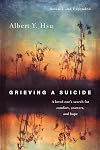
Summary: A narrative of how the author learned to deal with the trauma of his father’s suicide, the questions it raised, and the movement through grief toward healing.
Albert Hsu is a survivor, and part of a large group of similar survivors. Following a stroke, his father descended into depression as he coped with rehabilitation. One night, he went into his own bedroom and took his life. Hsu is part of a group that extends to many of us who have lost someone we love, a friend, a family show more member, a work colleague, when they chose to take their lives. He writes,
“In most literature on the topic, “suicide survivor” refers to a loved one left behind by a
suicide—husband, wife, parent, child, roommate, coworker, another family member, friend—not a person who has survived a suicide attempt. It is no coincidence that the term survivor is commonly applied to those who have experienced a horrible catastrophe of earth-shattering proportions. We speak of Holocaust survivors or of survivors of genocide, terrorism, or war. So it is with those of us who survive a suicide. According to the American Psychiatric Association, ‘the level of stress resulting from the suicide of a loved one is ranked as catastrophic—equivalent to that of a concentration camp experience.’
. . .
Such is the case for survivors of suicide. We have experienced a trauma on par psychologically with the experience of soldiers in combat. In the aftermath, we simply don’t know if we can endure the pain and anguish. Because death has struck so close to home, life itself seems uncertain. We don’t know if we can go on from day to day. We wonder if we will be consumed by the same despair that claimed our loved one. At the very least, we know that our life will never be the same. If we go on living, we will do so as people who see the world very differently” (p. 10).
Hsu’s unfolds the survivor experience in three parts. The first is the particular experience of grief one goes through when suicide strikes. With many examples from his own experience and those of other survivors, he traces a journey from shock, through turmoil, lament, relinquishment, to remembrance. In shock there is the numbness that may only be able to say “I don’t think I can handle anything right now. I need you to take care of some things for me.” Turmoil is going through a jumble of emotions from grief to abandonment, from failure to guilt, anger, and fear, and even a temptation to self-destructiveness, and a distraction that cannot focus. Lament gives voice to the grief, including acknowledging the reality of the suicide. What I most appreciated is the idea that to lament is to express one’s love for one you have lost. Relinquishment involves facing death as friend, enemy, intruder, and yet that death does not have the final word for those who believe. The chapter on remembrance was perhaps one of the most beautiful in the book as Hsu begins with how his pastor spoke about his father at the funeral, how he began to discover aspects of his father’s life he never knew, and how he created ways to remember his father, not to keep him alive, which he was not, but to honor him, and to give thanks to God for his life.
The second part of the book explores three hard questions survivors struggle with. The first is “why did this happen?” Hsu not only explores the factors that contribute to suicide but also the underlying reason we ask this question, which is because we wonder what we might have done differently. The second question is, “is suicide the unforgiveable sin?” Hsu would propose that this does not put a person beyond God’s forgiveness and the hope of eternal life. The third is, “where is God when it hurts?” Here Hsu talks about the biblical portrayal of a God who enters deeply into suffering, ultimately in Christ, who, as hard as it is to believe or feel, is with us and suffers with us.
The final part of the book explores life after suicide. He explores the spirituality of grief, as we struggle to find purpose in suffering, move from despair to hope, and the experience of healing, but never closure. He writes most helpfully about the healing community, and what is helpful and unhelpful to say and do. Here he also addresses what the church can do in growing in suicide awareness and prevention. Finally, he concludes with some of the lessons of suicide for his own life.
This is a profoundly thoughtful, personal, and gentle book. One senses as one reads that Hsu knows other survivors, people in pain, are reading this book. He gives them permission to put it down if it is just too hard. He carefully names the places of pain, those he faced in his own life. He helps survivors know that what they are feeling and what they are asking are entirely appropriate to the trauma they have faced. He does something more. Having allowed people to openly own the pain they are experiencing, he shares, not tritely but honestly out of his own experience, the journey to hope, and even the hope that one day, they like him may become wounded healers for others.
____________________________
Disclosure of Material Connection: I received this book free from the publisher. I was not required to write a positive review. The opinions I have expressed are my own. show less
Albert Hsu is a survivor, and part of a large group of similar survivors. Following a stroke, his father descended into depression as he coped with rehabilitation. One night, he went into his own bedroom and took his life. Hsu is part of a group that extends to many of us who have lost someone we love, a friend, a family show more member, a work colleague, when they chose to take their lives. He writes,
“In most literature on the topic, “suicide survivor” refers to a loved one left behind by a
suicide—husband, wife, parent, child, roommate, coworker, another family member, friend—not a person who has survived a suicide attempt. It is no coincidence that the term survivor is commonly applied to those who have experienced a horrible catastrophe of earth-shattering proportions. We speak of Holocaust survivors or of survivors of genocide, terrorism, or war. So it is with those of us who survive a suicide. According to the American Psychiatric Association, ‘the level of stress resulting from the suicide of a loved one is ranked as catastrophic—equivalent to that of a concentration camp experience.’
. . .
Such is the case for survivors of suicide. We have experienced a trauma on par psychologically with the experience of soldiers in combat. In the aftermath, we simply don’t know if we can endure the pain and anguish. Because death has struck so close to home, life itself seems uncertain. We don’t know if we can go on from day to day. We wonder if we will be consumed by the same despair that claimed our loved one. At the very least, we know that our life will never be the same. If we go on living, we will do so as people who see the world very differently” (p. 10).
Hsu’s unfolds the survivor experience in three parts. The first is the particular experience of grief one goes through when suicide strikes. With many examples from his own experience and those of other survivors, he traces a journey from shock, through turmoil, lament, relinquishment, to remembrance. In shock there is the numbness that may only be able to say “I don’t think I can handle anything right now. I need you to take care of some things for me.” Turmoil is going through a jumble of emotions from grief to abandonment, from failure to guilt, anger, and fear, and even a temptation to self-destructiveness, and a distraction that cannot focus. Lament gives voice to the grief, including acknowledging the reality of the suicide. What I most appreciated is the idea that to lament is to express one’s love for one you have lost. Relinquishment involves facing death as friend, enemy, intruder, and yet that death does not have the final word for those who believe. The chapter on remembrance was perhaps one of the most beautiful in the book as Hsu begins with how his pastor spoke about his father at the funeral, how he began to discover aspects of his father’s life he never knew, and how he created ways to remember his father, not to keep him alive, which he was not, but to honor him, and to give thanks to God for his life.
The second part of the book explores three hard questions survivors struggle with. The first is “why did this happen?” Hsu not only explores the factors that contribute to suicide but also the underlying reason we ask this question, which is because we wonder what we might have done differently. The second question is, “is suicide the unforgiveable sin?” Hsu would propose that this does not put a person beyond God’s forgiveness and the hope of eternal life. The third is, “where is God when it hurts?” Here Hsu talks about the biblical portrayal of a God who enters deeply into suffering, ultimately in Christ, who, as hard as it is to believe or feel, is with us and suffers with us.
The final part of the book explores life after suicide. He explores the spirituality of grief, as we struggle to find purpose in suffering, move from despair to hope, and the experience of healing, but never closure. He writes most helpfully about the healing community, and what is helpful and unhelpful to say and do. Here he also addresses what the church can do in growing in suicide awareness and prevention. Finally, he concludes with some of the lessons of suicide for his own life.
This is a profoundly thoughtful, personal, and gentle book. One senses as one reads that Hsu knows other survivors, people in pain, are reading this book. He gives them permission to put it down if it is just too hard. He carefully names the places of pain, those he faced in his own life. He helps survivors know that what they are feeling and what they are asking are entirely appropriate to the trauma they have faced. He does something more. Having allowed people to openly own the pain they are experiencing, he shares, not tritely but honestly out of his own experience, the journey to hope, and even the hope that one day, they like him may become wounded healers for others.
____________________________
Disclosure of Material Connection: I received this book free from the publisher. I was not required to write a positive review. The opinions I have expressed are my own. show less
O suicídio é uma triste realidade no mundo. A cada ano milhares de pessoas tiram a próprias vida e deixam um rastro de sofrimento e emoções conflitantes. Parentes e amigos ficam chocados e passam por profundo trauma emocional. Começam a fazer perguntas de difícil respostas: Porque isso aconteceu? Por que não percebemos antes? Poderíamos ter feito alguma coisa para evitá-lo? Como podemos seguir em frente? Ao narrar sua experiência com o suicídio do próprio pai, o autor deste show more livro reconhece que não há respostas fáceis para essas perguntas. No entanto, ele está convencido de que os recursos da fé cristã podem trazer alívio aos parentes enlutados. Deus é capaz de oferecer pleno conforto em meio à dor e fazer brotar esperança para o futuro. Leitura indispensável para pastores, líderes, conselheiros e para todos os que se preocupam com o bem-estar do próximo. show less
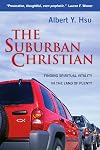
This helpful book is as much about "finding spiritual vitality in the land of plenty" as it is about "the subruban christian." There is plenty that applies to persons living in small towns, inner cities, or on the farm.
I especially appreciate the discussion of the gospel as being a two-sided coin: salvation and deliverance on one side and stewardship and celebration on the other.
Hsu nicely sums it up this way: "The call to stewardship is one of gratitute for what we have received; we can show more then joyfully release it for the benefit of others. It's better to think of ourselves more as conduits of blessing rather than reservoirs of banks where resources are horded. We have been blessed so we can bless others." (p. 192)
The book is heavily documented. Indexed. show less
I especially appreciate the discussion of the gospel as being a two-sided coin: salvation and deliverance on one side and stewardship and celebration on the other.
Hsu nicely sums it up this way: "The call to stewardship is one of gratitute for what we have received; we can show more then joyfully release it for the benefit of others. It's better to think of ourselves more as conduits of blessing rather than reservoirs of banks where resources are horded. We have been blessed so we can bless others." (p. 192)
The book is heavily documented. Indexed. show less
Interesting, but "The Good Life" by David Matzko McCarthy is a more substantial treatment of similar subject matter.
You May Also Like


Statistics
- Works
- 6
- Members
- 541
- Popularity
- #46,067
- Rating
- 4.0
- Reviews
- 5
- ISBNs
- 15
- Languages
- 1