
Joyce E. Chaplin
Author of The First Scientific American: Benjamin Franklin and the Pursuit of Genius
About the Author
Joyce E. Chaplin is professor of history at Harvard University.
Image credit: via Macmillan Publishers
Works by Joyce E. Chaplin
The First Scientific American: Benjamin Franklin and the Pursuit of Genius (2006) 156 copies, 4 reviews
Subject Matter: Technology, the Body, and Science on the Anglo-American Frontier, 1500-1676 (2001) 59 copies, 1 review
Tagged
Common Knowledge
- Gender
- female
- Education
- Northwestern University
Johns Hopkins University - Occupations
- historian
- Organizations
- Harvard University
Vanderbilt University - Awards and honors
- Fulbright Scholar
- Relationships
- Armitage, David (husband)
Members
Reviews
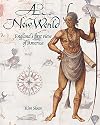
A New World: England’s First View of America. By Kim Sloan. With contributions by Joyce E. Chaplin, Christian F. Feest, and Ute Kuhlmann. (Chapel Hill: University of North Carolina Press, c. 2007. Pp. 256. Paper, $29.95, ISBN 978-0-0878-5825-07; cloth, $60.00, ISBN 978-0-8139-3125-0.)
In a year when events commemorating the four hundredth anniversary of the permanent English settlement at Jamestown are occupying a prominent place in the public eye, these two volumes are a welcome reminder show more of the importance of the short-lived English settlements at Roanoke in what is now North Carolina. Both books use the well-known watercolors of John White and the copper engravings of White’s paintings made by Theodor de Bry for Thomas Hariot’s 1590 tract A briefe and true report of the new found land of Virginia to examine what the English knew—or thought they knew—about the New World. They are both also useful and informative scholarly inquiries into how Europeans used visual representations of North America’s plants, animals, and people to win support for ongoing colonization efforts. English adventurers and investors, operating under Sir Walter Raleigh’s leadership, made several successive voyages to the Virginia’s shores during the 1580s, with the intention of making money by preying on Spanish treasure shipping. The early Roanoke settlements were primarily military bases intended to hide English privateers, but some investors had a more permanent presence in mind. To that end, Roanoke expeditions (like other English exploratory missions) carried scientists, naturalists, cartographers, and artists to record the land’s inhabitants and its possible commodities.
The participation of gentleman-artist John White in several of these voyages has left us with powerful images of southern coastal Algonkian people, as well as the region’s flora and fauna. Kim Sloan’s A New World: England’s First View of America is a magnificently presented catalogue of White’s watercolors, accompanied by essays meticulously presenting the most recent scholarship on White, his times, and the impact of his famous watercolors. The catalogue itself occupies most of the volume, and includes White’s watercolors, accompanied by the eighteenth-century copies made for Sir Hans Sloane. Sloan is careful to point out changes in the coloring and pigmentation due to water damage and chemical alterations in some of the pigments—the watercolors we now know are probably only a pale shadow of their sixteenth-century selves. The catalogue is also careful to provide context for White’s drawings and their copies by including the work of other European painter-observers of the New World, with the intent of providing “consideration of John White and his artistic milieu” (229). Thus White’s watercolors take their place in the pantheon of early modern natural history illustration and ethnography. The result is a catalogue that is much more sensitive and sophisticated understanding of John White’s art, his times, and his gentlemanly circle. Most usefully, though, the catalogue places different renditions of the watercolors together, allowing for a simultaneous comparison of the different versions.
The opening three essays of the catalogue, all written by editor Kim Sloan, examine White and his techniques. The John White that emerges in this catalogue is a complicated, interesting, and somewhat enigmatic figure. Using new evidence and reevaluating older evidence, Sloan concludes that White “…was a well-educated, well-connected and an accomplished artist.” (33) In exploring her understanding of White, Sloan leads readers through the intricacies of gentlemanly art in the late sixteenth century.
The other essays in the catalogue examine the reception of White’s drawings in Europe. Joyce Chaplin’s contribution on John White’s watercolors as theatre and propaganda rightly notes that English colonists are completely absent from the drawings. White, Chaplin writes, “presented the Indians as if they were performing for an audience.” (58) These theatrical drawings of Indians and their surroundings was a way for White to communicate the fecundity of American land and people to English observers. Christian Feest’s piece examines White’s watercolors in the context of sixteenth and seventeenth-century ethnographic drawing, including those by Hans Staden and Jacque Le Moyne de Morgues. By giving White a thoroughly European context, Feest is able to show that White’s complete scenes of coastal Algonkian life are remarkable and unique. Ute Kuhlemann’s concluding piece follows John White’s watercolors through their second incarnation in Theodor de Bry’s copper engravings accompanying Thomas Hariot’s A briefe and true report of the new found land of Virginia (1590). “These prized volumes,” Kuhlemann writes, “were given highly individualized treatment in the arrangement, display, and colouring of de Bry’s engravings, which were amended according to personal taste and utilized for individual purposes.” (83) Though marketability, rather than accuracy in color and detail, was de Bry’s goal, Europeans still learned much from the engravings.
As Sloan notes in her introduction, some of the essays do provide contradictory interpretations of White and his drawings (8). The overall result, though, is a fascinating set of essays addressing the latest scholarly interpretations of White and the Roanoke venture. The goal of the catalogue is to induce readers to rethink White and his contributions, and in this the volume succeeds admirably. Sloan’s work is an able addition to, and dare one suggest, even a replacement for David Beers Quinn and Paul Hulton’s 1964 two-volume catalogue of the drawings, and an essential addition to libraries.
--Rebecca A. Goetz in the Journal of Southern History, vol. 74, no. 3 (August 2008), 707-709. show less
In a year when events commemorating the four hundredth anniversary of the permanent English settlement at Jamestown are occupying a prominent place in the public eye, these two volumes are a welcome reminder show more of the importance of the short-lived English settlements at Roanoke in what is now North Carolina. Both books use the well-known watercolors of John White and the copper engravings of White’s paintings made by Theodor de Bry for Thomas Hariot’s 1590 tract A briefe and true report of the new found land of Virginia to examine what the English knew—or thought they knew—about the New World. They are both also useful and informative scholarly inquiries into how Europeans used visual representations of North America’s plants, animals, and people to win support for ongoing colonization efforts. English adventurers and investors, operating under Sir Walter Raleigh’s leadership, made several successive voyages to the Virginia’s shores during the 1580s, with the intention of making money by preying on Spanish treasure shipping. The early Roanoke settlements were primarily military bases intended to hide English privateers, but some investors had a more permanent presence in mind. To that end, Roanoke expeditions (like other English exploratory missions) carried scientists, naturalists, cartographers, and artists to record the land’s inhabitants and its possible commodities.
The participation of gentleman-artist John White in several of these voyages has left us with powerful images of southern coastal Algonkian people, as well as the region’s flora and fauna. Kim Sloan’s A New World: England’s First View of America is a magnificently presented catalogue of White’s watercolors, accompanied by essays meticulously presenting the most recent scholarship on White, his times, and the impact of his famous watercolors. The catalogue itself occupies most of the volume, and includes White’s watercolors, accompanied by the eighteenth-century copies made for Sir Hans Sloane. Sloan is careful to point out changes in the coloring and pigmentation due to water damage and chemical alterations in some of the pigments—the watercolors we now know are probably only a pale shadow of their sixteenth-century selves. The catalogue is also careful to provide context for White’s drawings and their copies by including the work of other European painter-observers of the New World, with the intent of providing “consideration of John White and his artistic milieu” (229). Thus White’s watercolors take their place in the pantheon of early modern natural history illustration and ethnography. The result is a catalogue that is much more sensitive and sophisticated understanding of John White’s art, his times, and his gentlemanly circle. Most usefully, though, the catalogue places different renditions of the watercolors together, allowing for a simultaneous comparison of the different versions.
The opening three essays of the catalogue, all written by editor Kim Sloan, examine White and his techniques. The John White that emerges in this catalogue is a complicated, interesting, and somewhat enigmatic figure. Using new evidence and reevaluating older evidence, Sloan concludes that White “…was a well-educated, well-connected and an accomplished artist.” (33) In exploring her understanding of White, Sloan leads readers through the intricacies of gentlemanly art in the late sixteenth century.
The other essays in the catalogue examine the reception of White’s drawings in Europe. Joyce Chaplin’s contribution on John White’s watercolors as theatre and propaganda rightly notes that English colonists are completely absent from the drawings. White, Chaplin writes, “presented the Indians as if they were performing for an audience.” (58) These theatrical drawings of Indians and their surroundings was a way for White to communicate the fecundity of American land and people to English observers. Christian Feest’s piece examines White’s watercolors in the context of sixteenth and seventeenth-century ethnographic drawing, including those by Hans Staden and Jacque Le Moyne de Morgues. By giving White a thoroughly European context, Feest is able to show that White’s complete scenes of coastal Algonkian life are remarkable and unique. Ute Kuhlemann’s concluding piece follows John White’s watercolors through their second incarnation in Theodor de Bry’s copper engravings accompanying Thomas Hariot’s A briefe and true report of the new found land of Virginia (1590). “These prized volumes,” Kuhlemann writes, “were given highly individualized treatment in the arrangement, display, and colouring of de Bry’s engravings, which were amended according to personal taste and utilized for individual purposes.” (83) Though marketability, rather than accuracy in color and detail, was de Bry’s goal, Europeans still learned much from the engravings.
As Sloan notes in her introduction, some of the essays do provide contradictory interpretations of White and his drawings (8). The overall result, though, is a fascinating set of essays addressing the latest scholarly interpretations of White and the Roanoke venture. The goal of the catalogue is to induce readers to rethink White and his contributions, and in this the volume succeeds admirably. Sloan’s work is an able addition to, and dare one suggest, even a replacement for David Beers Quinn and Paul Hulton’s 1964 two-volume catalogue of the drawings, and an essential addition to libraries.
--Rebecca A. Goetz in the Journal of Southern History, vol. 74, no. 3 (August 2008), 707-709. show less
Franklin had at least five successful careers: writer, businessman, scientist, civic leader, international statesman. Biographers could probably write book length accounts on each of them as if they were separate people. I’ve been looking for something about Franklin the scientist.
I just finished The First Scientific American by Harvard professor Joyce Chaplin. It billed itself as a biography that uniquely examined his science career. Most Franklin bios run the course I laid out in the show more middle of my last blog, so I was hoping Chaplin’s book would dwell on his scientific period. It didn’t. At first. The first seven chapters, although enjoyable to a Franklinophile like myself, followed the normal outline of most Franklin biographies.
In one of the last chapters, however, Chaplin managed to tie up many little threads she had been quietly weaving into the narrative all along. She accomplished it by presenting Franklin nearing the end of his life and longing for time to answer questions he had posed years earlier; to finish projects he started to research but got called away; to investigate theories he had toyed with.
Americans think of him as a Founding Father. Chaplin maintained that he was first and foremost a scientist. He was on par with Newton among the greats, but all his other “successful distractions” pulled him away from accomplishing even more. He never completely stopped doing science, but it was limited to times when it was convenient. His charting of the gulf stream, for instance, and the world’s first deep sea temperature studies were done while en route to handling pesky international conflicts like the American Revolution.
There’s even a passage Chaplin quotes from 1782, where Franklin — steeped in thoughts of fluid dynamics, the circulation of heat, and the choppy landscape of England — imagines the earth’s interior to be a dense liquid churning about an iron core with the surface “swimming in or on that liquid.” The surface, therefore, was a “shell, capable of being broken and disordered.” It was just conjecture “given loose to imagination,” for which Franklin regretted observation was “out of my power.” But what he wrote is a fair description of modern plate tectonics — almost 150 years before Alfred Wegener’s continental drift theory was laughed at, and almost 200 years before it became established fact.
How can you not be amazed by this guy when book after book reveals something new like that?
Find more of my reviews at Mostly NF. show less
I just finished The First Scientific American by Harvard professor Joyce Chaplin. It billed itself as a biography that uniquely examined his science career. Most Franklin bios run the course I laid out in the show more middle of my last blog, so I was hoping Chaplin’s book would dwell on his scientific period. It didn’t. At first. The first seven chapters, although enjoyable to a Franklinophile like myself, followed the normal outline of most Franklin biographies.
In one of the last chapters, however, Chaplin managed to tie up many little threads she had been quietly weaving into the narrative all along. She accomplished it by presenting Franklin nearing the end of his life and longing for time to answer questions he had posed years earlier; to finish projects he started to research but got called away; to investigate theories he had toyed with.
Americans think of him as a Founding Father. Chaplin maintained that he was first and foremost a scientist. He was on par with Newton among the greats, but all his other “successful distractions” pulled him away from accomplishing even more. He never completely stopped doing science, but it was limited to times when it was convenient. His charting of the gulf stream, for instance, and the world’s first deep sea temperature studies were done while en route to handling pesky international conflicts like the American Revolution.
There’s even a passage Chaplin quotes from 1782, where Franklin — steeped in thoughts of fluid dynamics, the circulation of heat, and the choppy landscape of England — imagines the earth’s interior to be a dense liquid churning about an iron core with the surface “swimming in or on that liquid.” The surface, therefore, was a “shell, capable of being broken and disordered.” It was just conjecture “given loose to imagination,” for which Franklin regretted observation was “out of my power.” But what he wrote is a fair description of modern plate tectonics — almost 150 years before Alfred Wegener’s continental drift theory was laughed at, and almost 200 years before it became established fact.
How can you not be amazed by this guy when book after book reveals something new like that?
Find more of my reviews at Mostly NF. show less
Benjamin Franklin has always been a fascinating figure to me. Of course, that was just the created folk-hero persona of the man flying his kite in the rainstorm, napping during the Continental Congress and waking to shout one-liners he created during his period as a printer of Poor Richard's Almanac. Seeing this book, I hoped to get more on the scientific side of Mr. Franklin, and that's exactly what I got.
This book goes through Franklin's entire history from the viewpoint of his scientific show more observations. He was a man of learning, though he never went to college (lack of funds). That didn't stop him from pursuing knowledge in all forms for his entire life, though. Benjamin Franklin was a visionary, an observer of natural phenomenon, a man in search of answers. He helped shape many of the major theories of the day, especially those relating to electricity and the study of the Gulf Stream.
What I found fascinating is how little he wanted to be involved in politics, even though that is primarily what he is remembered for now. He was forced by circumstance (and the power of the positions in society he worked his way into) to often set aside his experimental mind in order to help his fledgling nation make its way in the world. Imagine how much more he could have done if politics hadn't gotten in the way. show less
This book goes through Franklin's entire history from the viewpoint of his scientific show more observations. He was a man of learning, though he never went to college (lack of funds). That didn't stop him from pursuing knowledge in all forms for his entire life, though. Benjamin Franklin was a visionary, an observer of natural phenomenon, a man in search of answers. He helped shape many of the major theories of the day, especially those relating to electricity and the study of the Gulf Stream.
What I found fascinating is how little he wanted to be involved in politics, even though that is primarily what he is remembered for now. He was forced by circumstance (and the power of the positions in society he worked his way into) to often set aside his experimental mind in order to help his fledgling nation make its way in the world. Imagine how much more he could have done if politics hadn't gotten in the way. show less
Excellent and thought provoking history of Circumnavigation and the impact these voyages have had on history.Whether you are an armchair traveler or a historian you will gain insights into how world travel impacted history, literature, the arts, and science.
Lists
Awards


You May Also Like


Associated Authors
Statistics
- Works
- 14
- Members
- 628
- Popularity
- #40,131
- Rating
- 4.0
- Reviews
- 7
- ISBNs
- 38
- Languages
- 1