
George Elliott Clarke
Author of Whylah Falls
About the Author
George Elliott Clarke, Febraury 12, 1960 - George Elliott Clarke was born in Windsor Plains, Nova Scotia on February 12, 1960. He earned an Honours B.A. in English from the University of Waterloo, an M.A. in English from Dalhousie University and a Ph.D awarded by Queens University. After college, show more he accepted a position as assistant professor of English and Canadian Studies at Duke University, where he taught topics such as nationalism, post-colonialism, and New World African Literature. In September 1998, he transferred to McGill University in Montréal and became the third Seagram Visiting Chair of Canadian Studies for 1998-1999. He also taught at the University of Toronto as an assistant professor in English. At the age of 21, he received first prize in poetry from the Writers' Federation of Nova Scotia in 1981. In 1983, he was runner-up for the Bliss Carman Award for Poetry. While studying at Queens, he was named winner of the Archibald Lampman Award for poetry in 1991. While teaching at Duke, in 1998, he won the $25,000 Portia White Prize for Excellence in the Arts, That same year, he was awarded a Bellagio Center Residency by the Rockefeller Foundation of New York City. In 1999, he received an honorary Doctor of Laws degree from Dalhousie University, and the University of Waterloo Arts Alumni Achievement Award. He is also the recipient of a Doctor of Letters, honoris causa, from University of New Brunswick. On September 9, 2000, Clarke was awarded Outstanding Writer of a Canadian Feature Film, for One Heart Broken Into Song, by the Black Film and Video Network. Clarke has also edited a two volume anthology, Fire on the Water: An Anthology of Black Nova Scotian Writing (1991-92) and is also the editor of Eyeing the North Star: Directions in African-Canadian Literature. In 2001, Clarke was awarded the Governor General's Award for poetry for his work Execution Poems. (Bowker Author Biography) show less
Image credit: uwaterloo.ca
Series
Works by George Elliott Clarke
Associated Works
Lost Classics: Writers on Books Loved and Lost, Overlooked, Under-read, Unavailable, Stolen, Extinct, or Otherwise Out of Commission (2000) — Contributor — 319 copies, 6 reviews
So Much Things to Say: 100 Poets from the First Ten Years of the Calabash International Literary Festival (2010) — Contributor — 26 copies, 1 review
Another English: Anglophone Poems from Around the World (Poets in the World) (2014) — Contributor — 11 copies
Tagged
Common Knowledge
- Birthdate
- 1960-02-12
- Gender
- male
- Education
- University of Waterloo (BA Hons - English)
Dalhousie University (MA - English)
Queen’s University (PhD - English) - Occupations
- poet
playwright
literary critic
univrsity professor - Organizations
- Duke University
University of Toronto - Awards and honors
- OC [Order of Canada]
ONS [Order of Nova Scotia]
Order of Canada (2008)
William P. Hubbard Award for Race Relations from the City of Toronto, 2009
Honorary Fellow, Haliburton Literary Society, 2008
Poet Laureate of Canada (show all 7)
Canadian Parliamentary Poet Laureate - Nationality
- Canada
- Birthplace
- Three Mile Plains, Nova Scotia, Canada
- Places of residence
- Windsor, Nova Scotia, Canada
Three Mile Plains, Nova Scotia, Canada
Toronto, Ontario, Canada - Associated Place (for map)
- Nova Scotia, Canada
Members
Reviews
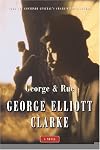
I found this book in a Little Free Library and I recognized the title as being one that appears on the CBC 100 Novels that Make You Proud to be Canadian so I snapped it up. I'm not sure that the subject matter of the book makes me proud to be Canadian but certainly the calibre of the writing makes me proud to recognize George Elliott Clarke as a Canadian. At the back of the book Clarke says it took him from 1994 to 2004 to write this book; I'm certainly glad that he persevered.
George and Rue show more Hamilton were brothers raised in a black community in the Annapolis Valley of Nova Scotia called Three Mile Plains. Born into poverty they never managed to rise much farther economically in their lifetimes. George, the elder, probably would have been happier farming the fertile land of the Valley but he met a woman he wanted to marry and he felt he had to earn more money. Rue (Rufus) was wilder than his brother and more inclined to violence. He was gifted musically having taught himself how to play jazz and blues on a derelict piano that only had half a keyboard. If that gift had been nourished his trajectory in life (and that of his brother) would have been quite different. He did work for a while as a pianist in Halifax but got embroiled with a prostitute and went downhill from there. George signed up for the Army during World War II but went AWOL when he saw how racist the service was. He then signed up for the Merchant Marine and did a number of tours but when the war was over he was jailed for deserting. He still didn't have much money but he persuaded his girl to marry him and move to Fredericton where he was sure he could find work. He found some jobs and he felt life was pretty good so he wrote to Rue in Halifax and asked him to come to Fredericton. Rue was not a good influence on George and just when George's wife gave birth to their second child the brothers were completely broke. Rue convinced George that they could solve their money problems by robbing a taxi driver. Rue wielded a hammer to hit the driver who died of the blows. They tried to dispose of the body and incriminating evidence but were as useless at that as almost everything else they attempted to do. Police questioned George first who told them Rue had killed the driver. George mistakenly thought he would be allowed to go free if he testified against Rue. Instead both were convicted of murder and sentenced to hang. "July 27, 1949, Anno Domini: the Hamiltons fell like dominoes. They merit no poetry, no laurels, no ballads, no statues, no headstones, no memory, no existence."
As a footnote to the book Clarke tells the reader about two white men in Quebec who committed almost the same crime in December 1949. They were sentenced to die but the sentences were commuted to life in prison. "George and Rue--black--had no such white luck."
Clarke learned the story of the Hamilton brothers from his mother because they were relatives. In fact George Hamilton and George Elliott Clarke were named after the same man, George Johnson. Clarke was also born in the settlement of Three Mile Plains. Thankfully his life turned out much better than the Hamiltons. show less
George and Rue show more Hamilton were brothers raised in a black community in the Annapolis Valley of Nova Scotia called Three Mile Plains. Born into poverty they never managed to rise much farther economically in their lifetimes. George, the elder, probably would have been happier farming the fertile land of the Valley but he met a woman he wanted to marry and he felt he had to earn more money. Rue (Rufus) was wilder than his brother and more inclined to violence. He was gifted musically having taught himself how to play jazz and blues on a derelict piano that only had half a keyboard. If that gift had been nourished his trajectory in life (and that of his brother) would have been quite different. He did work for a while as a pianist in Halifax but got embroiled with a prostitute and went downhill from there. George signed up for the Army during World War II but went AWOL when he saw how racist the service was. He then signed up for the Merchant Marine and did a number of tours but when the war was over he was jailed for deserting. He still didn't have much money but he persuaded his girl to marry him and move to Fredericton where he was sure he could find work. He found some jobs and he felt life was pretty good so he wrote to Rue in Halifax and asked him to come to Fredericton. Rue was not a good influence on George and just when George's wife gave birth to their second child the brothers were completely broke. Rue convinced George that they could solve their money problems by robbing a taxi driver. Rue wielded a hammer to hit the driver who died of the blows. They tried to dispose of the body and incriminating evidence but were as useless at that as almost everything else they attempted to do. Police questioned George first who told them Rue had killed the driver. George mistakenly thought he would be allowed to go free if he testified against Rue. Instead both were convicted of murder and sentenced to hang. "July 27, 1949, Anno Domini: the Hamiltons fell like dominoes. They merit no poetry, no laurels, no ballads, no statues, no headstones, no memory, no existence."
As a footnote to the book Clarke tells the reader about two white men in Quebec who committed almost the same crime in December 1949. They were sentenced to die but the sentences were commuted to life in prison. "George and Rue--black--had no such white luck."
Clarke learned the story of the Hamilton brothers from his mother because they were relatives. In fact George Hamilton and George Elliott Clarke were named after the same man, George Johnson. Clarke was also born in the settlement of Three Mile Plains. Thankfully his life turned out much better than the Hamiltons. show less
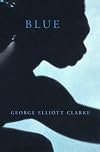
...Blue is licorice manufactured from liquor and rice
Blue is what happens when you sleep through your moment of
truth
Blue is snuff films screened in classrooms for literary reasons
Blue is coffee from the Blue Mountains of Jamaica
Blue is a moth huddled in the middle of a sugar bowl as the
spoon is plunged in
Blue is Saltwater Spirituals and Deeper Blues; Lush Dreams,
Blue Exile; and Blue
Fatal, foolhardy poetry.
- from Blue Elegies, I.i.
All I ask from poetry is that it let me look through someone show more else's eyes and see, really see, just a little. That it break and grind the world, deliver it to me dripping in language. That it make me cringe a little. Maybe laugh. Shudder some. Open up a place I have never seen, or a place I have seen every day of my life and never really seen. So, George Elliott Clarke, I salute you. For letting me look through your black Canadian man's eyes for a little while. For these gems. This is what poetry should be. This is what poetry should do.
More than that, it is here done by a man who has read both deeply and widely and who has the raw talent and love of language to stand up and talk back to those he has read, to join the conversation and hold his own. (I was absolutely tickled by the assaults on Ezra Pound.) As might be gathered from the title, this is a profane, pornographic little bundle of poems, and the repeated whore imagery did wear just a little. But again, poetry exists to bring me another world view, male gaze and all.
I loved so many of these it's hard to know which one to memorialize here. My very favorite is "Elegy for Mona States (1958-1999)" but it's too long for my purposes at the moment. Several of my favorites are. I'll go with this one:
Self-Portrait
for Arnold 'Ted' Davidson (1936-1999)
I am the lyrical warrior
who eyes the icy moon
and gulps tear-soured rum,
while etching blues to beguile
a difficult, desired lover,
and who imagines his enemies
gashed and battered by God,
and who drifts, enduring exile,
but hallucinating of home, and love, and war.
I'll end my days, withered, sorrowful,
mourning all of these words,
wondering why I was not loved enough,
why I loved not enough. show less
Blue is what happens when you sleep through your moment of
truth
Blue is snuff films screened in classrooms for literary reasons
Blue is coffee from the Blue Mountains of Jamaica
Blue is a moth huddled in the middle of a sugar bowl as the
spoon is plunged in
Blue is Saltwater Spirituals and Deeper Blues; Lush Dreams,
Blue Exile; and Blue
Fatal, foolhardy poetry.
- from Blue Elegies, I.i.
All I ask from poetry is that it let me look through someone show more else's eyes and see, really see, just a little. That it break and grind the world, deliver it to me dripping in language. That it make me cringe a little. Maybe laugh. Shudder some. Open up a place I have never seen, or a place I have seen every day of my life and never really seen. So, George Elliott Clarke, I salute you. For letting me look through your black Canadian man's eyes for a little while. For these gems. This is what poetry should be. This is what poetry should do.
More than that, it is here done by a man who has read both deeply and widely and who has the raw talent and love of language to stand up and talk back to those he has read, to join the conversation and hold his own. (I was absolutely tickled by the assaults on Ezra Pound.) As might be gathered from the title, this is a profane, pornographic little bundle of poems, and the repeated whore imagery did wear just a little. But again, poetry exists to bring me another world view, male gaze and all.
I loved so many of these it's hard to know which one to memorialize here. My very favorite is "Elegy for Mona States (1958-1999)" but it's too long for my purposes at the moment. Several of my favorites are. I'll go with this one:
Self-Portrait
for Arnold 'Ted' Davidson (1936-1999)
I am the lyrical warrior
who eyes the icy moon
and gulps tear-soured rum,
while etching blues to beguile
a difficult, desired lover,
and who imagines his enemies
gashed and battered by God,
and who drifts, enduring exile,
but hallucinating of home, and love, and war.
I'll end my days, withered, sorrowful,
mourning all of these words,
wondering why I was not loved enough,
why I loved not enough. show less
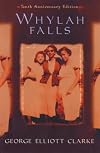
Summary: A poetry book that tells of a community of African-Canadians in Nova Scotia. An assemblage of poets, lovers, and murderers.
Review: I have a serious weakness for books that blur the distinction between poetry and novel. They are my kryptonite. When talking about Canadian lit, I love Ondaatje's contributions to this small but powerful genre, and I love Clarke's as well. Clarke is a vivid, powerful poet, using both the language of high literary culture and the earthy language of the show more Whylah community -- of what he calls "Africadia" -- to create a clash of cultures and a space in time.
I love the different sections of the poems and the glimpses of the different inhabitants of Whylah Falls. I love X's courtship of Shelley and Shelley's own reluctance to accept X, criticizing his language as the language of outsiders, of oppression, of the system. I love the tension that Clarke displays between gender and race, and I love the little insights into language and literature, such as when Clarke says, "So what if you drop the final 'g' in 'ing' and use the affirmative 'be' as essence. Literature be the tongue you do your lovin' in."
Amen.
Conclusion: Powerful and poetic. What more can you ask for? show less
Review: I have a serious weakness for books that blur the distinction between poetry and novel. They are my kryptonite. When talking about Canadian lit, I love Ondaatje's contributions to this small but powerful genre, and I love Clarke's as well. Clarke is a vivid, powerful poet, using both the language of high literary culture and the earthy language of the show more Whylah community -- of what he calls "Africadia" -- to create a clash of cultures and a space in time.
I love the different sections of the poems and the glimpses of the different inhabitants of Whylah Falls. I love X's courtship of Shelley and Shelley's own reluctance to accept X, criticizing his language as the language of outsiders, of oppression, of the system. I love the tension that Clarke displays between gender and race, and I love the little insights into language and literature, such as when Clarke says, "So what if you drop the final 'g' in 'ing' and use the affirmative 'be' as essence. Literature be the tongue you do your lovin' in."
Amen.
Conclusion: Powerful and poetic. What more can you ask for? show less
Blue is described on cover leaf as "black, profane, surly, damning — and unrelenting in its brilliance." And George Elliott Clarke writes of his poems, "I craved to draft lyrics that would pour out like pentecostal fire — pell mell, scorching, bright, loud: a poetics of arson." I think both these descriptions are fairly accurate.
These poems reveal ugly truths with powerful words. They get into the mud, roll around in it: they go straight for gut and expose the entrails. These are poems show more that mix abrupt, blunt English with profanity and lilting French. These poems "skillfully turn rage into a violet bruise of love and meaning," according to the spine and I see that, too.
The one thing that unsettled me was how women seemed to be described as sluts and whores, with occasional visions of violence against them (although to be fair visions of violence happen throughout and to many, but it seems to be particularly hostile against women). Positive representations of women were few. But maybe I'm missing something, because these poems are not meant to be nice, but rough, ragged, and brutally real.
Many of these poems were not my cup of tea, they didn't resonate with me. But I can see their beauty, their power and I did love the poems in the last section, called "Ashen Blues". I respect the voice her, the full tilt bravery of the words. This collection is worth a read and many moments of contemplation. I'll have to reread myself at some point to try to reconsider some of these poems from a different angle.
These poems reveal ugly truths with powerful words. They get into the mud, roll around in it: they go straight for gut and expose the entrails. These are poems show more that mix abrupt, blunt English with profanity and lilting French. These poems "skillfully turn rage into a violet bruise of love and meaning," according to the spine and I see that, too.
The one thing that unsettled me was how women seemed to be described as sluts and whores, with occasional visions of violence against them (although to be fair visions of violence happen throughout and to many, but it seems to be particularly hostile against women). Positive representations of women were few. But maybe I'm missing something, because these poems are not meant to be nice, but rough, ragged, and brutally real.
Many of these poems were not my cup of tea, they didn't resonate with me. But I can see their beauty, their power and I did love the poems in the last section, called "Ashen Blues". I respect the voice her, the full tilt bravery of the words. This collection is worth a read and many moments of contemplation. I'll have to reread myself at some point to try to reconsider some of these poems from a different angle.
"A pen burns paper. A black Blitzkriegshow less
Blazes, leaving the glinting odour of charred
Diction, a vocabulary in ashes: Detritus.
The word-scorched paper smells darkly."
— from "Burning Poems"
Lists
Awards


You May Also Like


Associated Authors
Statistics
- Works
- 41
- Also by
- 7
- Members
- 590
- Popularity
- #42,529
- Rating
- 3.9
- Reviews
- 14
- ISBNs
- 82
- Favorited
- 1