
Diana Wallis Taylor
Author of Journey to the Well
About the Author
Image credit: http://dianawallistaylor.com/
Works by Diana Wallis Taylor
Tagged
Common Knowledge
- Gender
- female
Members
Reviews
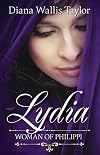
For me, a Biblical novel should create a sense of the cultural and political atmosphere relevant for the time and place, include characters who are faithful to their time, but are relatable to a modern reader, and have a strong foundation in scripture. Lydia:Woman of Philippi by Diana Wallis Taylor achieves all three. From the opening pages I became immersed in the world in which Lydia lived. The patriarchal society was a strong influence in Lydia’s life, yet she endeavored to be an show more independent woman, both in her finances and thought. Taylor created a very credible backstory for Lydia in which her upbringing, unhappy marriage, and business struggles shaped her into a woman ready to meet her Savior. There are, of course, many historical figures within the novel — Paul, Silas, Timothy, yet the fictional characters that surround Lydia are wonderful additions to the narrative. I especially liked the romance that Taylor adds to the story. Lydia’s encounter with Paul and the subsequent change in her and her household’s life was depicted in a beautiful way. Throughout the novel, Taylor endeavored to be faithful to scripture, and I feel on the most part she was successful. There was only one scene in which I felt she strayed a bit from what the Bible teaches. It did not keep me from enjoying the novel and in turn recommending it to those who enjoy Biblical fiction.
All in all, this book is a great addition to my library.
Recommended.
Audience: adults.
(Thanks to Celebrate Lit for a complimentary copy. All opinions expressed are mine alone.) show less
All in all, this book is a great addition to my library.
Recommended.
Audience: adults.
(Thanks to Celebrate Lit for a complimentary copy. All opinions expressed are mine alone.) show less
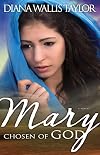
Mary: Chosen of God by Diana Wallis Taylor is a remarkable novel. Biblical fiction is one of my favorite genres to read and this book did not disappoint. The story of the young Hebrew maiden, Mary, may be a familiar story to many but her every day life and her thoughts and emotions throughout her journey as the mother of Jesus leave a bit to the imagination and Taylor fills in this story magnificently. The rawness of emotions as we see Mary's wonder at being chosen as the Messiah's mother, show more the love she shows as Yeshua grows and the grief as she watches her son die are eloquently portrayed. Throughout the story Mary is depicted as a woman of prayer, one who is in intimate contact with Ha'Shem, the God Who Sees Her. In the Scriptures, it is said that Mary treasured and pondered all these things in her heart and Taylor shows that well as Mary often is seen questioning and thinking about this miracle child of hers. She knew who he was but where was he going? What is his destiny? What would come next? Would he take on Rome? When could she reveal his miracle birth to his siblings so they might understand more fully who Yeshua really was? How could she dispel their disquietude and skepticism as they try to make sense of a brother who is now a rabbi who heals the sick and raises the dead? Mary knew within her heart of hearts that Yeshua was only loaned to her for a time and she must trust the Father with what she could not see.
Taylor keeps the story moving and brings interest as she describes the everyday life of the Hebrew families, their meals and activities, the architecture of their living areas and the ways of travel. Ancient history is brought to life as the Hebrew customs, holidays and feast days are described and integrated into the story.
Mary: Chosen of God is a captivating and compelling book, one that those who love Biblical history will not want to miss.
I received a complimentary copy of this book from Book Club network. A favorable review was not required and opinions are my own. show less
Taylor keeps the story moving and brings interest as she describes the everyday life of the Hebrew families, their meals and activities, the architecture of their living areas and the ways of travel. Ancient history is brought to life as the Hebrew customs, holidays and feast days are described and integrated into the story.
Mary: Chosen of God is a captivating and compelling book, one that those who love Biblical history will not want to miss.
I received a complimentary copy of this book from Book Club network. A favorable review was not required and opinions are my own. show less
“She must trust Adonai for strength to face her future.”
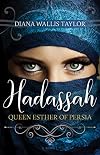
Although God is not directly mentioned by name in the Biblical book of Esther, His presence and the manifestation of His power are clearly demonstrated. With any work of Biblical fiction, some liberties are taken in order to offer more details and flesh out characters and their backstories. When done well, Biblical fiction points readers to the original story, encouraging careful study of the people and cultures therein. Diana show more Wallis Taylor’s “Hadassah, Queen Esther of Persia” does just that. Drawing upon the details in Scripture and various historical accounts, Taylor pieces together a stirring account of the unassuming Jewish girl, Hadassah, who would become queen.
Hadassah’s story begins at age eight with the death of her mother, leaving her an orphan. Her older cousin Mordecai and his wife, Jerusha, adopt her and treat her as the daughter they never had. Years later, Hadassah finds herself in King Xerxes’ palace under an edict commanding that all virgins in Persia be taken there to be considered as a potential queen or otherwise consigned to a lifetime in the harem. Hadassah follows Mordecai’s advice to take the name Esther and conceal her Jewish heritage, and Adonai’s plans for her play out as she becomes Queen of Persia.
Seeing Esther’s story come to life in the pages of this novel gives the reader an idea of Persian life from the perspective of both the subordinate Jewish population and the royal family. The uncertain existence and safety of the Jewish people emphasizes Esther’s position both before and especially after becoming queen. In this story, Esther and King Xerxes’ marriage is one of love, adding in some gentle romance and lightheartedness. Intrigue is incredibly rife within the palace, demonstrating the continuing precariousness of Esther’s life despite her position of power. Throughout her life, Esther relies on Adonai’s guidance and provision for her and maintains a wise and compassionate demeanor despite being married to a pagan king and thrust into a world she knows little about.
All of the characters have depth, both the benevolent and the wicked. Esther and later Mordecai seem to have a stabilizing influence on the often capricious King Xerxex. Atossa, the queen mother, is one of my favorite characters. Haman is the character whom everyone loves to hate, but he is not the only villain lurking in the wings. Also, I enjoyed some of the little details that the author included to make the narrative more well-rounded, such as the scene with Esther and the children. My criticisms are trivial; there were editorial errors throughout the book, although I did receive a copy prior to the release date and though it was not marked as an advanced reader’s copy, it may have been, so I am not deducting stars for that. Also, there seemed to me to be a discontinuity in the passage of time. There were time lapses throughout and it seemed as though more time had passed than actually had, particularly once Esther entered the palace. However, this could just be my reading of the story.
“Hadassah” is an inspirational story of what the Biblical Esther’s life may have been like. Trusting in God and following His guidance is paramount, just as it is today. For anyone interested in Biblical fiction, the story of Esther, Christian historical fiction, or women’s historical fiction, this book is a must-read.
I received a complimentary copy of this book through CelebrateLit and was not required to post a favorable review. All opinions are my own. show less
Although God is not directly mentioned by name in the Biblical book of Esther, His presence and the manifestation of His power are clearly demonstrated. With any work of Biblical fiction, some liberties are taken in order to offer more details and flesh out characters and their backstories. When done well, Biblical fiction points readers to the original story, encouraging careful study of the people and cultures therein. Diana show more Wallis Taylor’s “Hadassah, Queen Esther of Persia” does just that. Drawing upon the details in Scripture and various historical accounts, Taylor pieces together a stirring account of the unassuming Jewish girl, Hadassah, who would become queen.
Hadassah’s story begins at age eight with the death of her mother, leaving her an orphan. Her older cousin Mordecai and his wife, Jerusha, adopt her and treat her as the daughter they never had. Years later, Hadassah finds herself in King Xerxes’ palace under an edict commanding that all virgins in Persia be taken there to be considered as a potential queen or otherwise consigned to a lifetime in the harem. Hadassah follows Mordecai’s advice to take the name Esther and conceal her Jewish heritage, and Adonai’s plans for her play out as she becomes Queen of Persia.
Seeing Esther’s story come to life in the pages of this novel gives the reader an idea of Persian life from the perspective of both the subordinate Jewish population and the royal family. The uncertain existence and safety of the Jewish people emphasizes Esther’s position both before and especially after becoming queen. In this story, Esther and King Xerxes’ marriage is one of love, adding in some gentle romance and lightheartedness. Intrigue is incredibly rife within the palace, demonstrating the continuing precariousness of Esther’s life despite her position of power. Throughout her life, Esther relies on Adonai’s guidance and provision for her and maintains a wise and compassionate demeanor despite being married to a pagan king and thrust into a world she knows little about.
All of the characters have depth, both the benevolent and the wicked. Esther and later Mordecai seem to have a stabilizing influence on the often capricious King Xerxex. Atossa, the queen mother, is one of my favorite characters. Haman is the character whom everyone loves to hate, but he is not the only villain lurking in the wings. Also, I enjoyed some of the little details that the author included to make the narrative more well-rounded, such as the scene with Esther and the children. My criticisms are trivial; there were editorial errors throughout the book, although I did receive a copy prior to the release date and though it was not marked as an advanced reader’s copy, it may have been, so I am not deducting stars for that. Also, there seemed to me to be a discontinuity in the passage of time. There were time lapses throughout and it seemed as though more time had passed than actually had, particularly once Esther entered the palace. However, this could just be my reading of the story.
“Hadassah” is an inspirational story of what the Biblical Esther’s life may have been like. Trusting in God and following His guidance is paramount, just as it is today. For anyone interested in Biblical fiction, the story of Esther, Christian historical fiction, or women’s historical fiction, this book is a must-read.
I received a complimentary copy of this book through CelebrateLit and was not required to post a favorable review. All opinions are my own. show less
“Something in her heart longed to truly know the God of her people. He had made a way to save her when there seemed to be no way.”
Biblical fiction is often a hit-or-miss genre, and readers tend to either enjoy it or avoid it altogether. I can understand both sides of that case and tend to stick with trusted authors I’m either familiar with or who have been recommended to me by reliable sources. Last year I did take a chance with then new-to-me author Diana Wallis Taylor’s show more “Hadassah” and found it intriguing. As the author herself acknowledges, she likes to choose Biblical women who are generally not well-regarded and offer a different perspective of them. One requirement that I have for reading Biblical fiction is that it does not change fundamental truths about Scripture or promote anything that does not line up with God’s Word. Good Biblical fiction, in my opinion, causes readers to more deeply contemplate and connect with the Lord through His Word, the Bible.
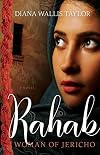
In her most recent novel, “Rahab: Woman of Jericho”, Taylor explores this enigmatic figure from the book of Joshua. I will be honest and say that I do not think that this is truly plausible as Rahab’s backstory because I have always read among various translations that she was a prostitute, and I think that her being a redeemed prostitute in the lineage of Jesus makes more sense and demonstrates God’s grace and mercy, particularly considering that she is mentioned in the Hall of Faith in Hebrews 11. Also, Taylor portrays Rahab and her family as Jewish, the only ones in Upper Beth-horon. That being said, though, I respect the author’s creative license and the reasons for her interpretation, and I appreciate that she addresses these at the end of the book.
The genealogy of Rahab is given several times throughout the novel, and I found this helpful in connecting her to the historical story itself and to the bigger picture of ultimately becoming part of the lineage of Jesus. It is interesting that her name means “remembering Egypt”, and that is a theme that plays out in a variety of ways as the story unfolds. There are also several elements that stood out to me as having very clear contemporary parallels. Just as, in this story, Rahab and her family are terrified when Jericho is attacked but are spared as followers of Jehovah, so are we living in frightening times amidst a global pandemic and increasing unrest and chaos, and so too will God spare us if we are truly devoted to Him. Trust is key. There is also an urgency to share God (and in the modern world, the Gospel) with others because the walls are falling down, literally in Rahab’s case and more metaphorically in ours. Another thing that struck me is the acknowledgement of the emotional and psychological impact of killing that the Israelite soldiers bore. The overall effect of everything that the Israelites went through on their journey became much more apparent to me than it had before, and I am so grateful to live in the time after Jesus’s sacrifice!
I received a complimentary copy of this book through Celebrate Lit and was not required to post a favorable review. All opinions are my own. show less
Biblical fiction is often a hit-or-miss genre, and readers tend to either enjoy it or avoid it altogether. I can understand both sides of that case and tend to stick with trusted authors I’m either familiar with or who have been recommended to me by reliable sources. Last year I did take a chance with then new-to-me author Diana Wallis Taylor’s show more “Hadassah” and found it intriguing. As the author herself acknowledges, she likes to choose Biblical women who are generally not well-regarded and offer a different perspective of them. One requirement that I have for reading Biblical fiction is that it does not change fundamental truths about Scripture or promote anything that does not line up with God’s Word. Good Biblical fiction, in my opinion, causes readers to more deeply contemplate and connect with the Lord through His Word, the Bible.
In her most recent novel, “Rahab: Woman of Jericho”, Taylor explores this enigmatic figure from the book of Joshua. I will be honest and say that I do not think that this is truly plausible as Rahab’s backstory because I have always read among various translations that she was a prostitute, and I think that her being a redeemed prostitute in the lineage of Jesus makes more sense and demonstrates God’s grace and mercy, particularly considering that she is mentioned in the Hall of Faith in Hebrews 11. Also, Taylor portrays Rahab and her family as Jewish, the only ones in Upper Beth-horon. That being said, though, I respect the author’s creative license and the reasons for her interpretation, and I appreciate that she addresses these at the end of the book.
The genealogy of Rahab is given several times throughout the novel, and I found this helpful in connecting her to the historical story itself and to the bigger picture of ultimately becoming part of the lineage of Jesus. It is interesting that her name means “remembering Egypt”, and that is a theme that plays out in a variety of ways as the story unfolds. There are also several elements that stood out to me as having very clear contemporary parallels. Just as, in this story, Rahab and her family are terrified when Jericho is attacked but are spared as followers of Jehovah, so are we living in frightening times amidst a global pandemic and increasing unrest and chaos, and so too will God spare us if we are truly devoted to Him. Trust is key. There is also an urgency to share God (and in the modern world, the Gospel) with others because the walls are falling down, literally in Rahab’s case and more metaphorically in ours. Another thing that struck me is the acknowledgement of the emotional and psychological impact of killing that the Israelite soldiers bore. The overall effect of everything that the Israelites went through on their journey became much more apparent to me than it had before, and I am so grateful to live in the time after Jesus’s sacrifice!
I received a complimentary copy of this book through Celebrate Lit and was not required to post a favorable review. All opinions are my own. show less
Awards

You May Also Like


Statistics
- Works
- 12
- Members
- 739
- Popularity
- #34,364
- Rating
- 4.1
- Reviews
- 40
- ISBNs
- 34