
Angela Hunt
Author of The Tale of Three Trees
About the Author
Image credit: Photo by Ken Rada
Series
Works by Angela Hunt
The Tale of Three Trees : A Traditional Folktale (Abridged) [Board book] (2001) 293 copies, 3 reviews
King's Shadow: (A Biblical Ancient World Family Drama & Romance) (The Silent Years) (2019) 85 copies, 8 reviews
The Daughter of Rome: (Historical Biblical Fiction Set in the Apostle Paul's New Testament Era) (The Emissaries) (2025) 41 copies, 9 reviews
Star of Wonder: An Advent Devotional to Illuminate the People, Places, and Purpose of the First Christmas (25 Daily Devotions & Prayers with Woodcut Illustrations and Weekly… (2023) 19 copies, 2 reviews
Creating Extraordinary Characters: a simple, practical approach to creating unforgettable characters (Writing Lessons from the Front) (Volume 2) (2013) 16 copies
My Life As a Middle School Mom: My Kids May Be Deductible, but They're Still Taxing (2000) 15 copies
Writing Historical Fiction: Viewing the Past Through the Lens of the Present (Writing Lessons from the Front) (2014) 12 copies, 1 review
Plans and Processes to Get Your Book Written (Writing Lessons from the Front) (Volume 6) (2013) 8 copies
The Fiction Writer's Book of Checklists: Gentle Reminders to Help Your Work be the Best It Can Be (Writing Lessons from the Front 9) (2014) 7 copies
Track Down the Weasel Words: And other strategies to revise and improve your manuscript (Writing Lessons from the Front) (Volume 4) (2013) 6 copies
Tension on the Line: the secret to hooking readers (Writing Lessons from the Front) (Volume 7) (2014) 5 copies, 1 review
Cycle Five: The Finish: Through a Glass Darkly, Interesting Times, Into the Blue, and End Game (Harbingers) (2018) 4 copies
The Keepers of the Ring Series: Roanoke, Jamestown, Hartford, Rehoboth, and Charles Towne (2015) 4 copies
Street God: The Explosive True Story of a Former Drug Boss on the Run from the Hood--and the Courageous Mission That Drove Him Back (2015) 2 copies
A Christian Writer's Possibly Useful Ruminations on a Life in Pages (Writing Lessons from the Front #0) (2013) 2 copies
The Theyn Chronicles: Afton of Margate Castle / The Troubadours Quest / Ingram of the Irish 2 copies
Invitation (Harbingers #1-4) 1 copy
Meddelandet 1 copy
The Knights Chronicles: Afton of Margate Castle, The Troubadour's Quest, and Ingram of the Irish 1 copy
Writing Dialogue: How to Put Words in Your Characters' Mouths (Writing Lessons from the Front) (2024) 1 copy
Debating Calvinism 1 copy
Writing the Picture Book: Mastering the First Book Adults Read to Children (Writing Lessons from the Front, Book 10) (2020) 1 copy
三棵榭的傳說 1 copy
Prepare Your Heart . . . for Christmas!: Notes and Thoughts to Complement STAR OF WONDER (2024) 1 copy
Foster the forever tree 1 copy
Kisah Tiga Pohon 1 copy
Associated Works
Tagged
Common Knowledge
- Legal name
- Hunt, Angela Elwell
- Other names
- Hunt, Angela Elise Elwell
- Birthdate
- 1957-12-20
- Gender
- female
- Education
- Liberty University (BS ∙ English)
Masters International Divinity School (MACS)
Masters International Divinity School (DBS)
Rockledge High School - Occupations
- novelist
- Organizations
- Authors Guild
- Awards and honors
- Romantic Times Career Achievement Award (Inspirational, 2005); Christy Award 2000, National Readers Choice Award (2004, The Debt); Readers Choice Award, Angel Award from Excellence in Media, Foreword Magazine "Book of the Year" Gold Award Winner (The Novelist)
- Nationality
- USA
- Birthplace
- Winter Haven, Florida, USA
- Places of residence
- Brevard County, Florida, USA
- Associated Place (for map)
- Florida, USA
Members
Reviews

The Sisters of Corinth by Angela Hunt immerses readers in a world where the clash of belief systems ignites a fervent flame of courage and unyielding commitment. Through the captivating journey of Marianna and her mother, Hester, readers are transported to a time where the depth of one's faith was tested against the backdrop of societal pressures, devotion to false gods, and familial obligations.
The characters, both lovable and detestable, were expertly crafted, drawing readers into their show more complex personalities and motivations. The intricately woven plot kept me engaged from start to finish, with its twists and turns adding depth and excitement to the story. Angela Hunt's writing style and thematic depth were impressive, enriching the narrative with layers of meaning and emotion. My heart is racing with anticipation for the next book in the series!
Hunt's narrative invites readers to explore the reflective themes of getting to know God and loving Him with all our hearts, as Marianna grapples with the challenges of her time. As she navigates the complexities of her faith and the demands of her family, Marianna's unwavering commitment to Yeshua serves as a guiding light, illuminating the path towards spiritual maturity and full surrender to Him.
Through moments of triumph and turmoil, Hunt's characters contend with doubt and uncertainty, yet emerge stronger and more resolute in their convictions. As Marianna reflects on the challenges she faces, her words serve as a reminder of the inherent struggles we encounter in our journey of faith.
At the core of The Sisters of Corinth beats the author's fervent prayer: that within its pages, readers will not only witness but also be profoundly moved by the unyielding vision, courage, and devotion of those early followers of Jesus. With every word penned, there's a resounding call to embrace a transformative journey—one that ignites the flames of passion and unwavering commitment to the one and only true God. In the midst of life's storms, these tales compel us to forge an unbreakable bond with our faith, empowering us to navigate the darkest of times with unwavering trust and steadfast love for our Savior.
“ … if you know He {God} is good, you can trust Him to be kind." These words echo a timeless truth, reminding us of the boundless love and compassion of our Heavenly Father.
"I feel it's important to acknowledge that I chose to skip over the scenes depicting pleas to the Roman gods and similar actions. I understand why Hunt included those actions and she makes it truly clear -- in the book and in her notes -- the truth of Deuteronomy 32:16-18: “… They sacrificed to demons, a non-god…” Personally, I felt it necessary to distance myself from such influences, opting instead to immerse myself in the timeless truths of the Bible and the profound impact of Paul’s letters, as experienced by Marianna and Hester. The thought of experiencing Paul’s letters in real-time during that historical period is truly fascinating to me.
The Sisters of Corinth invites readers to step into a story that transcends the boundaries of time and space, reminding us of the importance of loving God with all our hearts and living out our faith every second regardless of the consequences. Through the lives of Marianna and Hester, we are inspired to cultivate a deep and abiding relationship with God, embracing His love and grace, as we walk in obedience to Him in every aspect of our lives.
I received a digital copy of The Sisters of Corinth from Celebrate Lit Publicity Group. I am not required to write a positive review in any way or for any reason. My honest and unbiased opinions expressed in this book review are my own. My review focuses on the writing style, the pacing, and the story’s content, ensuring transparency and reliability. show less
The characters, both lovable and detestable, were expertly crafted, drawing readers into their show more complex personalities and motivations. The intricately woven plot kept me engaged from start to finish, with its twists and turns adding depth and excitement to the story. Angela Hunt's writing style and thematic depth were impressive, enriching the narrative with layers of meaning and emotion. My heart is racing with anticipation for the next book in the series!
Hunt's narrative invites readers to explore the reflective themes of getting to know God and loving Him with all our hearts, as Marianna grapples with the challenges of her time. As she navigates the complexities of her faith and the demands of her family, Marianna's unwavering commitment to Yeshua serves as a guiding light, illuminating the path towards spiritual maturity and full surrender to Him.
Through moments of triumph and turmoil, Hunt's characters contend with doubt and uncertainty, yet emerge stronger and more resolute in their convictions. As Marianna reflects on the challenges she faces, her words serve as a reminder of the inherent struggles we encounter in our journey of faith.
At the core of The Sisters of Corinth beats the author's fervent prayer: that within its pages, readers will not only witness but also be profoundly moved by the unyielding vision, courage, and devotion of those early followers of Jesus. With every word penned, there's a resounding call to embrace a transformative journey—one that ignites the flames of passion and unwavering commitment to the one and only true God. In the midst of life's storms, these tales compel us to forge an unbreakable bond with our faith, empowering us to navigate the darkest of times with unwavering trust and steadfast love for our Savior.
“ … if you know He {God} is good, you can trust Him to be kind." These words echo a timeless truth, reminding us of the boundless love and compassion of our Heavenly Father.
"I feel it's important to acknowledge that I chose to skip over the scenes depicting pleas to the Roman gods and similar actions. I understand why Hunt included those actions and she makes it truly clear -- in the book and in her notes -- the truth of Deuteronomy 32:16-18: “… They sacrificed to demons, a non-god…” Personally, I felt it necessary to distance myself from such influences, opting instead to immerse myself in the timeless truths of the Bible and the profound impact of Paul’s letters, as experienced by Marianna and Hester. The thought of experiencing Paul’s letters in real-time during that historical period is truly fascinating to me.
The Sisters of Corinth invites readers to step into a story that transcends the boundaries of time and space, reminding us of the importance of loving God with all our hearts and living out our faith every second regardless of the consequences. Through the lives of Marianna and Hester, we are inspired to cultivate a deep and abiding relationship with God, embracing His love and grace, as we walk in obedience to Him in every aspect of our lives.
I received a digital copy of The Sisters of Corinth from Celebrate Lit Publicity Group. I am not required to write a positive review in any way or for any reason. My honest and unbiased opinions expressed in this book review are my own. My review focuses on the writing style, the pacing, and the story’s content, ensuring transparency and reliability. show less
The Sisters of Corinth: (Biblical Fiction Set in the Apostle Paul's New Testament Era) (The Emissaries) by Angela Hunt
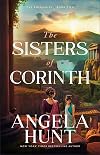
“Hester and Mariana could have their strange new god, but Father and I would remain true to the deities of Rome. They had made us part of an empire that brought its citizens power, slaves, and unimaginable luxuries.”
In The Sisters of Corinth, Angela Hunt spins a Biblical fiction tale so real, so suspenseful, and so engrossing that you will not want to put it down until you can finish it.
It is the story of the Roman world in the Apostle Paul’s time, during the reign of Nero. It is the show more story of a divided house. In a second marriage for both Corinthian statesman Narkis and his wife Hester, both bring daughters into the marriage. Prima and her father follow the Roman gods; Hester and her daughter, Mariana, have learned from Paulos and Acquilla & Priscilla to follow Yeshua.
Hunt’s novel is consists of two basic conflicts. As we read alternating chapters narrated by the sisters, we see sister pitted against sister for the love of the son of the new governor of Corinth. The other conflict pits all the gods of Rome against the God Who created the Universe. “How could the gods disappoint me? Mariana’s God could not be stronger than Aphrodite, Jupiter, and Asclepius. She had one God; I had dozens. Impossible that one foreign God could have prevailed against the gods of Rome.”
Power, lust, and greed are very real and driving forces in Corinth ( and Roman) politics. How far will Narkis and his daughter, Prima, go to ensure they climb the social and political ladder leading to Rome?
I was amazed by the attitudes toward slaves of the day. Yet, I think that Hunt probably went light on her description of the depravity there.
I loved how a daily witness of love and kindness in their homes influenced people around Jeshua’s followers. I also loved discovering that this is a second book in a series of three. So I must find the first book and prepare for the way Hunt will wrap up things in the third. My little experience with Hunt and this time period says it may not be as pretty as I’d like!
Notable Quotables:
“Freedom was found in truth, and truth was found only in Adonai and His Son.”
“Your Adonai,” she said, her voice firm, “He must be the true God…Because He is the only God who asks His followers to do what they cannot do without His help.”
“Even the small mistakes of rulers loom large in history, and that thought is what terrifies me.”
“Perhaps it is the same with your God—if you know He is good, you can trust Him to be kind.”
I received a copy of the book from Celebrate Lit via Netgalley. I also purchased my own ecopy. No positive review was required, and all opinions are my own. show less
In The Sisters of Corinth, Angela Hunt spins a Biblical fiction tale so real, so suspenseful, and so engrossing that you will not want to put it down until you can finish it.
It is the story of the Roman world in the Apostle Paul’s time, during the reign of Nero. It is the show more story of a divided house. In a second marriage for both Corinthian statesman Narkis and his wife Hester, both bring daughters into the marriage. Prima and her father follow the Roman gods; Hester and her daughter, Mariana, have learned from Paulos and Acquilla & Priscilla to follow Yeshua.
Hunt’s novel is consists of two basic conflicts. As we read alternating chapters narrated by the sisters, we see sister pitted against sister for the love of the son of the new governor of Corinth. The other conflict pits all the gods of Rome against the God Who created the Universe. “How could the gods disappoint me? Mariana’s God could not be stronger than Aphrodite, Jupiter, and Asclepius. She had one God; I had dozens. Impossible that one foreign God could have prevailed against the gods of Rome.”
Power, lust, and greed are very real and driving forces in Corinth ( and Roman) politics. How far will Narkis and his daughter, Prima, go to ensure they climb the social and political ladder leading to Rome?
I was amazed by the attitudes toward slaves of the day. Yet, I think that Hunt probably went light on her description of the depravity there.
I loved how a daily witness of love and kindness in their homes influenced people around Jeshua’s followers. I also loved discovering that this is a second book in a series of three. So I must find the first book and prepare for the way Hunt will wrap up things in the third. My little experience with Hunt and this time period says it may not be as pretty as I’d like!
Notable Quotables:
“Freedom was found in truth, and truth was found only in Adonai and His Son.”
“Your Adonai,” she said, her voice firm, “He must be the true God…Because He is the only God who asks His followers to do what they cannot do without His help.”
“Even the small mistakes of rulers loom large in history, and that thought is what terrifies me.”
“Perhaps it is the same with your God—if you know He is good, you can trust Him to be kind.”
I received a copy of the book from Celebrate Lit via Netgalley. I also purchased my own ecopy. No positive review was required, and all opinions are my own. show less
The Woman from Lydia: (Biblical Fiction Set in the Apostle Paul's New Testament Era) (The Emissaries) by Angela Hunt
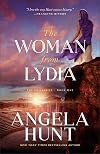
I love biblical fiction and I'm a fan of Angela Hunt, so I was especially anxious to read this book. The Woman from Lydia features the apostle Paul, his traveling companion Silas, and Euodia, who is mentioned in Acts 16 as Lydia, a seller of purple cloth. Much of the story is told from Euodia's point of view as she valiantly tries to free a girl from slavery after the apostle Paul casts a demon from her. Euodia's determined efforts to free Sabina from a retired Roman soldier's possession are show more equally matched by his intentions to use Sabina's gift of divination for his own personal gain! Will Euodia succeed in thwarting Hector's intentions?
Hunt possesses a wonderful talent for weaving facts with fiction and this book is a perfect example. I enjoyed the relationship that evolves between Euodia and her new husband Ariston, along with those that she shares with Phebe and Syntyche. I gained a new perspective on Paul's missionary journeys, and relished the explanation of slavery versus freedom, in both physical and spiritual terms. I know that an author of Biblical fiction has succeeded when I find myself reading my Bible to verify a fact, or searching a Bible commentary to learn more about a scene. I did both of these while reading this book!
This is a story that will inspire Christian readers and challenge non-believers, and I'm thrilled to have it as my church Bible group begins its study of The Book of Acts. I highly recommend The Woman from Lydia and I look forward to the next book in The Emissaries series!
I was provided an ARC courtesy of Bethany House through Interviews & Reviews and a complimentary copy from Bethany House. These are my own thoughts. show less
Hunt possesses a wonderful talent for weaving facts with fiction and this book is a perfect example. I enjoyed the relationship that evolves between Euodia and her new husband Ariston, along with those that she shares with Phebe and Syntyche. I gained a new perspective on Paul's missionary journeys, and relished the explanation of slavery versus freedom, in both physical and spiritual terms. I know that an author of Biblical fiction has succeeded when I find myself reading my Bible to verify a fact, or searching a Bible commentary to learn more about a scene. I did both of these while reading this book!
This is a story that will inspire Christian readers and challenge non-believers, and I'm thrilled to have it as my church Bible group begins its study of The Book of Acts. I highly recommend The Woman from Lydia and I look forward to the next book in The Emissaries series!
I was provided an ARC courtesy of Bethany House through Interviews & Reviews and a complimentary copy from Bethany House. These are my own thoughts. show less
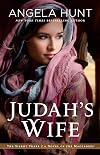
The second book of the Silent Years series is the story of Judah Maccabaeus and his brothers’ battles to reclaim the Temple in Jerusalem for the Jewish people — told through the eyes of Judah’s wife.
Leah has grown up in a home full of violence. When she gets the chance to escape her father’s rage by marrying into a new family, she prays that the man she has chosen will treat her better than her father did her mother. Judah is kind and gentle, and Leah has only known him to fight in show more defense of those who can’t protect themselves. But everything changes when the king passes new laws that forbid the Jews from living according to God’s Law, and Judah finds himself at the center of a rebellion. Leah struggles between her desire for peace and safety and her calling to support and love her husband. Above all, she strives to understand God’s will for her, her husband, and her people.
Angela Hunt’s retelling of history through the perspective of Leah, with her background of abuse, adds layers of depth to the narrative that really brought the characters to life and made their struggles more vivid for me. I don’t know much about this period of history, and I know Hunt didn’t include every detail of all the battles, but I felt that she portrayed the how and why of the most significant events in a way that was captivating and informative. It is a story that once again shows that God is never silent when our hearts are willing to listen. show less
Leah has grown up in a home full of violence. When she gets the chance to escape her father’s rage by marrying into a new family, she prays that the man she has chosen will treat her better than her father did her mother. Judah is kind and gentle, and Leah has only known him to fight in show more defense of those who can’t protect themselves. But everything changes when the king passes new laws that forbid the Jews from living according to God’s Law, and Judah finds himself at the center of a rebellion. Leah struggles between her desire for peace and safety and her calling to support and love her husband. Above all, she strives to understand God’s will for her, her husband, and her people.
Angela Hunt’s retelling of history through the perspective of Leah, with her background of abuse, adds layers of depth to the narrative that really brought the characters to life and made their struggles more vivid for me. I don’t know much about this period of history, and I know Hunt didn’t include every detail of all the battles, but I felt that she portrayed the how and why of the most significant events in a way that was captivating and informative. It is a story that once again shows that God is never silent when our hearts are willing to listen. show less
Lists
Awards


You May Also Like


Associated Authors
Statistics
- Works
- 173
- Also by
- 9
- Members
- 17,720
- Popularity
- #1,242
- Rating
- 4.0
- Reviews
- 421
- ISBNs
- 684
- Languages
- 8
- Favorited
- 12

