
Sujata Massey
Author of The Widows of Malabar Hill
About the Author
Sujata Massey was born in Sussex, England in 1964 and graduated from Johns Hopkins University in 1986. She moved to Japan after marrying a Naval officer stationed there, taking a job as an English teacher. Massey is the author of "The Salaryman's Wife," winner of the 1998 Agatha Award for Best show more First Novel, and "Zen Attitude," mysteries set in contemporary Japan. (Bowker Author Biography) show less
Image credit: Jim Burger
Series
Works by Sujata Massey
Associated Works
Malice Domestic 10: : An Anthology of Original Traditional Mystery Stories (2001) — Contributor — 35 copies, 1 review
Tagged
Common Knowledge
- Birthdate
- 1964
- Gender
- female
- Education
- Johns Hopkins University (1986)
- Agent
- Vicky Bijur
- Nationality
- USA (naturalized, 1998)
- Birthplace
- Sussex, England, UK
- Places of residence
- Sussex, England, UK (birth)
Philadelphia, Pennsylvania, USA
Berkeley, California, USA
St. Paul, Minnesota, USA
Hayama, Japan
Baltimore, Maryland, USA - Associated Place (for map)
- USA
Members
Reviews
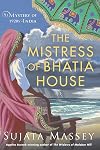
Each new volume in Sujata Massey's Perveen Mistery mystery series leaves me even more eager for the next. This is a series in which the characters are well drawn, true to their times even when questioning them, and interesting as individuals as well as problem solvers. As that description might suggest, if you enjoy series mysteries and don't know about Perveen Mistry, you may want to go back and start with the first volume, but you can absolutely jump into them in any order without feeling show more on the margins.
Set in 1920s Bombay, this series features Perveen Mistry, India's only female soliciter (as in the British sense, meaning lawyer). Perveen has fought hard to achieve her professional goals and still has to fight. Early on, Perveen speaks out during the bail hearing of a woman of a woman accused of aborting her pregnancy. Technically, this is a crime in India at the time, but it's rarely prosecuted, and prosecutions generally focus on the individual who performs the abortion, not the individual seeking to end a pregnancy. The judge she approaches takes time to mock her in front of all assembled, to question her credentials, to remind her that women are not allowed to represent clients in the courtroom, and to eject her from the court. Despite this painful start, Perveen continues investigating on behalf of this woman, researching case law, and questioning whether an abortion even occurred—as that accusation is revealed as connected to possible financial crimes. That's the mystery part of the plot.
Mistress of Bhatia House also develops plot lines among characters. Perveen lives in an extended household that includes her parents, her brother and her sister-in-law, and live-in staff. When the novel opens, Perveen's sister-in-law has given birth and is leaving the traditional forty-day stay at a lying-in facility. She returns home exhausted and angry, quickly taking anyone's comments as criticism, and providing limited care for her child; in other words, she's wrestling with a vicious case of post-partum depression. Suddenly Perveen finds herself at odds with a woman who was once her dearest childhood friend. The marriage between her brother and sister-in-law has become volatile and fractured. In addition, Perveen is in a very modest, but clandestine relationship with a British mapmaker. They love each other, are eager for time together, but social conventions of the time make that very difficult. And the conventions aren't just "outside." Perveen continuously wrestles with herself because she embraces many of these social conventions and feels bound by them. Perveen also begins to see the different ways household staff are treated, which varies widely from home to home, and she comes to question many of her assumptions about what she'd thought of as an acceptable social hierarchy.
This book is an excellent read, not just for mystery fans, but also for anyone interested in exploring historical and/or India-based novels, and for those who question the powers embedded in social structures, particularly those regarding gender and wealth.
If you're looking for a summer read that carries you along comfortably while also pushing you to examine social norms, you're going to love The Mistress of Bhatia House. I received a free electronic copy of this title from the publisher via Edelweiss; the opinions are my own. show less
Set in 1920s Bombay, this series features Perveen Mistry, India's only female soliciter (as in the British sense, meaning lawyer). Perveen has fought hard to achieve her professional goals and still has to fight. Early on, Perveen speaks out during the bail hearing of a woman of a woman accused of aborting her pregnancy. Technically, this is a crime in India at the time, but it's rarely prosecuted, and prosecutions generally focus on the individual who performs the abortion, not the individual seeking to end a pregnancy. The judge she approaches takes time to mock her in front of all assembled, to question her credentials, to remind her that women are not allowed to represent clients in the courtroom, and to eject her from the court. Despite this painful start, Perveen continues investigating on behalf of this woman, researching case law, and questioning whether an abortion even occurred—as that accusation is revealed as connected to possible financial crimes. That's the mystery part of the plot.
Mistress of Bhatia House also develops plot lines among characters. Perveen lives in an extended household that includes her parents, her brother and her sister-in-law, and live-in staff. When the novel opens, Perveen's sister-in-law has given birth and is leaving the traditional forty-day stay at a lying-in facility. She returns home exhausted and angry, quickly taking anyone's comments as criticism, and providing limited care for her child; in other words, she's wrestling with a vicious case of post-partum depression. Suddenly Perveen finds herself at odds with a woman who was once her dearest childhood friend. The marriage between her brother and sister-in-law has become volatile and fractured. In addition, Perveen is in a very modest, but clandestine relationship with a British mapmaker. They love each other, are eager for time together, but social conventions of the time make that very difficult. And the conventions aren't just "outside." Perveen continuously wrestles with herself because she embraces many of these social conventions and feels bound by them. Perveen also begins to see the different ways household staff are treated, which varies widely from home to home, and she comes to question many of her assumptions about what she'd thought of as an acceptable social hierarchy.
This book is an excellent read, not just for mystery fans, but also for anyone interested in exploring historical and/or India-based novels, and for those who question the powers embedded in social structures, particularly those regarding gender and wealth.
If you're looking for a summer read that carries you along comfortably while also pushing you to examine social norms, you're going to love The Mistress of Bhatia House. I received a free electronic copy of this title from the publisher via Edelweiss; the opinions are my own. show less
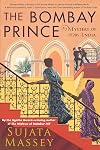
Anyone who enjoys historical mysteries, strong female lead characters, and learning about a fascinating period in India's history must read Sujata Massey's excellent Perveen Mistry series. The Bombay Prince is the third and latest in the series and after reading it, I'm eagerly awaiting the next chapter in Perveen's life.
Yes, we learn more about the customs of the Parsi. Yes, we learn about Gandhi's influence during this period when India began to actively seek independence. Yes, we learn show more about the effect of the Prince of Wales' visit on the country, but we mostly get to immerse ourselves in Perveen Mistry's life. (For those of you who may be wondering, both the Prince of Wales and Gandhi stay very firmly on the far periphery.) Perveen, the first female lawyer in Bombay, is based on a real person, Cornelia Sorabji, and Perveen is fascinating.
As I tried to figure out who killed Freny Cuttingmaster, I couldn't help but see how carefully Perveen had to deal, not only with the British who were in control of the government but also with all the males she came in contact with. She's confronted with a double whammy: sexual and religious bias, and both constantly throw up roadblocks in her path to justice. Perveen daily walks through a minefield with her wits as her only protection. Fortunately, the woman can think on her feet.
As the mystery unfolds, readers are reminded that no place in Bombay is ever completely quiet, that the new steel wardrobes are preferable because they help prevent mildew, and that women had to be tough if they wanted a higher education. But there's so much more to The Bombay Prince than learning the random facts that are so skillfully woven into the story or trying to unravel a very well-plotted mystery. There is the rich tapestry of characters. Perveen has a developing relationship with someone that should prove very interesting in future books, and Massey introduces two new characters that I certainly hope to see more of: the American journalist J.P. Singer, and the elderly Mr. Dass who certainly knows his way around a library.
If you're already a fan of Sujata Massey's series, you're going to enjoy The Bombay Prince. If you haven't feasted upon the series yet, don't delay. But start at the beginning with the award-winning The Widows of Malabar Hill, and prepare to find yourselves experiencing Bombay in the 1920s. I envy anyone reading these books for the first time!
(Review copy courtesy of the publisher and Net Galley) show less
Yes, we learn more about the customs of the Parsi. Yes, we learn about Gandhi's influence during this period when India began to actively seek independence. Yes, we learn show more about the effect of the Prince of Wales' visit on the country, but we mostly get to immerse ourselves in Perveen Mistry's life. (For those of you who may be wondering, both the Prince of Wales and Gandhi stay very firmly on the far periphery.) Perveen, the first female lawyer in Bombay, is based on a real person, Cornelia Sorabji, and Perveen is fascinating.
As I tried to figure out who killed Freny Cuttingmaster, I couldn't help but see how carefully Perveen had to deal, not only with the British who were in control of the government but also with all the males she came in contact with. She's confronted with a double whammy: sexual and religious bias, and both constantly throw up roadblocks in her path to justice. Perveen daily walks through a minefield with her wits as her only protection. Fortunately, the woman can think on her feet.
As the mystery unfolds, readers are reminded that no place in Bombay is ever completely quiet, that the new steel wardrobes are preferable because they help prevent mildew, and that women had to be tough if they wanted a higher education. But there's so much more to The Bombay Prince than learning the random facts that are so skillfully woven into the story or trying to unravel a very well-plotted mystery. There is the rich tapestry of characters. Perveen has a developing relationship with someone that should prove very interesting in future books, and Massey introduces two new characters that I certainly hope to see more of: the American journalist J.P. Singer, and the elderly Mr. Dass who certainly knows his way around a library.
If you're already a fan of Sujata Massey's series, you're going to enjoy The Bombay Prince. If you haven't feasted upon the series yet, don't delay. But start at the beginning with the award-winning The Widows of Malabar Hill, and prepare to find yourselves experiencing Bombay in the 1920s. I envy anyone reading these books for the first time!
(Review copy courtesy of the publisher and Net Galley) show less

I loved the Rei Shimura series by Massey and it was nice to drop into a book written by a familiar author.
I enjoyed the slowish pace and the immersion in this completely unfamiliar culture and time period and learning so many new things while also trying to solve a mystery. This novel takes on the systemic misogyny of life 100 years ago among deeply religious people and I love the empowerment of our main character (and her friend) despite those obstacles. Perveen is based on actual show more pioneering women lawyers in India during this time so it’s not all completely out of left field.
Anyway, I was a fan of this book and I’ll continue reading the series. show less
I enjoyed the slowish pace and the immersion in this completely unfamiliar culture and time period and learning so many new things while also trying to solve a mystery. This novel takes on the systemic misogyny of life 100 years ago among deeply religious people and I love the empowerment of our main character (and her friend) despite those obstacles. Perveen is based on actual show more pioneering women lawyers in India during this time so it’s not all completely out of left field.
Anyway, I was a fan of this book and I’ll continue reading the series. show less
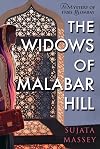
This was a very engaging mystery, for a variety of reasons. The story takes place in 1920's India, featuring Perveen Mistry, an independent young woman who aspires to be the first female lawyer in Bombay. I learned so much about Indian culture as the plot unwound - how women were treated, the lack of justice for women both married and single, transportation, inheritance, respect, food, manners, superstitions, protocols - it was fascinating. The novel shifts back and forth between years, as show more Perveen slowly accumulates information that will give her the evidence she needs to assist the widows. When a murder takes place and a young girl disappears, and then Perveen is endangered, I was on the edge of my seat. This was an entertaining and satisfying novel. I'm looking forward to reading the second book about Perveen, "The Satapur Moonstone." show less
Lists
Awards


You May Also Like


Associated Authors
Statistics
- Works
- 26
- Also by
- 9
- Members
- 6,652
- Popularity
- #3,680
- Rating
- 3.6
- Reviews
- 239
- ISBNs
- 191
- Languages
- 9
- Favorited
- 23
