
Mary Chesnut (1823–1886)
Author of Mary Chesnut's Civil War
About the Author
Image credit: Fromm Wikipedia
Works by Mary Chesnut
Mary Chesnut's Civil War Vol.1 4 copies
Associated Works
The Civil War: The First Year Told By Those Who Lived It (2011) — Contributor — 269 copies, 2 reviews
The Heath Anthology of American Literature, Volume 1 (1990) — Contributor, some editions — 252 copies, 1 review
The Civil War: The Third Year Told by Those Who Lived It (2013) — Contributor — 169 copies, 1 review
The Heath Anthology of American Literature, Concise Edition (2003) — Contributor — 73 copies, 1 review
Tagged
Common Knowledge
- Legal name
- Chesnut, Mary Boykin
- Other names
- Miller, Mary Boykin
- Birthdate
- 1823-03-31
- Date of death
- 1886-11-22
- Gender
- female
- Education
- Mme. Talvande's French School for Young Ladies
- Occupations
- diarist
novelist
society hostess - Awards and honors
- Mulberry Plantation was designated a National Historic Landmark
- Relationships
- Hood, John Bell (friend)
Davis, Varina (friend)
Pryor, Sara Agnes (friend)
King, Susan Petigru (classmate) - Short biography
- Mary Boykin Miller came from a prominent South Carolina plantation family. Her father, Stephen Decatur Miller, had served in the U.S. House of Representatives and would later be elected Governor and then Senator. Mary attended a French boarding school in Charleston. As a young teenager, she had began a courtship with James Chesnut, Jr., a lawyer eight years her senior. The couple married in 1840 and went to live at Mulberry, the Chesnut family plantation. In 1858, Mary's husband was elected to the U.S. Senate and she became a society hostess in Washington, D.C. James Chestnut resigned his Senate seat in the months before the Civil War broke out and became an aide to Jefferson Davis, President of the Confederacy. Mary began keeping a diary in 1861. She was well aware that she was living through momentous events, and faithfully recorded political and military news as well as conversations with people she met and her personal impressions of them. She also carefully edited and re-wrote parts of the diary before her death in 1886. The first published edition appeared in 1905 as A Diary from Dixie, with a fuller version released in 1949. A new, fully annotated edition, edited by C. Vann Woodward, won the 1982 Pulitzer Prize for history. Mary Chestnut's diary is now one of the most frequently cited memoirs of the Civil War.
- Nationality
- USA
- Birthplace
- Stateburg, South Carolina, USA
- Places of residence
- Charleston, South Carolina, USA
Washington, D.C., USA - Place of death
- Camden, South Carolina, USA
- Burial location
- Knights Hill Cemetery, Camden, South Carolina, USA
- Associated Place (for map)
- South Carolina, USA
Members
Reviews
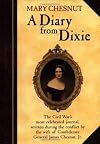
The author was a friend and admirer of Jefferson Davis on the eve of the Civil War, but was great enough as a conscious person to realize her admiration was abused. This is a personal diary of a Southern Lady. She also recognized that the white men were not really fighting for "state's rights", but for enslavement of Africans, from which they drew their "black harems".
This single diary pretty much gives The Lie to the propaganda which Southern plutocrats dispensed to the poor white males show more upon which they depend for their political support, then and to this day. Poor white male Southerners are poor, ignorant, and kept that way.
In writing about the actual events in her life and privy to the rulers of the South, Ms Chesnut has done a great service. Her diary should be studied by the Tea Party to sober them up. show less
This single diary pretty much gives The Lie to the propaganda which Southern plutocrats dispensed to the poor white males show more upon which they depend for their political support, then and to this day. Poor white male Southerners are poor, ignorant, and kept that way.
In writing about the actual events in her life and privy to the rulers of the South, Ms Chesnut has done a great service. Her diary should be studied by the Tea Party to sober them up. show less
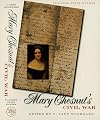
I would say this is mostly a woman's book, that is, looking at things that women are more likely to enjoy or appreciate. She considers the impact on the household of various events, including changes in clothing options, food, modes of travel. We get commentary on those who did not go to war and the praise for those who did. We share the sorrows of mothers who lost sons and wives who lost their husbands of only a few days. What I did not expect were the number of women who died, sometimes show more along with their babies, leaving behind distraught soldier husbands unable to get furloughs.
I was keenly interested in the close friendship between Mrs. Chesnut and Mrs. Davis, wife of President Jefferson Davis. Even as public outcry against that President devolved into viciousness toward his wife, Mary Chesnut never abandoned her friend and remained a stolid admirer. She also tracked most closely the relationship between Sally "Buck" Preston and General AP "Sam" Hood. I found myself rooting for a marriage between the two. Even though they eventually parted, Buck's mother deeply opposed to the marriage, Mary remained fast friends with each, valuing each time she saw either of them.
What this contributes to the history of the Civil War is a behind the scenes picture of the lives of citizens, mostly wealthy citizens, of part of the Confederacy. We meet the wives and families of familiar Confederate leaders and learn of their losses and reactions to wider events. Mary Chesnut is somewhat unusual in that she had always opposed slavery although she relied heavily on slaves to enable her life style. While she did not mourn the end of slavery, she also paints a rarely reported fact that slaves were also not always welcomed nor helped by the invading Yankees. We also have a chance to observe as the wealthy come to have nothing, much of their posessions stolen and their homes burned. How do you find a place to live when your Confederate money is worthless? How do you eat when your extra clothes went long ago just to buy food? You have no money to pay your debts and those who owe you can't pay because they have no money either. And you can't pay the former slaved who have chosen to remain with you. Now what? show less
I was keenly interested in the close friendship between Mrs. Chesnut and Mrs. Davis, wife of President Jefferson Davis. Even as public outcry against that President devolved into viciousness toward his wife, Mary Chesnut never abandoned her friend and remained a stolid admirer. She also tracked most closely the relationship between Sally "Buck" Preston and General AP "Sam" Hood. I found myself rooting for a marriage between the two. Even though they eventually parted, Buck's mother deeply opposed to the marriage, Mary remained fast friends with each, valuing each time she saw either of them.
What this contributes to the history of the Civil War is a behind the scenes picture of the lives of citizens, mostly wealthy citizens, of part of the Confederacy. We meet the wives and families of familiar Confederate leaders and learn of their losses and reactions to wider events. Mary Chesnut is somewhat unusual in that she had always opposed slavery although she relied heavily on slaves to enable her life style. While she did not mourn the end of slavery, she also paints a rarely reported fact that slaves were also not always welcomed nor helped by the invading Yankees. We also have a chance to observe as the wealthy come to have nothing, much of their posessions stolen and their homes burned. How do you find a place to live when your Confederate money is worthless? How do you eat when your extra clothes went long ago just to buy food? You have no money to pay your debts and those who owe you can't pay because they have no money either. And you can't pay the former slaved who have chosen to remain with you. Now what? show less
I kept thinking of Scarlett O'Hara while reading this. It's the portrait of a hot-blooded, cocky, pugnacious society that was teetering on the brink of destruction, like Carthage during the Punic Wars.
It's hard to have much sympathy. Chesnut is snide, hard-nosed, delusional, insightful, and vulnerable all at the same time. Her view into the minds and actions of the Confederate upper crust as things crumble around them touched my heart even as their motivations escaped me.
The irony is that show more once the hotheads had their way they were shoved aside and spent the rest of the war kvetching on the sidelines, excreting the same poisonous grease on their own side as they'd poured on Lincoln and the North a few scant months before.
Chesnut's book was originally published in a truncated edition after her death. Here Woodward has pieced together and deciphered her original text giving Chesnut's portraits of the Civil War's most compelling personalities a modern freshness that everyone can enjoy. show less
It's hard to have much sympathy. Chesnut is snide, hard-nosed, delusional, insightful, and vulnerable all at the same time. Her view into the minds and actions of the Confederate upper crust as things crumble around them touched my heart even as their motivations escaped me.
The irony is that show more once the hotheads had their way they were shoved aside and spent the rest of the war kvetching on the sidelines, excreting the same poisonous grease on their own side as they'd poured on Lincoln and the North a few scant months before.
Chesnut's book was originally published in a truncated edition after her death. Here Woodward has pieced together and deciphered her original text giving Chesnut's portraits of the Civil War's most compelling personalities a modern freshness that everyone can enjoy. show less
I picked this book up because when I was younger, someone told me how interesting it was to read a firsthand account of what the Civil War was like. While I appreciated reading all the details and plans about the war and getting an insight into the opinions and thoughts of the Confederates, I wasn’t very impressed by this book. It’s rather boring, mostly because Chesnut is so disconnected from the true atrocities of the war and comes across as very superficial and arrogant without having show more any real substance about her.
The other problem is that this book is said to be heavily edited so as not to contain anything that would be unflattering to the Confederates, which is entirely ridiculous to me. It most likely would have been much more interesting if it contained everything, but it really just talks about inflation, traveling from one city to another, and the parties the higher up Confederates threw for each other.
Overall, I could see using snippets of this to supplement a civil war lesson in a class, but it’s not worth reading the diary in its entirety.
Also posted on Purple People Readers. show less
The other problem is that this book is said to be heavily edited so as not to contain anything that would be unflattering to the Confederates, which is entirely ridiculous to me. It most likely would have been much more interesting if it contained everything, but it really just talks about inflation, traveling from one city to another, and the parties the higher up Confederates threw for each other.
Overall, I could see using snippets of this to supplement a civil war lesson in a class, but it’s not worth reading the diary in its entirety.
Also posted on Purple People Readers. show less
Lists
Awards


You May Also Like


Associated Authors
Statistics
- Works
- 11
- Also by
- 5
- Members
- 2,038
- Popularity
- #12,612
- Rating
- 4.0
- Reviews
- 22
- ISBNs
- 39
- Favorited
- 2