
Charles W. Chesnutt (1858–1932)
Author of The Marrow of Tradition
About the Author
Image credit: Courtesy of the NYPL Digital Gallery (image use requires permission from the New York Public Library)
Works by Charles W. Chesnutt
The Conjure Woman 1 copy
Associated Works
The Story and Its Writer: An Introduction to Short Fiction (1976) — Contributor — 1,215 copies, 3 reviews
Great American Short Stories: From Hawthorne to Hemingway (2004) — Contributor — 675 copies, 2 reviews
Dark Matter: A Century of Speculative Fiction from the African Diaspora (2000) — Contributor — 596 copies, 11 reviews
The Norton Anthology of African American Literature {2nd edition} (2003) — Contributor, some editions — 282 copies, 2 reviews
The Best Short Stories by Black Writers, 1899-1967: The Classic Anthology (1967) — Contributor — 200 copies, 1 review
Classic American Short Stories [Barnes & Noble Leatherbound Classics] (2001) — Contributor — 175 copies, 1 review
The Norton Anthology of American Literature, Volume 2: 1865 to Present (1979) — Contributor, some editions — 136 copies
Calling the Wind: Twentieth Century African-American Short Stories (1992) — Contributor — 116 copies
The Heath Anthology of American Literature, Concise Edition (2003) — Contributor — 73 copies, 1 review
Black Noir: Mystery, Crime, and Suspense Fiction by African-American Writers (2009) — Contributor — 61 copies, 1 review
The African-American Novel in the Age of Reaction: 3 Classics Iola Leroy or Shadows Uplifted The Marrow Tradition The Sp (1992) — Contributor — 39 copies
"The Man Who Thought Himself a Woman" and Other Queer Nineteenth-Century Short Stories (Q19: The Queer American Nineteenth Century) (2017) — Contributor — 20 copies
Before Harlem: An Anthology of African American Literature from the Long Nineteenth Century (2016) — Contributor — 12 copies
The Ethnic Image in Modern American Literature, 1900-1950, Volumes 1-2 (1984) — Contributor — 1 copy
African American Literature: A Concise Anthology from Frederick Douglass to Toni Morrison (2009) — Contributor — 1 copy
Tagged
Common Knowledge
- Legal name
- Chesnutt, Charles Waddell
- Birthdate
- 1858-06-20
- Date of death
- 1932-11-15
- Gender
- male
- Education
- Howard School
- Occupations
- novelist
short story writer
playwright
essayist
lawyer
teacher (show all 13)
lecturer
principal
founder of court reporting business
stenographer
railway clerk
reporter
columnist - Organizations
- National Association for the Advancement of Colored People
Fayetteville State Normal School for Negroes
Dow Jones & Co.
New York Mail and Express
Nickel Plate Railroad Co. - Awards and honors
- Spingarn Medal (1928)
United States Postal Service Stamp - Relationships
- Chesnutt, Helen M. (daughter)
- Nationality
- USA
- Birthplace
- Cleveland, Ohio, USA
- Places of residence
- Cleveland, Ohio, USA
Fayetteville, North Carolina, USA
New York, New York, USA - Place of death
- Cleveland, Ohio, USA
- Burial location
- Lake View Cemetery, Cleveland, Ohio, USA
- Associated Place (for map)
- Ohio, USA
Members
Reviews
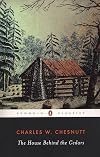
The House Behind the Cedars is certainly built as a romance novel, but what stands out is how Chesnutt uses that structure as a framework for social critique. Tryon’s pursuit of Rena isn’t a particularly interesting love story on its own, but the underlying secret of her identity gives it real tension. What it is is a stage, on which the precariousness of passing and the rigidity of racial boundaries are played out. So the narrative doesn’t move in the traditional direction—it’s show more not an emotional arc, so much as the inevitable trajectory of a social collapse.
It’s not unusual for novels of the time to feature characters that are more symbol than reality, and this is no exception. But what I like about Chesnutt’s writing is his voice and ironic wit. The way his narration takes on the very voice of racist white society is particularly striking when you bear in mind that he himself was Black. It makes the novel’s critique bite harder, calling conventional views into sharp criticism even as it gives them voice.
Unfortunately, I didn’t see as much of that in this novel as I had in The Marrow of Tradition, but still, Chesnutt’s method of layering social critique over a familiar generic form is one that I find compelling. show less
It’s not unusual for novels of the time to feature characters that are more symbol than reality, and this is no exception. But what I like about Chesnutt’s writing is his voice and ironic wit. The way his narration takes on the very voice of racist white society is particularly striking when you bear in mind that he himself was Black. It makes the novel’s critique bite harder, calling conventional views into sharp criticism even as it gives them voice.
Unfortunately, I didn’t see as much of that in this novel as I had in The Marrow of Tradition, but still, Chesnutt’s method of layering social critique over a familiar generic form is one that I find compelling. show less
The Conjure Woman and Other Tales is a collection of short stories tied together under the umbrella of a frame story in which a white northern couple has relocated to the South and has met a man on their property who they hire on as caretaker. The poor black southerner regales them with tales which they find entertaining but are actually pointing a finger directly at them. The book was first published in the late 1800's and the dialect is that of a poor southern black man and the stories show more themselves offer a glimpse into the rich cultural heritage of the people and the times in which they lived.
The tales presented in The Conjure Woman are entertaining and humorous on their own but the real value of this work is how the protagonist uses his tales in order to point out the flaws in the views and attitudes of the white couple and goad or guilt them into getting things done on the farm in the way that he wants them sometimes for his own benefit but usually for the benefit of everyone involved. I really did enjoy this book as both the individual stories and the ongoing tale as a whole teach the reader a lot about the views of society during that era whilst maintaining a lighter air so that the reader doesn't feel as if they are being scolded or sitting in a lecture. show less
The tales presented in The Conjure Woman are entertaining and humorous on their own but the real value of this work is how the protagonist uses his tales in order to point out the flaws in the views and attitudes of the white couple and goad or guilt them into getting things done on the farm in the way that he wants them sometimes for his own benefit but usually for the benefit of everyone involved. I really did enjoy this book as both the individual stories and the ongoing tale as a whole teach the reader a lot about the views of society during that era whilst maintaining a lighter air so that the reader doesn't feel as if they are being scolded or sitting in a lecture. show less
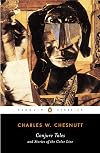
(I read this in a different edition that only included the ten "Color Line" stories, starting with "The Wife of His Youth." I did not read the "Conjure Tales.")
Charles Chesnutt's color line stories deal with race relations in the late nineteenth century United States. About half the stories are set in rural North Carolina, where Chesnutt was from, and the other half are set in a middle class black community in Michigan, probably somewhere around Detroit. Some of the stories are historical, show more taking place just before or during the Civil War, and the rest are set in Reconstruction or Gilded Age America, roughly contemporary with Chesnutt's young/middle adulthood.
The stories deal with complex issues in American race relations such as "passing," racial mixing both consensual and forced, white perceptions of black culture (and vice versa), prejudice within the African American community, and the legacies of slavery and the Civil War. Chesnutt also tackles difficult moral questions--does a former slave owe anything to his white owner/father? does such a father owe anything to his son? is passing wrong? how does white prejudice help create a culture of violence (on both sides)? why does skin color play such a role in how people are perceived and treated? In asking these questions, Chesnutt seems to prefigure many American writers of the twentieth century in his willingness to probe into the heart of racism.
Chesnutt writes of these devastating issues with a straightforward and often humorous tone, and it's true that many of the stories are quite funny. He deploys dramatic irony in a way similar to his contemporary, O. Henry, often using twist endings. However, there is also a solid vein of sentimentalism running through these stories. Despite their great psychological and social insight, the stories are not particularly modern in their form. This is a very interesting collection of stories that sheds much light on 19th c. America and on readers' relationships to their personal pasts and national history. show less
Charles Chesnutt's color line stories deal with race relations in the late nineteenth century United States. About half the stories are set in rural North Carolina, where Chesnutt was from, and the other half are set in a middle class black community in Michigan, probably somewhere around Detroit. Some of the stories are historical, show more taking place just before or during the Civil War, and the rest are set in Reconstruction or Gilded Age America, roughly contemporary with Chesnutt's young/middle adulthood.
The stories deal with complex issues in American race relations such as "passing," racial mixing both consensual and forced, white perceptions of black culture (and vice versa), prejudice within the African American community, and the legacies of slavery and the Civil War. Chesnutt also tackles difficult moral questions--does a former slave owe anything to his white owner/father? does such a father owe anything to his son? is passing wrong? how does white prejudice help create a culture of violence (on both sides)? why does skin color play such a role in how people are perceived and treated? In asking these questions, Chesnutt seems to prefigure many American writers of the twentieth century in his willingness to probe into the heart of racism.
Chesnutt writes of these devastating issues with a straightforward and often humorous tone, and it's true that many of the stories are quite funny. He deploys dramatic irony in a way similar to his contemporary, O. Henry, often using twist endings. However, there is also a solid vein of sentimentalism running through these stories. Despite their great psychological and social insight, the stories are not particularly modern in their form. This is a very interesting collection of stories that sheds much light on 19th c. America and on readers' relationships to their personal pasts and national history. show less
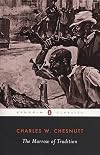
Chesnutt was America's first successful black novelist. This book was written in 1901, and is based on an actual race riot that broke out in North Carolina a few years earlier. It's not nonfiction; it's a dramatization based on events leading up to and during the riot.
Really good book. Chesnutt's style is perfect for his theme—it reminds me a lot of Baldwin, in that sense. Stark, straightforward realism is a sharp tool for opening up and exposing racism in society. What Chesnutt does here, show more primarily, is to tell the stories of two families—one white, one black—who actually share an unacknowledged bond of blood (the wives/mothers are half-sisters). The parallels are really telling. Chesnutt is at his best when he's simply describing the thoughts or actions of his characters. There's a really great moment, for example, after the white sister discovers that her father did indeed marry the mother of her half-sister, and that as such she's entitled to a large portion of his estate. She mulls all this over in her mind, trying honestly and logically to decide whether a black woman can be entitled to a large sum of money from a white man's estate. Which is absurd (and realistic) enough. But then for one brief moment, the larger picture occurs to her:
Eventually, of course, she snaps out of it and decides to keep hidden the secret of her sister's lineage and inheritance.
The characters in the book are compelling, especially the black ones. As I said, the parallels are often really revealing. Black characters have a full range of thought and emotion, as they rarely seem to get even from today's white writers. There's a real honesty to Chesnutt's writing, I think. At around the same time, I was reading To Kill a Mockingbird, which deals with some of the same issues from a white perspective. It's also very well written and honest, but the black characters just don't get the same breadth that they get here.
I have to add this other quote, by the way, which really goes to the heart of the perceptions governing American race relations: "The qualities which in a white man would win the applause of the world would in a negro be taken as the marks of savagery."
I don't mean to make it sound like an essay-form treatise on race or anything, though. It's written as a thriller, complete with cliff-hangers and intrigue and the lot. And it reads pretty well, even just on that level. From the very beginning of the book, I really enjoyed his writing style. I love the language and rhetoric of that period, and he was obviously a master of it. That he's not more widely known is, I think, a testament to the fact that we haven't fully recovered from racism. It was interesting to finish this book just after James Cameron passed away, and the anniversary of the Soweto Uprising. show less
Really good book. Chesnutt's style is perfect for his theme—it reminds me a lot of Baldwin, in that sense. Stark, straightforward realism is a sharp tool for opening up and exposing racism in society. What Chesnutt does here, show more primarily, is to tell the stories of two families—one white, one black—who actually share an unacknowledged bond of blood (the wives/mothers are half-sisters). The parallels are really telling. Chesnutt is at his best when he's simply describing the thoughts or actions of his characters. There's a really great moment, for example, after the white sister discovers that her father did indeed marry the mother of her half-sister, and that as such she's entitled to a large portion of his estate. She mulls all this over in her mind, trying honestly and logically to decide whether a black woman can be entitled to a large sum of money from a white man's estate. Which is absurd (and realistic) enough. But then for one brief moment, the larger picture occurs to her:
If the woman had been white,—but the woman had not been white, and the same rule of moral conduct did not, could not, in the very nature of things, apply, as between white people! For, if this were not so, slavery had been, not merely an economic mistake, but a great crime against humanity. If it had been such a crime, as for a moment she dimly perceived it might have been, then through the long centuries there had been piled up a catalogue of wrong and outrage which, if the law of compensation be a law of nature, must some time, somewhere, in some way, be atoned for.
Eventually, of course, she snaps out of it and decides to keep hidden the secret of her sister's lineage and inheritance.
The characters in the book are compelling, especially the black ones. As I said, the parallels are often really revealing. Black characters have a full range of thought and emotion, as they rarely seem to get even from today's white writers. There's a real honesty to Chesnutt's writing, I think. At around the same time, I was reading To Kill a Mockingbird, which deals with some of the same issues from a white perspective. It's also very well written and honest, but the black characters just don't get the same breadth that they get here.
I have to add this other quote, by the way, which really goes to the heart of the perceptions governing American race relations: "The qualities which in a white man would win the applause of the world would in a negro be taken as the marks of savagery."
I don't mean to make it sound like an essay-form treatise on race or anything, though. It's written as a thriller, complete with cliff-hangers and intrigue and the lot. And it reads pretty well, even just on that level. From the very beginning of the book, I really enjoyed his writing style. I love the language and rhetoric of that period, and he was obviously a master of it. That he's not more widely known is, I think, a testament to the fact that we haven't fully recovered from racism. It was interesting to finish this book just after James Cameron passed away, and the anniversary of the Soweto Uprising. show less
Lists
Awards


You May Also Like


Associated Authors
Statistics
- Works
- 38
- Also by
- 34
- Members
- 2,354
- Popularity
- #10,898
- Rating
- 3.9
- Reviews
- 29
- ISBNs
- 295
- Languages
- 4
- Favorited
- 6
