
Charles W. Chesnutt (1858–1932)
Author of The Marrow of Tradition
About the Author
Image credit: Courtesy of the NYPL Digital Gallery (image use requires permission from the New York Public Library)
Works by Charles W. Chesnutt
The Conjure Woman 1 copy
Associated Works
The Story and Its Writer: An Introduction to Short Fiction (1976) — Contributor — 1,214 copies, 3 reviews
Great American Short Stories: From Hawthorne to Hemingway (2004) — Contributor — 673 copies, 2 reviews
Dark Matter: A Century of Speculative Fiction from the African Diaspora (2000) — Contributor — 595 copies, 11 reviews
The Norton Anthology of African American Literature {2nd edition} (2003) — Contributor, some editions — 282 copies, 2 reviews
The Best Short Stories by Black Writers, 1899-1967: The Classic Anthology (1967) — Contributor — 200 copies, 1 review
Classic American Short Stories [Barnes & Noble Leatherbound Classics] (2001) — Contributor — 174 copies, 1 review
The Norton Anthology of American Literature, Volume 2: 1865 to Present (1979) — Contributor, some editions — 136 copies
Calling the Wind: Twentieth Century African-American Short Stories (1992) — Contributor — 114 copies
The Heath Anthology of American Literature, Concise Edition (2003) — Contributor — 73 copies, 1 review
Black Noir: Mystery, Crime, and Suspense Fiction by African-American Writers (2009) — Contributor — 61 copies, 1 review
The African-American Novel in the Age of Reaction: 3 Classics Iola Leroy or Shadows Uplifted The Marrow Tradition The Sp (1992) — Contributor — 38 copies
"The Man Who Thought Himself a Woman" and Other Queer Nineteenth-Century Short Stories (Q19: The Queer American Nineteenth Century) (2017) — Contributor — 20 copies
Before Harlem: An Anthology of African American Literature from the Long Nineteenth Century (2016) — Contributor — 12 copies
The Ethnic Image in Modern American Literature, 1900-1950, Volumes 1-2 (1984) — Contributor — 1 copy
African American Literature: A Concise Anthology from Frederick Douglass to Toni Morrison (2009) — Contributor — 1 copy
Tagged
Common Knowledge
- Legal name
- Chesnutt, Charles Waddell
- Birthdate
- 1858-06-20
- Date of death
- 1932-11-15
- Gender
- male
- Education
- Howard School
- Occupations
- novelist
short story writer
playwright
essayist
lawyer
teacher (show all 13)
lecturer
principal
founder of court reporting business
stenographer
railway clerk
reporter
columnist - Organizations
- National Association for the Advancement of Colored People
Fayetteville State Normal School for Negroes
Dow Jones & Co.
New York Mail and Express
Nickel Plate Railroad Co. - Awards and honors
- Spingarn Medal (1928)
United States Postal Service Stamp - Relationships
- Chesnutt, Helen M. (daughter)
- Nationality
- USA
- Birthplace
- Cleveland, Ohio, USA
- Places of residence
- Cleveland, Ohio, USA
Fayetteville, North Carolina, USA
New York, New York, USA - Place of death
- Cleveland, Ohio, USA
- Burial location
- Lake View Cemetery, Cleveland, Ohio, USA
- Associated Place (for map)
- Ohio, USA
Members
Reviews
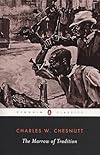
Chesnutt was America's first successful black novelist. This book was written in 1901, and is based on an actual race riot that broke out in North Carolina a few years earlier. It's not nonfiction; it's a dramatization based on events leading up to and during the riot.
Really good book. Chesnutt's style is perfect for his theme—it reminds me a lot of Baldwin, in that sense. Stark, straightforward realism is a sharp tool for opening up and exposing racism in society. What Chesnutt does here, show more primarily, is to tell the stories of two families—one white, one black—who actually share an unacknowledged bond of blood (the wives/mothers are half-sisters). The parallels are really telling. Chesnutt is at his best when he's simply describing the thoughts or actions of his characters. There's a really great moment, for example, after the white sister discovers that her father did indeed marry the mother of her half-sister, and that as such she's entitled to a large portion of his estate. She mulls all this over in her mind, trying honestly and logically to decide whether a black woman can be entitled to a large sum of money from a white man's estate. Which is absurd (and realistic) enough. But then for one brief moment, the larger picture occurs to her:
Eventually, of course, she snaps out of it and decides to keep hidden the secret of her sister's lineage and inheritance.
The characters in the book are compelling, especially the black ones. As I said, the parallels are often really revealing. Black characters have a full range of thought and emotion, as they rarely seem to get even from today's white writers. There's a real honesty to Chesnutt's writing, I think. At around the same time, I was reading To Kill a Mockingbird, which deals with some of the same issues from a white perspective. It's also very well written and honest, but the black characters just don't get the same breadth that they get here.
I have to add this other quote, by the way, which really goes to the heart of the perceptions governing American race relations: "The qualities which in a white man would win the applause of the world would in a negro be taken as the marks of savagery."
I don't mean to make it sound like an essay-form treatise on race or anything, though. It's written as a thriller, complete with cliff-hangers and intrigue and the lot. And it reads pretty well, even just on that level. From the very beginning of the book, I really enjoyed his writing style. I love the language and rhetoric of that period, and he was obviously a master of it. That he's not more widely known is, I think, a testament to the fact that we haven't fully recovered from racism. It was interesting to finish this book just after James Cameron passed away, and the anniversary of the Soweto Uprising. show less
Really good book. Chesnutt's style is perfect for his theme—it reminds me a lot of Baldwin, in that sense. Stark, straightforward realism is a sharp tool for opening up and exposing racism in society. What Chesnutt does here, show more primarily, is to tell the stories of two families—one white, one black—who actually share an unacknowledged bond of blood (the wives/mothers are half-sisters). The parallels are really telling. Chesnutt is at his best when he's simply describing the thoughts or actions of his characters. There's a really great moment, for example, after the white sister discovers that her father did indeed marry the mother of her half-sister, and that as such she's entitled to a large portion of his estate. She mulls all this over in her mind, trying honestly and logically to decide whether a black woman can be entitled to a large sum of money from a white man's estate. Which is absurd (and realistic) enough. But then for one brief moment, the larger picture occurs to her:
If the woman had been white,—but the woman had not been white, and the same rule of moral conduct did not, could not, in the very nature of things, apply, as between white people! For, if this were not so, slavery had been, not merely an economic mistake, but a great crime against humanity. If it had been such a crime, as for a moment she dimly perceived it might have been, then through the long centuries there had been piled up a catalogue of wrong and outrage which, if the law of compensation be a law of nature, must some time, somewhere, in some way, be atoned for.
Eventually, of course, she snaps out of it and decides to keep hidden the secret of her sister's lineage and inheritance.
The characters in the book are compelling, especially the black ones. As I said, the parallels are often really revealing. Black characters have a full range of thought and emotion, as they rarely seem to get even from today's white writers. There's a real honesty to Chesnutt's writing, I think. At around the same time, I was reading To Kill a Mockingbird, which deals with some of the same issues from a white perspective. It's also very well written and honest, but the black characters just don't get the same breadth that they get here.
I have to add this other quote, by the way, which really goes to the heart of the perceptions governing American race relations: "The qualities which in a white man would win the applause of the world would in a negro be taken as the marks of savagery."
I don't mean to make it sound like an essay-form treatise on race or anything, though. It's written as a thriller, complete with cliff-hangers and intrigue and the lot. And it reads pretty well, even just on that level. From the very beginning of the book, I really enjoyed his writing style. I love the language and rhetoric of that period, and he was obviously a master of it. That he's not more widely known is, I think, a testament to the fact that we haven't fully recovered from racism. It was interesting to finish this book just after James Cameron passed away, and the anniversary of the Soweto Uprising. show less
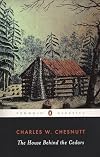
The House Behind the Cedars is certainly built as a romance novel, but what stands out is how Chesnutt uses that structure as a framework for social critique. Tryon’s pursuit of Rena isn’t a particularly interesting love story on its own, but the underlying secret of her identity gives it real tension. What it is is a stage, on which the precariousness of passing and the rigidity of racial boundaries are played out. So the narrative doesn’t move in the traditional direction—it’s show more not an emotional arc, so much as the inevitable trajectory of a social collapse.
It’s not unusual for novels of the time to feature characters that are more symbol than reality, and this is no exception. But what I like about Chesnutt’s writing is his voice and ironic wit. The way his narration takes on the very voice of racist white society is particularly striking when you bear in mind that he himself was Black. It makes the novel’s critique bite harder, calling conventional views into sharp criticism even as it gives them voice.
Unfortunately, I didn’t see as much of that in this novel as I had in The Marrow of Tradition, but still, Chesnutt’s method of layering social critique over a familiar generic form is one that I find compelling. show less
It’s not unusual for novels of the time to feature characters that are more symbol than reality, and this is no exception. But what I like about Chesnutt’s writing is his voice and ironic wit. The way his narration takes on the very voice of racist white society is particularly striking when you bear in mind that he himself was Black. It makes the novel’s critique bite harder, calling conventional views into sharp criticism even as it gives them voice.
Unfortunately, I didn’t see as much of that in this novel as I had in The Marrow of Tradition, but still, Chesnutt’s method of layering social critique over a familiar generic form is one that I find compelling. show less
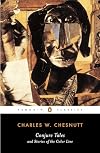
(I read this in a different edition that only included the ten "Color Line" stories, starting with "The Wife of His Youth." I did not read the "Conjure Tales.")
Charles Chesnutt's color line stories deal with race relations in the late nineteenth century United States. About half the stories are set in rural North Carolina, where Chesnutt was from, and the other half are set in a middle class black community in Michigan, probably somewhere around Detroit. Some of the stories are historical, show more taking place just before or during the Civil War, and the rest are set in Reconstruction or Gilded Age America, roughly contemporary with Chesnutt's young/middle adulthood.
The stories deal with complex issues in American race relations such as "passing," racial mixing both consensual and forced, white perceptions of black culture (and vice versa), prejudice within the African American community, and the legacies of slavery and the Civil War. Chesnutt also tackles difficult moral questions--does a former slave owe anything to his white owner/father? does such a father owe anything to his son? is passing wrong? how does white prejudice help create a culture of violence (on both sides)? why does skin color play such a role in how people are perceived and treated? In asking these questions, Chesnutt seems to prefigure many American writers of the twentieth century in his willingness to probe into the heart of racism.
Chesnutt writes of these devastating issues with a straightforward and often humorous tone, and it's true that many of the stories are quite funny. He deploys dramatic irony in a way similar to his contemporary, O. Henry, often using twist endings. However, there is also a solid vein of sentimentalism running through these stories. Despite their great psychological and social insight, the stories are not particularly modern in their form. This is a very interesting collection of stories that sheds much light on 19th c. America and on readers' relationships to their personal pasts and national history. show less
Charles Chesnutt's color line stories deal with race relations in the late nineteenth century United States. About half the stories are set in rural North Carolina, where Chesnutt was from, and the other half are set in a middle class black community in Michigan, probably somewhere around Detroit. Some of the stories are historical, show more taking place just before or during the Civil War, and the rest are set in Reconstruction or Gilded Age America, roughly contemporary with Chesnutt's young/middle adulthood.
The stories deal with complex issues in American race relations such as "passing," racial mixing both consensual and forced, white perceptions of black culture (and vice versa), prejudice within the African American community, and the legacies of slavery and the Civil War. Chesnutt also tackles difficult moral questions--does a former slave owe anything to his white owner/father? does such a father owe anything to his son? is passing wrong? how does white prejudice help create a culture of violence (on both sides)? why does skin color play such a role in how people are perceived and treated? In asking these questions, Chesnutt seems to prefigure many American writers of the twentieth century in his willingness to probe into the heart of racism.
Chesnutt writes of these devastating issues with a straightforward and often humorous tone, and it's true that many of the stories are quite funny. He deploys dramatic irony in a way similar to his contemporary, O. Henry, often using twist endings. However, there is also a solid vein of sentimentalism running through these stories. Despite their great psychological and social insight, the stories are not particularly modern in their form. This is a very interesting collection of stories that sheds much light on 19th c. America and on readers' relationships to their personal pasts and national history. show less
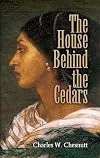
I must say, this book turned out to be quite more of an adventure than I expected it to be! It started out one way completely, and then before you knew it, our main character had completely dropped out of the picture while everything went on without him. It's a very intriguing book, and it's written well and flows so smoothly! You can read it like drinking in fresh air after being cooped up inside a stale house for days! It's enjoyable, it's pleasant, and it's a charm to read. In fact, I was show more more than surprised by many of the events and concepts that this book played with. While I'm sure it's not an old idea that the intermingling of races--especially on a romantic front--can lead to problems, it's still interesting how they brought about much of the interplay here in this book.
In fact, the most shocking thing to me is that the book started out one way and changed at multiple times to be something completely different. It's not a linear read at all. It's got characters in it that are pure and single-minded, and others that are confused and wandering in circles. Everyone has either objectives to follow and meet, or has emotions tugging at their heartstrings so deftly that they cannot help but listen to them and fly madly into fits of logic! Logic! Not passion! How impressive and singularly strange this book was! For the first half of it we were following the story of John, who was our main character by all respects and standards, and his objective was pretty simple enough: "Come with me my beautiful sister! For I can make a better life for you than in our shoddy hometown!" And thus WHOOSH he speeds her away and she becomes a lady of respects and manners, beautiful and intelligent and desired by one man in particular. It becomes a case of courtship, and then it all BOOM. Grows complex! As romances do.
I know this is hardly an explanation, but let's just dabble into the second half, and the ODDEST shift of any book that I've EVER seen! Somewhere, somehow, our main character, John, just drops completely off the face of the earth for us halfway through the book. He's there, and then suddenly, we realize, "Heyyyy... we started off reading about John. But now we're constantly reading about his sister Rena." And mind you, I was NOT upset about this. I think that John came off as a narrow-minded character, with a singular view and purpose in his mind, and that he was acting along a path that followed only what he was attempting to achieve. Once that succeeded or failed, he didn't care beyond that. If it began to mess with his plans, he left it and moved on, which is essentially what he did throughout the entire book: with his mother, his sister, and anyone else he ever worked or interacted with. He's not a person who cares beyond the objective. He has a mind set on a goal, and that's the end-all and only source of concern in his life. *Shrugs* I don't quite hate him, but neither can I say that I exactly fully like him either. He doesn't do anything particularly EVIL in my opinion, even if he is something of an ass. But when he fades away towards the middle of the book, and we start following Rena's life and what she's going through, then I can't be bothered with John anymore.
Rena is a much more honest, emotive, and relateable character I feel. Her voice is strong throughout the book, and her feelings aren't some stupid whining patheticness like most girls today are written up with. She's not a shallow character. Not at all. She has so much depth that it makes the second half of the book almost a torment to read about at times! In a good way. When she's feeling agony and pain, then we do too. And when she's thrilled or annoyed, we feel it too. We right there empathizing with her all the way, and it's a lot of fun to do so! Even if it brings out a lot of emotional feelings in us. I mean, for a character as strong and beautiful in heart and soul as in her features, she's a woman that goes through so much that it's terrible. But that's what makes you love her all the more. Because she's tough enough to keep on trying and fighting in whatever way she knows how, so that she can keep on moving forward. And if she's not fighting, she's finding ways to outsmart others, and she's considering how others are acting and feeling. God she's such a wonderfully complex and thought-provoking woman!
And things are compounded by the two side characters that I love, love, love, love, LOVE! FRANK AND GEORGE. I love them both SO MUCH. George is the epitome of the olden knight figure, glorious and noble, brave and charming in every single way. The way that the speech even in the book changes when we're having the story narrated to us whenever it's following his part of the story, it's GORGEOUS. Words and phrases are used that would make ANY woman's heart SING! He's absolutely magnificent in heart. The only thing that makes me sad, is that it takes him a long time in order to realize the fullness of his own power. And it's a shame, because even though I love seeing how he grows in beauty and strength by doing exactly as he wants, no matter what others say and what the repercussions might be, it all comes a little too slowly and late. And that just causes so many problems in the book that it's not something I can really talk about. Yet even then, I admire the growth and potential for beauty that George has. And then there's Frank. And oh God, Frank. He... makes my heart throb and ache, and I can only say that I love him the more every single time that his name is mentioned, and with every additional thing that he does. He is... so selfless, devoted. He gives every last shred of his love--his pure and undying love--to Rena, and he doesn't ask for a thing in return. He loves her, and he doesn't ask for her to love him, doesn't ask for her to ever even consider loving him. He is merely glad to be friends with her, to hear her speak, to know that she is happy--and that she is with someone who deserves her and her beautiful heart, her intelligence and warmth. Frank is the ultimate selfless and magnificent character in this story just for his own ability to give up everything except for the supporting of the one that he loves more than anything, without ever wanting to incriminate her or ask from her the slightest thing besides her own happiness. How can you not love a character of this worth? Of this merit? He is the ultimate supporting character, epitomizing it in perfection. And that's why I love him so dearly.
Overall, this book was absolutely impressive in how readable and enjoyable I found it! I think it conveyed the thoughts of interracial relationships amazingly well, as well as having a relationship at its central focus that was actually enjoyable to read about, even at its worst moments. The weird thing is that it still doesn't read like a romance book when it starts out, and that's the shocking thing! Usually romances have dead give-aways that they're going to eventually become a romance, but this started off as something so completely different that when it eventually progressed into what could be called almost a full romance--and even then tentatively since there are so many other issues constantly going on--that it was enjoyable still! I was surprised by the progress of the story, but that was the good thing about! Being surprised was pleasant, and even though the ending left me with something of a terrible hole in my heart, I think that's what made this story so... beautiful and profound all at the same time.
Although I bought this book for a class, I love it. I can say it confidently and proudly: It was a GREAT book. And I'm HAPPY I have it in my collection, because it's going to be worth keeping, and has been worth more than every last cent I spent on it. I absolutely advise you pick up this story and read it. Because of the type of story it is, I think it's very susceptible to not being liked by others. But I feel it's a story that has so much else behind it and to it, that it's a beautiful and really thought-provoking read in itself. It's worth it, just for the experience. So if you're afraid you'll read it and end up hating it, then definitely don't go and attempt to buy it. Take it out of a library or find it second-hand first. But at the very least, I recommend it as one of those books you just have to give a shot. Who knows! You might find it more valuable than the sum of its parts, or maybe the end is what makes it for you. But definitely give it a try. show less
In fact, the most shocking thing to me is that the book started out one way and changed at multiple times to be something completely different. It's not a linear read at all. It's got characters in it that are pure and single-minded, and others that are confused and wandering in circles. Everyone has either objectives to follow and meet, or has emotions tugging at their heartstrings so deftly that they cannot help but listen to them and fly madly into fits of logic! Logic! Not passion! How impressive and singularly strange this book was! For the first half of it we were following the story of John, who was our main character by all respects and standards, and his objective was pretty simple enough: "Come with me my beautiful sister! For I can make a better life for you than in our shoddy hometown!" And thus WHOOSH he speeds her away and she becomes a lady of respects and manners, beautiful and intelligent and desired by one man in particular. It becomes a case of courtship, and then it all BOOM. Grows complex! As romances do.
I know this is hardly an explanation, but let's just dabble into the second half, and the ODDEST shift of any book that I've EVER seen! Somewhere, somehow, our main character, John, just drops completely off the face of the earth for us halfway through the book. He's there, and then suddenly, we realize, "Heyyyy... we started off reading about John. But now we're constantly reading about his sister Rena." And mind you, I was NOT upset about this. I think that John came off as a narrow-minded character, with a singular view and purpose in his mind, and that he was acting along a path that followed only what he was attempting to achieve. Once that succeeded or failed, he didn't care beyond that. If it began to mess with his plans, he left it and moved on, which is essentially what he did throughout the entire book: with his mother, his sister, and anyone else he ever worked or interacted with. He's not a person who cares beyond the objective. He has a mind set on a goal, and that's the end-all and only source of concern in his life. *Shrugs* I don't quite hate him, but neither can I say that I exactly fully like him either. He doesn't do anything particularly EVIL in my opinion, even if he is something of an ass. But when he fades away towards the middle of the book, and we start following Rena's life and what she's going through, then I can't be bothered with John anymore.
Rena is a much more honest, emotive, and relateable character I feel. Her voice is strong throughout the book, and her feelings aren't some stupid whining patheticness like most girls today are written up with. She's not a shallow character. Not at all. She has so much depth that it makes the second half of the book almost a torment to read about at times! In a good way. When she's feeling agony and pain, then we do too. And when she's thrilled or annoyed, we feel it too. We right there empathizing with her all the way, and it's a lot of fun to do so! Even if it brings out a lot of emotional feelings in us. I mean, for a character as strong and beautiful in heart and soul as in her features, she's a woman that goes through so much that it's terrible. But that's what makes you love her all the more. Because she's tough enough to keep on trying and fighting in whatever way she knows how, so that she can keep on moving forward. And if she's not fighting, she's finding ways to outsmart others, and she's considering how others are acting and feeling. God she's such a wonderfully complex and thought-provoking woman!
And things are compounded by the two side characters that I love, love, love, love, LOVE! FRANK AND GEORGE. I love them both SO MUCH. George is the epitome of the olden knight figure, glorious and noble, brave and charming in every single way. The way that the speech even in the book changes when we're having the story narrated to us whenever it's following his part of the story, it's GORGEOUS. Words and phrases are used that would make ANY woman's heart SING! He's absolutely magnificent in heart. The only thing that makes me sad, is that it takes him a long time in order to realize the fullness of his own power. And it's a shame, because even though I love seeing how he grows in beauty and strength by doing exactly as he wants, no matter what others say and what the repercussions might be, it all comes a little too slowly and late. And that just causes so many problems in the book that it's not something I can really talk about. Yet even then, I admire the growth and potential for beauty that George has. And then there's Frank. And oh God, Frank. He... makes my heart throb and ache, and I can only say that I love him the more every single time that his name is mentioned, and with every additional thing that he does. He is... so selfless, devoted. He gives every last shred of his love--his pure and undying love--to Rena, and he doesn't ask for a thing in return. He loves her, and he doesn't ask for her to love him, doesn't ask for her to ever even consider loving him. He is merely glad to be friends with her, to hear her speak, to know that she is happy--and that she is with someone who deserves her and her beautiful heart, her intelligence and warmth. Frank is the ultimate selfless and magnificent character in this story just for his own ability to give up everything except for the supporting of the one that he loves more than anything, without ever wanting to incriminate her or ask from her the slightest thing besides her own happiness. How can you not love a character of this worth? Of this merit? He is the ultimate supporting character, epitomizing it in perfection. And that's why I love him so dearly.
Overall, this book was absolutely impressive in how readable and enjoyable I found it! I think it conveyed the thoughts of interracial relationships amazingly well, as well as having a relationship at its central focus that was actually enjoyable to read about, even at its worst moments. The weird thing is that it still doesn't read like a romance book when it starts out, and that's the shocking thing! Usually romances have dead give-aways that they're going to eventually become a romance, but this started off as something so completely different that when it eventually progressed into what could be called almost a full romance--and even then tentatively since there are so many other issues constantly going on--that it was enjoyable still! I was surprised by the progress of the story, but that was the good thing about! Being surprised was pleasant, and even though the ending left me with something of a terrible hole in my heart, I think that's what made this story so... beautiful and profound all at the same time.
Although I bought this book for a class, I love it. I can say it confidently and proudly: It was a GREAT book. And I'm HAPPY I have it in my collection, because it's going to be worth keeping, and has been worth more than every last cent I spent on it. I absolutely advise you pick up this story and read it. Because of the type of story it is, I think it's very susceptible to not being liked by others. But I feel it's a story that has so much else behind it and to it, that it's a beautiful and really thought-provoking read in itself. It's worth it, just for the experience. So if you're afraid you'll read it and end up hating it, then definitely don't go and attempt to buy it. Take it out of a library or find it second-hand first. But at the very least, I recommend it as one of those books you just have to give a shot. Who knows! You might find it more valuable than the sum of its parts, or maybe the end is what makes it for you. But definitely give it a try. show less
Lists
Awards


You May Also Like


Associated Authors
Statistics
- Works
- 38
- Also by
- 34
- Members
- 2,352
- Popularity
- #10,902
- Rating
- 3.9
- Reviews
- 29
- ISBNs
- 295
- Languages
- 4
- Favorited
- 6
