
Peter B. Kyne (1880–1957)
Author of The Go-Getter
About the Author
Series
Works by Peter B. Kyne
Kindred of the Dust 2 copies
Tamea 2 copies
The three godfathers 1 copy
Längtans ö : söderhavsroman 1 copy
Cappy Ricks Retires 1 copy
Omnibusbogen — Author — 1 copy
Green-Pea Pirates 1 copy
Webster—Man's Man 1 copy
The pride of Palomar. 1 copy
Hjertet vinner 1 copy
Fristelsens øy 1 copy
"E -- For Efficiency" 1 copy
The Silent Comrade 1 copy
Kampen om arven 1 copy
I tykt og tynt 1 copy
Hans kongerike 1 copy
Mexikanen : Äventyrsroman 1 copy
El Capitán Scraggs 1 copy
Los proscritos del paraiso 1 copy
El triunfador 1 copy
Soldiers, sailors and dogs 1 copy
De un mismo barro 1 copy
THE PRIDE 0F PALOMAR 1 copy
The Tide of Empire 1 copy
Pride of Palomar 1 copy
Associated Works
Tagged
Common Knowledge
- Canonical name
- Kyne, Peter B.
- Legal name
- Kyne, Peter Bernard
- Birthdate
- 1880-10-12
- Date of death
- 1957-11-25
- Gender
- male
- Occupations
- novelist
- Organizations
- United States Army (WWI)
- Short biography
- Kyne's stories inspired films, and he worked on a number of them including material for silent and `talkies' in the 1920s. Kyne was a sometimes wealthy Republican, though he ended up squandering much of his wealth on poor investments in the oil industry, schemes of speculation and invention and horseracing. He died on 25 November 1957 and is buried at the Golden Gate National Cemetery, San Bruno, San Mateo County, California, USA.
- Nationality
- USA
- Birthplace
- San Francisco, California, USA
- Places of residence
- San Francisco, California, USA
- Place of death
- San Francisco, California, USA
- Burial location
- Golden Gate National Cemetery, San Bruno, California, USA
- Associated Place (for map)
- San Francisco, California, USA
Members
Reviews

I bought this book 7 years ago originally under the mistaken idea that it was about literal giants, of the mythical kind, as it was in the science fiction section of the secondhand bookstore. So you can imagine my surprise when it turns out to be a novel set in the early 1900s about the rough and tumble world of running a logging business in the fictional town of Sequoia
Pleasingly, as a fan of Arthur Hailey's books that delve into business, this was a pleasant and much welcome surprise. Not show more only does this novel paint a realistic and vivid picture of the time, it is immersive and dare I go as far as to say exciting. You can't help but root for the Cardigan's as they attempt to operate their business in an ethical manner whilst Colonel Pettington does so underhandedly and unethically attempting to gain any advantage he can.
At the very core it is a novel of succession and overcoming adversity, with the adversity being an unethical competitor who has seemingly taken advantage of the aging owner of a timber enterprise. The aging owner's son returns home from his education to taken the reigns of the family business and take the fight to the competitor.
I really enjoyed this and would recommend it. show less
Pleasingly, as a fan of Arthur Hailey's books that delve into business, this was a pleasant and much welcome surprise. Not show more only does this novel paint a realistic and vivid picture of the time, it is immersive and dare I go as far as to say exciting. You can't help but root for the Cardigan's as they attempt to operate their business in an ethical manner whilst Colonel Pettington does so underhandedly and unethically attempting to gain any advantage he can.
At the very core it is a novel of succession and overcoming adversity, with the adversity being an unethical competitor who has seemingly taken advantage of the aging owner of a timber enterprise. The aging owner's son returns home from his education to taken the reigns of the family business and take the fight to the competitor.
I really enjoyed this and would recommend it. show less

I enjoyed this post-modern western by Peter B. Kyne. I'm calling it post-modern because it takes place in the 1930s (contemporary for when it was published), fifteen years after Arizona state hood, so it has all the modern trappings (telephones, cars, etc.) but is still basically a western in that it deals a working ranch and the struggle over the land with a sheriff who is torn between upholding the law and protecting his cattle rustling sons.
Kyne fleshed out Mary Sutherland far better than show more I expected. She has a smart head for business, can handle a horse and is fluent in Spanish, all amazing accomplishments for the more typical 1930s heroine. The conflict and history of Hamilton and his son is where the book really captured my attention and interest. show less
Kyne fleshed out Mary Sutherland far better than show more I expected. She has a smart head for business, can handle a horse and is fluent in Spanish, all amazing accomplishments for the more typical 1930s heroine. The conflict and history of Hamilton and his son is where the book really captured my attention and interest. show less

This is one of those rugged old manly man kinds of books, pitting a good, fair-playing capitalist against an underhanded one. The story revolves around red-wood timber magnates in Northern California. It's a pretty good yarn, albeit melodramatic, at times. The characterization of women is predictably paternalistic (hey, its from a century ago, before suffrage). Interestingly, however, the primary female character is unusually shrewd in a business sense in between her fits of swooning and show more peevishness over the manly man of her dreams. This is escapist literature from a century ago, the kind of stuff my grandfather-in-law liked (although he turned me on to James Oliver Curwood, but this stuff is somewhat similar). It does it's job well enough. show less
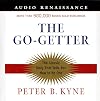
My workplace gave all employees a copy of The Go Getter and encouraged us to read the book and to come up with our own "Blue Vase." There was also apparently a short story by P.G. Wodehouse of the same name and so to avoid confusion I found a couple of places that referenced this book by Kyne as Winning the Blue Vase. Other versions add the (original?) subtitle "A Story that Tells You how to Be One."
The book is a very short read (only about 70 pages) and our edition came with an afterword of show more another ~15 pages of commentary. The story is a parable/fable like tale. It tells the story of war veteran William "Bill" Peck and his efforts to get a job at a Logging & Lumber Company. The company is owned by "Cappy" Ricks but Cappy has delegated out normal management roles to two vice presidents. The book was written and is set in the time immediately following World War One.
The book begins with Cappy berating his acting upper management team for their poor choices and their inability to find worthwhile employees. Shortly after that, Peck arrives on the scene asking Cappy for a job. However, he does more than just "ask" for a job. He comes to Cappy without an appointment and basically tells Cappy that Peck is the man for whatever job Cappy wants to throw at him. There are other details as well (Peck had already talked with the other vice-presidents and been turned down, he had a great working knowledge of Cappy's business, etc.) but the short of it is that Cappy is very intrigued by Peck and gives him a chance. However, at the same time, he makes the job as difficult as possible by giving Peck what is considered (as I understood it) the worst sales assignment in the company.
I don't want to go through the whole plot with you (it's a short book…and it seems to be in the public domain if you want to read it online for free). But I will say what you've already guessed from the title of the book…Peck continues to impress Cappy and goes on to impress the other vice presidents. At which point, Cappy gives him "the test of the blue vase." The test is a simple personal task that Cappy asks Peck to do, namely to go and purchase a blue vase from a shop window and bring it to Cappy. However Cappy throws all sorts of obstacles in the way to test Peck's ingenuity and resolve.
The story is a cute little tale and it does include a number of quippy little comments that can be used as motivational blurbs. The afterward in my edition expounds on the concepts of the book in case you failed to make the leap from the fiction of the story to the moral and practical lesson it's trying to teach. The actual lesson being taught is actually fairly simple and straightforward on paper. It basically involves setting your eye on the prize and doing whatever it takes to get there. In addition it's the idea that you should go above and beyond just the status quo…that you should attempt to exceed expectations, not simply meet them (or worse, fail to meet them). When given an assignment, you should give it your all and do the best you can without excuses. When you see an opportunity, you should leap at the chance to stretch and grow even if it's outside your comfort zone or expertise.
Bottom line (as I take it) you should not "settle", you should not "coast." Life should always consist of your best effort, your best talent, your best energy. There will always be obstacles, sometimes more than others. Bill Peck's motto (as taught him by his general in the war) was "it shall be done." Even if he'd never done it before or if nobody had ever done it before, he always went into a task that he could and would finish the task and no matter the obstacles, he continued trying to find a way to complete the task even when others may have given up. He continued after the blue vase even when everything was against him and his allotted time was up. And eventually, he succeeded.
This is a fun little read and I can see the reason that employers might want their employees to read it. It's definitely a simple read with a simple message, but it's a worthwhile message.
***
3 out of 5 stars show less
The book is a very short read (only about 70 pages) and our edition came with an afterword of show more another ~15 pages of commentary. The story is a parable/fable like tale. It tells the story of war veteran William "Bill" Peck and his efforts to get a job at a Logging & Lumber Company. The company is owned by "Cappy" Ricks but Cappy has delegated out normal management roles to two vice presidents. The book was written and is set in the time immediately following World War One.
The book begins with Cappy berating his acting upper management team for their poor choices and their inability to find worthwhile employees. Shortly after that, Peck arrives on the scene asking Cappy for a job. However, he does more than just "ask" for a job. He comes to Cappy without an appointment and basically tells Cappy that Peck is the man for whatever job Cappy wants to throw at him. There are other details as well (Peck had already talked with the other vice-presidents and been turned down, he had a great working knowledge of Cappy's business, etc.) but the short of it is that Cappy is very intrigued by Peck and gives him a chance. However, at the same time, he makes the job as difficult as possible by giving Peck what is considered (as I understood it) the worst sales assignment in the company.
I don't want to go through the whole plot with you (it's a short book…and it seems to be in the public domain if you want to read it online for free). But I will say what you've already guessed from the title of the book…Peck continues to impress Cappy and goes on to impress the other vice presidents. At which point, Cappy gives him "the test of the blue vase." The test is a simple personal task that Cappy asks Peck to do, namely to go and purchase a blue vase from a shop window and bring it to Cappy. However Cappy throws all sorts of obstacles in the way to test Peck's ingenuity and resolve.
The story is a cute little tale and it does include a number of quippy little comments that can be used as motivational blurbs. The afterward in my edition expounds on the concepts of the book in case you failed to make the leap from the fiction of the story to the moral and practical lesson it's trying to teach. The actual lesson being taught is actually fairly simple and straightforward on paper. It basically involves setting your eye on the prize and doing whatever it takes to get there. In addition it's the idea that you should go above and beyond just the status quo…that you should attempt to exceed expectations, not simply meet them (or worse, fail to meet them). When given an assignment, you should give it your all and do the best you can without excuses. When you see an opportunity, you should leap at the chance to stretch and grow even if it's outside your comfort zone or expertise.
Bottom line (as I take it) you should not "settle", you should not "coast." Life should always consist of your best effort, your best talent, your best energy. There will always be obstacles, sometimes more than others. Bill Peck's motto (as taught him by his general in the war) was "it shall be done." Even if he'd never done it before or if nobody had ever done it before, he always went into a task that he could and would finish the task and no matter the obstacles, he continued trying to find a way to complete the task even when others may have given up. He continued after the blue vase even when everything was against him and his allotted time was up. And eventually, he succeeded.
This is a fun little read and I can see the reason that employers might want their employees to read it. It's definitely a simple read with a simple message, but it's a worthwhile message.
***
3 out of 5 stars show less
Lists
Awards

You May Also Like


Associated Authors
Statistics
- Works
- 66
- Also by
- 9
- Members
- 1,036
- Popularity
- #24,854
- Rating
- 3.8
- Reviews
- 10
- ISBNs
- 218
- Languages
- 4