
Sharan Newman
Author of Death Comes as Epiphany
About the Author
Sharan Newman is a medieval historian and author. She took her Master's degree in Medieval Literature at Michigan State University and then did her doctoral work at the University of California at Santa Barbara in Medieval Studies, specializing in twelfth-century France. She is a member of the show more Medieval Academy and the Medieval Association of the Pacific. Newman has done research at the Bibliotheque Nationale in Paris, the centre National de la Recherche Scientifique France Meridionale et Espagne at the University of Toulouse and the Institute for Jewish History at the University of Trier, as well as many departmental archives. show less
Image credit: Whitney Hall
Series
Works by Sharan Newman
The Real History of the End of the World: Apocalyptic Predictions from Revelation and Nostradamus to Y2K and 2012 (2010) 78 copies, 3 reviews
Defending the City of God: A Medieval Queen, the First Crusades, and the Quest for Peace in Jerusalem (2014) 62 copies, 18 reviews
The Queen's Man 2 copies
Sir Gerard in Charge 1 copy
Associated Works
Malice Domestic 05: An Anthology of Original Traditional Mystery Stories (1996) — Contributor — 86 copies, 2 reviews
The Deadly Bride and 21 of the Year's Finest Crime and Mystery Stories: Volume II (2006) — Contributor — 29 copies
Left Coast Crimes: A Collection of Short Stories — Contributor — 2 copies
Tagged
Common Knowledge
- Other names
- Newman, Sharan Elizabeth
- Birthdate
- 1949-04-15
- Gender
- female
- Education
- University of California, Santa Barbara
Michigan State University (MA ∙ Medieval Literature)
Antioch College (AB ∙ 1971) - Occupations
- historian
novelist - Organizations
- Medieval Academy
Medieval Association of the Pacific - Awards and honors
- Career Achievement Award for Historical Mystery (1999)
- Nationality
- USA
- Birthplace
- Ann Arbor, Michigan, USA
- Places of residence
- Oregon, USA
- Associated Place (for map)
- USA
Members
Reviews
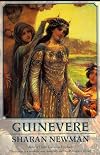
I think this is one of the best portrayals of Guinevere I've ever read. It may have been written for a young adult audience due to the point of view of the title character: we arrive at the end of the book when she marries Arthur, and do not go into Guinevere's queenship.
Guinevere is introduced as a child with an affinity for nature, and her parents, Leodegrance and Guenlain maintain their home in the style of the Romans who left nearly 200 years ago. But they also left behind a sense of show more order and running water, and Guinevere's parents know the value of both these things!
Making a prominent place in this re-telling are the incursions of the Saxon invaders as well as hints of an earlier religion. Flora, Guinevere's nurse is one of the practitioners of this Old Way, as are many of the house servants with their darker hair and slighter build. New characters are Geraldus, a traveling priest beset by an invisible chorus that only he can hear (though Guinevere can see several of them), and three older brothers to Guinevere: Matthew, Mark, and John. And Guinevere's mother, Guenlian, is mentioned by name and given a great deal of character. She is also cousin to Merlin.
As Guinevere grows, her affinity with nature includes her finding and bonding with a unicorn who is the most beautiful creature Guinevere has ever seen. It is while she is spending time with her unicorn that a young Arthur and several of his early band, including Gawain, come riding up. While the unicorn runs away from this armed band of men, Guinevere is still in her trance and the aura that surrounds her enraptures Arthur and he thinks he has seen the Virgin Mary.
Other adventures occur in Guinevere's life, fleshing her out as a whole person during her earlier years. It is well-written, full of detail, and describes this time in British history and develops this famous young woman's life. show less
Guinevere is introduced as a child with an affinity for nature, and her parents, Leodegrance and Guenlain maintain their home in the style of the Romans who left nearly 200 years ago. But they also left behind a sense of show more order and running water, and Guinevere's parents know the value of both these things!
Making a prominent place in this re-telling are the incursions of the Saxon invaders as well as hints of an earlier religion. Flora, Guinevere's nurse is one of the practitioners of this Old Way, as are many of the house servants with their darker hair and slighter build. New characters are Geraldus, a traveling priest beset by an invisible chorus that only he can hear (though Guinevere can see several of them), and three older brothers to Guinevere: Matthew, Mark, and John. And Guinevere's mother, Guenlian, is mentioned by name and given a great deal of character. She is also cousin to Merlin.
As Guinevere grows, her affinity with nature includes her finding and bonding with a unicorn who is the most beautiful creature Guinevere has ever seen. It is while she is spending time with her unicorn that a young Arthur and several of his early band, including Gawain, come riding up. While the unicorn runs away from this armed band of men, Guinevere is still in her trance and the aura that surrounds her enraptures Arthur and he thinks he has seen the Virgin Mary.
Other adventures occur in Guinevere's life, fleshing her out as a whole person during her earlier years. It is well-written, full of detail, and describes this time in British history and develops this famous young woman's life. show less

The book is a series of more or less disconnected short chapters with no chronological or probably any other order; as such, it reads as a poorly written high school textbook. It could still be valuable though if it were a trustworthy, well-researched work - but is it? I have my doubts. [a: Sharan Newman|50581|Sharan Newman|https://d.gr-assets.com/authors/1412689005p2/50581.jpg] stresses throughout the work the importance of footnotes and critical reading. Well so she gets it.
She claims, for show more instance, that:
Completely wrong. This "works" in Medieval French, spoken if not written, and this false etymology is not a recent invention. The Catholic Encyclopedia of 1913 is well aware thereof, as are several books. OTOH, this "misprint" does not work in modern Spanish, the Spanish word for blood is sangre and not sang as she seems to assume.
Granted, this still is a false etymology, and it wasn't probably invented (at least no earlier evidence survived) until very late in the Middle Ages, but still, it does work in Medieval French, it does not work in modern Spanish, and it is far from being a modern invention by conspiracy theorists, who are simply parroting (or perhaps reinventing) this centuries old mistake.
But this is not even the worst blunder she had made in the book.
The following is, quoted verbatim, the footnote 23 from the 48th chapter:
Rough? Well, no, not rough, completely nonexistent (I am a native speaker, btw). I don't believe that she had taken as much as a lesson of Polish. And not just that, she has failed to comprehend the text so miserably that she has started the quotation worse than in midsentence. Now for a more complete quotation (the article is now found here):
and my translation (a rough one, I admit):
(Both in the quote and the translation, the fragment quoted by Newman is in italic)
As can be seen, she completely misunderstood the text, so much so that she thought Moguncji to be a personal name (I think it says that Moguncji was preceptor) when it is the Polish name of the German city of Mainz (more precisely, Moguncja is the name; Polish nouns are inflected), and the fragment means that Hugo von Salm, who was preceptor from Grumbach, appeared in person at the council in Mainz to defend the order, accompanied by 20 armed knights. She's so incompetent in the Polish language that she inadvertently split the city name from the preposition - w Moguncji meaning exactly in Mainz.
Obviously, she doesn't need to know Polish, and no book is free from mistakes, so it may feel like I'm making much ado about nothing. But I don't think so. I would not be writing this if I thought this to have been a simple mistake. But, frankly, it doesn't look as one. It looks as if she googled the name Hugo von Salm, copied the offending fragment (perhaps directly from search results, or else how did she manage not to notice that she was splitting a name from a preposition?!) and without so much as trying to ask someone with even a passing knowledge of Polish she inferred that the mysterious Mr. Moguncji was a preceptor in Grumbach, and - since it's written on a Polish website - von Salm must have been in Poland to defend the order.
In short, it appears that she completely made this one up on the basis of one badly misunderstood fragment of a sentence from a Polish website.
This might look as gratuitous nitpicking, but I don't think it is. I am not an expert in Templar History, and I wanted to read a book by one. But, now aware of the reckless abandon Sharan Newman treats her sources with, I am sure this is not a book I can trust. show less
She claims, for show more instance, that:
recently some imaginative writers have decided that “Holy Grail”—San Greal—is simply a misprint for Sang Real, “Royal Blood,” and that medieval writers were using it as a code for a hidden secret. This is cute but there are a number of problems in the theory, the most important being that this only works in modern Spanish. Old French, the language of the first Grail poems, would write it Saint Graal, Grel, or even Gresal
Completely wrong. This "works" in Medieval French, spoken if not written, and this false etymology is not a recent invention. The Catholic Encyclopedia of 1913 is well aware thereof, as are several books. OTOH, this "misprint" does not work in modern Spanish, the Spanish word for blood is sangre and not sang as she seems to assume.
Granted, this still is a false etymology, and it wasn't probably invented (at least no earlier evidence survived) until very late in the Middle Ages, but still, it does work in Medieval French, it does not work in modern Spanish, and it is far from being a modern invention by conspiracy theorists, who are simply parroting (or perhaps reinventing) this centuries old mistake.
But this is not even the worst blunder she had made in the book.
The following is, quoted verbatim, the footnote 23 from the 48th chapter:
http://www.templariusze.org/artykuly.php?id=27 “Moguncji zrobił to osobiście preceptor z Grumbach, Hugo von Salm wraz z dwudziestoma uzbrojonymi rycerzami.” Okay, my Polish is rough. He might have been the preceptor of Grumbach, but I think it says that Moguncji was preceptor. For more see chapter 35, The Trials outside of France.
Rough? Well, no, not rough, completely nonexistent (I am a native speaker, btw). I don't believe that she had taken as much as a lesson of Polish. And not just that, she has failed to comprehend the text so miserably that she has started the quotation worse than in midsentence. Now for a more complete quotation (the article is now found here):
W Niemczech na żądanie papieża zwołano w kilku prowincjach synody mające sądzić templariuszy. Na niektórych z nich jednak w obronie zakonu stanęli życzliwi mu biskupi, w Moguncji zrobił to osobiście preceptor z Grumbach, Hugo von Salm wraz z dwudziestoma uzbrojonymi rycerzami. Przybyli ostro zaprotestowali przeciwko oskarżeniu zakonu o herezję, a przerażony arcybiskup zawiesił prace synodu na okres dwóch miesięcy.
and my translation (a rough one, I admit):
In Germany, at the pope's request, in several provinces councils were convened to try the Templars. In some of them friendly bishops stood in the order's defence, in Mainz the preceptor from Grumbach, Hugo von Salm did it himself, with twenty armed knights. They contested strongly the charges of heresy against the order, and the terrified archbishop suspended the council for two month's time.
(Both in the quote and the translation, the fragment quoted by Newman is in italic)
As can be seen, she completely misunderstood the text, so much so that she thought Moguncji to be a personal name (I think it says that Moguncji was preceptor) when it is the Polish name of the German city of Mainz (more precisely, Moguncja is the name; Polish nouns are inflected), and the fragment means that Hugo von Salm, who was preceptor from Grumbach, appeared in person at the council in Mainz to defend the order, accompanied by 20 armed knights. She's so incompetent in the Polish language that she inadvertently split the city name from the preposition - w Moguncji meaning exactly in Mainz.
Obviously, she doesn't need to know Polish, and no book is free from mistakes, so it may feel like I'm making much ado about nothing. But I don't think so. I would not be writing this if I thought this to have been a simple mistake. But, frankly, it doesn't look as one. It looks as if she googled the name Hugo von Salm, copied the offending fragment (perhaps directly from search results, or else how did she manage not to notice that she was splitting a name from a preposition?!) and without so much as trying to ask someone with even a passing knowledge of Polish she inferred that the mysterious Mr. Moguncji was a preceptor in Grumbach, and - since it's written on a Polish website - von Salm must have been in Poland to defend the order.
In short, it appears that she completely made this one up on the basis of one badly misunderstood fragment of a sentence from a Polish website.
This might look as gratuitous nitpicking, but I don't think it is. I am not an expert in Templar History, and I wanted to read a book by one. But, now aware of the reckless abandon Sharan Newman treats her sources with, I am sure this is not a book I can trust. show less
Definitely my favorite version of the King Arthur story (despite the fact I'm not so crazy about Guinevere herself). This series privileges the fantastic and romantic aspects of the Arthur stories over the historical (you sort of have to, if you are including Lancelot and Guinevere), and it doesn't seem to favor Christianity or Paganism like some of the versions I've read. It's a bit soapy, I"ll admit, but I love Gawain!
Defending the City of God: A Medieval Queen, the First Crusades, and the Quest for Peace in Jerusalem by Sharan Newman
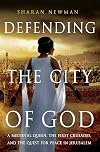
This book covers the period of the crusades that encompasses the reign of Queen Melisende and her father. It's a fascinating real-life Game of Thrones kind of story, and you will find it surprising just how interwoven the society around the Crusades became. It's not always about Infidels vs. Islam, there are far more complexities to it, even instances of Europeans and local populations working together. I have not spent a great deal of time reading about this period in history, but I did show more find myself wanting to understand and learn more once I was done.
The author spends a good deal of time exposing the role women played in this time period, showing how they were not always as subjugated the way modern society thinks. Queen Melisende being a prime example: she was the first woman ruler of Jerusalem, and the first to inherit the role (most Jerusalem kings were elected), as well as showing her prowess at the art holding the throne. She even beat her own husband at the game, not allowing him to rule solely on his own, requiring her to be part of all the decisions made. Throughout the book the author does her best to bring a new perspective to events, even challenging some of the standards taught about the characters on this historic stage. I enjoyed hearing her take on things as it gives an opportunity to reexamine what evidence still exists.
The book is written in an easy prose that is not dry, like so many history books, but flowed well enough to keep my pace moving through the pages. And the book isn't terrible large, making it something that didn't drag on forever. I highly recommend this book and the fresh look at this particular period of the 1st Crusade to anyone who has an interest in this moment from our history. show less
The author spends a good deal of time exposing the role women played in this time period, showing how they were not always as subjugated the way modern society thinks. Queen Melisende being a prime example: she was the first woman ruler of Jerusalem, and the first to inherit the role (most Jerusalem kings were elected), as well as showing her prowess at the art holding the throne. She even beat her own husband at the game, not allowing him to rule solely on his own, requiring her to be part of all the decisions made. Throughout the book the author does her best to bring a new perspective to events, even challenging some of the standards taught about the characters on this historic stage. I enjoyed hearing her take on things as it gives an opportunity to reexamine what evidence still exists.
The book is written in an easy prose that is not dry, like so many history books, but flowed well enough to keep my pace moving through the pages. And the book isn't terrible large, making it something that didn't drag on forever. I highly recommend this book and the fresh look at this particular period of the 1st Crusade to anyone who has an interest in this moment from our history. show less
 This review was written for LibraryThing Early Reviewers.
Lists
Awards


You May Also Like


Associated Authors
Statistics
- Works
- 27
- Also by
- 14
- Members
- 3,798
- Popularity
- #6,675
- Rating
- 3.6
- Reviews
- 86
- ISBNs
- 137
- Languages
- 7
- Favorited
- 9
