
About the Author
Image credit: Todd B. Kashdan, Ph.D.
Works by Todd Kashdan
The Upside of Your Dark Side: Why Being Your Whole Self--Not Just Your "Good" Self--Drives Success and Fulfillment (2014) 161 copies, 6 reviews
Mindfulness, Acceptance, and Positive Psychology: The Seven Foundations of Well-Being (The Context Press Mindfulness and Acceptance Practica Series) (2013) 32 copies, 1 review
National Geographic Mind: A Scientific Guide to Who You Are, How You Got That Way, and How to Make the Most of It (2016) 29 copies
Tagged
Common Knowledge
- Birthdate
- 20th Century
- Gender
- male
- Nationality
- USA
- Associated Place (for map)
- USA
Members
Reviews
The Upside of Your Dark Side: Why Being Your Whole Self--Not Just Your "Good" Self--Drives Success and Fulfillment by Todd Kashdan

This book delves into the topic of why the exclusive pursuit of happiness and positive emotions can be counter-productive. The main theses tends to be very commonsensical, and the authors do an okay job explaining and rationalizing their ideas.
The thing I hate about this book, and all other pop-psych books, is the "science" they use to back up their claims. I know I'm biased as a physical scientist, where I can run an experiment and get a concrete answer; much like a math problem that has a show more verifiable solution. Social science, however, in my mind, isn't really science. It's asking a bunch of people to fill out a survey or do some weird experiment that always tends to prove the hypothesis of the experimenter. This is always prone to sample bias, experimenter bias, sample size problems, questionable interpretation of results, etc. However it always makes for flashy PR. (A sort-of made up example that is very close to one of the studies used as concrete evidence of human nature in this book: "We made a dozen people angry before having them throw darts and they did better than the dozen people who we made happy before the dart-throwing. Therefore being angry improves performance by 500%!!!!!")
At any rate, many of the concepts in this book are related to Dialectical Behavioral Therapy (DBT), which has also been "proven" to be one of the most effective therapeutic methods for people with depression, anxiety and similar mental illnesses. So a lot of the concepts can be boiled down to DBT's four main areas: mindfulness, emotional regulation, distress tolerance and interpersonal effectiveness. It makes sense that people who understand their emotions, can deal with them (even if that means distracting oneself while backing away from the metaphorical ledge), communicate assertively with others, and be mindful of the moment they're living in (instead of projecting into the future or dwelling on the past) are going to have, if not a happier life, then at least a life with less stress, anxiety, depression, etc. Incidentally, I thought it was funny how, in the last chapter, the authors discuss being present in being bored (instead of continually distracting oneself with TV, smart phones, etc.) as being "mindless", when actually it's an amazing example of mindfulness, which the authors think is not worth the hype. I don't think anybody argues that being mindful 100% of the time is beneficial for anybody, but still, the authors have to sell books.
Really, I liked this book, and I think it's worth reading. But being the research scientist / skeptic that I am, I am unable to read books like this without finding at least a million flaws. So don't take my word for it, read it yourself. There's still a lot of good stuff packed in here. show less
The thing I hate about this book, and all other pop-psych books, is the "science" they use to back up their claims. I know I'm biased as a physical scientist, where I can run an experiment and get a concrete answer; much like a math problem that has a show more verifiable solution. Social science, however, in my mind, isn't really science. It's asking a bunch of people to fill out a survey or do some weird experiment that always tends to prove the hypothesis of the experimenter. This is always prone to sample bias, experimenter bias, sample size problems, questionable interpretation of results, etc. However it always makes for flashy PR. (A sort-of made up example that is very close to one of the studies used as concrete evidence of human nature in this book: "We made a dozen people angry before having them throw darts and they did better than the dozen people who we made happy before the dart-throwing. Therefore being angry improves performance by 500%!!!!!")
At any rate, many of the concepts in this book are related to Dialectical Behavioral Therapy (DBT), which has also been "proven" to be one of the most effective therapeutic methods for people with depression, anxiety and similar mental illnesses. So a lot of the concepts can be boiled down to DBT's four main areas: mindfulness, emotional regulation, distress tolerance and interpersonal effectiveness. It makes sense that people who understand their emotions, can deal with them (even if that means distracting oneself while backing away from the metaphorical ledge), communicate assertively with others, and be mindful of the moment they're living in (instead of projecting into the future or dwelling on the past) are going to have, if not a happier life, then at least a life with less stress, anxiety, depression, etc. Incidentally, I thought it was funny how, in the last chapter, the authors discuss being present in being bored (instead of continually distracting oneself with TV, smart phones, etc.) as being "mindless", when actually it's an amazing example of mindfulness, which the authors think is not worth the hype. I don't think anybody argues that being mindful 100% of the time is beneficial for anybody, but still, the authors have to sell books.
Really, I liked this book, and I think it's worth reading. But being the research scientist / skeptic that I am, I am unable to read books like this without finding at least a million flaws. So don't take my word for it, read it yourself. There's still a lot of good stuff packed in here. show less
 This review was written for LibraryThing Early Reviewers.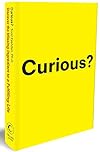
My feelings about Curious are…ambiguous. I think it’s a good book, but perhaps not a great one. Part self-help manual, part lecture series for undergrad psych majors, the book attempts to tie everything he wants to say to his audience to the concept of curiosity and at times seems forced. Kashdan’s writing style didn’t resonate with me and while I enjoyed the topic I really didn’t like reading the book, and went through it more quickly than it may have merited. I found I got a lot show more more out of it when I started outlining the concepts for myself.
The book describes why curiosity is an important ingredient in our lives – that it’s the engine of personal growth, that it enhances intelligence, and gives life meaning and purpose. It discusses the biological basis of curiosity and considers the role of curiosity in everyday life, including the effect of curiosity on lasting interests (which the author contends must be linked to our values, shared, supported, and come from within in order to be sustained).
There’s a chapter on the value of curiosity in overcoming anxiety (stop worrying about what you’re worried about and start exploring it, and you’ll conquer your fears, which seems to work well with the examples he uses, the boy who’s afraid of bugs; but may be a little simplistic when it comes to other anxiety). He even discusses the downside of curiosity, when curiosity becomes obsession, or leads to nosiness, gossip, and sensation-seeking behavior of all kinds, before tying everything back together about curiosity and our search for meaning.
I really think my problem with this book is with the writing style, as I’d be a lot more enthusiastic about reading this book based on my outline of it than I ultimately ended up being. So I’d recommend it with qualifications; definitely a YMMV work. show less
The book describes why curiosity is an important ingredient in our lives – that it’s the engine of personal growth, that it enhances intelligence, and gives life meaning and purpose. It discusses the biological basis of curiosity and considers the role of curiosity in everyday life, including the effect of curiosity on lasting interests (which the author contends must be linked to our values, shared, supported, and come from within in order to be sustained).
There’s a chapter on the value of curiosity in overcoming anxiety (stop worrying about what you’re worried about and start exploring it, and you’ll conquer your fears, which seems to work well with the examples he uses, the boy who’s afraid of bugs; but may be a little simplistic when it comes to other anxiety). He even discusses the downside of curiosity, when curiosity becomes obsession, or leads to nosiness, gossip, and sensation-seeking behavior of all kinds, before tying everything back together about curiosity and our search for meaning.
I really think my problem with this book is with the writing style, as I’d be a lot more enthusiastic about reading this book based on my outline of it than I ultimately ended up being. So I’d recommend it with qualifications; definitely a YMMV work. show less
The Upside of Your Dark Side: Why Being Your Whole Self--Not Just Your "Good" Self--Drives Success and Fulfillment by Todd Kashdan
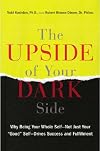
I've spent my life trying to minimize negative feelings. Anything I could fail at or might make me uncomfortable, I avoid. My theory for this is that if I'm happier, my life is better. This book made me question that policy.
This review was written for LibraryThing Early Reviewers.Curious ? Well of course I am. Which is why I just couldn't resist a book simply titled "Curious ?" I was expecting something with a scientific or anthropological point of view but unfortunately, the book turned out to be nothing more than a simple self help book. And after reading this book the only thing I'm curious about is why people bother to read these kind of books anyway ?
Lists
Awards

You May Also Like


Statistics
- Works
- 10
- Members
- 403
- Popularity
- #60,269
- Rating
- 3.4
- Reviews
- 13
- ISBNs
- 36
- Languages
- 4
