
Sonja Lyubomirsky
Author of The How of Happiness: A New Approach to Getting the Life You Want
About the Author
Sonja Lyubomirsky is professor of psychology at the University of California, Riverside.
Works by Sonja Lyubomirsky
The Myths of Happiness: What Should Make You Happy, but Doesn't, What Shouldn't Make You Happy, but Does (2013) 211 copies, 7 reviews
Associated Works
Tagged
Common Knowledge
- Canonical name
- Lyubomirsky, Sonja
- Gender
- female
- Education
- Harvard University (AB)
Stanford University (PhD|Social/Personality Psychology) - Occupations
- professor of psychology (University of California, Riverside)
- Organizations
- University of California, Riverside
- Relationships
- Del Greco, Peter (husband)
Del Greco, Gabriella (daughter)
Del Greco, Alexander (son) - Nationality
- USA
- Places of residence
- Santa Monica, California, USA
- Associated Place (for map)
- California, USA
Members
Reviews
The Myths of Happiness: What Should Make You Happy, but Doesn't, What Shouldn't Make You Happy, but Does by Sonja Lyubomirsky
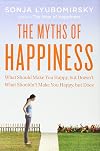
I read children’s picture books and travel narratives and creative nonfiction and literary fiction and Books About Happiness.
Yes, Books About Happiness. It’s one of my favorite genres.
I’ve read Learned Optimism by Martin Seligman and Happiness: Lessons from a New Science by Richard Leyman and Gretchen Rubin’s Happiness Project and Happier at Home and the Dalai Lama’s The Art of Happiness and Sonja Lyubomirsky’s earlier book, The How of Happiness.
How could I pass up show more Lyubomirsky’s new book, The Myths of Happiness?
Of course I couldn’t.
And I am happy to report that reading it was four hours happily spent.
Lyubomirsky’s underlying theme relies on the truth of two quotes: Pasteur reminds us, “Chance favors the prepared mind,” and Socrates notes, “He who is not contented with what he has, Would not be contented with what he would like to have.”
Chapter by chapter, Lyubomirsky examines all the myths of happiness we Americans hide in our hearts---all the I’ll Be Happy When’s and all the I Can’t Be Happy If’s---and explodes them, using a lovely combination of scientific research and case studies.
Turns out, we are much more resilient than we think we are. We keep walking through great traumas with scarcely more than a few months’ dip in happiness. We keep walking through great good fortune with scarcely more than a few months’ rise in happiness.
Interesting. Unexpected. Good to know. show less
Yes, Books About Happiness. It’s one of my favorite genres.
I’ve read Learned Optimism by Martin Seligman and Happiness: Lessons from a New Science by Richard Leyman and Gretchen Rubin’s Happiness Project and Happier at Home and the Dalai Lama’s The Art of Happiness and Sonja Lyubomirsky’s earlier book, The How of Happiness.
How could I pass up show more Lyubomirsky’s new book, The Myths of Happiness?
Of course I couldn’t.
And I am happy to report that reading it was four hours happily spent.
Lyubomirsky’s underlying theme relies on the truth of two quotes: Pasteur reminds us, “Chance favors the prepared mind,” and Socrates notes, “He who is not contented with what he has, Would not be contented with what he would like to have.”
Chapter by chapter, Lyubomirsky examines all the myths of happiness we Americans hide in our hearts---all the I’ll Be Happy When’s and all the I Can’t Be Happy If’s---and explodes them, using a lovely combination of scientific research and case studies.
Turns out, we are much more resilient than we think we are. We keep walking through great traumas with scarcely more than a few months’ dip in happiness. We keep walking through great good fortune with scarcely more than a few months’ rise in happiness.
Interesting. Unexpected. Good to know. show less
If you read The Geography of Happiness, you might give this a try. Self-help books are often facile and silly, but this is research-based and that appeals to the scientist in me. The general analysis is that approximately 40% of our mood/attitudes is subject to our direct control (as in not biology or given life circumstances. It is a fascinating look at what one might be able to do with that 40% and how. The only section I skimmed was the one on spirituality/religion, but the others are show more well worth a look. Some repetition and a few wonky questionnaires aside, it is at least guaranteed to make you think again about what you really need to be happy. show less
There are some helpful nuggets in this user-friendly guide to a universal theme: attaining happiness. One of the sub-titles in some editions positions the book as a "scientific approach" to the topic. Indeed, Lyubomirsky skillfully weaves in a number of relevant studies to bolster her assertions. It gets a bit dense and even repetitive in spots. But in general, "The How of Happiness" serves up some practical tips aimed at boosting people's happiness quotients. The first mission involves show more finding out what makes each of us tick. The author provides an easy-to-administer assessment test. Once the assessment is made, she presents a laundry list of activities that could help people to gain more satisfaction out of daily life. A couple examples: setting up a system that makes it easy to "savor" positive memories as a regular routine, and focusing on accomplishing intrinsic goals. I doubt that many would label this book a ground-breaking work, but I do think it's well worth reading. show less
Unlike many happiness and self-help books, The How of Happiness is very solidly based in scientific research. The author, Sonja Lyubomirsky, is a psychology professor at UC Riverside with a degree from Stanford who does a great job pulling together current happiness research. The main premise of the book is that 50% of our happiness is inherited, only 10% is determined by circumstance, and 40% of our happiness is determined by our own thoughts and behavior. Activities presented here are show more intended to affect the proportion of happiness under our control.
I loved the empirical approach the author has taken to determining ways for people to become happier. A dozen happiness increasing actions are described, proceeded by a quiz to help determine the actions most helpful to you. Previous research studies have even been done to show that the activities are more helpful for people if they do those selected by the quiz! The reasons behind all the suggested actions are also explained and nearly every factual statement made is backed up by a citation.
This is one of the very few books I’ve reviewed that I’ve then gone out and purchased. The boy and I are both trying some of the activities and I think having it around as a reference could be helpful. There’s even an evaluation with which to check in periodically to measure whether the exercises are really helping. I have high hopes for it, but I’ll post some updates later once I know how it going.
This review first published on Doing Dewey. show less
I loved the empirical approach the author has taken to determining ways for people to become happier. A dozen happiness increasing actions are described, proceeded by a quiz to help determine the actions most helpful to you. Previous research studies have even been done to show that the activities are more helpful for people if they do those selected by the quiz! The reasons behind all the suggested actions are also explained and nearly every factual statement made is backed up by a citation.
This is one of the very few books I’ve reviewed that I’ve then gone out and purchased. The boy and I are both trying some of the activities and I think having it around as a reference could be helpful. There’s even an evaluation with which to check in periodically to measure whether the exercises are really helping. I have high hopes for it, but I’ll post some updates later once I know how it going.
This review first published on Doing Dewey. show less
Lists
Awards

You May Also Like


Associated Authors
Statistics
- Works
- 4
- Also by
- 1
- Members
- 1,015
- Popularity
- #25,389
- Rating
- 3.8
- Reviews
- 25
- ISBNs
- 41
- Languages
- 9
