
Daniel Todd Gilbert
Author of Stumbling on Happiness
About the Author
Works by Daniel Todd Gilbert
Associated Works
What Is Your Dangerous Idea? Today's Leading Thinkers on the Unthinkable (2007) — Contributor — 669 copies, 8 reviews
Tagged
Common Knowledge
- Other names
- Gilbert, Daniel T.
Gilbert, Daniel - Birthdate
- 1957-11-05
- Gender
- male
- Occupations
- professor (psychology ∙ Harvard University)
- Organizations
- Harvard University (psychology professor)
- Awards and honors
- Phi Beta Kappa Teaching Prize
Guggenheim Fellowship - Nationality
- USA
- Places of residence
- Cambridge, Massachusetts, USA
- Associated Place (for map)
- Massachusetts, USA
Members
Reviews
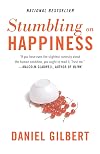
This is one of the better of the current glut of positive psychology books. This book is high quality because Gilbert does not focus on happiness. He rarely talks about happiness directly. He focuses on cognitive tendencies of human beings and their effects on how people interpret how they feel, remember how they felt, and anticipate how they will feel.
One cognitive trick that reoccurs throughout the book is that the brain summarizes. Memories of the past are not faithful recordings of the show more events but reconstructions based on a few key points. Observations of the present only gather a small part of the information around. (Side note: it is my opinion that this is why the faddish "law of attraction" seems to work. Focusing on a desire does not change the world, but it does change your perception of the world.)
Summarizing also applies to images of the future (although the exact word choice becomes a little odd). One's predictions tend to focus on a few key points and ignore everything else. For example, most people would feel that they will have a strong and long lasting reaction to the outcome of the next presidential election. Often, people are right about the strength of their reaction, but they are very wrong about the duration. This mistake occurs because predictions of the future leave out the details about the rest of life that tend to very quickly temper your emotions (whether your candidate wins or loses, you will still, for example, have to walk in the rain and will still get to go out to a nice dinner).
That is not all there is to this. Although people tend to over estimate their future happiness or unhappiness, the strength of their anticipation tends to color how they remember an event. Thus, if you think you will feel some amount of happiness from event and you actually feel some different amount, the amount of happiness you remember feeling will be somewhere between the two.
Gilbert does not give happiness tips, but I will take a stab at using his observations to analyze some common happiness tips. Consider the following (seemingly inconsistent) tips: live in the moment, look forward to the future, do not worry too much about the future, do not dwell on the past, cherish your happy memories. If you compare these tips with what we know about the mind, you can start to see why they all can help. Focusing on the moment raises the happiness you actually experience. Anticipation raises the happiness you will remember having experienced. Remembering past experiences provides material for your mind to use when it is making predictions about the future, so focusing on the happy memories will help you to anticipate that similar future events will bring happiness.
This book does not pretend to have all the answers. Instead, it focuses on helping you to understand how the human mind works. With these tools, you can begin to understand why certain bits of common wisdom on happiness work and why they sometimes fail. And, if you are like me, just knowing that makes you a little bit happier. show less
One cognitive trick that reoccurs throughout the book is that the brain summarizes. Memories of the past are not faithful recordings of the show more events but reconstructions based on a few key points. Observations of the present only gather a small part of the information around. (Side note: it is my opinion that this is why the faddish "law of attraction" seems to work. Focusing on a desire does not change the world, but it does change your perception of the world.)
Summarizing also applies to images of the future (although the exact word choice becomes a little odd). One's predictions tend to focus on a few key points and ignore everything else. For example, most people would feel that they will have a strong and long lasting reaction to the outcome of the next presidential election. Often, people are right about the strength of their reaction, but they are very wrong about the duration. This mistake occurs because predictions of the future leave out the details about the rest of life that tend to very quickly temper your emotions (whether your candidate wins or loses, you will still, for example, have to walk in the rain and will still get to go out to a nice dinner).
That is not all there is to this. Although people tend to over estimate their future happiness or unhappiness, the strength of their anticipation tends to color how they remember an event. Thus, if you think you will feel some amount of happiness from event and you actually feel some different amount, the amount of happiness you remember feeling will be somewhere between the two.
Gilbert does not give happiness tips, but I will take a stab at using his observations to analyze some common happiness tips. Consider the following (seemingly inconsistent) tips: live in the moment, look forward to the future, do not worry too much about the future, do not dwell on the past, cherish your happy memories. If you compare these tips with what we know about the mind, you can start to see why they all can help. Focusing on the moment raises the happiness you actually experience. Anticipation raises the happiness you will remember having experienced. Remembering past experiences provides material for your mind to use when it is making predictions about the future, so focusing on the happy memories will help you to anticipate that similar future events will bring happiness.
This book does not pretend to have all the answers. Instead, it focuses on helping you to understand how the human mind works. With these tools, you can begin to understand why certain bits of common wisdom on happiness work and why they sometimes fail. And, if you are like me, just knowing that makes you a little bit happier. show less
I literally stumbled on this book whilst browsing the library shelf and happily so! It may sound like a self-help book but thats precisely what its not.. its a primer on the quest for happiness with a mix of psychology, neuroscience, philosophy & behavioral economics.
Written in a tongue-in-cheek humorous style, from the filling-in & leaving-out tricks that our brain plays to the liberties that imagination takes without telling us about doing so.. its a mind-boggling start to the book! The show more author then goes on to describe how imagination leans on perception, given its own limitation to transcend boundaries of the present time, place & circumstances - what we imagine as the future is often a response to what's happening in the present; our present thoughts & feelings exert a strong influence on the way we think we'll feel later.
It gets further complicated when our brain gets busy looking for ways to think about the experience that will allow us to appreciate it - we build a psychological immune system that defends the mind against unhappiness in the same way that the physical immune system defends the body. To ensure our views are credible, our brain accepts what our eyes see and to ensure our views are positive, our eyes look for what our brain wants; conspiring against us in a secretive way! We are more likely to generate a positive & credible view of an action than an inaction, of a painful experience than of an annoying experience, of an unpleasant situation that we cant escape than of one we can and yet we choose the former coz we pay more attn to favorable information, surround ourselves with those who provide it and accept it uncritically.
Our memory does not serve us too well too - its less like a collection of photographs than it is like a collection of impressionist paintings by an artist who takes license with his subject and emotional experience of happiness is probably the most ambiguous of subjects. Our memory for emotional episodes is overly influenced by unusual instances, closing moments & theories of how we may have felt in past - compromising our ability to learn from personal experience.
Then what is it that still makes us lean on our own selves as the experiencer to gauge our future happiness - the self considers itself to be a very special/ unique person (psst.. ego!) for 3 reasons: a. even if we aren't special, the way we know ourselves is - we experience our own thoughts but infer those of others b. we enjoy thinking of ourselves as special and c. we overestimate everyone's uniqueness, thinking of people as more different from one another than they actually are.
Because of all the reasons above, the author goes on to offer the final solution to getting a real sense of happiness with a certain planned action - relying on the experience of an average individual going thru the same experience currently rather than imagining ourselves in the scenario. Its the surest way to get a real sense of how it would be to stumble upon happiness when undertaking that action! show less
Written in a tongue-in-cheek humorous style, from the filling-in & leaving-out tricks that our brain plays to the liberties that imagination takes without telling us about doing so.. its a mind-boggling start to the book! The show more author then goes on to describe how imagination leans on perception, given its own limitation to transcend boundaries of the present time, place & circumstances - what we imagine as the future is often a response to what's happening in the present; our present thoughts & feelings exert a strong influence on the way we think we'll feel later.
It gets further complicated when our brain gets busy looking for ways to think about the experience that will allow us to appreciate it - we build a psychological immune system that defends the mind against unhappiness in the same way that the physical immune system defends the body. To ensure our views are credible, our brain accepts what our eyes see and to ensure our views are positive, our eyes look for what our brain wants; conspiring against us in a secretive way! We are more likely to generate a positive & credible view of an action than an inaction, of a painful experience than of an annoying experience, of an unpleasant situation that we cant escape than of one we can and yet we choose the former coz we pay more attn to favorable information, surround ourselves with those who provide it and accept it uncritically.
Our memory does not serve us too well too - its less like a collection of photographs than it is like a collection of impressionist paintings by an artist who takes license with his subject and emotional experience of happiness is probably the most ambiguous of subjects. Our memory for emotional episodes is overly influenced by unusual instances, closing moments & theories of how we may have felt in past - compromising our ability to learn from personal experience.
Then what is it that still makes us lean on our own selves as the experiencer to gauge our future happiness - the self considers itself to be a very special/ unique person (psst.. ego!) for 3 reasons: a. even if we aren't special, the way we know ourselves is - we experience our own thoughts but infer those of others b. we enjoy thinking of ourselves as special and c. we overestimate everyone's uniqueness, thinking of people as more different from one another than they actually are.
Because of all the reasons above, the author goes on to offer the final solution to getting a real sense of happiness with a certain planned action - relying on the experience of an average individual going thru the same experience currently rather than imagining ourselves in the scenario. Its the surest way to get a real sense of how it would be to stumble upon happiness when undertaking that action! show less
There is a ton of hype surrounding this book. I have read several other books on happiness research, and subscribe to blog feeds on the topic. This book is referenced all the time. I guess I was expecting to have my socks blown off, but I don't feel wowed at all.
At least it is a fast read, although I didn't dig his writing style. And I did come away with some takeaway points that should serve me well. To sum up the premise in one sentence: humans are bad at predicting the future, so our show more imagination often leads us to make poor decisions that leave us feeling dissatisfied. show less
At least it is a fast read, although I didn't dig his writing style. And I did come away with some takeaway points that should serve me well. To sum up the premise in one sentence: humans are bad at predicting the future, so our show more imagination often leads us to make poor decisions that leave us feeling dissatisfied. show less
Gilbert's book is wry, funny and informative. My initial joy at finding such a book was muted as I read, finding little that I could relate to. Now, the point of the book is that the many cited studies show that everyone thinks better of themselves than they can justify, so perhaps I'm in that boat. In the end, though, I found myself frustrated by how little new knowledge I gained. True, the details behind the mechanics of thought, perception, judgement and analysis are fascinating, but only show more confirm what observant folks have been saying for years.A fun read, but unsatisfying. show less
Lists
Awards


You May Also Like


Associated Authors
Statistics
- Works
- 9
- Also by
- 5
- Members
- 4,701
- Popularity
- #5,364
- Rating
- 3.8
- Reviews
- 108
- ISBNs
- 56
- Languages
- 9