
Gianni Guadalupi
Author of The Dictionary of Imaginary Places: The Newly Updated and Expanded Classic
About the Author
Gianni Guadalupi is on the editorial staff of FMR and co-editor of Le Vie del Mondo, the Touring Club Italiano's magazine devoted to journeys of the past.
Image credit: via Babelio.com
Series
Works by Gianni Guadalupi
The Dictionary of Imaginary Places: The Newly Updated and Expanded Classic (1999) — Author — 1,428 copies, 10 reviews
China Arts and Daily Life as Seen by Father Matteo Ricci and Other Jesuit Missionaries (1984) 3 copies
Argovia & Brisgovia: viaggio di qua e di là dal Reno in compagnia di due esimii scrittori (1989) 2 copies
Cieli del mondo: Avventure aeronautiche italiane narrate dai protagonisti (Aracne) (Italian Edition) (1994) 2 copies
Guía del viaje al fin del mundo. El libro que Cristóbal Colón hubiera querido llevar consigo. (1991) 2 copies
Milan and Lombardy 2 copies
Guide Impossibili. Èteria 2 copies
2: Regno di Sardegna, 1720-1859 2 copies
I signori del Po 1 copy
Antichi Stati. Stati Pontifici. Tomo II, Patrimmonio di San Pietro, Campagna e Sabina (1700-1870) 1 copy
Signorie & Principati, Le Italie dal'400 al '700. Stati Pontifici. Tomo I, Città Apostolica di Roma (1447-1534) (2001) 1 copy
Guide Impossibili. Crimtartaria, ovvero, Governatorato di Tauride con un'escursione nella steppa dei calmucchi (1986) 1 copy
Cattedrale di Cremona 1 copy
Borges al cinema 1 copy
Il sogno di FMR 1 copy
Guide Impossibili. Malwa 1 copy
Borges A/Z. Dizionario 1 copy
Carpazia. Guide impossibili 1 copy
Stati & Principati. Stati Sabaudi, Tomo II da Carlo Emanuele I a Vittorio Amedeo II (1580-1699) 1 copy
Associated Works
Venticinque Agosto 1983 e altri racconti inediti (1980) — Translator, some editions — 80 copies, 3 reviews
Tagged
Common Knowledge
Members
Reviews

I fell upon this book when it was first published like a punter attacking an ice-cream during the interval in an over-hot theatre. Just the title had me drooling, and once inside the book I was in seventh heaven. First of all it took places described in a range of literary works as literally true by giving each a Baedeker-style travel guide entry. Then, like any good Baedeker it provided maps and charts giving visual aids to familiar and unfamiliar locations. There have been at least two show more revised editions since 1980 but this was the first attempt to give an overview of dystopias, utopias, fantasy worlds and comic geographies from different cultures, languages and centuries. The mock-seriousness is sometimes leavened with equally tongue-in-cheek humour though I found that at times the terseness of some entries could be wearing.
Just a few examples of entries, almost at random, may give you a flavour. Bluebeard’s Castle, for example is described as “somewhere in France; the exact location remains unknown. The castle is famed for its many riches and fine furniture, tapestries and full-length mirrors with frames of gold. Travellers – in particular female ones – should proceed with caution…” Some places are in distant lands, such as King Solomon’s Mines, “discovered by Allan Quatermain’s expedition to Kukuanaland, Africa, in 1884″, or Shangri-La, which can “only be reached on foot and visitors are infrequent.” In contrast Ruritania is “a European kingdom reached by train from Dresden” while Wonderland is “a kingdom under England, inhabited by a pack of cards and a few other creatures.”
Here you can find entries for Atlantis and Oz, Camelot and Treasure Island, Middle Earth and Erewhon, Arkham and Hyperborea, Lilliput and Gormenghast, plus a plethora of more obscure places culled from even more obscure titles. Graham Greenfield’s wonderful line drawings have an antique quality about them which only adds to the sense of strangeness and wonder, while the maps and charts by James Cook are a joy to peruse and explore. Some maps from 1980 needed revision (Narnia, for example, had some crucial omissions and misplacements), but their consistent olde-worlde look (with hachures rather than contour lines, for instance, and Renaissance-style typeface) is charming and lends character to the whole presentation.
In addition to the alphabetical listing of places, the authors include an index of authors and titles to help you cross reference. For example, if you can’t remember some of the cities visited by Marco Polo in Italo Calvino’s Invisible Cities they are handily included here. Which only helps to underscore that The Dictionary of Imaginary Places is a treasure chest to dip into again and again.
http://wp.me/s2oNj1-places show less
Just a few examples of entries, almost at random, may give you a flavour. Bluebeard’s Castle, for example is described as “somewhere in France; the exact location remains unknown. The castle is famed for its many riches and fine furniture, tapestries and full-length mirrors with frames of gold. Travellers – in particular female ones – should proceed with caution…” Some places are in distant lands, such as King Solomon’s Mines, “discovered by Allan Quatermain’s expedition to Kukuanaland, Africa, in 1884″, or Shangri-La, which can “only be reached on foot and visitors are infrequent.” In contrast Ruritania is “a European kingdom reached by train from Dresden” while Wonderland is “a kingdom under England, inhabited by a pack of cards and a few other creatures.”
Here you can find entries for Atlantis and Oz, Camelot and Treasure Island, Middle Earth and Erewhon, Arkham and Hyperborea, Lilliput and Gormenghast, plus a plethora of more obscure places culled from even more obscure titles. Graham Greenfield’s wonderful line drawings have an antique quality about them which only adds to the sense of strangeness and wonder, while the maps and charts by James Cook are a joy to peruse and explore. Some maps from 1980 needed revision (Narnia, for example, had some crucial omissions and misplacements), but their consistent olde-worlde look (with hachures rather than contour lines, for instance, and Renaissance-style typeface) is charming and lends character to the whole presentation.
In addition to the alphabetical listing of places, the authors include an index of authors and titles to help you cross reference. For example, if you can’t remember some of the cities visited by Marco Polo in Italo Calvino’s Invisible Cities they are handily included here. Which only helps to underscore that The Dictionary of Imaginary Places is a treasure chest to dip into again and again.
http://wp.me/s2oNj1-places show less
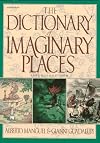
Fun, but the criteria for inclusion or non-inclusion didn't entirely make sense, so I kept thinking of places that seemed like they should have been in and weren't, or the reverse. But still a fascinating book to browse through for inspiration, anyway.
I first got the 1987 edition of this book as a gift from my uncle in the mid-nineties, and it has since been one of my favorite volumes to idly peruse. Though it contains lengthy entries on the most frequently visited of imaginary places, such as Middle-earth, Earthsea, and Oz, its entries on less familiar regions such as Sylvia Townsend Warner's Kingdoms of Elfin are welcome.
This work was my first introduction to such places as Arkham, Gormenghast, and Erewhon, and inspired me to find each show more source work. I've found it both a useful reference as well as fine pleasure reading due to Manguel and Guadalupi's jovial prose, which treats each place as if the reader might really be planning to travel there in the near future. show less
This work was my first introduction to such places as Arkham, Gormenghast, and Erewhon, and inspired me to find each show more source work. I've found it both a useful reference as well as fine pleasure reading due to Manguel and Guadalupi's jovial prose, which treats each place as if the reader might really be planning to travel there in the near future. show less
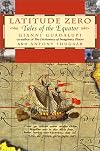
A collection of tales mostly about European conquest of equatorial locales in South America, Africa, Asia, and Oceania. I am not convinced of the veracity of most of these stories, especially given the dearth of references cited. However, if you take it just as a bunch of legends, it can be a fairly fun read. Just try to look at it for the adventure, and conveniently ignore the maltreatment of the locals (which is glossed over in the text anyway). You'll enjoy it much more that way.
Lists
You May Also Like


Associated Authors
Statistics
- Works
- 86
- Also by
- 6
- Members
- 2,923
- Popularity
- #8,762
- Rating
- 3.9
- Reviews
- 25
- ISBNs
- 148
- Languages
- 12