
Tim Jeal
Author of Stanley: The Impossible Life of Africa's Greatest Explorer
About the Author
Tim Jeal is a highly acclaimed biographer and novelist. (Bowker Author Biography)
Image credit: Dulwich Festival 2006
Works by Tim Jeal
Explorers of the Nile: The Triumph and Tragedy of a Great Victorian Adventure (2011) 346 copies, 7 reviews
Tagged
Common Knowledge
- Birthdate
- 1945-01-27
- Gender
- male
- Education
- University of Oxford (Christ Church)
Westminster School, London - Occupations
- novelist
biographer - Nationality
- England
UK - Birthplace
- London, England, UK
- Places of residence
- London, England, UK
- Map Location
- England, UK
Members
Reviews

When David Livingstone published his first book, the one that made him famous Missionary Travels in Africa (1857) he was in his mid-40s. The book is full of incident and is still a delightful read. People were enthralled by what seemed like a rich country. The book laid the groundwork for what would later become the 'myth of Livingstone'.
When Tim Jeal published Livingstone in 1973 he was still in his 20s and, in his own words, exploded the myth. All prior biographies had been religious show more hagiographies and the public perceived Livingstone as a saintly gentle missionary. Jeal showed that Livingstone was in reality a failed missionary, having converted a single person (who later lapsed). Livingstone lied about the nature of Africa to further his career - causing the death of future missionaries who were ill-prepared for Africa. And his character flaws tended towards the anti-social - his son hated him so much he changed his last name, his neglected wife turned alcoholism among other horrors, and he treated colleagues with contempt. He lacked empathy.
At the same time Jeal shows Livingstone to be a brilliant mind who possessed super-human physical strength and conviction. He accurately predicted the future of colonial Africa, explored for the first time vast areas, became a hero of Africans to this day. His primary and great idea was to end slavery in Africa, he was a Lincoln figure in aspiration. Great men are often contradicted and Jeal concludes he was a great man. This is a complex and rich story set in an exotic place and time. It is also fun as an adventure story to step back in time and follow Livingstone's journeys, learning African geography, while also gaining an insiders view through Jeal's impeccable research of private diaries and letters. There are many books that retell the myth, this is the first and only serious biography that gives the complete picture. show less
When Tim Jeal published Livingstone in 1973 he was still in his 20s and, in his own words, exploded the myth. All prior biographies had been religious show more hagiographies and the public perceived Livingstone as a saintly gentle missionary. Jeal showed that Livingstone was in reality a failed missionary, having converted a single person (who later lapsed). Livingstone lied about the nature of Africa to further his career - causing the death of future missionaries who were ill-prepared for Africa. And his character flaws tended towards the anti-social - his son hated him so much he changed his last name, his neglected wife turned alcoholism among other horrors, and he treated colleagues with contempt. He lacked empathy.
At the same time Jeal shows Livingstone to be a brilliant mind who possessed super-human physical strength and conviction. He accurately predicted the future of colonial Africa, explored for the first time vast areas, became a hero of Africans to this day. His primary and great idea was to end slavery in Africa, he was a Lincoln figure in aspiration. Great men are often contradicted and Jeal concludes he was a great man. This is a complex and rich story set in an exotic place and time. It is also fun as an adventure story to step back in time and follow Livingstone's journeys, learning African geography, while also gaining an insiders view through Jeal's impeccable research of private diaries and letters. There are many books that retell the myth, this is the first and only serious biography that gives the complete picture. show less
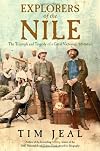
Very interesting history of the European discovery of central Africa during the search for the source of the Nile, mainly in the 1860s and 70s. The primary actors were Richard Francis Burton, John Hanning Speke, James Grant, Henry Morton Stanley, David Livingstone and Samuel Baker, although there are more in this generous book. Jeal recounts their journeys with an emphasis on setting the record straight behind the legends built up over the years. He reveals Burton to be a duplicitous jerk show more hardly worthy of the title "explorer", while John Hanning Speke, historically vilified, is the surprise hero of the story. The relationship of Livingstone and Stanley is revealing in how the later was able to leverage the formers good reputation into his own by deifying his mentor. The wealthy gentleman explorer Samuel Baker and his slave/wife was a story I had never heard of but fascinating for their accomplishments and experiences. Their story would make great fiction or film. Baker also seems to have written the most readable contemporary account, The Albert N'yanza; great basin of the Nile, and explorations of the Nile sources, though Speke's book Journal of the Discovery of the Source of the Nile looks good too. Tim Jeal is probably the most authoritative writer on this subject and this book moves the scholarship forward with his discovery of Spekes previously unpublished papers. Jeal has previously published detailed biographies of Livingstone and of Stanley, so he doesn't go into lengthy bios in this book, but does give pretty detailed accounts of the expeditions in search of the Nile and places them in context with African history that makes it more than just an adventure story. show less

Stanley is most famous for finding Livingstone, but it was a publicity stunt, his real legacy were two crossings of equatorial Africa, the first in recorded history. The popular perception of Stanley as a young upstart who finds Livingstone then turns into a brute killer and imperialist enabler, a model for the Heart of Darkness turns out to be wrong, he is more victim than victimizer, a scapegoat. Jeal does an admirable job establishing Stanley as one of the great African explorers who was show more unfairly maligned, in no small part due to Stanley's own insecurities from his workhouse upbringing. He wanted to appear tough and strong, and went too far in his memoirs, even when the truth was more sanguine. Of course much of this is speculation, other authors might speculate differently, but Jeal had access to a trove of newly available primary source materials. And Jeal is no hagiographer, as his biography of Livingstone can attest, so his opinion is credible. The third major expedition Stanley took, the rescue of Emin Pasha, is about as Apocalypse Now as it gets for Victorian explorers. They went deep up the Congo, then up another major river into a thousand mile forest full of headhunters, columns got separated and people went insane committing brutish atrocities. Documented in Stanley's In Darkest Africa and later adapted to the 1978 play The Rear Column (dir. Harold Pinter). show less
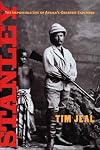
More of a hagiography than a biography, but very well done. The affect of Stanley’s traumatic childhood on his entire life is very much front and center. The author acknowledges his desertions and his sometimes brutal behavior, though he definitely downplays them. Uses tons of primary sources to demonstrate how Stanley was often his own worst enemy, trying to burnish his reputation by presenting himself as having killed and exerted control more than was actually the case. The items about show more his relationship with his son were particularly touching, leaving me to wonder how he fared when Stanley died show less
Lists
Awards


You May Also Like


Statistics
- Works
- 12
- Members
- 1,148
- Popularity
- #22,369
- Rating
- 3.9
- Reviews
- 24
- ISBNs
- 80
- Languages
- 4
- Favorited
- 1