

Martin Dugard
Author of The Murder of King Tut
About the Author
Martin Dugard is one of today's foremost adventure writers. His work appears regularly in "GQ", "Sports Illustrated" & "Esquire". He won the 1997 Dallas Press Club "Katie" award for Best Magazine Sports Story. An avid adventurer himself, Dugard has completed the Raid Gauloises adventure race three show more times. He is co-holder of the Around the World Speed Record (New York New York in 31 hours, 28 minutes) & he makes his home with his wife & three boys in Orange County, California. (Publisher Provided) Martin Dugard is a ghostwriter and New York Times bestselling author. His books include To Be a Runner, The Training Ground, The Last Voyage of Columbus, Chasing Lance, Into Africa: The Epic Adventures of Stanley and Livingstone, Farther Than Any Man: The Rise and Fall of Captain James Cook, and The Murder of King Tut co-written with James Patterson. He has also coauthored a number of books with Bill O'Reilly including Killing Patton, Killing Jesus, Killing Kennedy, Killing Lincoln, Killing Reagan, and Killing the SS. He is the writer and producer of the movie A Warrior's Heart starring Ashley Greene and Kellan Lutz. (Bowker Author Biography) show less
Works by Martin Dugard
The Last Voyage of Columbus: Being the Epic Tale of the Great Captain's Fourth Expedition, Including Accounts of Mutiny, Shipwreck, and Discovery (2005) 391 copies, 10 reviews
Confronting the Presidents: No Spin Assessments from Washington to Biden (2024) 261 copies, 8 reviews
The Training Ground: Grant, Lee, Sherman, and Davis in the Mexican War, 1846-1848 (2008) 226 copies, 5 reviews
The Explorers: A Story of Fearless Outcasts, Blundering Geniuses, and Impossible Success (2014) 126 copies, 4 reviews
Chasing Lance: The 2005 Tour de France and Lance Armstrong's Ride of a Lifetime (with 20 photos included) (2005) 77 copies, 2 reviews
To Be a Runner: How Racing Up Mountains, Running with the Bulls, or Just Taking On a 5-K Makes You a Better Person (and the World a Better Place) (2011) 51 copies, 2 reviews
Taking Midway: Naval Warfare, Secret Codes, and the Battle that Turned the Tide of World War II (2025) 37 copies, 3 reviews
The Long Run: Steve Prefontaine, Frank Shorter, Joan Benoit, Grete Waitz, and the Decade That Made the Marathon Cool (2026) 8 copies
Associated Works
Killing Lincoln: The Shocking Assassination that Changed America Forever (2011) 3,646 copies, 141 reviews
Killing Patton: The Strange Death of World War II's Most Audacious General (2014) 1,844 copies, 41 reviews
Killing the Rising Sun: How America Vanquished World War II Japan (2016) — Author — 1,384 copies, 32 reviews
Killing Reagan: The Violent Assault That Changed a Presidency (Bill O'Reilly's Killing Series) (2015) 1,287 copies, 28 reviews
Reader's Digest Today's Best Nonfiction 60 — Contributor — 1 copy
Tagged
Common Knowledge
- Canonical name
- Dugard, Martin
- Birthdate
- 1961-06-01
- Gender
- male
- Nationality
- USA
- Places of residence
- Rancho Santa Margarita, California, USA
- Associated Place (for map)
- California, USA
Members
Reviews
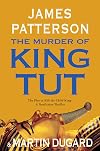
The Murder of King Tut is not a book; it is a cash grab, plain and simple. It is a scheme to remove $33 dollars from the pockets of fans, and reward them with the barest minimum necessary for it to qualify as an actual book. The entire 340 page book can be read in under three hours, written at the level of a particularly bright Grade 4 child. That this piece of hackwork was released at all is utterly contemptible, a middle finger to Patterson's many fans. His hubris is astounding, his show more arrogance depressing. It is that which transforms King Tut from merely being a waste of time into something worthy of all the bile and vitriol one can spew at it.
Read the rest of the review here. show less
Read the rest of the review here. show less
The writing in this book is abysmally poor and the historical inaccuracies were astounding. A certain level of bad writing might be worth overlooking if the plot were especially strong or if recent findings were revealed, but the plot is weak and the premise is not based on any archeological findings. This book is advertised as a nonfiction thriller, but it's really a fictional non-thriller.
The author begins the book with much pomp about how the materials were thoroughly researched so that show more the reconstructed story of Tutankhamun would be accurate and the theory would be sound. He then proceeds to write insanely bloated, inaccurate sub-Harlequin Romance prose about Ancient Egypt and Howard Carter. The two timelines are ocassionally interrupted by the author's modern-day soliloquies about how puzzling everything is when one is looking across the lake at one's yacht, thinking about how wealthy one is. I really don't care about Patterson's yacht or bank account, but I do find Ancient Egypt to be fascinating. Sadly, there are huge pieces of important information about Tut's life missing from this book, most obviously the simultaneous name changes of Tutankhaten to Tutankhamun and Ankhesenpaaten to Ankhesenamun. Those name changes were extremely significant, but Patterson ignores history and instead uses only the names Tutankhamen and Ankhesenpaaten alongside each other with no regard for accuracy. There is also no evidence given for Patterson's relationships between characters, relationships that either vary from historical evidence or have no historical evidence to back them up.
Such disregard for historical facts is behind Patterson's cheez-whiz of a "murder theory." My incentive for reading further was to find out what evidence proved his theory, but Patterson never mentioned any evidence. He never attempted to tie his theory to any evidence of any nature, which astounded me. When zero evidence is ALL Patterson and his "researcher" come up with after spending thousands of dollars and years doing HEAVY DUTY RESEARCH, someone owes someone a refund! There is a LOT of current information out there, and none of it is in this book.
If you must read this, check it out from your local public library. But don't be suckered into buying it! show less
The author begins the book with much pomp about how the materials were thoroughly researched so that show more the reconstructed story of Tutankhamun would be accurate and the theory would be sound. He then proceeds to write insanely bloated, inaccurate sub-Harlequin Romance prose about Ancient Egypt and Howard Carter. The two timelines are ocassionally interrupted by the author's modern-day soliloquies about how puzzling everything is when one is looking across the lake at one's yacht, thinking about how wealthy one is. I really don't care about Patterson's yacht or bank account, but I do find Ancient Egypt to be fascinating. Sadly, there are huge pieces of important information about Tut's life missing from this book, most obviously the simultaneous name changes of Tutankhaten to Tutankhamun and Ankhesenpaaten to Ankhesenamun. Those name changes were extremely significant, but Patterson ignores history and instead uses only the names Tutankhamen and Ankhesenpaaten alongside each other with no regard for accuracy. There is also no evidence given for Patterson's relationships between characters, relationships that either vary from historical evidence or have no historical evidence to back them up.
Such disregard for historical facts is behind Patterson's cheez-whiz of a "murder theory." My incentive for reading further was to find out what evidence proved his theory, but Patterson never mentioned any evidence. He never attempted to tie his theory to any evidence of any nature, which astounded me. When zero evidence is ALL Patterson and his "researcher" come up with after spending thousands of dollars and years doing HEAVY DUTY RESEARCH, someone owes someone a refund! There is a LOT of current information out there, and none of it is in this book.
If you must read this, check it out from your local public library. But don't be suckered into buying it! show less
The Explorers: A Story of Fearless Outcasts, Blundering Geniuses, and Impossible Success by Martin Dugard
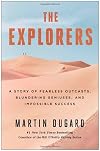
This was an unexpected pleasure. Nominally about the Speke/Burton battle over who found the source of the Nile, it uses their story as a framework for discussing the seven attributes Dugard considers essential to successful explorers: curiosity, hope, passion, courage, independence, self-discipline, and perseverance. Each is illustrated by numerous examples of explorers from the earliest age (out of Africa) through Saint Brendan, Cook, Shackleton, Scott and Oates, Ledyard, Stanley and show more Livingstone, Humboldt, and many others of more or less renown. Dugard is an unapologetic champion of Speke's character and efforts in the battle of personalities, and, of course, history knows who was right in the end (I'll not mention that in case a future reader is unaware, as I was). The result is a dramatic and thoughtful book, sure to be of interest to anyone who is intrigued with exploration, even if not of Africa in particular. My only regret is the lack of pictures and maps. Highly recommended. show less
Retelling of Burton and Speke’s quest for the source of the Nile, used as a template for analysing seven attributes required of the successful explorer, further illustrated by references to many other voyages of discovery. Devolves into something of a self-help book. Somewhat undermined in this purpose, from my perspective, by Dugard’s championing of Speke, the game-hunting loner, and complete immunity to Burton’s charms, let alone his claims as an explorer.
W. B. Carnochan’s book show more The Sad Story of Burton, Speke, and the Nile adds an eighth quality of the explorer—habitual lying, or at least “an imaginative reconstruction of things as they might coherently claim to have been,” and I find this the most useful approach to the Burton/Speke story. show less
W. B. Carnochan’s book show more The Sad Story of Burton, Speke, and the Nile adds an eighth quality of the explorer—habitual lying, or at least “an imaginative reconstruction of things as they might coherently claim to have been,” and I find this the most useful approach to the Burton/Speke story. show less
Lists
Awards


You May Also Like


Associated Authors
Statistics
- Works
- 24
- Also by
- 11
- Members
- 5,152
- Popularity
- #4,827
- Rating
- 3.8
- Reviews
- 161
- ISBNs
- 150
- Languages
- 8
- Favorited
- 5