
Elizabeth Prioleau
Author of Seductress: Women Who Ravished the World and Their Lost Art of Love
About the Author
Image credit: By Betsy Prioleau - The uploader on Wikimedia Commons received this from the author/copyright holder., CC BY-SA 3.0, https://commons.wikimedia.org/w/index.php?curid=34274288
Works by Elizabeth Prioleau
Diamonds and Deadlines: A Tale of Greed, Deceit, and a Female Tycoon in the Gilded Age (2022) 115 copies, 2 reviews
Tagged
Common Knowledge
- Legal name
- Prioleau, Elizabeth Stevens
- Other names
- Prioleau, Betsy
- Birthdate
- 1942-11-14
- Gender
- female
- Education
- Duke University (Ph.D|1980)
University of Virginia (B.S.|M.A.) - Occupations
- professor
Cultural Historian - Organizations
- Manhattan College
- Relationships
- Stevens, Hugo (father)
Prioleau, Philip (husband) - Nationality
- USA
- Birthplace
- Richmond, Virginia, USA
- Places of residence
- New York, New York, USA
- Associated Place (for map)
- USA
Members
Reviews
Diamonds and Deadlines: A Tale of Greed, Deceit, and a Female Tycoon in the Gilded Age by Betsy Prioleau
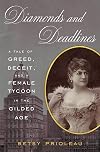
I'm really unsure how to review this book. On the one hand, I learned of a woman of whom I knew absolutely nothing. Her rise from poverty in New Orleans to the riches of Gilded Age New York was quite something. However, I found I wouldn't like this woman at all. The subtitle mentions greed and deceit. That was Miriam Leslie in a nutshell. Her hunger for money and her schemes to get it were sickening. She longed to get into Mrs. Astor's kind of society. And that society snubbed her at every show more opportunity. I loved that.
The book itself is a bit muddled. The author herself says that because of holes in the documentation of Mrs. Leslie, she reconstructed scenes with available data and the use of period details. She also describes clothes on occasions. Sometimes these were definitely outfits that Miriam owned, but we don't know if she actually wore them when described. The author also mentions using "inspired conjecture" in order to decipher what she thinks were the meanings of Mrs. Leslie's actions.
This is hagiography, pure and simple. There are also instances of profanity used, and this was not in a quotation. That's hardly the stuff a serious biography should include. I did, however, enjoy the descriptions of Gilded Age New York, even if I had read them in every other book about the period.
Unless you are researching personalities of the Gilded Age time period, give this book a pass. show less
The book itself is a bit muddled. The author herself says that because of holes in the documentation of Mrs. Leslie, she reconstructed scenes with available data and the use of period details. She also describes clothes on occasions. Sometimes these were definitely outfits that Miriam owned, but we don't know if she actually wore them when described. The author also mentions using "inspired conjecture" in order to decipher what she thinks were the meanings of Mrs. Leslie's actions.
This is hagiography, pure and simple. There are also instances of profanity used, and this was not in a quotation. That's hardly the stuff a serious biography should include. I did, however, enjoy the descriptions of Gilded Age New York, even if I had read them in every other book about the period.
Unless you are researching personalities of the Gilded Age time period, give this book a pass. show less
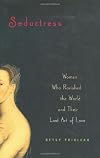
Yet another bargain table special. I confess I bought this one for the titillation factor; the cover illustration is of a 16th century painting depicting Sabina Poppea clothed in material that would make an inadequate cobweb. The author, Betsy Prioleau, has subtitled the work “Women Who Ravished the World and their Lost Art of Love”, but this is not a sex manual; it’s a compendium of women who were successful and how they managed it. The emphasis is on the use of what were once called show more “feminine wiles”, of which blatant sexual attraction is a major part but not the whole.
The science and history here are often dubious, with Ms. Prioleau always giving the feminist interpretation of history and prehistory the benefit of the doubt. The generally debunked theory of Neolithic universal goddess worship is here presented as fact, complete with a vivid description of Stone Age goddess-worshiping priestesses dressed in plumed headdresses, “black-striped bell skirts hitched up in front”, and daubed with red ocher dancing topless to throbbing drums. One wonders which cave wall that’s painted on (although I think I’ve been to that place for a bachelor party). Once we make it into ancient history Ms. Prioleau becomes particularly enamored of the Middle Eastern love/sex/fertility goddess Inanna/Ishtar/Asherah/Ashtaroth/Aphrodite. Admittedly, Inanna is a pretty hot number; a Sumerian epic about her is an interesting mix of eroticism and alien-culture creepiness. However, in this book she’s evoked a little too often as the ideal female archetype.
The book continues with seductresses divided by category, rather than historically. Each chapter concludes with an explanation of how that particular category evokes some aspect of “the goddess”.
* “Homely Sirens” (Isabella Gardner, Catherine Sedley, Wallis Windsor, Tullia d’Aragona, Therese Lachman, Edith Piaf, Pauline Viardot); the theme here being ladies who were ugly but still managed to attract men and power. I’m not sure Ms. Prioleau isn’t exaggerating her heroines’ purported ugliness for effect; I can’t speak for the others but based on photographs Isabella Gardner, Wallis Windsor, Edith Piaf and Pauline Viardot do not display modern silicone-enhanced glamour but are still ladies that would not make you chew your own arm off. I was a little surprised that Ms. Prioleau, in a chapter on how there’s more to seduction than beauty, and in a book where she doesn’t show the slightest fear of getting kinky, did not go into some of the stories about how Wallis Warfield Simpson seduced Edward VII by identifying and catering to his collection of sexual fetishes. The “goddess” for this chapter is the “masked Neolithic sex deity in her grotesque form”.
* “Silver Foxes” (Minette Helvétius, Diane de Poitiers, Françoise de Maintenon, Gnathaena, Glycera, George Sand, Colette, Mae West, Frank Leslie); these are ladies that remained seductive well past what would be considered middle age, either our time or theirs. One weakness of Ms. Prioleau’s approach comes out here; while there’s lots of documentation for Minette Helvétius cavorting with the equally geriatric Benjamin Franklin, in order to fill out her selection she resorts to including Gnathaena and Glycera, Greek hetaerae with no documentation except an inclusion in a list of “senior” courtesans. For all we know that could mean they were 25. The goddess here is the “crone”; I expected at least a nod to Robert Graves for inventing the concept with The White Goddess; but although he’s referenced in the preceding chapter he doesn’t show up here.
* “Scholar Sirens” (Veronica Franco, Ninon de Lenclos, Lou Andreas-Salome, Émilie de Châtelet, Martha Gellhorn, Aspasia, Germaine de Staël). I’ve always been something of a fan of Veronica Franco. Whether she should count as a “scholar” rather than an “artist” could be debated; Ms. Prioleau appears to be basing her description more on the character played by Catherine McCormack in the movie Dangerous Beauty than the actual Veronica Franco. Lou Andreas-Salome is another interesting sort; there’s a picture of her sitting in the back of a dogcart, wielding a whip. There are two men in the photograph, not exactly harnessed to the cart but standing as if they were. One is the obscure philosopher Paul Rée; the other is Friedrich Nietzsche. Seeing Mr. “Will to Power” himself in this position is a little shocking; Ms. Andreas-Salome must have been something else. Nietzsche apparently couldn’t get used to the idea either, as he later challenged Rée to a duel and then went nuts. The inclusion of Martha Gellhorn in this chapter is a little surprising; although she certainly was intelligent, her qualification as a “scholar” apparently consists of marrying Ernest Hemingway (which might be taken as evidence to the contrary). Our “goddess” connection consists of the tale of Inanna obtaining the mes (sort of the Sumerian version of Platonic archetypes} by getting Enki drunk and tricking him into handing them over - hardly an act of scholarship on her part.
* “Siren Artists” (Grace Hartigan, Violet Gordon Woodhouse, Lamia, Josephine Baker, Cynthia the Golden, Maria de Ventadorn, Louise Labé, Louise de Vilmorin, Nell Gwyn, Rachel Félix). Once again Ms. Prioleau has to stretch her definitions a little bit. Violet Woodhouse certainly qualifies as a “seductress-artist”; she was a virtuoso harpsichordist, good enough for Ralph Vaughn Williams to write a piece for her, and she juggled simultaneous relationships with three men and a woman, all of whom lived with her. (Some of her harpsichord concerts are on CD; I’ll have to check them out). However, Lamia, Josephine Baker, and Nell Gwyn are here for their skills as exotic dancers or stage performers. There’s certainly some art to that, but it’s not the first that pops into your head when you think of “artist”; I doubt anyone ever expressed admiration for Grace Hartigan’s paintings by stuffing dollar bills into her underwear. The “goddess” connection here is the “rhapsodic incantations” performed in Neolithic goddess temples. Sure.
* “Sirens in Politics” (Cleopatra, Elizabeth I, Catherine the Great, Theodora, Eleanor of Aquitaine, Eva Perón, Victorian Woodhull, Gloria Steinem) The careers of Theodora and Eva Perón would make interesting Plutarchian “parallel lives”. I’m not going there for fear of offending somebody’s mom; you’ll have to read Procopius yourself. Kleopatra gets whitewashed here; although her part in the demise of her older sister Berenike and younger brother Ptolemy is mentioned, she also did away with her younger sister Arsinoë and another brother, also named Ptolemy (well, we don’t actually know that she killed them; all we know is that they got on a boat with her in Rome and didn’t get off in Alexandria; accidents happen at sea). It’s ironic that the really great woman leaders here date from quite a ways in the past; Elizabeth I is probably the greatest ruler in English history and Catherine is in a dead heat with Peter the Great for that role in Russia history. Their more modern sisters Victoria Woodhull, Eva Perón and Gloria Steinem don’t really qualify in the politics department. I guess it’s hard to think of Margaret Thatcher or Golda Meir as sex sirens. It’s interesting that Steinem’s famous stint as an undercover Playboy bunny isn’t mentioned; apparently not politically correct. The goddess connection for this chapter is, of course, Inanna’s role as “Queen of Heaven”.
* “Siren-Adventuresses” (Agnès Sorel, Jane Digby, Lola Montez, Hortense Mancini, Beryl Markham, Rhodophis, Phyrne, Cora Pearl, La Belle Otero) “Adventuress” covers enough ground that you can include almost anybody here: Beryl Markham made the first east-west solo flight across the Atlantic (after 30 men and 5 women had died trying it) and her Masai name meant “She Who Cannot Fall Off a Horse”; Jane Digby took up the life of a desert nomad at age 45. The others fit the more traditional definition of “adventuress”; Lola Montez is famous for forcing King Ludwig of Bavaria to abdicate, and La Belle Otero got her nickname “Suicide Siren” after eight men killed themselves for her. Ms. Prioleau’s history is, as usual, somewhat dubious; she describes Agnès Sorel as wearing a “signature breast-bearing gown” around the palace, while in fact this is based on a painting of the Madonna which Sorel is rumored to have posed for (warning; even though this painting dates from c. 1450, you may not want to open it at work). Denys Finch-Hatton is described as “discarding” the “pale, desk-bound” Karen Blixen/Isaak Dinesen for Beryl Markham; apparently this is based on the fact that Finch-Hatton taught Markham to fly; Finch-Hatton was living with Blixen when he died in a plane crash and his remains were returned to her. The description of Rhodopis is extrapolated from a couple of lines in Herodotus to a story of a ghost who haunts the Pyramids at Giza, appearing nude to travelers and trying to lure them into the “endless desert”. I’ve been to the Giza pyramids four times and this hasn’t happened to me yet. Fully clothed Egyptians always try to lure me into riding a camel, but it’s not the same.
As I said, I picked this book up for the titillation factor; it turns out to be more sad than titillating. For most of human history everywhere, and for a large part of the world still, women’s lives have been nasty, brutish and short. Their choices were limited to (usually arranged) marriage, dependent spinsterhood, or trading on sexuality. If they picked door number three, more power to them. There are a lot of really interesting women in this book, and I’d like to read more about them. I suspect the author has exaggerated their stories sometimes, which is a shame; they really don’t need any help. show less
The science and history here are often dubious, with Ms. Prioleau always giving the feminist interpretation of history and prehistory the benefit of the doubt. The generally debunked theory of Neolithic universal goddess worship is here presented as fact, complete with a vivid description of Stone Age goddess-worshiping priestesses dressed in plumed headdresses, “black-striped bell skirts hitched up in front”, and daubed with red ocher dancing topless to throbbing drums. One wonders which cave wall that’s painted on (although I think I’ve been to that place for a bachelor party). Once we make it into ancient history Ms. Prioleau becomes particularly enamored of the Middle Eastern love/sex/fertility goddess Inanna/Ishtar/Asherah/Ashtaroth/Aphrodite. Admittedly, Inanna is a pretty hot number; a Sumerian epic about her is an interesting mix of eroticism and alien-culture creepiness. However, in this book she’s evoked a little too often as the ideal female archetype.
The book continues with seductresses divided by category, rather than historically. Each chapter concludes with an explanation of how that particular category evokes some aspect of “the goddess”.
* “Homely Sirens” (Isabella Gardner, Catherine Sedley, Wallis Windsor, Tullia d’Aragona, Therese Lachman, Edith Piaf, Pauline Viardot); the theme here being ladies who were ugly but still managed to attract men and power. I’m not sure Ms. Prioleau isn’t exaggerating her heroines’ purported ugliness for effect; I can’t speak for the others but based on photographs Isabella Gardner, Wallis Windsor, Edith Piaf and Pauline Viardot do not display modern silicone-enhanced glamour but are still ladies that would not make you chew your own arm off. I was a little surprised that Ms. Prioleau, in a chapter on how there’s more to seduction than beauty, and in a book where she doesn’t show the slightest fear of getting kinky, did not go into some of the stories about how Wallis Warfield Simpson seduced Edward VII by identifying and catering to his collection of sexual fetishes. The “goddess” for this chapter is the “masked Neolithic sex deity in her grotesque form”.
* “Silver Foxes” (Minette Helvétius, Diane de Poitiers, Françoise de Maintenon, Gnathaena, Glycera, George Sand, Colette, Mae West, Frank Leslie); these are ladies that remained seductive well past what would be considered middle age, either our time or theirs. One weakness of Ms. Prioleau’s approach comes out here; while there’s lots of documentation for Minette Helvétius cavorting with the equally geriatric Benjamin Franklin, in order to fill out her selection she resorts to including Gnathaena and Glycera, Greek hetaerae with no documentation except an inclusion in a list of “senior” courtesans. For all we know that could mean they were 25. The goddess here is the “crone”; I expected at least a nod to Robert Graves for inventing the concept with The White Goddess; but although he’s referenced in the preceding chapter he doesn’t show up here.
* “Scholar Sirens” (Veronica Franco, Ninon de Lenclos, Lou Andreas-Salome, Émilie de Châtelet, Martha Gellhorn, Aspasia, Germaine de Staël). I’ve always been something of a fan of Veronica Franco. Whether she should count as a “scholar” rather than an “artist” could be debated; Ms. Prioleau appears to be basing her description more on the character played by Catherine McCormack in the movie Dangerous Beauty than the actual Veronica Franco. Lou Andreas-Salome is another interesting sort; there’s a picture of her sitting in the back of a dogcart, wielding a whip. There are two men in the photograph, not exactly harnessed to the cart but standing as if they were. One is the obscure philosopher Paul Rée; the other is Friedrich Nietzsche. Seeing Mr. “Will to Power” himself in this position is a little shocking; Ms. Andreas-Salome must have been something else. Nietzsche apparently couldn’t get used to the idea either, as he later challenged Rée to a duel and then went nuts. The inclusion of Martha Gellhorn in this chapter is a little surprising; although she certainly was intelligent, her qualification as a “scholar” apparently consists of marrying Ernest Hemingway (which might be taken as evidence to the contrary). Our “goddess” connection consists of the tale of Inanna obtaining the mes (sort of the Sumerian version of Platonic archetypes} by getting Enki drunk and tricking him into handing them over - hardly an act of scholarship on her part.
* “Siren Artists” (Grace Hartigan, Violet Gordon Woodhouse, Lamia, Josephine Baker, Cynthia the Golden, Maria de Ventadorn, Louise Labé, Louise de Vilmorin, Nell Gwyn, Rachel Félix). Once again Ms. Prioleau has to stretch her definitions a little bit. Violet Woodhouse certainly qualifies as a “seductress-artist”; she was a virtuoso harpsichordist, good enough for Ralph Vaughn Williams to write a piece for her, and she juggled simultaneous relationships with three men and a woman, all of whom lived with her. (Some of her harpsichord concerts are on CD; I’ll have to check them out). However, Lamia, Josephine Baker, and Nell Gwyn are here for their skills as exotic dancers or stage performers. There’s certainly some art to that, but it’s not the first that pops into your head when you think of “artist”; I doubt anyone ever expressed admiration for Grace Hartigan’s paintings by stuffing dollar bills into her underwear. The “goddess” connection here is the “rhapsodic incantations” performed in Neolithic goddess temples. Sure.
* “Sirens in Politics” (Cleopatra, Elizabeth I, Catherine the Great, Theodora, Eleanor of Aquitaine, Eva Perón, Victorian Woodhull, Gloria Steinem) The careers of Theodora and Eva Perón would make interesting Plutarchian “parallel lives”. I’m not going there for fear of offending somebody’s mom; you’ll have to read Procopius yourself. Kleopatra gets whitewashed here; although her part in the demise of her older sister Berenike and younger brother Ptolemy is mentioned, she also did away with her younger sister Arsinoë and another brother, also named Ptolemy (well, we don’t actually know that she killed them; all we know is that they got on a boat with her in Rome and didn’t get off in Alexandria; accidents happen at sea). It’s ironic that the really great woman leaders here date from quite a ways in the past; Elizabeth I is probably the greatest ruler in English history and Catherine is in a dead heat with Peter the Great for that role in Russia history. Their more modern sisters Victoria Woodhull, Eva Perón and Gloria Steinem don’t really qualify in the politics department. I guess it’s hard to think of Margaret Thatcher or Golda Meir as sex sirens. It’s interesting that Steinem’s famous stint as an undercover Playboy bunny isn’t mentioned; apparently not politically correct. The goddess connection for this chapter is, of course, Inanna’s role as “Queen of Heaven”.
* “Siren-Adventuresses” (Agnès Sorel, Jane Digby, Lola Montez, Hortense Mancini, Beryl Markham, Rhodophis, Phyrne, Cora Pearl, La Belle Otero) “Adventuress” covers enough ground that you can include almost anybody here: Beryl Markham made the first east-west solo flight across the Atlantic (after 30 men and 5 women had died trying it) and her Masai name meant “She Who Cannot Fall Off a Horse”; Jane Digby took up the life of a desert nomad at age 45. The others fit the more traditional definition of “adventuress”; Lola Montez is famous for forcing King Ludwig of Bavaria to abdicate, and La Belle Otero got her nickname “Suicide Siren” after eight men killed themselves for her. Ms. Prioleau’s history is, as usual, somewhat dubious; she describes Agnès Sorel as wearing a “signature breast-bearing gown” around the palace, while in fact this is based on a painting of the Madonna which Sorel is rumored to have posed for (warning; even though this painting dates from c. 1450, you may not want to open it at work). Denys Finch-Hatton is described as “discarding” the “pale, desk-bound” Karen Blixen/Isaak Dinesen for Beryl Markham; apparently this is based on the fact that Finch-Hatton taught Markham to fly; Finch-Hatton was living with Blixen when he died in a plane crash and his remains were returned to her. The description of Rhodopis is extrapolated from a couple of lines in Herodotus to a story of a ghost who haunts the Pyramids at Giza, appearing nude to travelers and trying to lure them into the “endless desert”. I’ve been to the Giza pyramids four times and this hasn’t happened to me yet. Fully clothed Egyptians always try to lure me into riding a camel, but it’s not the same.
As I said, I picked this book up for the titillation factor; it turns out to be more sad than titillating. For most of human history everywhere, and for a large part of the world still, women’s lives have been nasty, brutish and short. Their choices were limited to (usually arranged) marriage, dependent spinsterhood, or trading on sexuality. If they picked door number three, more power to them. There are a lot of really interesting women in this book, and I’d like to read more about them. I suspect the author has exaggerated their stories sometimes, which is a shame; they really don’t need any help. show less

I will admit, as a lesbian, I am probably not the best person to appreciate the sexual allure of men. (I did go through a phase in college in which I experimented with men, but it only lasted about two semesters and was done, in part, so I could claim that oh-so-important-when-in-college 'bi' label.) Still, as one who nurtures many a literary crush, male and female, I was drawn to this non-fiction survey of historical seducers and contemporary ladies men.
Prioleau opens the book by show more articulating who a seducer -- a ladies man -- is and isn't. He isn't, thankfully, the professional Pick Up Artist (PUA), trained via offensive online courses on how put down a woman in such a way she'll consent to sex. The true ladies man, Prioleau argues, loves women, admires women, respects women. (I might also venture, based on her examples, the true ladies man is also not wired for monogamy, although some recent books on sex and evolution suggest we all aren't.)
The basis of her argument comes from historical lovers of fame and good repute, supplemented by interviews with everyday ladies men (more on that bit later). From that, she builds an inventory of qualities a successful seducer possesses. By no means is this a scientific study but I found it thought-provoking and amusing. Prioleau begins many a section with 'According to studies, women prefer...' and rattles off THE attribute science says women say they want in a man: creativity, intellect, a physical or emotional impediment like a scar or crippling depression, courage, virtue, élan, etc. (All I took from these chapters is that what strikes a woman as seductive varies by the woman!)
Prioleau punctuated her argument with tidbits about historical figures or quotes from romance novels. She focused on a set of historical and/or celebrity ladies men to illustrate her points -- Casanova, Byron, Liszt, Gabriele D'Annunzio, Porfirio Rubirosa, and Warren Beatty are a few -- as well as various deities and myths from around the world. She also uses real-life examples in her narrative, non-celebrity men she's somehow identified as being contemporary seducers and ladies men. I'll admit, I found all those sections super odd: she interviews some guy about why he's great with women (the reply is usually 'I don't know, I just am') and a few of his lovers (anonymously).
There are sixteen pages of black and white photos of many of the seducers Prioleau mentions, which confirmed her assertion that a successful seducer need not be all that stereotypically handsome.
Ultimately, what behavior one finds sexy rather than creepy is a matter of personal taste, the situation/setting, that kind of thing, so I often found some of Prioleau's examples the opposite of appealing, but just as often, she articulated why I find a historical figure just so damned dashing.
This is an unabashed heterosexual survey with Western heteronormative assumptions about sex and relationships so those of you looking for a nuanced study won't find that here. But as a springboard and conversation starter -- might be a good companion book for a book club or reading group -- this one hits the mark -- I've been shoving it at people all around me and yammering about Prioleau's assertions and ideas. Those who enjoy popular non-fiction on sex, society, and human behavior will likely dig this one! show less
Prioleau opens the book by show more articulating who a seducer -- a ladies man -- is and isn't. He isn't, thankfully, the professional Pick Up Artist (PUA), trained via offensive online courses on how put down a woman in such a way she'll consent to sex. The true ladies man, Prioleau argues, loves women, admires women, respects women. (I might also venture, based on her examples, the true ladies man is also not wired for monogamy, although some recent books on sex and evolution suggest we all aren't.)
The basis of her argument comes from historical lovers of fame and good repute, supplemented by interviews with everyday ladies men (more on that bit later). From that, she builds an inventory of qualities a successful seducer possesses. By no means is this a scientific study but I found it thought-provoking and amusing. Prioleau begins many a section with 'According to studies, women prefer...' and rattles off THE attribute science says women say they want in a man: creativity, intellect, a physical or emotional impediment like a scar or crippling depression, courage, virtue, élan, etc. (All I took from these chapters is that what strikes a woman as seductive varies by the woman!)
Prioleau punctuated her argument with tidbits about historical figures or quotes from romance novels. She focused on a set of historical and/or celebrity ladies men to illustrate her points -- Casanova, Byron, Liszt, Gabriele D'Annunzio, Porfirio Rubirosa, and Warren Beatty are a few -- as well as various deities and myths from around the world. She also uses real-life examples in her narrative, non-celebrity men she's somehow identified as being contemporary seducers and ladies men. I'll admit, I found all those sections super odd: she interviews some guy about why he's great with women (the reply is usually 'I don't know, I just am') and a few of his lovers (anonymously).
There are sixteen pages of black and white photos of many of the seducers Prioleau mentions, which confirmed her assertion that a successful seducer need not be all that stereotypically handsome.
Ultimately, what behavior one finds sexy rather than creepy is a matter of personal taste, the situation/setting, that kind of thing, so I often found some of Prioleau's examples the opposite of appealing, but just as often, she articulated why I find a historical figure just so damned dashing.
This is an unabashed heterosexual survey with Western heteronormative assumptions about sex and relationships so those of you looking for a nuanced study won't find that here. But as a springboard and conversation starter -- might be a good companion book for a book club or reading group -- this one hits the mark -- I've been shoving it at people all around me and yammering about Prioleau's assertions and ideas. Those who enjoy popular non-fiction on sex, society, and human behavior will likely dig this one! show less
Diamonds and Deadlines: A Tale of Greed, Deceit, and a Female Tycoon in the Gilded Age by Betsy Prioleau
I enjoyed this biography of Miriam Leslie, although I had mixed feelings about its subject. Miriam rose from poverty to fortune in the Gilded Age by running a publishing house. She also sought to be accepted by the social set surrounding Ms. Astor in New York, which repeatedly rejected her. While I appreciate highlighting a woman who held her own in a male-dominated profession, I'm not certain I would have liked Miriam Leslie as a person.
You May Also Like


Statistics
- Works
- 5
- Members
- 552
- Popularity
- #45,211
- Rating
- 3.4
- Reviews
- 12
- ISBNs
- 12

