
About the Author
Works by Carl L Hart
High Price: A Neuroscientist's Journey of Self-Discovery That Challenges Everything You Know About Drugs and Society (2013) 223 copies, 9 reviews
Tagged
Common Knowledge
- Birthdate
- 1966
- Gender
- male
- Education
- Columbia University (post-doc)
Yale University (post-doc)
University of California, San Francisco (post-doc)
University of Wyoming (MS, PhD)
University of Maryland (BS) - Occupations
- neuroscientist
professor
writer - Nationality
- USA
- Places of residence
- Miami, Florida, USA
Maryland, USA
Laramie, Wyoming, USA
New York, New York, USA - Associated Place (for map)
- USA
Members
Reviews
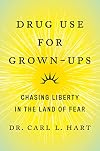
To describe this book in one word, I'd maybe choose "scandalous." Dr. Hart uses heroin & has no intention of stopping. It's a harmless hobby, like having a drink. "Grown-ups" can responsibly take heroin, and opioids, and meth - there is no drug that should be off limits. Now there's the general libertarian argument for that, which Dr. Hart espouses; but as a tenured professor of psychology at Columbia specializing in neuropharmacology, he'll also argue authoritatively that none of these show more drugs will necessarily harm you, if used responsibly - so it's not simply a matter of "you should be able to legally destroy your life if you choose". It's also that, if you're a "grown-up" about it, you won't.
Dr. Hart wrote this risky book to come out of the closet, in the hopes others would follow. I think he will likely find himself forever in the minority. I've never read any account of someone in such a prestigious station in life coming clean about so much casual, ongoing drug use (he's tried everything). But now I have - & I guess he'd say that's the point of the book.
And I know he'll say that this is more evidence of how badly the book is needed, but hearing him justify his heroin use and explain how NOT an addict he is made me wonder how long it might take for the inevitable shoe to drop - where will Dr. Hart be a year or more from now? Still a happy user insisting he's not an addict? Will it be true? I believe it to be true of him now. I do believe his accounts and all the evidence he presents; but being brainwashed by our anti-drug society I just can't help but wonder...
One constant point of his that I appreciate is this: drugs feel good, and that's reason enough to take them. He gets really uptight around LSD users because they tend to try to justify their drug use as "different" from others - they're doing it for mind-expanding reasons or whatever, not to get high. "What's wrong with getting high?" he cuts one guy off mid-sentence. I love that. The right to pleasure... not currently enshrined in the Constitution, but should be, as Tom Lehrer put it decades ago. He was talking about pornography, not drugs, but the principle's the same -
"Obscenity. I'm for it. Unfortunately the civil liberties types who are fighting this issue have to fight it owing to the nature of the laws as a matter of freedom of speech and stifling of free expression and so on - but we know what's really involved: dirty books are fun. That's all there is to it. But you can't get up in a court and say that I suppose. it's simply a matter of freedom of pleasure, a right which is not guaranteed by the constitution unfortunately." show less
Dr. Hart wrote this risky book to come out of the closet, in the hopes others would follow. I think he will likely find himself forever in the minority. I've never read any account of someone in such a prestigious station in life coming clean about so much casual, ongoing drug use (he's tried everything). But now I have - & I guess he'd say that's the point of the book.
And I know he'll say that this is more evidence of how badly the book is needed, but hearing him justify his heroin use and explain how NOT an addict he is made me wonder how long it might take for the inevitable shoe to drop - where will Dr. Hart be a year or more from now? Still a happy user insisting he's not an addict? Will it be true? I believe it to be true of him now. I do believe his accounts and all the evidence he presents; but being brainwashed by our anti-drug society I just can't help but wonder...
One constant point of his that I appreciate is this: drugs feel good, and that's reason enough to take them. He gets really uptight around LSD users because they tend to try to justify their drug use as "different" from others - they're doing it for mind-expanding reasons or whatever, not to get high. "What's wrong with getting high?" he cuts one guy off mid-sentence. I love that. The right to pleasure... not currently enshrined in the Constitution, but should be, as Tom Lehrer put it decades ago. He was talking about pornography, not drugs, but the principle's the same -
"Obscenity. I'm for it. Unfortunately the civil liberties types who are fighting this issue have to fight it owing to the nature of the laws as a matter of freedom of speech and stifling of free expression and so on - but we know what's really involved: dirty books are fun. That's all there is to it. But you can't get up in a court and say that I suppose. it's simply a matter of freedom of pleasure, a right which is not guaranteed by the constitution unfortunately." show less
Dr. Carl Hart has never met a recreational drug he did not like. All of them have their very positive aspects for him. They reduce stress, raise awareness, and induce respect, co-operation, empathy and intimacy. And then they wear off. He calls for a withdrawal of government from the drug-banning business. His constitutional rights preclude government interference, he says. His book, Drug Use for Grown-Ups is the distillation of years of research, plus lectures, speeches and feedback from show more them. It looks like a solid case.
Hart was chairman of the Psychiatry Department at Columbia University in New York. This both resulted from and continued to allow him to run studies on all kinds of drugs for all kinds of reasons. He could determine their effects from numerous angles. He found that they are not killers. He found (as many others have) that only 10-30% of drug users qualify as addicts. In his global travels as a respected academic, this has been supported and confirmed by his peers in countless panels and conferences.
Hart has made this his life’s work. Growing up in a high crime black area of Miami, surrounded by drug problems, he wanted to be part of the solution – meaning the elimination of all casual drug taking. Decades of intense research have led him to the precise opposite position. Throughout the book, he continually confesses his assumptions were wrong. And so are the blanket statements of so-called experts.
In addition to the studies, Hart uses himself as a test bed. He and his wife try them out, note their powers, and move on to others. He now freely admits he has done this all over the world in all kinds of contexts. For him, the drugs are unfailingly beneficial. The Harts use drugs to relieve stress and get more out of life. They can’t imagine stopping. Millions of Americans feel the same way. They are fully functioning adults who, because of government interference, must remain in the closet over their drug use. Their ability to totally hide their drug use is further proof to Hart that crippling addiction isn’t a necessary outcome, and 80% do not become addicted.
The drugs he describes are amphetamines, methamphetamines, cocaine, heroin and marijuana. He describes their chemical structures and their effects on him. He tells of impurities in manufacture, particularly of illegally made drugs. And of the users’ physical conditions that could lead to addiction or to death. It’s not a simple or straightforward relationship, as he says throughout. Far less causation than coincidence.
Readers might think the opioid crisis would be the end of Hart’s theory, what with 40,000 deaths a year from addiction. But Hart is up to the challenge. He shows that opioids do not cause addiction or death in the vast majority of users. Addiction occurs when users have other weaknesses, like a psychiatric condition, depression or other illness that might have them on other meds or simply lowered defenses. That would weaken the body so that opioids have greater effect than intended. Meds cannot simply be combined without unintended consequences. Similarly, co-morbidities like diabetes or other illnesses could lead to addiction and worse. The blanket condemnation of opioids as the cause of addiction, he says, is just wrong. In every case he examines, it turns out the drugs were not the cause of death, even though the media report it that way. Hart says “People are not dying because of opioids; they are dying because of ignorance.” Combine an opioid with alcohol, an anticonvulsive, an antihistamine, a benzodiazepine, or another sedative, and life itself is at risk.
Inevitably, race plays a major role in the book. Hart is black, and blacks are outrageously disproportionate residents of American prisons for their use of drugs. In the world of drug busts, White means victim and Black means addict/criminal. In Baltimore from 2015-17, he says, there were 1514 arrests for marijuana possession. Of those 1450 were black – 96%.
To make his point about both race and drugs, Hart looks at a number of famous racial killings by police, where cops claimed the victims were on drugs, and so they feared for their lives. This is the drug-crazed black syndrome, a bogus accusation made by whites for decades. In the Trayvon Martin case, for example, Hart explains the toxicology report on Martin. It shows he was not high and had not used even marijuana for a day or two before his murder. Nonetheless, the jury bought the drug-crazed argument, and the killer, claiming to be a police surrogate for his neighborhood, and fearing for his life, went free.
Race also hits Hart where he lives. In a triple race discrimination event involving his son’s private school (where Hart pays $50,000 a year for tuition), the administration refused to accept blame and then infuriated him by asking the Harts to rewrite the school’s policies for them. It’s an old trick that is as insulting as it is insincere. To deal with the stress, the Harts took drugs so they could deal sensibly and empathetically with their son. Of course, they did not involve their son in their drug use to help him reduce his own stress in the same situation that affected him first and foremost, a bit of parental hypocrisy that Hart does not even see.
The comparison of drugs to alcohol is a longstanding one. Hart says alcohol’s negative effects far outweigh those of drugs, yet alcohol is legal, and so is drinking yourself to death. During Prohibition, the government itself required the lacing of alcohol with methanol, in an attempt to dissuade drinkers. Instead, up to ten thousand died. Government is not competent to manage casual drug consumption, is Hart’s takeaway.
The government’s broad and complete banning of recreational drugs goes back to heroin before World War I. Heroin’s medical uses are well known, and Hart, who uses it for pleasure, says the effects are wonderful. But government will not budge. Not even its testing is allowed in the USA.
All kinds of doctors and other authorities continually testify that drugs kill, cause uncontrollable rage and other nefarious conditions. They have no scientific evidence behind their claims, but the media back them up, always on the lookout for the drug angle to tie up a story and forget about it. Hart calls them out when he can, but American society has it so ingrained that drugs are bad that the frauds are believed without question. It’s one of those “everyone knows” facts, continually reinforced by those in power.
In 1937 when marijuana was banned, Fiorello LaGuardia commissioned report on it. The report found “Individuals who have been smoking marijuana for a period of years showed no mental or physical deterioration which may be attributed to the drug,“ and that concerns about catastrophic effects were unfounded. But the ban stayed, and remains. And millions have been jailed for it.
The total failure of the “war on drugs”, which Hart says cost taxpayers $1.5 billion in 1981 and now costs $35 billion a year, annoys him. Despite all the expense and prison terms, there is a much larger menu of drug choices and far more Americans using them, successfully, and in secret. Hart is incensed by every aspect of that state of affairs. He wants government to get out of that business.
Instead, the government doubles down. It bans new recreational drugs as soon as it can define and name them. The list grows annually. The menu is far larger today than ever, as synthetic drugs, no longer simply derived from opium, have exploded in the marketplace. Hart presents a list of new bannings just from this decade, in case readers might want to keep up with what is new and hot.
Another reason for drug deaths is impurity. Hart says the illegality of drugs means there is no quality control. Impurities in drugs can kill. Lacing heroin with fentanyl may enhance it, but it kills. If the user knows it is there, s/he can take a smaller dose, but no one ever knows what they’re buying when it’s illegal to begin with. It was the same story with bathtub gin and hooch during Prohibition. Make it illegal, and risk rockets. Doesn’t stop anyone, and lives would be saved if the government stopped its failing, incorrect and pointless pursuit.
Even legal drugs can kill. Hart says just two days of too much acetaminophen can cause liver disease. It’s all very complicated, and users cannot be expected to know all the possible outcomes from combinations of drugs, let alone the side effects.
He emphasizes that the book is really about freedom, and not a drug user’s guide to bigger and better things. But the freedom message is simple and easy to absorb. The meat of the book is the vast knowledge Hart has about what the drugs do and don’t do, alone and mixed with others. That’s what it will be remembered for, and used for.
And although Hart is certainly right – recreational drugs should not be forbidden by law – it is clear not everyone can handle them as rationally and inquiringly as he does. He knows more about them than the drug companies (and labs) that make them. He is therefore the exception that proves the rule.
David Wineberg show less
Hart was chairman of the Psychiatry Department at Columbia University in New York. This both resulted from and continued to allow him to run studies on all kinds of drugs for all kinds of reasons. He could determine their effects from numerous angles. He found that they are not killers. He found (as many others have) that only 10-30% of drug users qualify as addicts. In his global travels as a respected academic, this has been supported and confirmed by his peers in countless panels and conferences.
Hart has made this his life’s work. Growing up in a high crime black area of Miami, surrounded by drug problems, he wanted to be part of the solution – meaning the elimination of all casual drug taking. Decades of intense research have led him to the precise opposite position. Throughout the book, he continually confesses his assumptions were wrong. And so are the blanket statements of so-called experts.
In addition to the studies, Hart uses himself as a test bed. He and his wife try them out, note their powers, and move on to others. He now freely admits he has done this all over the world in all kinds of contexts. For him, the drugs are unfailingly beneficial. The Harts use drugs to relieve stress and get more out of life. They can’t imagine stopping. Millions of Americans feel the same way. They are fully functioning adults who, because of government interference, must remain in the closet over their drug use. Their ability to totally hide their drug use is further proof to Hart that crippling addiction isn’t a necessary outcome, and 80% do not become addicted.
The drugs he describes are amphetamines, methamphetamines, cocaine, heroin and marijuana. He describes their chemical structures and their effects on him. He tells of impurities in manufacture, particularly of illegally made drugs. And of the users’ physical conditions that could lead to addiction or to death. It’s not a simple or straightforward relationship, as he says throughout. Far less causation than coincidence.
Readers might think the opioid crisis would be the end of Hart’s theory, what with 40,000 deaths a year from addiction. But Hart is up to the challenge. He shows that opioids do not cause addiction or death in the vast majority of users. Addiction occurs when users have other weaknesses, like a psychiatric condition, depression or other illness that might have them on other meds or simply lowered defenses. That would weaken the body so that opioids have greater effect than intended. Meds cannot simply be combined without unintended consequences. Similarly, co-morbidities like diabetes or other illnesses could lead to addiction and worse. The blanket condemnation of opioids as the cause of addiction, he says, is just wrong. In every case he examines, it turns out the drugs were not the cause of death, even though the media report it that way. Hart says “People are not dying because of opioids; they are dying because of ignorance.” Combine an opioid with alcohol, an anticonvulsive, an antihistamine, a benzodiazepine, or another sedative, and life itself is at risk.
Inevitably, race plays a major role in the book. Hart is black, and blacks are outrageously disproportionate residents of American prisons for their use of drugs. In the world of drug busts, White means victim and Black means addict/criminal. In Baltimore from 2015-17, he says, there were 1514 arrests for marijuana possession. Of those 1450 were black – 96%.
To make his point about both race and drugs, Hart looks at a number of famous racial killings by police, where cops claimed the victims were on drugs, and so they feared for their lives. This is the drug-crazed black syndrome, a bogus accusation made by whites for decades. In the Trayvon Martin case, for example, Hart explains the toxicology report on Martin. It shows he was not high and had not used even marijuana for a day or two before his murder. Nonetheless, the jury bought the drug-crazed argument, and the killer, claiming to be a police surrogate for his neighborhood, and fearing for his life, went free.
Race also hits Hart where he lives. In a triple race discrimination event involving his son’s private school (where Hart pays $50,000 a year for tuition), the administration refused to accept blame and then infuriated him by asking the Harts to rewrite the school’s policies for them. It’s an old trick that is as insulting as it is insincere. To deal with the stress, the Harts took drugs so they could deal sensibly and empathetically with their son. Of course, they did not involve their son in their drug use to help him reduce his own stress in the same situation that affected him first and foremost, a bit of parental hypocrisy that Hart does not even see.
The comparison of drugs to alcohol is a longstanding one. Hart says alcohol’s negative effects far outweigh those of drugs, yet alcohol is legal, and so is drinking yourself to death. During Prohibition, the government itself required the lacing of alcohol with methanol, in an attempt to dissuade drinkers. Instead, up to ten thousand died. Government is not competent to manage casual drug consumption, is Hart’s takeaway.
The government’s broad and complete banning of recreational drugs goes back to heroin before World War I. Heroin’s medical uses are well known, and Hart, who uses it for pleasure, says the effects are wonderful. But government will not budge. Not even its testing is allowed in the USA.
All kinds of doctors and other authorities continually testify that drugs kill, cause uncontrollable rage and other nefarious conditions. They have no scientific evidence behind their claims, but the media back them up, always on the lookout for the drug angle to tie up a story and forget about it. Hart calls them out when he can, but American society has it so ingrained that drugs are bad that the frauds are believed without question. It’s one of those “everyone knows” facts, continually reinforced by those in power.
In 1937 when marijuana was banned, Fiorello LaGuardia commissioned report on it. The report found “Individuals who have been smoking marijuana for a period of years showed no mental or physical deterioration which may be attributed to the drug,“ and that concerns about catastrophic effects were unfounded. But the ban stayed, and remains. And millions have been jailed for it.
The total failure of the “war on drugs”, which Hart says cost taxpayers $1.5 billion in 1981 and now costs $35 billion a year, annoys him. Despite all the expense and prison terms, there is a much larger menu of drug choices and far more Americans using them, successfully, and in secret. Hart is incensed by every aspect of that state of affairs. He wants government to get out of that business.
Instead, the government doubles down. It bans new recreational drugs as soon as it can define and name them. The list grows annually. The menu is far larger today than ever, as synthetic drugs, no longer simply derived from opium, have exploded in the marketplace. Hart presents a list of new bannings just from this decade, in case readers might want to keep up with what is new and hot.
Another reason for drug deaths is impurity. Hart says the illegality of drugs means there is no quality control. Impurities in drugs can kill. Lacing heroin with fentanyl may enhance it, but it kills. If the user knows it is there, s/he can take a smaller dose, but no one ever knows what they’re buying when it’s illegal to begin with. It was the same story with bathtub gin and hooch during Prohibition. Make it illegal, and risk rockets. Doesn’t stop anyone, and lives would be saved if the government stopped its failing, incorrect and pointless pursuit.
Even legal drugs can kill. Hart says just two days of too much acetaminophen can cause liver disease. It’s all very complicated, and users cannot be expected to know all the possible outcomes from combinations of drugs, let alone the side effects.
He emphasizes that the book is really about freedom, and not a drug user’s guide to bigger and better things. But the freedom message is simple and easy to absorb. The meat of the book is the vast knowledge Hart has about what the drugs do and don’t do, alone and mixed with others. That’s what it will be remembered for, and used for.
And although Hart is certainly right – recreational drugs should not be forbidden by law – it is clear not everyone can handle them as rationally and inquiringly as he does. He knows more about them than the drug companies (and labs) that make them. He is therefore the exception that proves the rule.
David Wineberg show less
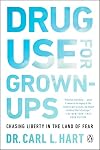
Okay so the good stuff about this book: the science is fascinating, I learned a lot, and I frankly really strongly agree with Hart. I did before I read the book, but his arguments about pleasure are pretty compelling. He's able to tie together both the science and the racist history of drug criminalization (and the criminalization of Black people through drugs.)
The major thing that kept this from being five stars, for me, was the way Hart uses "responsible" in his argument for who should show more get to use drugs freely. "Responsible" means nothing in this text; he never clarifies exactly who he thinks is "irresponsible," though he suggests that people with psychiatric illness should not use drugs (despite the VERY COOL fact that he drops that heroin is potentially AS effective at treating psychotic symptoms as anti-psychotics, with fewer side effects--which would suggest to me that perhaps people with psychosis would benefit from using heroin.) (Disclaimer I'm not a doctor and I'm not telling folks who experience symptoms of psychosis to use heroin.)
This specter of responsibility hangs over this book, and given the classist, racist implications of "responsibility" that have been wielded against poor people and people of color in this country, I don't think it fits with his argument. It's a bad softening of his argument, and it creates this tension between drug users who he deems are "responsible" and users who don't fall into that category. What differences are there between someone who uses drugs as self-medication for mental illness and Hart, who says in the text of the book that he uses drugs instead of going to therapy (because of the racism of mental healthcare.) I understand why he doesn't use the description "self-medication" (because he's trying to resist a medicalization of his own drug use,) but it definitely sounds like that's what he's doing. How do we address that? How do we validate it? How can drug users "in the closet" show solidarity with drug users who cannot be in the closet, outside of "coming out"? These are all questions that are raised for me by his differentiation, and none are really answered by the book.
I do definitely recommend people read this, especially because the discussion about the legalization of drugs is compelling and something to seriously think about. I just think some of his framing raises more problems than he addresses, and I found it a really big gap in the book. show less
The major thing that kept this from being five stars, for me, was the way Hart uses "responsible" in his argument for who should show more get to use drugs freely. "Responsible" means nothing in this text; he never clarifies exactly who he thinks is "irresponsible," though he suggests that people with psychiatric illness should not use drugs (despite the VERY COOL fact that he drops that heroin is potentially AS effective at treating psychotic symptoms as anti-psychotics, with fewer side effects--which would suggest to me that perhaps people with psychosis would benefit from using heroin.) (Disclaimer I'm not a doctor and I'm not telling folks who experience symptoms of psychosis to use heroin.)
This specter of responsibility hangs over this book, and given the classist, racist implications of "responsibility" that have been wielded against poor people and people of color in this country, I don't think it fits with his argument. It's a bad softening of his argument, and it creates this tension between drug users who he deems are "responsible" and users who don't fall into that category. What differences are there between someone who uses drugs as self-medication for mental illness and Hart, who says in the text of the book that he uses drugs instead of going to therapy (because of the racism of mental healthcare.) I understand why he doesn't use the description "self-medication" (because he's trying to resist a medicalization of his own drug use,) but it definitely sounds like that's what he's doing. How do we address that? How do we validate it? How can drug users "in the closet" show solidarity with drug users who cannot be in the closet, outside of "coming out"? These are all questions that are raised for me by his differentiation, and none are really answered by the book.
I do definitely recommend people read this, especially because the discussion about the legalization of drugs is compelling and something to seriously think about. I just think some of his framing raises more problems than he addresses, and I found it a really big gap in the book. show less
High price : a neuroscientist's journey of self-discovery that challenges everything you know about drugs and society by Carl Hart
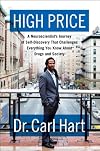
This is mostly an autobiography: a black boy grows up in Florida, through luck makes it into the military where his interest in learning is slowly awakened, and ends up a tenured Columbia professor. Many in his family have downward trajectories instead; early poverty and violence didn’t provide them with the resource cushions that would have helped insulate them from individual bits of bad luck/bad decisions. Hart discusses his early experiments with drugs, crime, and random sex (in fact, show more he later discovered he had a son he didn’t know about—a son who didn’t graduate from high school and now has five children of his own, while the two slightly younger sons Hart raised are just teenagers) in the course of arguing that poverty and racism, not drugs, produce the scary things we’re taught come from drugs. Only a small percentage of users, he says, become truly addicted; even addicts make rational decisions; but if you’re poor, the alternatives to drugs aren’t that attractive. He advocates decriminalization and treatment, not so much to decrease the rate of drug use—he doesn’t think that’s the right goal—but to decrease the appalling toll of imprisonment, impaired job prospects, and destroyed lives that a police-oriented approach has on African-American communities and especially men. show less
Awards


You May Also Like


Associated Authors
Statistics
- Works
- 5
- Members
- 632
- Popularity
- #39,872
- Rating
- 3.7
- Reviews
- 24
- ISBNs
- 44
- Languages
- 2