
James Frey (1) (1969–)
Author of A Million Little Pieces
For other authors named James Frey, see the disambiguation page.
About the Author
James Frey was born on September 12, 1969. He graduated from Denison University in 1992. He eventually moved to Los Angeles and found work as a screenwriter, director, and producer. He wrote the screenplays to the films Kissing a Fool and Sugar: The Fall of the West, which he also directed. He is show more an American author who was thrust into the spotlight after he published his "autobiographical" book, A Million Little Pieces in 2003. By 2006 it became common knowledge that parts of the memoir were fictitious. This lead Frey and his publisher to a public confrontation on the Oprah show. After admitting that he had made parts of the book up, a note was published in future editions of the book to that effect. Also, readers who felt that they were "defrauded" and who bought the book prior to the 2006 date were offered a refund by Random House. His other books include My Friend Leonard, Bright Shiny Morning, and The Final Testament of the Holy Bible. In 2009 he formed a young adult publishing company, Full Fathom Five, which wrote the novels I Am Number Four and The Power of Six under the name of Pittacus Lore. I Am Number Four was made into a movie in 2011. Frey's title, The Calling, co-authored with Nils Johnson-Shelton, made the New York Times bestseller list in 2014. (Bowker Author Biography) show less
Image credit: November 2009, photo by Roger Casas-Alatriste
Series
Works by James Frey
Endgame: The Complete Training Diaries: Volumes 1, 2, and 3 (Endgame: The Training Diaries) (2015) 64 copies
Endgame: The Complete Zero Line Chronicles (Endgame: The Zero Line Chronicles) (2016) 39 copies, 1 review
Size Does Matter 2 copies
"Endgame Novella #4" 2 copies
"Endgame Novella #2" 2 copies
"Endgame Novella #7" 2 copies
"Endgame Novella #1" 2 copies
"Endgame Novella #5" 2 copies
Endgame: Kalas Rache 1 copy
Associated Works
Why We Write: 20 Acclaimed Authors on How and Why They Do What They Do (2013) — Contributor — 211 copies, 10 reviews
Hint Fiction: An Anthology of Stories in 25 Words or Fewer (2010) — Contributor — 150 copies, 26 reviews
Tagged
Common Knowledge
- Legal name
- Frey, James Christopher
- Birthdate
- 1969-09-12
- Gender
- male
- Education
- Denison University
- Occupations
- screenwriter
- Relationships
- Lore, Pittacus (shared pseudonym)
- Nationality
- USA
- Birthplace
- Cleveland, Ohio, USA
- Places of residence
- New York, New York, USA
- Map Location
- USA
Members
Discussions
A Million Little Pieces: Not quite all James Frey's fault? in Biographies, Memoirs and Autobiographies (June 2025)
Found: YA Hunger Games/Battle Royal vibe but on a global scale in Name that Book (July 2023)
Found: Scifi/Adventure; End of the world game, Alien Overlords, Treasure hunt. in Name that Book (August 2021)
Reviews
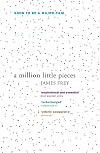
A bookclub read, this is either a relentlessly gruelling and honest account of the horrors of addiction, or a self-indulgent, repetitive, nasty and dull monologue about vomiting, hallucinating and wondering whether suicide is the better option.
I found nothing to like here: it starts with Frey semi-conscious and amnesiac, spitting, swearing and sulking, with no redeeming features on offer even after he starts to clean up. The supporting characters are no more appealing, thinly drawn and show more disinteresting (perhaps in part because the narrator is holding himself aloof), unable to engage my sympathy or curiosity.
As if very little happening (at length) to a dislikeable man weren't enough, Frey chooses to capitalize random Nouns and eschews use of standard punctuation (especially for speech). The resulting Hodge Podge of inconsistent capitals and no syntactical crutches makes for a subpar stream of consciousness that hurt to read. The Evening Standard's assertion on the cover that "this is brilliantly written, and if you disagree you can fuck off" was frankly red rag to my enraged bull.
This may (or may not - see Google for debate on whether this novel is as autobiographical as it claims) be a searingly honest account of one man's struggle back from the brink. If so, good for him. I hope he's fully recovered and making up to friends and family for being an asshat. It may be an accurate portrayal of the horror of recovery. But it's not escapist or entertaining, and (as I'm not an addict, and don't plan to become one) it's not educational.
There was a tiny chance in a million that I'd find this interesting, touching, even inspiring. Instead, I quit halfway through rather than work up a truly interminable rant to vent at bookclub. Sorry bookclub. show less
I found nothing to like here: it starts with Frey semi-conscious and amnesiac, spitting, swearing and sulking, with no redeeming features on offer even after he starts to clean up. The supporting characters are no more appealing, thinly drawn and show more disinteresting (perhaps in part because the narrator is holding himself aloof), unable to engage my sympathy or curiosity.
As if very little happening (at length) to a dislikeable man weren't enough, Frey chooses to capitalize random Nouns and eschews use of standard punctuation (especially for speech). The resulting Hodge Podge of inconsistent capitals and no syntactical crutches makes for a subpar stream of consciousness that hurt to read. The Evening Standard's assertion on the cover that "this is brilliantly written, and if you disagree you can fuck off" was frankly red rag to my enraged bull.
This may (or may not - see Google for debate on whether this novel is as autobiographical as it claims) be a searingly honest account of one man's struggle back from the brink. If so, good for him. I hope he's fully recovered and making up to friends and family for being an asshat. It may be an accurate portrayal of the horror of recovery. But it's not escapist or entertaining, and (as I'm not an addict, and don't plan to become one) it's not educational.
There was a tiny chance in a million that I'd find this interesting, touching, even inspiring. Instead, I quit halfway through rather than work up a truly interminable rant to vent at bookclub. Sorry bookclub. show less
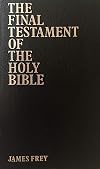
I admit to reading this with more than a bit of trepidation. I loved A Million Little Pieces, even after it was shown to be largely fiction. After the two "memoirs," I wasn't impressed with Frey's "first" novel. Add this to the fact The Final Testament of the Holy Bible is about the Messiah returning to modern New York City and you can see why I, like many others, was leery. Not only did I like it, it may well end up on my best of the year list.
When we meet Frey's central character, his show more name is Ben Jones, a 30-year-old drifter who lands a job working security for a construction company. Each chapter unveils more of Ben's story from the perspective of a different narrator (although we hear from some more than once). They include Ben's mother, sister, priests, rabbis, teen-aged prostitutes, drug addicts and homeless men. Frey gives each a unique voice that fits and captures the character. Ben narrates no part of his story but, like some Bibles, when a narrator relates his actual words, they appear in red (at least in the e-book I read).
No doubt the book isn't for everyone. Some may think Frey aims to shock for the sake of shock, others may simply dislike or condemn the Ben character, his actions or even the "theology" he espouses. But although not entirely original in concept, The Final Testament raises fundamental questions about religion, how it affects our lives and how religious doctrines are interpreted. Moreover, while some of Ben's experiences undoubtedly suggest otherworldliness, Frey provides a potentially rational explanation for his seemingly growing omniscience.
Not only is it interesting and thought-provoking, the way Frey tells the story does much to make this a book worth reading.
(Originally posted at A Progressive on the Prairie.) show less
When we meet Frey's central character, his show more name is Ben Jones, a 30-year-old drifter who lands a job working security for a construction company. Each chapter unveils more of Ben's story from the perspective of a different narrator (although we hear from some more than once). They include Ben's mother, sister, priests, rabbis, teen-aged prostitutes, drug addicts and homeless men. Frey gives each a unique voice that fits and captures the character. Ben narrates no part of his story but, like some Bibles, when a narrator relates his actual words, they appear in red (at least in the e-book I read).
No doubt the book isn't for everyone. Some may think Frey aims to shock for the sake of shock, others may simply dislike or condemn the Ben character, his actions or even the "theology" he espouses. But although not entirely original in concept, The Final Testament raises fundamental questions about religion, how it affects our lives and how religious doctrines are interpreted. Moreover, while some of Ben's experiences undoubtedly suggest otherworldliness, Frey provides a potentially rational explanation for his seemingly growing omniscience.
Not only is it interesting and thought-provoking, the way Frey tells the story does much to make this a book worth reading.
(Originally posted at A Progressive on the Prairie.) show less
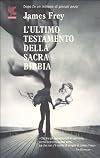
Lo spunto del romanzo è follemente ambizioso, riportare il figlio di Dio in vita e piazzarlo al centro della civiltà occidentale contemporanea non è uno scherzo. Il rischio di scivolare nel banale e nel ridicolo involontario è altissimo e Frey ci casca in pieno, purtroppo per lui, ma soprattuto per me che ho sborsato una cifra non da poco per comprare il libro (dannazione!).
L'architettura narrativa dell'opera non è male, in ogni capitolo un personaggio diverso si fa carico di show more raccontare in prima persona il proprio rapporto con il nuovo messia, tuttavia nonostante una scrittura esperta e accattivante la sostanza del romanzo è poca cosa.
Il messaggio di Ben Zion, espresso piú con le azioni che a parole, è una sorta di pan-erotismo fricchettone di sapore sessantottino talmente semplicistico e superficiale da risultare quasi reazionario: fate l'amore e non la guerra perché il sesso è il modo migliore di avvicinarsi a Dio. Insomma spassatevela come piú vi piace, senza calpestarvi i piedi a vicenda e vedrete che tutto andrà bene. Niente di nuovo sotto il sole dunque, nessun messaggio rivoluzionario, non a caso l'esempio di Ben ha come conseguenza più evidente la nascita di una specie di una nuova comune hippy in cui la gente di giorno canta, mangia e si sollazza e la notte guarda le stelle e si accoppia (come fanno a mantenersi lo sa solo Dio...).
Copulo ergo sum, per farla breve, e se per disgrazia una donna resta incinta non è un problema, una capatina alla più vicina clinica abortiva e la questione è risolta.
Ma il male e la sofferenza del mondo da dove vengono? Tutta colpa del governo e dei preti, risponde con placido e noncurante qualunquismo il Figlio di Dio. Per non parlare delle plateali contraddizioni in cui cade quando afferma che Dio non esiste (ma allora non si spiega lui chi diavolo sia e come faccia a sapere quello che sa) mentre poi sostiene di essere stato mandato da Dio per far sapere a tutti che Dio non si cura degli uomini, il che fa pensare, al contrario, che Dio esista davvero e si comporti come quell'idiota che, rinchiuso dentro casa, risponde "Non c'è nessuno!" quando qualcuno bussa alla porta.
Tremendo. Una bufala colossale. Rivoglio indietro i miei soldi!
---
Precedente: [b:QED - Fenomenologia della dimostrazione|6050344|QED - Fenomenologia della dimostrazione|Gabriele Lolli|https://i.gr-assets.com/images/S/compressed.photo.goodreads.com/books/1327485872l/6050344._SY75_.jpg|6225990]
Successivo: [b:Togliamo il disturbo|10865907|Togliamo il disturbo|Paola Mastrocola|https://i.gr-assets.com/images/S/compressed.photo.goodreads.com/books/1301073807l/10865907._SY75_.jpg|15781098] show less
L'architettura narrativa dell'opera non è male, in ogni capitolo un personaggio diverso si fa carico di show more raccontare in prima persona il proprio rapporto con il nuovo messia, tuttavia nonostante una scrittura esperta e accattivante la sostanza del romanzo è poca cosa.
Il messaggio di Ben Zion, espresso piú con le azioni che a parole, è una sorta di pan-erotismo fricchettone di sapore sessantottino talmente semplicistico e superficiale da risultare quasi reazionario: fate l'amore e non la guerra perché il sesso è il modo migliore di avvicinarsi a Dio. Insomma spassatevela come piú vi piace, senza calpestarvi i piedi a vicenda e vedrete che tutto andrà bene. Niente di nuovo sotto il sole dunque, nessun messaggio rivoluzionario, non a caso l'esempio di Ben ha come conseguenza più evidente la nascita di una specie di una nuova comune hippy in cui la gente di giorno canta, mangia e si sollazza e la notte guarda le stelle e si accoppia (come fanno a mantenersi lo sa solo Dio...).
Copulo ergo sum, per farla breve, e se per disgrazia una donna resta incinta non è un problema, una capatina alla più vicina clinica abortiva e la questione è risolta.
Ma il male e la sofferenza del mondo da dove vengono? Tutta colpa del governo e dei preti, risponde con placido e noncurante qualunquismo il Figlio di Dio. Per non parlare delle plateali contraddizioni in cui cade quando afferma che Dio non esiste (ma allora non si spiega lui chi diavolo sia e come faccia a sapere quello che sa) mentre poi sostiene di essere stato mandato da Dio per far sapere a tutti che Dio non si cura degli uomini, il che fa pensare, al contrario, che Dio esista davvero e si comporti come quell'idiota che, rinchiuso dentro casa, risponde "Non c'è nessuno!" quando qualcuno bussa alla porta.
Tremendo. Una bufala colossale. Rivoglio indietro i miei soldi!
---
Precedente: [b:QED - Fenomenologia della dimostrazione|6050344|QED - Fenomenologia della dimostrazione|Gabriele Lolli|https://i.gr-assets.com/images/S/compressed.photo.goodreads.com/books/1327485872l/6050344._SY75_.jpg|6225990]
Successivo: [b:Togliamo il disturbo|10865907|Togliamo il disturbo|Paola Mastrocola|https://i.gr-assets.com/images/S/compressed.photo.goodreads.com/books/1301073807l/10865907._SY75_.jpg|15781098] show less
Frey has been pilloried for writing under "false pretences". In his defence, it should be noted that it is an incredibly accurate account of what it actually feels like to undergo a detox. Regardless of factual accuracy or otherwise, it is absolutely "true" in the sense of all the best writing, of whatever genre. It therefore thoroughly deserved its place in the best seller list.
I gave this book to a materially and educationally impoverished young alcoholic/crack addict. At the age of 32 show more he'd never read a book before. He felt that the story was his own; it helped him through his early months of sobriety and quite literally helped save his life. At the same time it gave him an opening into reading for pleasure, something he had never understood before.
So do not underestimate this book. It should be valued for its insight into drug and alcohol addiction, although I can see that for non-addicts it may have little meaning. show less
I gave this book to a materially and educationally impoverished young alcoholic/crack addict. At the age of 32 show more he'd never read a book before. He felt that the story was his own; it helped him through his early months of sobriety and quite literally helped save his life. At the same time it gave him an opening into reading for pleasure, something he had never understood before.
So do not underestimate this book. It should be valued for its insight into drug and alcohol addiction, although I can see that for non-addicts it may have little meaning. show less
Lists
Awards


You May Also Like


Associated Authors
Statistics
- Works
- 33
- Also by
- 2
- Members
- 16,328
- Popularity
- #1,390
- Rating
- 3.5
- Reviews
- 401
- ISBNs
- 337
- Languages
- 16
- Favorited
- 28
