

Andrea Warren
Author of Surviving Hitler: A Boy in the Nazi Death Camps
About the Author
Andrea Warren has written many award-winning books for children including Orphan Train Rider: One Boy's True Story, which received the Boston Globe-Horn Book Award for Nonfiction, and Surviving Hitler: A Boy in the Nazi Death Camps, a Robert F. Sibert Honor Book. She lives in Kansas City. Visit her show more at AndreaWarren.com. show less
Works by Andrea Warren
The Boy Who Became Buffalo Bill: Growing Up Billy Cody in Bleeding Kansas (2015) 47 copies, 1 review
Enemy Child: The Story of Norman Mineta, a Boy Imprisoned in a Japanese American Internment Camp During World War II (2019) 41 copies, 1 review
Everybody's Doing It: How to Survive Your Teenagers' Sex Life (and Help Them Survive It, Too) (1993) 8 copies, 1 review
The Author's Guide to Orphan Train Rider: One Boy's True Story & We Rode The Orphan Trains And the Common Core Standards (2013) 1 copy
Growing Up on the Prairie 1 copy
Tagged
Common Knowledge
- Birthdate
- 1946-10-30
- Gender
- female
- Education
- University of Nebraska
University of Kansas - Occupations
- high school English teacher
biographer
journalist
freelance writer
children's book author - Short biography
- Andrea Warren grew up in the town of Newman Grove, Nebraska. She graduated from the University of Nebraska with a master’s degree in British literature. She wrote her first stories for publication while teaching high school English and history in Hastings, Nebraska. Later she moved to Lawrence, Kansas, and earned a master’s degree in magazine journalism from the University of Kansas. After briefly editing a magazine and working as a newspaper reporter, she began her career as a freelance writer, contributing articles to major magazines. She also began writing books. In 1996, she published her first nonfiction book for young readers, Orphan Train Rider: One Boy’s True Story.
It was followed by several more nonfiction works that have won awards, including the Boston Globe-Horn Book Award. - Nationality
- USA
- Birthplace
- Norfolk, Nebraska, USA
- Places of residence
- Newman Grove, Nebraska, USA
Kansas City, Kansas, USA - Associated Place (for map)
- Nebraska, USA
Members
Reviews
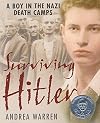
A factual biography based on the life of teenaged concentration camp survivor, Jack Mandelbaum. Jack, who was 14 when WW-II began, narrates his struggles about life in the camps, and later, to locate his family. This is supposed to be a recommended read for children.
Opinion: I read this little 140 page book last night and was blown away by the narrative. This is exactly what I would expect of a biographical book. Only facts, no masala. Andrea Warren narrates Mandelbaum's life in such a show more well-penned manner that you can't help but turn the pages to find out what happens next. Jack's line, "This is a place of endless sorrow. Think only of yourself and those closest to you. If you allow yourself to feel emotion, you will die quickly", shows his determination to come out of the concentration camp alive, all the time motivated by the thought of seeing his family. He admits that to survive a concentration camp, you needed a great deal of luck on your side.
Surviving Hitler is supposedly aimed at children who want to know more about concentration camps, but considering how I felt after reading it, I don't think I'll recommend it to any school-going child. It is nightmarish in its details, though it doesn't narrate anything other than what Jack actually saw. I wouldn't give this book to my kids until they start college at least, but yes, I will give this to them some day as a must-read. Recommended for everyone above 15.
Rating: 4.75/5
********************************************
Join me on the Facebook group, "Readers Forever!", for more reviews and other book-related discussions and fun. show less
Opinion: I read this little 140 page book last night and was blown away by the narrative. This is exactly what I would expect of a biographical book. Only facts, no masala. Andrea Warren narrates Mandelbaum's life in such a show more well-penned manner that you can't help but turn the pages to find out what happens next. Jack's line, "This is a place of endless sorrow. Think only of yourself and those closest to you. If you allow yourself to feel emotion, you will die quickly", shows his determination to come out of the concentration camp alive, all the time motivated by the thought of seeing his family. He admits that to survive a concentration camp, you needed a great deal of luck on your side.
Surviving Hitler is supposedly aimed at children who want to know more about concentration camps, but considering how I felt after reading it, I don't think I'll recommend it to any school-going child. It is nightmarish in its details, though it doesn't narrate anything other than what Jack actually saw. I wouldn't give this book to my kids until they start college at least, but yes, I will give this to them some day as a must-read. Recommended for everyone above 15.
Rating: 4.75/5
********************************************
Join me on the Facebook group, "Readers Forever!", for more reviews and other book-related discussions and fun. show less
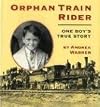
Have you ever heard of orphan trains? Well, don't feel bad if you haven't. I didn't know they existed until two years ago. My father-in-law was talking about this kid in Morgan City who came on the orphan train. My husband and I asked, "What is an orphan train?" He told us that kids would be put on the train and shipped west and south. Families would show up and pick out the kid they wanted. Fascinated, we had to know more. How is it that we never heard of this? When I saw these books in show more class, I had to read them.
Andrea Warren's Orphan Train Rider: One Boy's True Story follows Lee Nailing's journey from New York City orphan to Texas country boy. Warren lets Lee tells his personal story while she provides historical context for what is the largest children's migration in history. She sets the stage for why there were so many orphans at the time: disease, mass immigration combined with unemployment, etc. Warren does not mention the lack of contraception and family planning, but I suppose this is for a younger audience and she doesn't want to go there.
Her bibliography is not extensive, but they texts are credible. The inclusion of newspaper ads and flyers about picking up orphans from the train were shocking and illuminating. Warren relies a lot on testimonials from orphan train riders. I found these to be moving, and the photographs of children drove the message home that these children were vulnerable and needed good homes.
Warren also includes some startling figures and horrifying testimonies. In 1850, NYC's population was 500,000, and there were 30,000 homeless children on the streets (17). Lee describes how his father dropped he and his brother off at the orphanage and later put their younger brother on the orphan train with them. When children arrived at various stops, siblings were split up. Adults inspected children's muscles and teeth like cattle, checking to see if they were strong and could work (43).
While some children suffered and were not placed in good homes, this was not the case for Lee. He found a loving family and could visit his brothers often. There are some excellent photographs of Lee as a young boy in Texas and as an adult, meeting his other brothers after so many years apart. Lee's struggles at the beginning make his happy ending even happier for the reader.
Clearly, the book ends on a positive note, but I wondered about all of the children who chose not to tell their stories or who were no longer around. Warren quotes a 1910 Children's Aid Society report: "87 percent of orphan train riders had 'done well'" (61). She qualifies this in the next sentence, "We cannot know exactly what the society meant by that, but 87 percent is a high success rate..." (60). Of course the society in charge of the orphan trains reported a high success rate. It's not a disinterested third party, why would she not question this number? She includes a number of success stories but not any statistics. Also, didn't the notion that the people who are alive and want to discuss their journey had a positive experience in the end?
Overall, I enjoyed the book, but I am left wanting more, which I suppose is a good thing because I'm about to read her next book We Rode the Orphan Trains. show less
Andrea Warren's Orphan Train Rider: One Boy's True Story follows Lee Nailing's journey from New York City orphan to Texas country boy. Warren lets Lee tells his personal story while she provides historical context for what is the largest children's migration in history. She sets the stage for why there were so many orphans at the time: disease, mass immigration combined with unemployment, etc. Warren does not mention the lack of contraception and family planning, but I suppose this is for a younger audience and she doesn't want to go there.
Her bibliography is not extensive, but they texts are credible. The inclusion of newspaper ads and flyers about picking up orphans from the train were shocking and illuminating. Warren relies a lot on testimonials from orphan train riders. I found these to be moving, and the photographs of children drove the message home that these children were vulnerable and needed good homes.
Warren also includes some startling figures and horrifying testimonies. In 1850, NYC's population was 500,000, and there were 30,000 homeless children on the streets (17). Lee describes how his father dropped he and his brother off at the orphanage and later put their younger brother on the orphan train with them. When children arrived at various stops, siblings were split up. Adults inspected children's muscles and teeth like cattle, checking to see if they were strong and could work (43).
While some children suffered and were not placed in good homes, this was not the case for Lee. He found a loving family and could visit his brothers often. There are some excellent photographs of Lee as a young boy in Texas and as an adult, meeting his other brothers after so many years apart. Lee's struggles at the beginning make his happy ending even happier for the reader.
Clearly, the book ends on a positive note, but I wondered about all of the children who chose not to tell their stories or who were no longer around. Warren quotes a 1910 Children's Aid Society report: "87 percent of orphan train riders had 'done well'" (61). She qualifies this in the next sentence, "We cannot know exactly what the society meant by that, but 87 percent is a high success rate..." (60). Of course the society in charge of the orphan trains reported a high success rate. It's not a disinterested third party, why would she not question this number? She includes a number of success stories but not any statistics. Also, didn't the notion that the people who are alive and want to discuss their journey had a positive experience in the end?
Overall, I enjoyed the book, but I am left wanting more, which I suppose is a good thing because I'm about to read her next book We Rode the Orphan Trains. show less
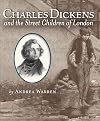
Charles Dickens and the Street Children of London – Andrea Warren
4 stars
There is a long tradition of biography as morality tale in children’s literature. Frequently there is little factual basis for the lesson; George Washington did not, in fact, chop down the cherry tree. However, with Charles Dickens, the lesson is implicit in the life of the man. Andrea Warren has presented the life of Charles Dickens in sixteen easy chapters with the clear intent of showcasing him as a social show more activist. The text is augmented with period illustrations and actual photographs. Following the last chapter are several brief selections that give additional information concerning Victorian England, workhouses and poorhouses in England and America, child labor laws and current charitable or activist organizations benefitting children worldwide. The book has an index, bibliography and a list of suggested websites.
The publisher recommends this book for ages 12 or above. I judge the reading level to be upper elementary; although some of the subject matter might be a bit mature. The text is informative and historically accurate, but is selected with a clear social agenda in mind. show less
4 stars
There is a long tradition of biography as morality tale in children’s literature. Frequently there is little factual basis for the lesson; George Washington did not, in fact, chop down the cherry tree. However, with Charles Dickens, the lesson is implicit in the life of the man. Andrea Warren has presented the life of Charles Dickens in sixteen easy chapters with the clear intent of showcasing him as a social show more activist. The text is augmented with period illustrations and actual photographs. Following the last chapter are several brief selections that give additional information concerning Victorian England, workhouses and poorhouses in England and America, child labor laws and current charitable or activist organizations benefitting children worldwide. The book has an index, bibliography and a list of suggested websites.
The publisher recommends this book for ages 12 or above. I judge the reading level to be upper elementary; although some of the subject matter might be a bit mature. The text is informative and historically accurate, but is selected with a clear social agenda in mind. show less
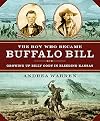
THE BOY WHO BECAME BUFFALO BILL by Andrea Warren is an engrossing nonfiction adventure featuring young Billy Cody.
This compelling true story details young Billy Cody’s life growing up on the plains and ultimately becoming an entertainer. Although the book discusses the Wild West show, emphasis is placed on his younger years. The bulk of the biography explores his tween and young adult years in Kansas, his role in the Civil War, and his work as a scout and guide.
The author skillfully show more weaves historical events into the real-life story of the beloved entertainer. The author’s notes point out that the legend can be difficult to distinguish from the facts. However, Warren’s well-researched biography does an excellent job focusing on historically accurate information.
Librarians will find this biography is written specifically for the middle grade audience. The easy-to-read narrative combined with the short chapters focusing on specific historical events will be attractive to young readers. The wealth of primary source documents including photographs will add to the appeal for young learners. A discussion guide is available for this title.
Add this title to your growing collection of outstanding biographical works by Andrea Warren.
To learn more about the author, go to http://andreawarren.com/.
Published by Two Lions on November 3, 2015. ARC courtesy of the publisher. show less
This compelling true story details young Billy Cody’s life growing up on the plains and ultimately becoming an entertainer. Although the book discusses the Wild West show, emphasis is placed on his younger years. The bulk of the biography explores his tween and young adult years in Kansas, his role in the Civil War, and his work as a scout and guide.
The author skillfully show more weaves historical events into the real-life story of the beloved entertainer. The author’s notes point out that the legend can be difficult to distinguish from the facts. However, Warren’s well-researched biography does an excellent job focusing on historically accurate information.
Librarians will find this biography is written specifically for the middle grade audience. The easy-to-read narrative combined with the short chapters focusing on specific historical events will be attractive to young readers. The wealth of primary source documents including photographs will add to the appeal for young learners. A discussion guide is available for this title.
Add this title to your growing collection of outstanding biographical works by Andrea Warren.
To learn more about the author, go to http://andreawarren.com/.
Published by Two Lions on November 3, 2015. ARC courtesy of the publisher. show less
Lists
Awards


Escape from Saigon: How a Vietnam War Orphan Became an American Boy (Winner – Children's Nonfiction – 2005)


You May Also Like


Associated Authors
Statistics
- Works
- 13
- Members
- 2,464
- Popularity
- #10,403
- Rating
- 4.1
- Reviews
- 71
- ISBNs
- 72