
Stanley Cloud
Author of A Question of Honor: The Kosciuszko Squadron: Forgotten Heroes of World War II
About the Author
Image credit: © 2003 Claudio Vasquez
Works by Stanley Cloud
A Question of Honor: The Kosciuszko Squadron: Forgotten Heroes of World War II (2003) — Author — 291 copies, 6 reviews
Tagged
Common Knowledge
- Gender
- male
Members
Reviews
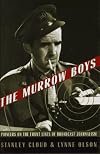
The “Murrow Boys” were a group of radio correspondents active before, and for a while after, World War II who were considered protégés of the great CBS journalist and smoker, Edward R. Murrow. Together they invented broadcast journalism, watched it become great and then wither under the influence of McCarthyism and the advent of television.
Murrow and the aura of integrity became an icon that modern broadcasters tried to emulate and idolize. Dan Rather “donned the mantle so often in show more public” that he was asked to tone it down in 1987 by Eric Sevareid, one of the authentic Murrow Boys. “Rather is not Edward R. Murrow,” Sevareid said. Undeterred, Rather and CBS continued to trade on the past, “ignoring the inconvenient parts, such as the fact that Murrow and most of the Boys had been either forced out or sidetracked by the network’s bosses.”
Radio news had been an oxymoron. Those who read the “news” barely knew of what they spoke. Often they were merely shameless shills for sponsors and mouthed the scripts handed to them -- much like TV newscasters today.
Murrow came from a Quaker family. His real name was Egbert; he changed it after being unmercifully hazed by lumberjacks with whom he worked in the northwest during the summers he was in high school. His mother was so religious she refused to answer the phone by saying hello, for fear that she would be invoking the name of the netherworld. Fun was certainly frowned upon.
Radio was still a new medium and Murrow was given a great deal of freedom to recruit. He hired the best newspaper reporters he could find, arguing that regardless of the medium the idea was to write well and provide honest reports. If there isn't any news, just say so. "I have an idea poeople might like that."
He wasn’t concerned about their voices or their mannerisms. He had offered several positions to women, but the New York CBS office was adamantly opposed to such a radical idea. The people he did hire, such as Winston Burdett, Charles Collingwood, and Eric Sevareid,became famous in their own right. A virtual cult developed around Murrow. Unconsciously, many even imitated his style of clothing. He became a sort of surrogate parent; “Murrow chose people who needed him.”
Paul White, of CBS, was the first to codify the concept of objectivity. It was severely tested by the war. Was it possible for a correspondent to "objectively" parrot Nazi propaganda when reporting from Berlin? The notion of objectivity meant different things to different people. To most people today, objectivity simply means agreement with their opinion.
Radio was particularly vulnerable to pressure from government. The airwaves were still considered public property, and some New Dealers wanted all radio under government control. Comments from FDR's press secretary warning the networks to behave were not ignored by the broadcasters. The issue of objectivity was to create enormous rifts in the industry as broadcasters sought to interpret what they knew, to place events in context. When several of the Murrow Boys reported on how the rear echelons were wallowing in luxurious settings and making huge sums from the black market, the generals accused the reporters of ruining morale. Front line troops asked them why they wouldn't report the horrible conditions up front and the disparity with the rear. This same conflict was to bedevil the journalists in Korea and Vietnam.
Radio brought fame to many of them. They were very good at their jobs. Celebrity was to affect them, too. “As long as a journalist and the outfit he works for are inconsequential, . . . it’s easy for them to believe in and stand for the verities of their craft: truth, reason, independence, freedom and the like. But when the reporter becomes a celebrity, or when his reporting affects masses of people, or when he and his outfit start to earn large amounts of money, then the pressures mount to conform, to protect oneself, to protect one’s income, to protect one’s outfit, to avoid giving offense.” A lesson many of today’s so-called journalists have forgotten or never learned.
The shift to television was to have profound impact on the business of news. After the war, sponsors had become more powerful in dictating the content of news shows they funded. Television’s requirement for larger staff and more expensive equipment made this relationship even more symbiotic. Murrow and his Boys were skeptical. They thought television was lightweight. Images rather than content became important. Nevertheless, Murrow made the transition successfully with his critically acclaimed See It Now program. The transformation to television had been fast. In the three-year period between 1948 and 1951 the nation had moved to television. But even with Murrow running the show, his Boys were appalled when he was heard to suggest that the cameraman was just as important a member of the team as the correspondent. That was part of the radical change. No longer were they independent nor did they have anywhere near the freedom that had existed during World War II. But it was really the money that was making the difference. Eric Sevareid summed it up neatly: "I have been impressed with how timid a million dollars' profit can make a publisher or radio executive, instead of how bold it makes him." How little things have changed.
Television news has become what the Murrow Boys feared, a vast, uninformative wasteland that celebrates image over substance, and happy talk over analysis. The networks cut costs by eliminating foreign correspondents, buying short video pieces from free-lancers and then layering local voices over the top. Broadcasters are hired for their looks rather than their brains. Frank Stanton recalled watching a network news broadcast one night and being appalled by the lack of knowledge of the reporter: "He had the technology, he had the pictures, he had the people to interview, and he asked the stupidest questions in the world. That didn't happen with the Shirers, the Howard K. Smiths, the Sevareids, the Murrows. They had a sense of history. They knew what was going on."
Ironically, CBS continues to extol the Murrow heritage. "It is almost axiomatic that the more an institution breaks faith with those who built it, the more it sanctifies them." This is a wonderful, revealing, impossible-to-put-down book. show less
Murrow and the aura of integrity became an icon that modern broadcasters tried to emulate and idolize. Dan Rather “donned the mantle so often in show more public” that he was asked to tone it down in 1987 by Eric Sevareid, one of the authentic Murrow Boys. “Rather is not Edward R. Murrow,” Sevareid said. Undeterred, Rather and CBS continued to trade on the past, “ignoring the inconvenient parts, such as the fact that Murrow and most of the Boys had been either forced out or sidetracked by the network’s bosses.”
Radio news had been an oxymoron. Those who read the “news” barely knew of what they spoke. Often they were merely shameless shills for sponsors and mouthed the scripts handed to them -- much like TV newscasters today.
Murrow came from a Quaker family. His real name was Egbert; he changed it after being unmercifully hazed by lumberjacks with whom he worked in the northwest during the summers he was in high school. His mother was so religious she refused to answer the phone by saying hello, for fear that she would be invoking the name of the netherworld. Fun was certainly frowned upon.
Radio was still a new medium and Murrow was given a great deal of freedom to recruit. He hired the best newspaper reporters he could find, arguing that regardless of the medium the idea was to write well and provide honest reports. If there isn't any news, just say so. "I have an idea poeople might like that."
He wasn’t concerned about their voices or their mannerisms. He had offered several positions to women, but the New York CBS office was adamantly opposed to such a radical idea. The people he did hire, such as Winston Burdett, Charles Collingwood, and Eric Sevareid,became famous in their own right. A virtual cult developed around Murrow. Unconsciously, many even imitated his style of clothing. He became a sort of surrogate parent; “Murrow chose people who needed him.”
Paul White, of CBS, was the first to codify the concept of objectivity. It was severely tested by the war. Was it possible for a correspondent to "objectively" parrot Nazi propaganda when reporting from Berlin? The notion of objectivity meant different things to different people. To most people today, objectivity simply means agreement with their opinion.
Radio was particularly vulnerable to pressure from government. The airwaves were still considered public property, and some New Dealers wanted all radio under government control. Comments from FDR's press secretary warning the networks to behave were not ignored by the broadcasters. The issue of objectivity was to create enormous rifts in the industry as broadcasters sought to interpret what they knew, to place events in context. When several of the Murrow Boys reported on how the rear echelons were wallowing in luxurious settings and making huge sums from the black market, the generals accused the reporters of ruining morale. Front line troops asked them why they wouldn't report the horrible conditions up front and the disparity with the rear. This same conflict was to bedevil the journalists in Korea and Vietnam.
Radio brought fame to many of them. They were very good at their jobs. Celebrity was to affect them, too. “As long as a journalist and the outfit he works for are inconsequential, . . . it’s easy for them to believe in and stand for the verities of their craft: truth, reason, independence, freedom and the like. But when the reporter becomes a celebrity, or when his reporting affects masses of people, or when he and his outfit start to earn large amounts of money, then the pressures mount to conform, to protect oneself, to protect one’s income, to protect one’s outfit, to avoid giving offense.” A lesson many of today’s so-called journalists have forgotten or never learned.
The shift to television was to have profound impact on the business of news. After the war, sponsors had become more powerful in dictating the content of news shows they funded. Television’s requirement for larger staff and more expensive equipment made this relationship even more symbiotic. Murrow and his Boys were skeptical. They thought television was lightweight. Images rather than content became important. Nevertheless, Murrow made the transition successfully with his critically acclaimed See It Now program. The transformation to television had been fast. In the three-year period between 1948 and 1951 the nation had moved to television. But even with Murrow running the show, his Boys were appalled when he was heard to suggest that the cameraman was just as important a member of the team as the correspondent. That was part of the radical change. No longer were they independent nor did they have anywhere near the freedom that had existed during World War II. But it was really the money that was making the difference. Eric Sevareid summed it up neatly: "I have been impressed with how timid a million dollars' profit can make a publisher or radio executive, instead of how bold it makes him." How little things have changed.
Television news has become what the Murrow Boys feared, a vast, uninformative wasteland that celebrates image over substance, and happy talk over analysis. The networks cut costs by eliminating foreign correspondents, buying short video pieces from free-lancers and then layering local voices over the top. Broadcasters are hired for their looks rather than their brains. Frank Stanton recalled watching a network news broadcast one night and being appalled by the lack of knowledge of the reporter: "He had the technology, he had the pictures, he had the people to interview, and he asked the stupidest questions in the world. That didn't happen with the Shirers, the Howard K. Smiths, the Sevareids, the Murrows. They had a sense of history. They knew what was going on."
Ironically, CBS continues to extol the Murrow heritage. "It is almost axiomatic that the more an institution breaks faith with those who built it, the more it sanctifies them." This is a wonderful, revealing, impossible-to-put-down book. show less
The story of the Polish pilots who fought in the RAF in the Battle of Britain has often been briefly referred to in histories of the war, but it has never, before now, properly told. It is, simply, a great story. Trained by the Americans in the '20's, the Polish fighter pilots fought through the defeat of their own country in 1939 and then alongside the French in the fall of France the following year. Defying the orders of the French government to surrender to the Germans, they made their show more varied ways to Britain, where, far more experienced than their British counterparts, they became the RAF's most successful aces. In the Battle of Britain, flying as 303 Squadron, they downed 126 German planes, more than three times as many as any other squadron. Described by an American bomber pilot as 'the best damn fighter squadron in the world', they became heroes to the British and idols to young women. According to Sir Archibald Sinclair, Britain's wartime air force minister, without them 'our shortage of trained pilots would have made it impossible to defeat the German air force and so win the Battle.'Olson and Cloud tell the story of the Polish pilots, focussing on a small group of five. in a stunning twist at the war’s end, the Allies rewarded their valor by abandoning Poland to Joseph Stalin. show less
The only bad thing about this book is that it is so heart-breaking. This is the story of the Polish air force pilots (and crew) who escaped from Poland after the Nazis invaded. They found their way to England and fought with the RAF throughout the war. At the end, Poland was sacrificed to Stalin and the Polish fighters had to decide whether to go home or find another life somewhere else.
What I learned reading this history of Polish aviators in World War 2 impressed and astounded me. Without free Polish pilots, Germany might have won the Battle of Britain, for example. A sympathetic but objective look at free Poland's role in defeating Hitler, and a pocket history of Poland's betrayal buy its allies before and after September 1939.
You May Also Like


Associated Authors
Statistics
- Works
- 4
- Members
- 458
- Popularity
- #53,634
- Rating
- 4.3
- Reviews
- 8
- ISBNs
- 14
- Languages
- 1
- Favorited
- 1