
Ted Koppel
Author of Lights Out
About the Author
Ted Koppel was born in Nelson, Lancashire, England on February 8, 1940. He moved to the United States in 1953 and became an American citizen in 1963. He received a B. S. from Syracuse University and an M.A. in mass communications research and political science from Stanford University. Originally a show more newscaster for WABC radio, he switched to television reporting while covering the Vietnam War. He is best known as the anchor for Nightline from the program's inception in 1980 until 2005. In June 2006, he began work on National Public Radio providing commentary to Morning Edition, All Things Considered. He has won numerous awards including 37 Emmy Awards, six George Foster Peabody Awards, 10 duPont-Columbia Awards, nine Overseas Press Club Awards, two George Polk Awards and two Sigma Delta Chi Awards, the highest honor bestowed for public service by the Society of Professional Journalists. He wrote several books including Nightline: History in the Making and the Making of Television and Off Camera: Private Thoughts Made Public. (Bowker Author Biography) Ted Koppel has been the anchor of Nightline on ABC-TV since March 1980. He has won every major broadcasting award, including 32 Emmys, 6 Peabodys, 9 Overseas Press Club awards, 2 George Polk awards, and 2 Sigma Delta Chi awards. Before Nightline, he was a foreign, domestic, and war correspondent and bureau chief for ABC, and its chief diplomatic correspondent. He is the coauthor of In the National Interest. He lives in Maryland. (Publisher Provided) show less
Works by Ted Koppel
The People's Republic of Capitalism 2 copies
ABC News Nightline. The Hajj : one American's pilgrimage to Mecca [1997 TV program] (1997) — Host — 2 copies
Loner 1 copy
Hesburgh 1 copy
Associated Works
Attacks on the Press in 2003: A Worldwide Survey by the Committee to Protect Journalists (Attacks on the Press) (2004) — Preface — 3 copies
Tagged
Common Knowledge
- Canonical name
- Koppel, Ted
- Legal name
- Koppel, Edward James
- Birthdate
- 1940-02-08
- Gender
- male
- Education
- Syracuse University (BS)
Stanford University (MA | Mass Communications Research)
Stanford University (MA | Political Science) - Occupations
- reporter
television host - Organizations
- ABC
Discovery Channel
National Public Radio - Awards and honors
- Sigma Delta Chi Award
George Polk Award
Overseas Press Club Award - Relationships
- Koppel, Grace Anne Dorney (wife)
Koppel, Andrea (daughter) - Nationality
- England (birth)
UK (birth)
USA (1963) - Birthplace
- Nelson, Lancashire, England
- Places of residence
- Lancashire, England, UK
Potomac, Maryland, USA
Members
Reviews
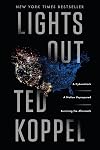
Here’s something you may not know about Antarctica: its ice sheet is heavy enough that it pushes its bedrock into the Earth. As warming ocean waters melt the underside of the ice sheet, its decreased weight allows the bedrock to rise — raising the ice high enough to slow or stop the melt.
I like this as an example of a dynamical system, an equation where changing variables change each other in ways that change the result. It’s why I’m not prone to climate doomerism. Though I don’t show more doubt the climate is changing, it’s a dynamical system; outcomes are hard to predict with prophetic accuracy.
Ted Koppel, famously the anchor of ABC’s “Nightline” for a quarter of a century, is not a doomer. He’s sober, reasonable, rational, and balanced. This makes him a great broadcast journalist, and it makes his book about the fragility of America’s three electrical grids worth your time.
He offers two theses. First, we live on a thinning crust of 21st-century ice over a warming 19th-century ocean. The grids that make modern life possible are a hodgepodge of insecure software and aging infrastructure impossible to replace quickly if a cyberattack destroys key nodes.
Koppel interviews executives in the energy industry, officials in national security, and expert analysts in both fields. He builds a convincing case that a big enough assault could regress the United States to pioneer tech for months or years, with a population death rate perhaps as high as 90 percent.
His second thesis boils down to this: “No one is coming to save you.” That’s not a quote, but Koppel leaves the impression that the problem is unsolvable due to a logjam of competing incentives between profit-driven private industries and governments overstretched by today’s problems. No one will have enough incentive to harden our system until it’s down, society is collapsing, and you’re starving in your cold dark home.
As I said, Koppel is not a doomer and this is a good book. He’s not trying to sell you supplements or earn ad revenue from fear clicks. This makes the book’s third act all the more sobering as Koppel essentially gives up on solutions and just interviews preppers and Mormons, looking for tips on building resources and resilience to survive the end of civilization as we know it.
I finished the book with question marks. First, I don’t think Koppel is wrong. Nearly a decade after the book’s publication, the number of alarms being sounded by high-caliber people and institutions is more, not less. We’re making efforts to address this, but maybe not enough, and maybe not fast enough.
Second, though, I return to the conundrum of dynamical systems. Even if malicious actors are motivated or unhinged enough to risk a ferocious military response, could they achieve maximum damage? What might go wrong in their plans or execution? How might individual operators or agencies respond in real time? Which nodes might prove more redundant or fixable than we thought? How might engineers forced into an extreme crisis solve for something that seems unsolvable now?
We don’t know what we don’t know. A massive cyberattack on our grids would change so many variables so quickly that, to my mind anyway, expecting the end of modern life with certainty would be akin to climate doomerism. Certainly it could happen, and those who prepare for it are no more dumb or paranoid than folks who buy insurance. Then again, we might be more agile and adaptive than we think — and let’s hope so, because I guarantee no one wants me as a farm laborer. show less
I like this as an example of a dynamical system, an equation where changing variables change each other in ways that change the result. It’s why I’m not prone to climate doomerism. Though I don’t show more doubt the climate is changing, it’s a dynamical system; outcomes are hard to predict with prophetic accuracy.
Ted Koppel, famously the anchor of ABC’s “Nightline” for a quarter of a century, is not a doomer. He’s sober, reasonable, rational, and balanced. This makes him a great broadcast journalist, and it makes his book about the fragility of America’s three electrical grids worth your time.
He offers two theses. First, we live on a thinning crust of 21st-century ice over a warming 19th-century ocean. The grids that make modern life possible are a hodgepodge of insecure software and aging infrastructure impossible to replace quickly if a cyberattack destroys key nodes.
Koppel interviews executives in the energy industry, officials in national security, and expert analysts in both fields. He builds a convincing case that a big enough assault could regress the United States to pioneer tech for months or years, with a population death rate perhaps as high as 90 percent.
His second thesis boils down to this: “No one is coming to save you.” That’s not a quote, but Koppel leaves the impression that the problem is unsolvable due to a logjam of competing incentives between profit-driven private industries and governments overstretched by today’s problems. No one will have enough incentive to harden our system until it’s down, society is collapsing, and you’re starving in your cold dark home.
As I said, Koppel is not a doomer and this is a good book. He’s not trying to sell you supplements or earn ad revenue from fear clicks. This makes the book’s third act all the more sobering as Koppel essentially gives up on solutions and just interviews preppers and Mormons, looking for tips on building resources and resilience to survive the end of civilization as we know it.
I finished the book with question marks. First, I don’t think Koppel is wrong. Nearly a decade after the book’s publication, the number of alarms being sounded by high-caliber people and institutions is more, not less. We’re making efforts to address this, but maybe not enough, and maybe not fast enough.
Second, though, I return to the conundrum of dynamical systems. Even if malicious actors are motivated or unhinged enough to risk a ferocious military response, could they achieve maximum damage? What might go wrong in their plans or execution? How might individual operators or agencies respond in real time? Which nodes might prove more redundant or fixable than we thought? How might engineers forced into an extreme crisis solve for something that seems unsolvable now?
We don’t know what we don’t know. A massive cyberattack on our grids would change so many variables so quickly that, to my mind anyway, expecting the end of modern life with certainty would be akin to climate doomerism. Certainly it could happen, and those who prepare for it are no more dumb or paranoid than folks who buy insurance. Then again, we might be more agile and adaptive than we think — and let’s hope so, because I guarantee no one wants me as a farm laborer. show less
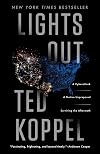
Summary: Explores the vulnerabilities of our power grid to attack, the state of our preparedness for such an attack, and what it would take as individuals to survive such an attack.
Imagine what you would do if the lights went out. Your electric appliances would not work. You could not charge laptops and smartphones. Suppose it was widespread enough to take out the pumps and equipment that pump drinking water and handle sewage. The pumps at gas stations won't work so you are immobilized. If show more it is winter, you may have no heat. Suppose this lasts not for a few hours or even a few days. Suppose it lasts for weeks or months. Suppose the lights are out for half or all of the country. What would happen to public order? Would you survive?
Sounds like something out of apocalyptic fiction, right? Ted Koppel, celebrated host of Nightline for many years and veteran journalist went through this mental exercise and that sought reassurances that it couldn't happen and discovered instead our disturbing vulnerability to just such an event. Through interviews with experts in the power industry, military, cyber-security, Homeland Security, and others, he discovered that such an event is not only possible, but that indeed there is a high probability that such an attack upon our power grid could be mounted.
The first part of the book explores the vulnerability of our power grid, particularly to cyber-attack. The danger is how inter-connected our grid is. You may remember how a wire hitting a tree limb near Akron took out much of the northeastern United States. Our own power company barely got us off that grid in time. Attacks on critical parts of the grid can cascade. It could be terrorists with AK-47s attacking key transformers. It could be a high altitude nuclear detonation emitting an electro-magnetic pulse. But more likely it could be a cyber attack. One of the problems is that our power grid interconnects thousands of electric companies who buy power from each other. Some, usually the bigger ones, have better cyber-security than others. None are hack proof. Probably all have at least been probed, and in some cases, already compromised. And most share control software from an era before cyber-warfare was a significant threat. And if hardware like transformers are destroyed, replacements are not always immediately available.
OK, so it is possible or even probable, but aren't we prepared for that? Sure, agencies like FEMA do disaster planning, but Koppel found that the people he interviewed offered little reassurance that there are good plans for responding to this kind of disaster. Yet eventually, responses would be mounted, but many major cities would have to survive by themselves for the first weeks or months of a prolonged outage.
So that brings us to the third part of Koppel's book, what would it take to survive such an event? This was probably the most sobering part of the book because it raised the question of how far one is prepared to go to survive. Yes, you can plan to be off the grid, have food and water supplies, but to what extent are you willing to defend yourself from those who are not so well prepared but may be willing to kill to get what you have. Consider the amount of guns in American society. Koppel interviews "preppers," those who already live in wilderness areas relatively off the grid, and interestingly, Mormons, who have prepared in each of their "wards" to support one another in disaster. Most fascinating in discussions with this group, which has renounced violence and trusts to law enforcement, is that their guidelines for survival in disaster include the recommendation that one "might consider obtaining a gun" without specifying how it would be used--an approach Koppel describes as "constructive ambiguity."
At the end of the day, Koppel thinks at very least that we need to think about how we would survive at least for two weeks and to have some kind of plan in place with provisions for non-perishable food, water (most critical), and other basic necessities, allowing time for coordinated disaster responses to begin. Drawing on the Mormons, he also points to the issue of social capital--do we belong to real networks of people who will help each other when the chips are down--religious organizations, community organizations, or even close knit neighborhoods?
What struck me in reading is that there are two kinds of preparedness that Koppel is addressing. One is defensive preparedness, ranging from cyber-security to disaster planning to stockpiling critical supplies. As important as that is, the more important preparation may be that of the social fabric of our country, which seems in tatters. Koppel speaks of wartime England and the mutual support people gave each other. It is sobering to ask whether that national character exists in our own highly divisive, factionalized nation and with our increasing isolation in an internet-mediated virtual reality. How long would order and mutual support last? Long enough?
____________________________
Disclosure of Material Connection: I received this book free from the publisher through Blogging for Books. I was not required to write a positive review. The opinions I have expressed are my own. show less
Imagine what you would do if the lights went out. Your electric appliances would not work. You could not charge laptops and smartphones. Suppose it was widespread enough to take out the pumps and equipment that pump drinking water and handle sewage. The pumps at gas stations won't work so you are immobilized. If show more it is winter, you may have no heat. Suppose this lasts not for a few hours or even a few days. Suppose it lasts for weeks or months. Suppose the lights are out for half or all of the country. What would happen to public order? Would you survive?
Sounds like something out of apocalyptic fiction, right? Ted Koppel, celebrated host of Nightline for many years and veteran journalist went through this mental exercise and that sought reassurances that it couldn't happen and discovered instead our disturbing vulnerability to just such an event. Through interviews with experts in the power industry, military, cyber-security, Homeland Security, and others, he discovered that such an event is not only possible, but that indeed there is a high probability that such an attack upon our power grid could be mounted.
The first part of the book explores the vulnerability of our power grid, particularly to cyber-attack. The danger is how inter-connected our grid is. You may remember how a wire hitting a tree limb near Akron took out much of the northeastern United States. Our own power company barely got us off that grid in time. Attacks on critical parts of the grid can cascade. It could be terrorists with AK-47s attacking key transformers. It could be a high altitude nuclear detonation emitting an electro-magnetic pulse. But more likely it could be a cyber attack. One of the problems is that our power grid interconnects thousands of electric companies who buy power from each other. Some, usually the bigger ones, have better cyber-security than others. None are hack proof. Probably all have at least been probed, and in some cases, already compromised. And most share control software from an era before cyber-warfare was a significant threat. And if hardware like transformers are destroyed, replacements are not always immediately available.
OK, so it is possible or even probable, but aren't we prepared for that? Sure, agencies like FEMA do disaster planning, but Koppel found that the people he interviewed offered little reassurance that there are good plans for responding to this kind of disaster. Yet eventually, responses would be mounted, but many major cities would have to survive by themselves for the first weeks or months of a prolonged outage.
So that brings us to the third part of Koppel's book, what would it take to survive such an event? This was probably the most sobering part of the book because it raised the question of how far one is prepared to go to survive. Yes, you can plan to be off the grid, have food and water supplies, but to what extent are you willing to defend yourself from those who are not so well prepared but may be willing to kill to get what you have. Consider the amount of guns in American society. Koppel interviews "preppers," those who already live in wilderness areas relatively off the grid, and interestingly, Mormons, who have prepared in each of their "wards" to support one another in disaster. Most fascinating in discussions with this group, which has renounced violence and trusts to law enforcement, is that their guidelines for survival in disaster include the recommendation that one "might consider obtaining a gun" without specifying how it would be used--an approach Koppel describes as "constructive ambiguity."
At the end of the day, Koppel thinks at very least that we need to think about how we would survive at least for two weeks and to have some kind of plan in place with provisions for non-perishable food, water (most critical), and other basic necessities, allowing time for coordinated disaster responses to begin. Drawing on the Mormons, he also points to the issue of social capital--do we belong to real networks of people who will help each other when the chips are down--religious organizations, community organizations, or even close knit neighborhoods?
What struck me in reading is that there are two kinds of preparedness that Koppel is addressing. One is defensive preparedness, ranging from cyber-security to disaster planning to stockpiling critical supplies. As important as that is, the more important preparation may be that of the social fabric of our country, which seems in tatters. Koppel speaks of wartime England and the mutual support people gave each other. It is sobering to ask whether that national character exists in our own highly divisive, factionalized nation and with our increasing isolation in an internet-mediated virtual reality. How long would order and mutual support last? Long enough?
____________________________
Disclosure of Material Connection: I received this book free from the publisher through Blogging for Books. I was not required to write a positive review. The opinions I have expressed are my own. show less
In my online book collection I have a shelf assigned dystopian novels such as The Stand , The Walking Dead, and Day of the Triffids. Once, in a somewhat whimsical mood, I renamed it my ‘we’re all gonna die’ shelf. Lights out, Ted Koppel’s Investigation into the threat that a cyberattack directed against our electrical grid, gets the dubious honor of being the first non-fiction book to be placed on that shelf.
Veteran newsman Koppel, with a consummate skill born of 42 years spent with show more ABC, lays the groundwork for a story that is every bit as terrifying as anything Stephen King could imagine. What makes ‘Lights Out’ all the scarier is that it is not imagination. A week doesn’t go by where we don’t hear about hackers successfully compromising the computer systems of a company or government agency. The second page of the book describes the recent hacking of millions of federal employees' private information. On the very day I started it my wife, a national laboratory employee, received two rejection letters for credit cards she never applied for. As unpleasant as this kind of cyberattack is for us, it is just the tip of the iceberg of what Ted Koppel's book is about.
The first half of the book describes in frightening detail the weaknesses that exist in America’s three major power grids. It tells how likely it is that a concerted attack may black out large parts of the country for months or even years, and how ill-prepared the electrical power industry and the government is to prevent it or deal with the aftermath. If it does happen (and many experts say the word to use is ‘when’) the prediction is that fewer than ten percent of the population would survive a power outage of one year's duration. Solutions have been proposed and legislation has been introduced to address this but, and this should surprise no one, that legislation has never made it out of committee.
The second half of the book is called ‘Surviving the Aftermath’ and addresses how people are preparing for this and other catastrophic events. These options range from renting condos in a repurposed Kansas missile silo to hiring an ex-special forces soldier to hustle your family to a waiting speedboat stored at a secret mooring on the East River for escape to a yacht waiting offshore. About the only thing these plans have in common is that they cost a lot more than the average suburbanite has to spend on post-apocalypse preparation, or anything for that matter. It also devotes three chapters to plans the Church of Latter-day Saints and their comprehensive preparations for disaster. While this provides ideas of what society can do if we work together it gives little in the way of hope for individuals wanting to make preparations themselves.
The bottom line is that we, in pursuit of convenience, economic advantage, and the right to privacy, have created an open door to allow anyone with the know-how and the will to destroy the United States without firing a shot. The ability for hackers to cripple one or more of our three major power grids for an extended period of time already exists.
* The review book was based on an advanced reading copy obtained at no cost from the publisher in exchange for an unbiased review. While this does take any ‘not worth what I paid for it’ statements out of my review, it otherwise has no impact on the content of my review.
FYI: On a 5-point scale I assign stars based on my assessment of what the book needs in the way of improvements:
• 5 Stars – Nothing at all. If it ain’t broke, don’t fix it.
• 4 Stars – It could stand for a few tweaks here and there but it’s pretty good as it is.
• 3 Stars – A solid C grade. Some serious rewriting would be needed in order for this book to be considered great or memorable.
• 2 Stars – This book needs a lot of work. A good start would be to change the plot, the character development, the writing style and the ending.
• 1 Star - The only thing that would improve this book is a good bonfire. show less
Veteran newsman Koppel, with a consummate skill born of 42 years spent with show more ABC, lays the groundwork for a story that is every bit as terrifying as anything Stephen King could imagine. What makes ‘Lights Out’ all the scarier is that it is not imagination. A week doesn’t go by where we don’t hear about hackers successfully compromising the computer systems of a company or government agency. The second page of the book describes the recent hacking of millions of federal employees' private information. On the very day I started it my wife, a national laboratory employee, received two rejection letters for credit cards she never applied for. As unpleasant as this kind of cyberattack is for us, it is just the tip of the iceberg of what Ted Koppel's book is about.
The first half of the book describes in frightening detail the weaknesses that exist in America’s three major power grids. It tells how likely it is that a concerted attack may black out large parts of the country for months or even years, and how ill-prepared the electrical power industry and the government is to prevent it or deal with the aftermath. If it does happen (and many experts say the word to use is ‘when’) the prediction is that fewer than ten percent of the population would survive a power outage of one year's duration. Solutions have been proposed and legislation has been introduced to address this but, and this should surprise no one, that legislation has never made it out of committee.
The second half of the book is called ‘Surviving the Aftermath’ and addresses how people are preparing for this and other catastrophic events. These options range from renting condos in a repurposed Kansas missile silo to hiring an ex-special forces soldier to hustle your family to a waiting speedboat stored at a secret mooring on the East River for escape to a yacht waiting offshore. About the only thing these plans have in common is that they cost a lot more than the average suburbanite has to spend on post-apocalypse preparation, or anything for that matter. It also devotes three chapters to plans the Church of Latter-day Saints and their comprehensive preparations for disaster. While this provides ideas of what society can do if we work together it gives little in the way of hope for individuals wanting to make preparations themselves.
The bottom line is that we, in pursuit of convenience, economic advantage, and the right to privacy, have created an open door to allow anyone with the know-how and the will to destroy the United States without firing a shot. The ability for hackers to cripple one or more of our three major power grids for an extended period of time already exists.
* The review book was based on an advanced reading copy obtained at no cost from the publisher in exchange for an unbiased review. While this does take any ‘not worth what I paid for it’ statements out of my review, it otherwise has no impact on the content of my review.
FYI: On a 5-point scale I assign stars based on my assessment of what the book needs in the way of improvements:
• 5 Stars – Nothing at all. If it ain’t broke, don’t fix it.
• 4 Stars – It could stand for a few tweaks here and there but it’s pretty good as it is.
• 3 Stars – A solid C grade. Some serious rewriting would be needed in order for this book to be considered great or memorable.
• 2 Stars – This book needs a lot of work. A good start would be to change the plot, the character development, the writing style and the ending.
• 1 Star - The only thing that would improve this book is a good bonfire. show less
Having lived in the world I was told was finishing its “last days” since the mid-1970’s, I’ve developed a certain callousness to all forms of apocrypha. Lights Out: A Cyberattack, A Nation Unprepared, Surviving the Aftermath by Ted Koppel, due out tomorrow, is not the latest version of “the end is near” story that has dogged humankind since we were amphibians. It is a dispassionate, reasoned, and unrelenting look at the consequences of a successful cyberattack on America’s show more power grid. And it is terrifying.
Koppel is no stranger to presenting frightful situations to his audience. Many first recognized his skill as a journalist when he transitioned ABC’s The Iran Crisis: America Held Hostage into Nightline. Koppel’s familiar cadence and style are present in his writing, and make it very easy to join him in looking at this potential disaster.
Thankfully, we have yet to experience a cyberattack of this nature, but Koppel uses historical events to interpolate the consequences of a seriously damaged power grid. In 2003, millions of homes and businesses from northern Ohio to parts of southeast Canada were without power for as much as two weeks. Our power grid is an unbelievably complicated balancing act of power creation and power consumption. A large enough disturbance on either side of the equation and the system is compromised. The simplicity of our home’s power grid creates the perfect breeding ground for overconfidence in the grid as a whole.
Many elements of the nation’s power grid are custom made machines, decades old, that enable electricity to be sent vast distances, and then converted back into current that can be distributed to local homes and business. So vast are these transformers that when originally installed, many had to be transported on custom rail cars that no longer exist. There is no so simple as resetting a breaker, and going back to watch the rest of the game. It is very plausible that weeks could become months or even longer to repair those components.
Thankfully, even if attackers successfully breached electronic firewalls, there is no way they could cause harm to machinery, right? Koppel’s example comes from the successful cyberattack by the United States and her allies on the Iranian nuclear program. After gaining access to the software running Iranian centrifuges, minute adjustments were made to their speed making the materials being processed useless, several of the centrifuges damage, and setting the Iranians back as much as two years. It’s easy to see that hacking into the power grid’s software would be difficult, but if achieved, could create a significant amount of damage.
Hurricane Katrina provides a far too real look at the challenges faced by those caught in a prolonged outage, especially in large metropolitan areas. How do you pump water to the seven million residents of Manhattan Island? How do you pump out the human waste? Elevators, hospitals, phones and many thousands of devices become useless without power. In responding to Katrina, every level of government failed the citizens of New Orleans.
Koppel does an excellent job of avoiding political dogma, his eyes firmly attached to the danger of a successful cyberattack, giving the reader no alternative to looking the danger straight in the eye. show less
Koppel is no stranger to presenting frightful situations to his audience. Many first recognized his skill as a journalist when he transitioned ABC’s The Iran Crisis: America Held Hostage into Nightline. Koppel’s familiar cadence and style are present in his writing, and make it very easy to join him in looking at this potential disaster.
Thankfully, we have yet to experience a cyberattack of this nature, but Koppel uses historical events to interpolate the consequences of a seriously damaged power grid. In 2003, millions of homes and businesses from northern Ohio to parts of southeast Canada were without power for as much as two weeks. Our power grid is an unbelievably complicated balancing act of power creation and power consumption. A large enough disturbance on either side of the equation and the system is compromised. The simplicity of our home’s power grid creates the perfect breeding ground for overconfidence in the grid as a whole.
Many elements of the nation’s power grid are custom made machines, decades old, that enable electricity to be sent vast distances, and then converted back into current that can be distributed to local homes and business. So vast are these transformers that when originally installed, many had to be transported on custom rail cars that no longer exist. There is no so simple as resetting a breaker, and going back to watch the rest of the game. It is very plausible that weeks could become months or even longer to repair those components.
Thankfully, even if attackers successfully breached electronic firewalls, there is no way they could cause harm to machinery, right? Koppel’s example comes from the successful cyberattack by the United States and her allies on the Iranian nuclear program. After gaining access to the software running Iranian centrifuges, minute adjustments were made to their speed making the materials being processed useless, several of the centrifuges damage, and setting the Iranians back as much as two years. It’s easy to see that hacking into the power grid’s software would be difficult, but if achieved, could create a significant amount of damage.
Hurricane Katrina provides a far too real look at the challenges faced by those caught in a prolonged outage, especially in large metropolitan areas. How do you pump water to the seven million residents of Manhattan Island? How do you pump out the human waste? Elevators, hospitals, phones and many thousands of devices become useless without power. In responding to Katrina, every level of government failed the citizens of New Orleans.
Koppel does an excellent job of avoiding political dogma, his eyes firmly attached to the danger of a successful cyberattack, giving the reader no alternative to looking the danger straight in the eye. show less
 This review was written for LibraryThing Early Reviewers.
Lists
Awards

You May Also Like


Associated Authors
Statistics
- Works
- 12
- Also by
- 4
- Members
- 929
- Popularity
- #27,632
- Rating
- 3.7
- Reviews
- 80
- ISBNs
- 30
- Languages
- 3
- Favorited
- 1
