
Stefan Collini
Author of What Are Universities For?
About the Author
Stefan Collini has been acclaimed as one of the most brilliant essayists of our time, and this collection shows his at his subtle, perceptive, and trenchant best.
Works by Stefan Collini
Associated Works
The Two Cultures and a Second Look: An Expanded Version of the Two Cultures and the Scientific Revolution (1964) — Introduction, some editions — 866 copies, 15 reviews
J. S. Mill: 'On Liberty' and Other Writings (Cambridge Texts in the History of Political Thought) (1989) — Editor, some editions — 562 copies, 5 reviews
The Two Cultures and the Scientific Revolution (1959) — Introduction, some editions — 288 copies, 5 reviews
The Slow Professor: Challenging the Culture of Speed in the Academy (2016) — Foreword, some editions — 216 copies, 4 reviews
Tagged
Common Knowledge
- Canonical name
- Collini, Stefan
- Legal name
- Collini, Stefan Anthony
- Birthdate
- 1947-09-06
- Gender
- male
- Education
- Jesus College, Cambridge University (Ph.D)
Yale University (MA) - Occupations
- professor
literary critic - Organizations
- University of Cambridge
University of Sussex - Awards and honors
- Fellow, British Academy (2000)
- Short biography
- Stefan Collini has published extensively on the literary and intellectual history of Britain since 1850. Themes that have been central to his recent work include: cultural criticism; intellectuals; literary critics and public debate. He has also written about the history and purpose of universities and has been a prominent critic of recent UK higher education policy. In addition he is a frequent contributor to The London Review of Books, The Times Literary Supplement, The Nation (NY), and The Guardian.
- Nationality
- UK
- Associated Place (for map)
- UK
Members
Reviews
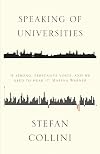
It seems entirely appropriate to be reviewing ‘Speaking of Universities’ today, as I am taking part in the UCU strike in defence of university employee pensions. The plan is to remove any guarantee of the level of pension we get (Defined Benefit), placing the entire financial risk on employees (Defined Contribution). The change is of course justified in terms of 'financial sustainability' and 'choice' - the choice to let the stock market decide whether we get less out of our pensions show more than we paid in. This is merely a further symptom of the disease Stefan Collini writes about exhaustively: British universities are being pushed into becoming businesses, despite the massive drawbacks this has for their students, employees, research, and society in general. As I read this collection of Collini’s writing, it not only made me deeply angry but called to mind many examples of what he describes from my personal experience. I have spent quite a lot of time in universities: three years as a undergrad, a year as a masters student, three and a half years as a PhD student, and eighteen months as a postdoc. I’m distinctly ambivalent about continuing in academia, despite the fact that reading theory is one of my favourite leisure activities, because I find the direction of universities and academic careers so depressing and off-putting.
Here’s an example. Recently I was looking at job listings, because the end of my two year fixed-term contract approaches and who knows whether there will be funding to extend it. On the website of a university I won’t name were listed two jobs. One was a Research Administrator, who would work solely on the university’s Research Excellence Framework submission for 2020. This job required a bachelor’s degree, subject unspecified, and administration experience. The other was an Assistant Professor, who would lecture, develop new courses, do research, seek out new research funding, and take on other miscellaneous duties to be named later. This job required a PhD, academic teaching experience, research experience, a publication record, and in-depth knowledge of a specific field. The two job were listed with the EXACT SAME FUCKING SALARY. Not a remotely generous one either. What does this say about the university? It isn’t that I think the research admin should be paid less - they shouldn’t be needed at all, as the expensive and nonsensical REF shouldn’t be such a bureaucratic burden. Meanwhile, the Assistant Professor job comes with a stated assumption of massive unpaid overtime. Hell, according to my current contract any teaching I do is unpaid overtime, as in theory I’m 100% research. Yet teaching is manifestly part of my job and can take up a lot of time. This is no way to treat your employees and results in a worse education for overcharged students.
Essentially, Collini is preaching to the choir with me. The book was nonetheless well worth reading, as he articulates his points so well. One caution is that 'Speaking of Universities' is a collection of essays, rather than a single contiguous narrative, so expect some repetition. The blurb disingenuously does not bother to mention this. Particularly apt phrases that caught my eye included:
If you require a lift after being downcast by Collini’s relentlessly thorough critique, I recommend [b:The Queer Art of Failure|11161565|The Queer Art of Failure|J. Jack Halberstam|https://images.gr-assets.com/books/1304517676s/11161565.jpg|16085542], [b:The Seventh Function of Language|36031246|The Seventh Function of Language|Laurent Binet|https://images.gr-assets.com/books/1511583633s/36031246.jpg|46079991], and [b:Exodus|15797029|Exodus|Lars Iyer|https://images.gr-assets.com/books/1344370583s/15797029.jpg|19257612]. All three skewer the absurdities of academia delightfully. But, whatever you do, don’t start contemplating how much worse things will get after Brexit. show less
Here’s an example. Recently I was looking at job listings, because the end of my two year fixed-term contract approaches and who knows whether there will be funding to extend it. On the website of a university I won’t name were listed two jobs. One was a Research Administrator, who would work solely on the university’s Research Excellence Framework submission for 2020. This job required a bachelor’s degree, subject unspecified, and administration experience. The other was an Assistant Professor, who would lecture, develop new courses, do research, seek out new research funding, and take on other miscellaneous duties to be named later. This job required a PhD, academic teaching experience, research experience, a publication record, and in-depth knowledge of a specific field. The two job were listed with the EXACT SAME FUCKING SALARY. Not a remotely generous one either. What does this say about the university? It isn’t that I think the research admin should be paid less - they shouldn’t be needed at all, as the expensive and nonsensical REF shouldn’t be such a bureaucratic burden. Meanwhile, the Assistant Professor job comes with a stated assumption of massive unpaid overtime. Hell, according to my current contract any teaching I do is unpaid overtime, as in theory I’m 100% research. Yet teaching is manifestly part of my job and can take up a lot of time. This is no way to treat your employees and results in a worse education for overcharged students.
Essentially, Collini is preaching to the choir with me. The book was nonetheless well worth reading, as he articulates his points so well. One caution is that 'Speaking of Universities' is a collection of essays, rather than a single contiguous narrative, so expect some repetition. The blurb disingenuously does not bother to mention this. Particularly apt phrases that caught my eye included:
If the language we use to talk about universities represents them as being principally institutions that provide narrowly vocational training for employment and the application of technology to promoting economic growth, and if the language we use about student represents them as being consumers who shop in the educational supermarket purely for what provides the most remunerative future job at the lowest cost, then those are the kinds of universities and the kind of education we shall end up with.
[...]
Thus, both externally and internally a pattern of providing long-term funding in ways that are most conducive to good intellectual work has been largely replaced by a system of artificially contrived short-term competition for the necessary resources. Stable and adequate, if limited, funding is derided as extravagant feather-bedding inimical to innovation. Systematic under-funding plus competition and punitive performance-management is seen as lean efficiency and proper accountability.
[...]
The ceaseless rhythm of the waves of everyday life causes a deposit of insensibility to build up that clogs our perceptions and dulls our responsiveness. Procedures established for a series of transient and ad hoc reasons acquire that patina of inevitability with which economic logic needs to coat its operations if we are not to rebel against its unconscionable exactions.
[...]
We risk denying the true benefits of higher education to those newly recruited students, including large numbers of mature and part-time students, if we try to concentrate the activities of universities on what the government considers promotes economic growth. Of course, those new students also want their education to be, among other things, a preparation for employment, but policy-makers risk a kind of condescension when they say in effect that although they themselves benefited from the culturally rich education they received, current and future generations, at least outside a few elite institutions, will have to be content with something more narrowly practical.
[...]
The fatal conceptual error involved in the new university funding system introduced in Britain in 2012 is that it treats the fee as a payment by an individual customer to a single institutional provider for a specific service in the present. By contrast, the proper basis for funding education is a form of social contract whereby each generation contributes to the education of future generations. It cannot be for a specific service because the ‘customer’, in the form of the student, is not in a position to know in advance exactly what benefit they may obtain from a university education. And it cannot really be to a single institutional provider because each university is only part of the world of learning: none of what they provide for their students would exist except for the work of many people over many generations in many other institutions.
If you require a lift after being downcast by Collini’s relentlessly thorough critique, I recommend [b:The Queer Art of Failure|11161565|The Queer Art of Failure|J. Jack Halberstam|https://images.gr-assets.com/books/1304517676s/11161565.jpg|16085542], [b:The Seventh Function of Language|36031246|The Seventh Function of Language|Laurent Binet|https://images.gr-assets.com/books/1511583633s/36031246.jpg|46079991], and [b:Exodus|15797029|Exodus|Lars Iyer|https://images.gr-assets.com/books/1344370583s/15797029.jpg|19257612]. All three skewer the absurdities of academia delightfully. But, whatever you do, don’t start contemplating how much worse things will get after Brexit. show less

I'm sure I picked this book up because something lead me to think it would deal with scientists as moralists, but that didn't really turn out to be true. It did, however, provide some insight into the political thought and actions of John Stuart Mill. Collini does discuss the way science was used by Mill: Alexander Bain called Mill's commitment to equality his greatest error as a scientific thinker, but Mill turned his opponents' belief in inequality into a symptom of bad science. Collini show more suggests that though we now remember Mill for his Utilitarian justifications, it was his actual, unequivocal morality that made him who he is: Mill's tone suggests dispassionate social fact, but he was actually tendentious and disputable. The insight that I particularly liked (and wished more politicians seemingly followed) was that Mill might compromise his measures, but never his opinions. show less
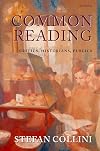
Yes, these essays are sometimes difficult and sometimes the subject matter may be unfamiliar, so all the more reason to take up the challenge and learn something new from a real authority.
http://www.culturewars.org.uk/index.php/site/article/reading_public_critical/
http://www.culturewars.org.uk/index.php/site/article/reading_public_critical/
Lists
Awards

You May Also Like


Associated Authors
Statistics
- Works
- 21
- Also by
- 6
- Members
- 488
- Popularity
- #50,612
- Rating
- 3.7
- Reviews
- 3
- ISBNs
- 48
- Languages
- 1