
Jonathan Rose
Author of The Intellectual Life of the British Working Classes
About the Author
For the Internet and digital generation, the most basic human right is the freedom to read. The Web has indeed brought about a rapid and far-reaching revolution in reading, making a limitless global pool of literature and information available to anyone with a computer. At the same time, however, show more the threats of censorship, surveillance, and mass manipulation through the media have grown apace. Readers' Liberation addresses questions that deeply concern everyone in the twenty-first century, and especially Millennials. What should we be reading? Can we trust what we read in the mass media? Can we use the Internet to find the truth out there? Is the Establishment out to deceive us and control our reading, and if so, what can we do about it? This book surveys the history of independent sceptical reading, from antiquity to the present. It tells the stories of heroic efforts at self-education by disadvantaged people in all parts of the world. It analyzes successful reading promotion campaigns throughout history (concluding with Oprah Winfrey) and explains why they succeeded. It also explores some disturbing current trends, such as the reported decay of attentive reading, the disappearance of investigative journalism, 'fake news', the growth of censorship, and the pervasive influence of advertisers and publicists on the media. Jonathan Rose is William R. Kenan Jr. Professor of History at Drew University. show less
Series
Works by Jonathan Rose
Book History (Volume 10) — Editor; Editor — 4 copies
Book History (Volume 16) — Editor — 2 copies
Book History (Volume 18) — Editor — 1 copy
Book History (Volume 17) — Editor — 1 copy
Book History (Volume 20) — Editor — 1 copy
Book History (Volume 22) — Editor — 1 copy
British Literary Publishing Houses 1820-1880 (Dictionary of Literary Biography, Vol. 106) (1991) 1 copy
The Literary Churchill 1 copy
Associated Works
The English Common Reader: A Social History of the Mass Reading Public, 1800-1900 (1957) — Foreword, some editions — 138 copies, 3 reviews
Tagged
Common Knowledge
- Birthdate
- 1952
- Gender
- male
- Organizations
- Drew University
- Nationality
- USA
- Associated Place (for map)
- USA
Members
Reviews

This book is written with a consistent lilt and heft that complement each other so well; I am enjoying it as much as any other I have ever come across. It is a model of how to write a thoroughly engaging study of a serious subject. Professor Rose set out “to enter the minds of ordinary readers in history, to discover what they read and how they read it”. That label “ordinary” is just the author’s shorthand in his preface and the work that follows shows his deep respect for the many show more people from a wide variety of working-class backgrounds whose autobiographical material contributes so much to the overall picture. The subject is covered through a vast and always relevant body of research, generating a Notes section of 53 and a comprehensive Index of names and institutions of 16 of the 543 pages.
Chapter headings like ‘Cultural Literacy in the Classic Slum’ and ‘What was Leonard Bast Really Like?’ are a delight in themselves, together with paragraphs that begin with seductive observations such as, “Radical politics were not incompatible with strict sexual puritanism.” or, “We must therefore break the habit of treating high culture and popular culture as two distinct categories with mutually exclusive audiences.”. If anything in the title is of interest, this book will be a guaranteed “good read”. show less
Chapter headings like ‘Cultural Literacy in the Classic Slum’ and ‘What was Leonard Bast Really Like?’ are a delight in themselves, together with paragraphs that begin with seductive observations such as, “Radical politics were not incompatible with strict sexual puritanism.” or, “We must therefore break the habit of treating high culture and popular culture as two distinct categories with mutually exclusive audiences.”. If anything in the title is of interest, this book will be a guaranteed “good read”. show less
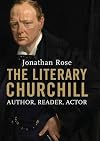
This work isn’t a biography of Winston Churchill, nor is it a book about his literary works. Rather, Jonathan Rose’s book is a more subtle study which analyzes the influence of literature and the theater on Churchill’s political career. Rose sees much of Churchill’s public image as the product of a conscious pose modeled after many of the tropes of popular theater. Churchill was hardly unique in this respect, as his political career began in an era when dramatic oratory was highly show more prized, and many politicians appreciated the value of the coup d’theatre. Though Churchill’s approach proved dated in the interwar era, with its preference for less affected politicians, it made him the ideal opponent for Adolf Hitler, a figure Rose sees as “a photo negative” to Churchill in his similar embrace of politics-as-theater. The dramatic style which was out of step in the interwar era proved a perfect fit for the war, becoming a critical component of both Churchill's success as prime minister and his depiction of his role in his image-defining postwar memoirs.
Rose’s approach offers a fresh and interesting perspective to understanding the ways in which Churchill shaped and defined his achievements. Though Rose oversells his argument by trying to read the influence of literature into more aspects of Churchill’s life than it can plausibly sustain, he makes a convincing case for viewing Churchill as more than just a politician who earned his income as a writer. Readers seeking to learn more about Churchill literary career would be better served by turning to more specialized studies such as David Reynolds’s [b:In Command of History: Churchill Fighting and Writing the Second World War|244753|In Command of History Churchill Fighting and Writing the Second World War|David Reynolds|https://d.gr-assets.com/books/1387712582s/244753.jpg|237133] or Peter Clarke’s [b:Mr Churchill's Profession: Statesman, Orator, Writer|21275593|Mr Churchill's Profession Statesman, Orator, Writer|Peter Clarke|https://d.gr-assets.com/books/1394343660s/21275593.jpg|40587187], but for how literature helped make him into the unique politician he was this is the book to read. show less
Rose’s approach offers a fresh and interesting perspective to understanding the ways in which Churchill shaped and defined his achievements. Though Rose oversells his argument by trying to read the influence of literature into more aspects of Churchill’s life than it can plausibly sustain, he makes a convincing case for viewing Churchill as more than just a politician who earned his income as a writer. Readers seeking to learn more about Churchill literary career would be better served by turning to more specialized studies such as David Reynolds’s [b:In Command of History: Churchill Fighting and Writing the Second World War|244753|In Command of History Churchill Fighting and Writing the Second World War|David Reynolds|https://d.gr-assets.com/books/1387712582s/244753.jpg|237133] or Peter Clarke’s [b:Mr Churchill's Profession: Statesman, Orator, Writer|21275593|Mr Churchill's Profession Statesman, Orator, Writer|Peter Clarke|https://d.gr-assets.com/books/1394343660s/21275593.jpg|40587187], but for how literature helped make him into the unique politician he was this is the book to read. show less
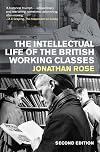
Don't be put off by the cinder-block-size of this book--or its title. It's wholly engaging, fun to read, and affirms the good sense of the common folks. What did regular people read between the wars? How would you find out--and what does this suggest about reading in general? Read it.
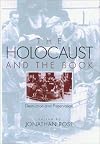
Invaluable for Holocaust or book historians. The chapter on the Vilna ghetto library should be the source of a dissertation; the entire book paints a picture that is hard to see in any other (English-language) source.
Lists
read in 2026 (1)
Awards


You May Also Like


Associated Authors
Statistics
- Works
- 39
- Also by
- 3
- Members
- 851
- Popularity
- #30,066
- Rating
- 4.2
- Reviews
- 7
- ISBNs
- 72
- Languages
- 2