

Susan Glaspell (1876–1948)
Author of Fidelity
About the Author
Image credit: Bachrach
Works by Susan Glaspell
Trifles / Peccadilles ; The Outside / De l’autre côté ; Woman’s Honor / L’Honneur d’une femme : Edition bilingue (2023) 2 copies, 1 review
The Works: Susan Glaspell 1 copy
Teatro de Cinco Peças 1 copy
Glaspell, Susan Archive 1 copy
Prodigal Giver 1 copy
Woman's Honor 1 copy
Associated Works
Literature: An Introduction to Fiction, Poetry, and Drama (1995) — Contributor, some editions — 1,013 copies, 7 reviews
Perrine's Literature: Structure, Sound, and Sense (1970) — Contributor, some editions — 893 copies, 4 reviews
A Moment on the Edge : 100 Years of Crime Stories by Women (2002) — Contributor — 295 copies, 6 reviews
The Moral Life: An Introductory Reader in Ethics and Literature (1999) — Contributor — 202 copies, 2 reviews
In the Shadow of Agatha Christie: Classic Crime Fiction by Forgotten Female Writers, 1850-1917 (2018) — Contributor — 108 copies, 8 reviews
The Heath Anthology of American Literature, Concise Edition (2003) — Contributor — 73 copies, 1 review
Women in the Trees: U.S. Women's Short Stories About Battering and Resistance, 1839-1994 (1996) — Contributor — 45 copies
25 best plays of the Modern American Theatre : Early Series : 1916-1929 (1949) — Contributor — 32 copies
To the Queen's Taste: The First Supplement to 101 Years Entertainment Consisting of the Best Stories Published in the First Four Years of Ellery Queen's Mystery Magazine (1946) — Contributor — 28 copies
The Best Short Stories of 1917 and the Yearbook of the American Short Story (2007) — Contributor — 27 copies
The Best Short Stories of 1919 and the Yearbook of the American Short Story (1919) — Contributor — 17 copies
The Best Short Stories of 1921 and the Yearbook of the American Short Story (2007) — Contributor — 17 copies
Contemporary Short Stories: Representative Selections, Volume 3 — Contributor — 6 copies
La nueva mujer: Relatos de escritoras estadounidenses del siglo XIX — Contributor — 1 copy
Tagged
Common Knowledge
- Canonical name
- Glaspell, Susan
- Legal name
- Glaspell, Susan Keating
- Birthdate
- 1876-07-01
- Date of death
- 1948-07-27
- Gender
- female
- Education
- Drake University(1899)
University of Chicago - Occupations
- novelist
playwright
short story writer
theater director
journalist - Organizations
- Provincetown Players(co-founder)
- Relationships
- Cook, George Cram (husband | widowed)
Matson, Norman (husband | divorced) - Short biography
- Susan Keating Glaspell was born into the family of one of the founders of Davenport, Iowa. Before attending Drake University, she wrote for the Davenport Morning Republican and The Weekly Outlook. After receiving her bachelor's degree in 1899, she worked for the Des Moines Daily News and as a freelance reporter for some Chicago newspapers. Susan was married twice, firstly in 1913 to George Cram Cook, with whom she became a member of the New York City literary and political scene; and secondly to writer Norman Matson. She and Cook summered on Cape Cod and co-founded the experimental Provincetown Players with Eugene O’Neill. Susan wrote several plays including Suppressed Desires (1915) and Tickless Time (1918). She won the Pulitzer Prize in 1931 for her last play Alison’s House, about Emily Dickinson. Her novels included The Glory of the Conquered (1909), Brook Evans (1928), and The Fugitive’s Return (1929). She served as the director of the Midwest Play Bureau of the Federal Theater Project in 1936-38.
- Nationality
- USA
- Birthplace
- Davenport, Iowa, USA
- Places of residence
- New York, New York, USA
Delphi, Greece
London, England, UK
Chicago, Illinois, USA - Place of death
- Provincetown, Massachusetts, USA
- Burial location
- Snow Cemetery, Truro, Massachusetts, USA
- Map Location
- USA
Members
Reviews

This is an extremely intense read, focussing completely on the emotions and inner life of its characters.
It's 1915 and Ruth Holland is returning to her childhood home. Some eleven years earlier, she ran off with a married man; since then her friends and relatives have cut her off, but now her father is dying...
Among those in town are her former admirer, now the local doctor. Despite being "thrown over" for the married man, he retains a fondness for her and recognises her sufferings- to the show more disgust of his supercilious young wife.
And then there are friends...some willing to reach out, some still sternly disapproving...and some of the former held in check by fear of the latter group and the demands of "Society". Not to mention the icy deserted wife.
The title-as becomes clear- pertains not only to one's marital vows but also - as Ruth discovers- the need to be faithful to what life has to offer.; not staying in a rut that no longer satisfies, but breaking free and living. A lesson she takes on board from poor yet free-thinking local girl, Annie (Chapter 23 is quite an inspiring look at how to live.)
VERY well written. show less
It's 1915 and Ruth Holland is returning to her childhood home. Some eleven years earlier, she ran off with a married man; since then her friends and relatives have cut her off, but now her father is dying...
Among those in town are her former admirer, now the local doctor. Despite being "thrown over" for the married man, he retains a fondness for her and recognises her sufferings- to the show more disgust of his supercilious young wife.
And then there are friends...some willing to reach out, some still sternly disapproving...and some of the former held in check by fear of the latter group and the demands of "Society". Not to mention the icy deserted wife.
The title-as becomes clear- pertains not only to one's marital vows but also - as Ruth discovers- the need to be faithful to what life has to offer.; not staying in a rut that no longer satisfies, but breaking free and living. A lesson she takes on board from poor yet free-thinking local girl, Annie (Chapter 23 is quite an inspiring look at how to live.)
VERY well written. show less
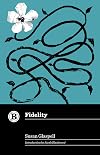
Rating: 4.5* of five
The Publisher Says: A classic feminist novel originally published in 1915, and set in Iowa in the early years of the 20th century, Susan Glaspell's Fidelity is a surprising, suspenseful work about the strictures that confine women, the risks those who want to flee them take, and the opportunities that await them if they do.
Ruth Holland, bored in her conventional small town, falls in love with a married man and runs off with him, shocking the community. A decade later she show more returns to cold shoulders and the disapproval of the town: she is seen as "a human being who selfishly—basely—took her own happiness, leaving misery for others. She outraged society as completely as a woman could outrage it ... One who defies it ... must be shut out from it."
What Ruth decides to do next will upend most readers' expectations, as will the cryptic scenes that take place in the doctor's office after Ruth becomes involved with her married lover. Ruth Holland deserves to be placed alongside other heroines such as Emma Bovary and Lily Bart, women who wanted "an enlarged experience" and were "zestful for new things from life." Fidelity will shock and fascinate readers today as its heroine did in her day.
I RECEIVED A DRC FROM THE PUBLISHER VIA EDELWEISS+. THANK YOU.
My Review: It will most certainly shock readers today, will this read; not for the same reasons and not to the same degree as the readers of 1915 were shocked. Nowadays we're watching, or y'all're watching because I sure as shootin' ain't, The Real Housewives of {Flyover Country} to get the equivalent shock value. (I sometimes long for the Hays Code when I read about the antics of these surgically altered weirdos that keep so many so entertained.) I too was shocked by Fidelity: How has Susan Glaspell disappeared from the awareness of 2026's readers?
Born on a rural Iowa homestead (this means something important, y'all follow the link) in 1876, by 1894 she was a paid journalist; she later became a college graduate (in philosophy!) at a time when the number of *men* who graduated college was a vanishingly small slice of the population; she was a staffer, full time and paid, at the Des Moines newspaper; then gave it all up...to become a bestselling novelist and short-story writer.
AFTER that, she fell in love with a married guy. He divorced whoever he was married to in order to put a ring on Susan's finger (and who can blame him?), and their union produced...more bestselling novels, as well as the Provincetown Players, Eugene O'Neill's career, several still-produced plays of her own...y'know, all the usual things a woman can expect to have happen to her when she's born into a nineteenth-century farming family. Her life as a radical socialist free-love advocate would shock and startle many in the US today, let alone then.
So Fidelity is probably more faction, or even a roman à clef if one knew the good folk of Davenport, Iowa, circa 1910 which I do not and, if this story is any guide, am delighted not to have done. I'm no small-town fancier in general, but the beady-eyed, small-minded and judgmental folk of the place evoked in this story made me panther-screechingly furious on the regular.
Equally irksome to my twenty-first century self is the lackluster critical reception of the time, doubtless symptomatic of the era's cultural unreadiness to examine its prudishness and misogyny. (I'm appalled to not these same objectively wrongheaded notions are being trumpeted as in the ascendant again. Well-timed, Belt Publishing!) I suspect some of the resistance then also stemmed from the multiple narrators whose ideas about "fidelity," that inherently coercive concept applied far more to women than men in marriage as we constitute it in the West, being rather transparently intended to counterpoint each other and reinforce the validity of protagonist Ruth's choice to elope with a married man.
Pace University Professor Sarah Blackwood's introduction alone might repay the cost of procuring the book. So much of Author Glaspell's life is footnoted in relation to the Provincetown Players' enduring legacy, despite her 1932 Pulitzer Prize for Drama meriting more than a simple "oh, by the way" footnote. Professor Blackwood makes a good case for why we should look for, and at, Susan Glaspell as a visionary life-liver and writer.
I don't really think this story of "infidelity" and sexual liberation despite its consequences will ever go out of relevance and ability to illuminate and elucidate how willful and capricious a thing the human heart is. It's more out of fashion in twenty-first century storytelling when its focus is not on the guilt and the transgression angles of attack. It might feel less minatory because there's no emphasis on punishment for the behavior, but to my mind this story is more honest about reality than modern salacious takes on the topic. There are consequences to the choices we make. They aren't always easy to endure. If you knowingly transgress your community's norms be ready to find a new community.
I think a lot of people, married or not, can relate to, resonate with, find fellowship in, that message. show less
The Publisher Says: A classic feminist novel originally published in 1915, and set in Iowa in the early years of the 20th century, Susan Glaspell's Fidelity is a surprising, suspenseful work about the strictures that confine women, the risks those who want to flee them take, and the opportunities that await them if they do.
Ruth Holland, bored in her conventional small town, falls in love with a married man and runs off with him, shocking the community. A decade later she show more returns to cold shoulders and the disapproval of the town: she is seen as "a human being who selfishly—basely—took her own happiness, leaving misery for others. She outraged society as completely as a woman could outrage it ... One who defies it ... must be shut out from it."
What Ruth decides to do next will upend most readers' expectations, as will the cryptic scenes that take place in the doctor's office after Ruth becomes involved with her married lover. Ruth Holland deserves to be placed alongside other heroines such as Emma Bovary and Lily Bart, women who wanted "an enlarged experience" and were "zestful for new things from life." Fidelity will shock and fascinate readers today as its heroine did in her day.
I RECEIVED A DRC FROM THE PUBLISHER VIA EDELWEISS+. THANK YOU.
My Review: It will most certainly shock readers today, will this read; not for the same reasons and not to the same degree as the readers of 1915 were shocked. Nowadays we're watching, or y'all're watching because I sure as shootin' ain't, The Real Housewives of {Flyover Country} to get the equivalent shock value. (I sometimes long for the Hays Code when I read about the antics of these surgically altered weirdos that keep so many so entertained.) I too was shocked by Fidelity: How has Susan Glaspell disappeared from the awareness of 2026's readers?
Born on a rural Iowa homestead (this means something important, y'all follow the link) in 1876, by 1894 she was a paid journalist; she later became a college graduate (in philosophy!) at a time when the number of *men* who graduated college was a vanishingly small slice of the population; she was a staffer, full time and paid, at the Des Moines newspaper; then gave it all up...to become a bestselling novelist and short-story writer.
AFTER that, she fell in love with a married guy. He divorced whoever he was married to in order to put a ring on Susan's finger (and who can blame him?), and their union produced...more bestselling novels, as well as the Provincetown Players, Eugene O'Neill's career, several still-produced plays of her own...y'know, all the usual things a woman can expect to have happen to her when she's born into a nineteenth-century farming family. Her life as a radical socialist free-love advocate would shock and startle many in the US today, let alone then.
So Fidelity is probably more faction, or even a roman à clef if one knew the good folk of Davenport, Iowa, circa 1910 which I do not and, if this story is any guide, am delighted not to have done. I'm no small-town fancier in general, but the beady-eyed, small-minded and judgmental folk of the place evoked in this story made me panther-screechingly furious on the regular.
Equally irksome to my twenty-first century self is the lackluster critical reception of the time, doubtless symptomatic of the era's cultural unreadiness to examine its prudishness and misogyny. (I'm appalled to not these same objectively wrongheaded notions are being trumpeted as in the ascendant again. Well-timed, Belt Publishing!) I suspect some of the resistance then also stemmed from the multiple narrators whose ideas about "fidelity," that inherently coercive concept applied far more to women than men in marriage as we constitute it in the West, being rather transparently intended to counterpoint each other and reinforce the validity of protagonist Ruth's choice to elope with a married man.
Pace University Professor Sarah Blackwood's introduction alone might repay the cost of procuring the book. So much of Author Glaspell's life is footnoted in relation to the Provincetown Players' enduring legacy, despite her 1932 Pulitzer Prize for Drama meriting more than a simple "oh, by the way" footnote. Professor Blackwood makes a good case for why we should look for, and at, Susan Glaspell as a visionary life-liver and writer.
I don't really think this story of "infidelity" and sexual liberation despite its consequences will ever go out of relevance and ability to illuminate and elucidate how willful and capricious a thing the human heart is. It's more out of fashion in twenty-first century storytelling when its focus is not on the guilt and the transgression angles of attack. It might feel less minatory because there's no emphasis on punishment for the behavior, but to my mind this story is more honest about reality than modern salacious takes on the topic. There are consequences to the choices we make. They aren't always easy to endure. If you knowingly transgress your community's norms be ready to find a new community.
I think a lot of people, married or not, can relate to, resonate with, find fellowship in, that message. show less
Ruth Holland runs off with another woman's husband and Glaspell asks 'Was it worth it?'. I was prepared to hate Ruth, struggled to hate her, and yet wound up liking her enormously. Other than running off with someone else's husband, which she did while still very young, she was actually awfully nice and, indeed, quite an honorable person.
What interested me most about the book was the author's arguments for and against the adultery and the pain it caused Ruth's extended family. Sure everyone show more was devastated by it but it was done for LOVE! And yet, what sort of LOVE is claimed at the expense of other people? On the other hand, haven't we all stood up to our families for LOVE and in some cases, rightly so? In the 100 years since the book was written we now cross all sorts of barriers to be with our lovers, be it race, gender or religion, and yet most women still have expectations of monogamy within those relationships. Glaspell who was a Greenwich Village, free love, Bohemian might be disappointed to find that not much has changed since 1915.
On a par with the best of Edith Wharton, in my view, and highly recommended. show less
What interested me most about the book was the author's arguments for and against the adultery and the pain it caused Ruth's extended family. Sure everyone show more was devastated by it but it was done for LOVE! And yet, what sort of LOVE is claimed at the expense of other people? On the other hand, haven't we all stood up to our families for LOVE and in some cases, rightly so? In the 100 years since the book was written we now cross all sorts of barriers to be with our lovers, be it race, gender or religion, and yet most women still have expectations of monogamy within those relationships. Glaspell who was a Greenwich Village, free love, Bohemian might be disappointed to find that not much has changed since 1915.
On a par with the best of Edith Wharton, in my view, and highly recommended. show less

When Ruth Holland does the unthinkable and runs away with a married man, her hometown of Freeport buzzes with angry gossip. The fact that she was helped by her dear friend Deane only makes matters worse. Twelve years later Deane, now a physician, returns to Freeport with his new wife Amy. As Amy begins assimilating into Freeport “society,” she pieces together the details of Ruth’s story. She meets Ruth’s best high school friend and the wife of the married man, and aligns herself with show more “Team Freeport.” When family matters compel Ruth to return home for a visit, Deane suggests Amy visit her, sure that she will see the good in Ruth. Amy wants none of it. And frankly, no one else in town wants to see Ruth, either.
Ruth’s visit to Freeport is filled with sadness, but also a degree of healing that strengthens her and changes her world view. Her reappearance also has a ripple effect on Ruth’s siblings, on Deane, and even on some townspeople. Susan Glaspell’s depiction of petty small-town society caught up in the moral constraints of the early 20th century is spot on, and her resolution of Ruth’s central conflict is unconventional and brilliant. Highly recommended. show less
Ruth’s visit to Freeport is filled with sadness, but also a degree of healing that strengthens her and changes her world view. Her reappearance also has a ripple effect on Ruth’s siblings, on Deane, and even on some townspeople. Susan Glaspell’s depiction of petty small-town society caught up in the moral constraints of the early 20th century is spot on, and her resolution of Ruth’s central conflict is unconventional and brilliant. Highly recommended. show less
Lists
Awards


You May Also Like


Associated Authors
Statistics
- Works
- 40
- Also by
- 47
- Members
- 877
- Popularity
- #29,203
- Rating
- 3.8
- Reviews
- 40
- ISBNs
- 144
- Languages
- 2
- Favorited
- 6
