
Tennessee Williams (1911–1983)
Author of A Streetcar Named Desire
About the Author
After O'Neill, Williams is perhaps the best dramatist the United States has yet produced. Born in his grandfather's rectory in Columbus, Mississippi, Williams and his family later moved to St. Louis. There Williams endured many bad years caused by the abuse of his father and his own anguish over show more his introverted sister, who was later permanently institutionalized. Williams attended the University of Missouri, and, after time out to clerk for a shoe company and for his own mental breakdown, also attended Washington University of St. Louis and the University of Iowa, from which he graduated in 1938. Williams began to write plays in 1935. During 1943 he spent six months as a contract screenwriter for MGM but produced only one script, The Gentleman Caller. When MGM rejected it, Williams turned it into his first major success, The Glass Menagerie (1945). In this intensely autobiographical play, Williams dramatizes the story of Amanda, who dreams of restoring her lost past by finding a gentleman caller for her crippled daughter, and of Amanda's son Tom, who longs to escape from the responsibility of supporting his mother and sister. After The Glass Menagerie,Williams wrote his masterpiece, A Streetcar Named Desire, (1947), along with a steady stream of other plays, among them such major works as Summer and Smoke(1948), Cat on a Hot Tin Roof (1954), and Suddenly Last Summer (1958). His plays celebrate the "fugitive kind," the sensitive outcasts whose outsider status allows them to perceive the horror of the world and who often give additional witness to that horror by becoming its victims. Stephen S. Stanton has summed up Williams's "virtues and strengths" as "a genius for portraiture, particularly of women, a sensitive ear for dialogue and the rhythms of natural speech, a comic talent often manifesting itself in "black comedy,' and a genuine theatrical flair exhibited in telling stage effects attained through lighting, costume, music, and movements." After The Night of the Iguana (1961), Williams continued to write profusely---and constantly to revise his work---but it became more difficult to get productions of his plays and, if they were produced, to win critical or popular acclaim for them. Williams won the Pulitzer Prize for drama for A Streetcar Named Desire and Cat on a Hot Tin Roof. He won the New York Drama Critics Circle Award for these two and for The Glass Menagerie and The Night of the Iguana. (Bowker Author Biography) show less
Image credit: Tennessee Williams. UH Photographs Collection.
Series
Works by Tennessee Williams
Summer and Smoke / Orpheus Descending / Suddenly Last Summer / Period of Adjustment (1976) 489 copies, 4 reviews
Cat on a Hot Tin Roof / The Milk Train Doesn't Stop Here Anymore / The Night of the Iguana (1990) 282 copies, 1 review
Five O'Clock Angel: Letters of Tennessee Williams to Maria St. Just, 1948-1982 (1990) 72 copies, 1 review
The Glass Menagerie / A Streetcar Named Desire / Cat on a Hot Tin Roof / Suddenly Last Summer (1955) 67 copies
The Theatre of Tennessee Williams, Volume 2: Eccentricities of a Nightingale, Summer and Smoke, The Rose Tattoo, Camino Real (1971) 62 copies
A Streetcar named Desire 40 copies
The Theatre of Tennessee Williams, Vol. 6: 27 Wagons Full of Cotton and Other Short Plays (1981) — Author — 38 copies
Suddenly last summer / The milk train doesn't stop here anymore / Small craft warnings (2009) 37 copies, 1 review
The Theatre of Tennessee Williams, Vol. 7: In the Bar of a Tokyo Hotel, and Other Plays (1981) 25 copies
The Milk Train Doesn't Stop Here Anymore / Kingdom of Earth / Small Craft Warnings / The Two-Character Play (1976) 22 copies
In the Bar of a Tokyo Hotel - Acting Edition (Acting Edition for Theater Productions) (1969) 20 copies
The milk train doesn't stop here anymore;: [and], Cat on a hot tin roof (Penguin plays) (1969) 13 copies
Una gata sobre un tejado de zinc / El análisis perfecto hecho por un loro (Artes escénicas/Obras) (Spanish Edition) (2007) 9 copies
Iets van Tolstoi 8 copies
A Streetcar named Desire. ( Fremdsprachentexte). (Lernmaterialien) (English and German Edition) 5 copies
Drámák 5 copies
The Vengeance of Nitocris 4 copies
De repente el último verano: y otras piezas cortas (El libro de bolsillo - Literatura) (Spanish Edition) (2012) 4 copies
Tennessee Williams: Selected Plays, Limited Edition (The 100 Greatest Masterpieces of American Literature) (1977) 3 copies
El Pais del Dragon II 3 copies
Sommerspiel zu dritt. Erzählungen 3 copies
three plays of tennessee williams 3 copies
Un tramway nommé désir [A Streetcar Named Desire] ; Portrait d'une madone [Portrait of a Madona] ; Propriété condamnée [This Property is Condemned] ; Parle-moi comme la pluie… — Author — 3 copies
Three American Plays 3 copies
Four plays: The glass menagerie, A streetcar named desire, Summer and smoke, Camino real (1956) 3 copies
Die Katze auf dem hei en Blechdach ; Die tätowierte Rose : zwei Theaterstücke (1956) — Author — 3 copies
Gata em Telhado de Zinco Quente, A Descida de Orfeu e A Noite do Iguana - Colecao Biblioteca Teatral (2016) — Author — 2 copies
The Case of the Crushed Petunias 2 copies
El manco y otros cuentos 2 copies
El país del dragón I — Author — 2 copies
Die Glasmenagerie / Endstation Sehnsucht / Die tätowierte Rose / Die Katze auf dem heißen Blechdach (1999) 2 copies
Der Milchzug halt hier nicht mehr [and] Konigreich auf Erden [The Milk Train Doesn't Stop Here Any More and Kingdom of Earth] (1969) 2 copies
The Catastrophe of Success 2 copies
Soudain l'été dernier, suivi de "Le Train de l'aube ne s'arrête plus ici" (1995) — Author — 2 copies
The Last of My Solid Gold Watches 2 copies
Theatre of Tennessee Williams, The 2 copies
At Liberty: A Drama 2 copies
Playboy interview 2 copies
The Dark Room 2 copies
Portrait of a Madonna — Author — 2 copies
Tennessee Williams. Le Printemps romain de Mrs. Stone, roman traduit de l'américain par Jacques et Jean Tournier (1955) 1 copy
Summer at the Lake 1 copy
Cat on a Hot Tin Roof (Pulitzer Prize-Winning Play): The American Shakespeare Theatre Production (1975) 1 copy
El país del dragón 1 copy
A vágy villamosa 1 copy
KIZGIN DAMDAKİ KEDİ 1 copy
Arena 1936 1 copy
Jednorękijednoręki 1 copy
Ο Ακρωτηριασμένος Απόλλων 1 copy
Cat on a Hot Tin Roof {1976 TV movie} — Author — 1 copy
A Streetcar Named Desire [1984 TV movie] — Author — 1 copy
قطة على سطح من الصفيح الساخن 1 copy
عربة اسمها اللذة 1 copy
El zoo de vidre 1 copy
TENN IN 2002! 1 copy
7 Selected Plays 1 copy
A ultima primavera 1 copy
Snowfall 1 copy
Hello from Bertha 1 copy
Η ρωμαϊκή άνοιξη της Κας Στόουν. Τρεις σ' ένα καλοκαιρινό παιχνίδι: Τι συνέβη στην Ισαβέλα Χόλλυ:… 1 copy
Two on a Party {short story} 1 copy
Det kan man kalla kärlek 1 copy
Lektürehilfen. A Streetcar Named Desire: Ausführliche Inhaltsangabe mit Interpretation. Inklusive Abitur-Fragen mit Lösungen (2008) 1 copy
Tutto finito 1 copy
Lord Byron's Love Letter 1 copy
Tennessee Williams plays 1 copy
Young men waking at daybreak 1 copy
Teatro 2. La noche de la iguana - Lo que no se dice - Súbitamente el último verano - Periodo de ajuste. (1966) 1 copy
Soudain l'ete dernier 1 copy
Moony's Kid Don't Cry 1 copy
Garden District (Program) 1 copy
La Vengeance de Nitocris 1 copy
The Glass Managerie, film 1 copy
The Rose Tattoo (film 1 copy
La chatte sur un toit brûlant, suivi de La descente d'Orphée [Cat on a Hot Tin Roof / Orpheus Descending] (2003) — Author — 1 copy
Tutti i racconti 1 copy
Associated Works
Literature: An Introduction to Fiction, Poetry, and Drama (1995) — Contributor, some editions — 1,017 copies, 7 reviews
American Poetry: The Twentieth Century, Volume Two: E. E. Cummings to May Swenson (2000) — Contributor — 444 copies, 1 review
American Fantastic Tales : Terror and the Uncanny from the 1940's to Now (2009) — Contributor — 298 copies, 5 reviews
First Fiction: An Anthology of the First Published Stories by Famous Writers (1994) — Contributor — 197 copies, 1 review
The Actor's Book of Contemporary Stage Monologues: More Than 150 Monologues from More Than 70 Playwrights (1987) — Contributor — 193 copies
In Another Part of the Forest: An Anthology of Gay Short Fiction (1994) — Contributor — 193 copies, 2 reviews
Gay and Lesbian Poetry in Our Time (Stonewall Inn Editions) (1988) — Contributor — 190 copies, 1 review
The Heath Anthology of American Literature, Concise Edition (2003) — Contributor — 73 copies, 1 review
Twenty One-Act Plays: An Anthology for Amateur Performing Groups (1978) — Contributor — 42 copies, 1 review
The Second Gates of Paradise: The Anthology of Erotic Short Fiction (1997) — Contributor — 38 copies
Critics' Choice: New York Drama Critics' Circle Prize Plays, 1935-1955 (1980) — Contributor — 26 copies
Sylvia Plath's Tomato Soup Cake: A Compendium of Classic Authors' Favourite Recipes (2024) — Contributor — 6 copies
The Tony winners: A collection of ten exceptional plays, winners of the Tony Award for the most distinguished play of the year (1977) — Contributor — 6 copies
Weird Tales Volume 12 Number 2, August 1928 — Contributor — 3 copies
Teatro Norteamericano contemporaneo — Contributor — 2 copies
Meesters der vertelkunst : zevenendertig verhalen uit de moderne wereldliteratuur (1975) — Contributor — 2 copies
Amores de mujer : (de los 15 a los 70 ) — Contributor — 2 copies
50 seltsame Geschichten — Contributor — 1 copy
50 Best Plays of the American Theatre, Volume 3 — Contributor — 1 copy
32 Współczesne Opowiadania Amerykańskie - Tom I — Contributor — 1 copy
Tagged
Common Knowledge
- Legal name
- Williams, Thomas Lanier, III
- Birthdate
- 1911-03-26
- Date of death
- 1983-02-25
- Gender
- male
- Education
- University of Iowa (BA|1938)
- Occupations
- playwright
screenwriter - Awards and honors
- Presidential Medal of Freedom (1980)
Kennedy Center Honors (1979)
American Academy of Arts and Letters Academy Award (Literature ∙ 1944)
American Academy of Arts and Letters (Literature ∙ 1952)
Pulitzer Prize for Drama (1948, 1955)
New York Drama Critics Circle Award (1945, 1948, 1955, 1962) (show all 11)
American Theater Hall of Fame (1979)
Tony Award for Best Play (1951)
Clarksdale Walk of Fame
St Louis Walk of Fame
Rainbow Honor Walk (2014) - Agent
- Tom Erhardt (Casarotto Ramsay and Associates Ltd) - estate agent
- Cause of death
- choking
drug overdose - Nationality
- USA
- Birthplace
- Columbus, Mississippi, USA
- Places of residence
- Clarksdale, Mississippi, USA
St. Louis, Missouri, USA
New Orleans, Louisiana, USA
Key West, Florida, USA
New York, New York, USA - Place of death
- New York, New York, USA
- Burial location
- Calvary Cemetery, St. Louis, Missouri, USA
- Associated Place (for map)
- USA
Members
Discussions
A Streetcar Named Desire by Tennessee Williams – LIMITED EDITIONS CLUB 1982 in George Macy devotees (June 2025)
"Born On A Mountain Top In TENNESSEE (Williams That Is)!"... in Pro and Con (February 2015)
Reviews
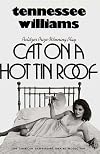
“What is the smell in this room? Don’t you notice it, Brick? Don’t you notice a powerful and obnoxious odor of mendacity in this room?”
In a “Cat on a Hot Tin Roof”, Tennessee Williams shows us the darker side of a Southern family – lies, cover-ups, desires, frustrations, lovelessness, illness, greed, sex, childlessness, sibling rivalry, hints of homosexuality, alcoholism, and regret. One leads to another, and no one is happy or satisfied. It’s a rather miserable family who show more simply don’t like each other. This play spans only a few hours’ time where all these themes come to a head, and the cards are revealed. Yet, it doesn’t feel rushed. Bravo.
Originally staged in New York in 1955, this Pulitzer Prize winning play unveiled a new reality that was unprecedented in the era of “I Love Lucy”. (My book is the 1974 version where Act III was completely rewritten plus other heavy revisions.) This play was notably named for Margaret who finds herself in a loveless marriage, but not willing to leave it either. “I feel all the time like a cat on a hot tin roof.” Replies her uncaring husband, Brick, “Then jump off the roof…” and “Take a lover!” Yikes.
Some quotes:
The book has this preface from Dylan Thomas – there’s a lot of raging alright…:
“And you, my father, there on the sad height,
Curse, bless, me now with your fierce tears, I pray.
Do not go gentle into that good night.
Rage, rage against the dying of the light!”
On loneliness – so sad..:
“Living with someone you love can be lonelier – than living entirely alone! – if the one that y’ love doesn’t love you…”
A broken marriage – Geez, why do they bother to stay together…:
Brick: “I don’t have to do anything I don’t want to do. You keep forgetting the conditions on which I agreed to stay on living with you.”
Margaret [out before she knows it]: “I’m not living with you. We occupy the same cage.”
On life that has lost its luster:
“…My only point, the only point that I’m making, is life has got to be allowed to continue even after the dream of life is – all – over.”
On post war Europe:
“… That Europe is nothin’ on earth but a great big auction, that’s all it is, that bunch of old worn-out place, it’s just a big fire-sale, the whole fuckin’ thing…”
On death:
“—the human animal is a beast that dies and if he’s got money he buys and buys and buys and I think the reason he buys everything he can buy is that in the back of his mind he has the crazy hope that one of his purchases will be life everlasting! -- Which it never can be…”
And
“Ignorance – of mortality – is a comfort. A man don’t have that comfort, he’s the only living thing that conceives of death, that knows what it is…” show less
In a “Cat on a Hot Tin Roof”, Tennessee Williams shows us the darker side of a Southern family – lies, cover-ups, desires, frustrations, lovelessness, illness, greed, sex, childlessness, sibling rivalry, hints of homosexuality, alcoholism, and regret. One leads to another, and no one is happy or satisfied. It’s a rather miserable family who show more simply don’t like each other. This play spans only a few hours’ time where all these themes come to a head, and the cards are revealed. Yet, it doesn’t feel rushed. Bravo.
Originally staged in New York in 1955, this Pulitzer Prize winning play unveiled a new reality that was unprecedented in the era of “I Love Lucy”. (My book is the 1974 version where Act III was completely rewritten plus other heavy revisions.) This play was notably named for Margaret who finds herself in a loveless marriage, but not willing to leave it either. “I feel all the time like a cat on a hot tin roof.” Replies her uncaring husband, Brick, “Then jump off the roof…” and “Take a lover!” Yikes.
Some quotes:
The book has this preface from Dylan Thomas – there’s a lot of raging alright…:
“And you, my father, there on the sad height,
Curse, bless, me now with your fierce tears, I pray.
Do not go gentle into that good night.
Rage, rage against the dying of the light!”
On loneliness – so sad..:
“Living with someone you love can be lonelier – than living entirely alone! – if the one that y’ love doesn’t love you…”
A broken marriage – Geez, why do they bother to stay together…:
Brick: “I don’t have to do anything I don’t want to do. You keep forgetting the conditions on which I agreed to stay on living with you.”
Margaret [out before she knows it]: “I’m not living with you. We occupy the same cage.”
On life that has lost its luster:
“…My only point, the only point that I’m making, is life has got to be allowed to continue even after the dream of life is – all – over.”
On post war Europe:
“… That Europe is nothin’ on earth but a great big auction, that’s all it is, that bunch of old worn-out place, it’s just a big fire-sale, the whole fuckin’ thing…”
On death:
“—the human animal is a beast that dies and if he’s got money he buys and buys and buys and I think the reason he buys everything he can buy is that in the back of his mind he has the crazy hope that one of his purchases will be life everlasting! -- Which it never can be…”
And
“Ignorance – of mortality – is a comfort. A man don’t have that comfort, he’s the only living thing that conceives of death, that knows what it is…” show less
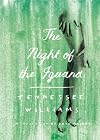
John Huston's 1964 adaptation of Tennessee Wiliams's Night of the Iguana is one of my dad's favorite films of all time, so I grew up knowing the characters: Reverend Larry Shannon, battling his demons after being locked out of his Episcopal church for having sex with a young Sunday-school teacher; Maxine Faulk (my hands-down favorite at the time), the crass, sexually omnivorous widow whose at whose hotel Shannon arrives, with twenty angry female Baptists in tow; the otherworldly spinster show more Hannah Jelkes and her 97-year-old grandfather, the oldest practicing poet in the world.
I grew up knowing them, but, as my dad said when I mentioned that I was reading the play along with my "Non-Structured" blog pals, how much of these characters and their interactions can you really understand at the age of fifteen? It is, as he pointed out, an "adult" story, and not just because it involves themes of sexual desperation and sexual contempt—Shannon with his teenage girls; Maxine with her cabana boys—that adults usually keep from children. I think the thing I most failed to identify as a teenager is how worn down all three main characters are, and how that desperate exhaustion imbues their small acts of basic human kindness toward one another with a significance bordering on the heroic. I understood ennui (what teenager doesn't?), but I didn't understand the way that living under emotionally taxing conditions stops being glamorous pretty shortly and starts wearing away at a person's reserves. Luckily, I still can't empathize with the choice between starvation and the kindness of strangers, but I do understand being engaged in a seemingly endless emotional struggle, and how exhausting and panic-inducing that can be.
I also had a much different perspective on the Charlotte/Shannon relationship than I do now. Watching the story unfold as a 15-year-old girl, Shannon's behavior doesn't read as predatory the way it can to an older viewer; my friends, after all, were all for dating "older men." But what I now think is interesting about Williams's portrayal of Shannon is that the Reverend's sexual exploits are not his real crime here—in the playwright's eyes, I think, it's Shannon's cold treatment of these young girls after sleeping with them that exposes the real ugliness in his character. I think, as Williams sees it, Shannon squanders the chance to connect with another human, and that's his sin.
It's interesting that in the 1964 film, Huston chose to remove any discussion of this coldness on Shannon's part, which strikes me as so important in the original play. Perhaps the director felt that a habit of seducing underage women was enough of a barrier for Shannon, as a basically sympathetic character, to overcome.
Another interesting change to Shannon's character in the Huston film is that his theology is completely transformed. In both versions, he objects to the "petulant old man" worshiped by his Virginia congregation. But Huston's Shannon is a sort of nascent hippie environmentalist: as he chases his parishioners out of his church, he speaks of "the God of loving kindness"; and in the scene where he is describing his "researches" to Hannah, he defines "man's inhumanity to God" in terms of polluted rivers and exploited natural resources. These are tropes that a theater audience would immediately understand and relate to. The theology of the original Shannon, on the other hand, is much more complex, and I've always found it difficult to understand. Here, for example, is how he defines his God to Hannah:
Much weirder, no? I can understand why Huston decided to alter Shannon into the more easily-understandable "loving kindness" variety of Christian. But what is he actually saying here? The "stray dogs vivisected" line suggests the idea that God is everywhere, even in the ugly parts of life, and it's wrong of the complacent Virginian congregants not to recognize that. But really, Shannon's recognition of God is no more universal than theirs. If they are only willing to see the divine in anodyne respectability, he only seems willing to recognize it at the most extreme margins of human experience—not in a calm blue sky, but in a dramatic, stormy sunset; not in a pampered house pet, but in a vivisected stray dog. On the other hand, he sees God as "oblivious," unconcerned with the travails of humans. I have always had a hard time wrapping my head around this seeming contradiction: if we're dealing with an unconcerned, "clock-maker" type God, why would he be more manifest in some aspects of life than others? Perhaps Shannon feels that humans are most able to connect with God when they are, themselves, in extremity, and it takes Hannah's calm plea for compassion, for a recognition that all humans have their struggles and their shadows, to balance out his glamorization of the extreme:
Oddly, although I strongly relate to Hannah's philosophy of endurance and human compassion irrespective of God's existence, I find her the least compelling of the three in terms of her actual character, especially on the page. She seems at times just a pretext through which Williams can speak directly to the audience; whereas Shannon and Maxine both talk like real people, Hannah often sounds written to me. Deborah Kerr's performance does a lot to dispel that impression, but Richard Burton and Ava Gardner are still more human-seeming to watch.
There are things in both versions of Night of the Iguana that walk a thin line between bothering and intriguing me: are the depictions of "butch" Judy Fellowes, for example, anti-lesbian misogyny, or an examination of how remaining closeted can cause a person to become cruel and vindictive? (Interestingly, tough-guy Huston actually added material that would favor the second hypothesis. It definitely surprises me that John Huston would be easier on closeted lesbians than Tennessee Williams!) The depictions of Maxine's cabana boys reflect a ridiculous level of casual racism, but it's unusual, especially for 1961, to see a mostly-sympathetic female extract unapologetic sexual enjoyment from men in the way male characters often make sexual use of women. Williams doesn't exactly congratulate Maxine (nor am I arguing that he should), but her employment of Pedro and Pancho is viewed as another desperate attempt at human contact in an alienated world—and Williams, like Hannah Jelkes, respects any attempt at survival that isn't cruel or childish.
In any case, I'm glad to have revisited this old family favorite. I suspect my appreciation of it will continue to grow with time. show less
I grew up knowing them, but, as my dad said when I mentioned that I was reading the play along with my "Non-Structured" blog pals, how much of these characters and their interactions can you really understand at the age of fifteen? It is, as he pointed out, an "adult" story, and not just because it involves themes of sexual desperation and sexual contempt—Shannon with his teenage girls; Maxine with her cabana boys—that adults usually keep from children. I think the thing I most failed to identify as a teenager is how worn down all three main characters are, and how that desperate exhaustion imbues their small acts of basic human kindness toward one another with a significance bordering on the heroic. I understood ennui (what teenager doesn't?), but I didn't understand the way that living under emotionally taxing conditions stops being glamorous pretty shortly and starts wearing away at a person's reserves. Luckily, I still can't empathize with the choice between starvation and the kindness of strangers, but I do understand being engaged in a seemingly endless emotional struggle, and how exhausting and panic-inducing that can be.
I also had a much different perspective on the Charlotte/Shannon relationship than I do now. Watching the story unfold as a 15-year-old girl, Shannon's behavior doesn't read as predatory the way it can to an older viewer; my friends, after all, were all for dating "older men." But what I now think is interesting about Williams's portrayal of Shannon is that the Reverend's sexual exploits are not his real crime here—in the playwright's eyes, I think, it's Shannon's cold treatment of these young girls after sleeping with them that exposes the real ugliness in his character. I think, as Williams sees it, Shannon squanders the chance to connect with another human, and that's his sin.
HANNAH: [...:] The episode in the cold, inhuman hotel room, Mr. Shannon, for which you despise the lady almost as much as you despise yourself. Afterward you are so polite to the lady that I'm sure it must chill her to the bone, the scrupulous little attentions that you pay her in return for your little enjoyment of her. The gentleman-of-Virginia act that you put on for her, your noblesse oblige treatment of her...Oh no, Mr. Shannon, don't kid yourself that you ever travel with someone. You have always traveled alone except for your spook, as you call it.
It's interesting that in the 1964 film, Huston chose to remove any discussion of this coldness on Shannon's part, which strikes me as so important in the original play. Perhaps the director felt that a habit of seducing underage women was enough of a barrier for Shannon, as a basically sympathetic character, to overcome.
Another interesting change to Shannon's character in the Huston film is that his theology is completely transformed. In both versions, he objects to the "petulant old man" worshiped by his Virginia congregation. But Huston's Shannon is a sort of nascent hippie environmentalist: as he chases his parishioners out of his church, he speaks of "the God of loving kindness"; and in the scene where he is describing his "researches" to Hannah, he defines "man's inhumanity to God" in terms of polluted rivers and exploited natural resources. These are tropes that a theater audience would immediately understand and relate to. The theology of the original Shannon, on the other hand, is much more complex, and I've always found it difficult to understand. Here, for example, is how he defines his God to Hannah:
SHANNON: It's going to storm tonight—a terrific electrical storm. Then you will see the Reverend T. Lawrence Shannon's conception of God Almighty paying a visit to the world he created. I want to go back to the Church and preach the gospel of God as Lightning and Thunder...and also stray dogs vivisected and...and...and...[He points out suddenly toward the sea.:] That's him! There he is now! [He is pointing out at a blaze, a majestic apocalypse of gold light, shafting the sky as the sun drops into the Pacific.:] His oblivious majesty—and here I am on this...dilapidated verandah of a cheap hotel, out of season, in a country caught and destroyed in its flesh and corrupted in its spirit by its gold-hungry conquistadors that bore the flag of the Inquisition along with the Cross of Christ.
Much weirder, no? I can understand why Huston decided to alter Shannon into the more easily-understandable "loving kindness" variety of Christian. But what is he actually saying here? The "stray dogs vivisected" line suggests the idea that God is everywhere, even in the ugly parts of life, and it's wrong of the complacent Virginian congregants not to recognize that. But really, Shannon's recognition of God is no more universal than theirs. If they are only willing to see the divine in anodyne respectability, he only seems willing to recognize it at the most extreme margins of human experience—not in a calm blue sky, but in a dramatic, stormy sunset; not in a pampered house pet, but in a vivisected stray dog. On the other hand, he sees God as "oblivious," unconcerned with the travails of humans. I have always had a hard time wrapping my head around this seeming contradiction: if we're dealing with an unconcerned, "clock-maker" type God, why would he be more manifest in some aspects of life than others? Perhaps Shannon feels that humans are most able to connect with God when they are, themselves, in extremity, and it takes Hannah's calm plea for compassion, for a recognition that all humans have their struggles and their shadows, to balance out his glamorization of the extreme:
HANNAH: I have a strong feeling you will go back to the Church with this evidence you've been collecting, but when you do and it's a black Sunday morning, look out over the congregation, over the smug, complacent faces for a few old, very old faces, looking up at you, as you begin your sermon, with eyes like a piercing cry for something to still look up to, something to still believe in. And then I think you'll not shout what you say you shouted that black Sunday in Pleasant Valley, Virginia. I think you will throw away the violent, furious sermon, you'll toss it into the chancel, and talk about...no, maybe talk about...nothing...just...
SHANNON: What?
HANNAH: Lead them beside still waters because you know how badly they need the still waters, Mr. Shannon.
Oddly, although I strongly relate to Hannah's philosophy of endurance and human compassion irrespective of God's existence, I find her the least compelling of the three in terms of her actual character, especially on the page. She seems at times just a pretext through which Williams can speak directly to the audience; whereas Shannon and Maxine both talk like real people, Hannah often sounds written to me. Deborah Kerr's performance does a lot to dispel that impression, but Richard Burton and Ava Gardner are still more human-seeming to watch.
There are things in both versions of Night of the Iguana that walk a thin line between bothering and intriguing me: are the depictions of "butch" Judy Fellowes, for example, anti-lesbian misogyny, or an examination of how remaining closeted can cause a person to become cruel and vindictive? (Interestingly, tough-guy Huston actually added material that would favor the second hypothesis. It definitely surprises me that John Huston would be easier on closeted lesbians than Tennessee Williams!) The depictions of Maxine's cabana boys reflect a ridiculous level of casual racism, but it's unusual, especially for 1961, to see a mostly-sympathetic female extract unapologetic sexual enjoyment from men in the way male characters often make sexual use of women. Williams doesn't exactly congratulate Maxine (nor am I arguing that he should), but her employment of Pedro and Pancho is viewed as another desperate attempt at human contact in an alienated world—and Williams, like Hannah Jelkes, respects any attempt at survival that isn't cruel or childish.
In any case, I'm glad to have revisited this old family favorite. I suspect my appreciation of it will continue to grow with time. show less
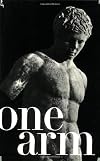
A collection of short stories exhibiting Williams' genius for creating drama with memorable characters, sexual electricity and atmosphere. I am not a fan of reading plays, but the availability of performances of Williams' work to watch over and over would be reason enough for me to sustain a video service subscription of whatever sort indefinitely. These short stories, published in 1967 during Williams' long depression, are frequently brilliant, often heart-breaking, occasionally bizarre and show more macabre. Two of the selections, "A Girl Made of Glass'" and "The Night of the Iguana" tell stories previously dramatised. Other powerful selections include the title story, in which a former boxer turned hustler finds his inner spark, just a bit too late; and "Desire and the Black Masseur", one of those that takes a turn to the very very dark side. Remarkably, there is even a flash or two of humor in the final piece, "Yellow Bird", before it takes off into outright fantasy. One or two of these stories left me a bit at a loss, but after completing the entire collection, I think I will go back and reread those, as I may just possibly have missed something, given the quality and impact of the rest.
Review written in 2014 show less
Review written in 2014 show less
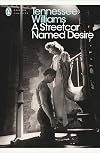
Stepping off a streetcar run by the Desire line in New Orleans, the flighty Southern belle Blanche DuBois steps into the lives of her sister Stella and her primally masculine, roughneck husband Stanley, who live in a small, two-room apartment in an unpromising district of the city. What follows is a series of entertaining sparks from Tennessee Williams' carefully-crafted tinderbox.
There might not be any deeper theme to Williams' play, beyond the idea that people "needn't [be] cruel to show more someone alone" (pg. 81) – an irony brought home by the play's famous line, delivered by Blanche, that she has "always depended on the kindness of strangers" (pg. 107). Said by Blanche at a moment in the play when she has been treated cruelly – and needlessly so – it throws into tragically harsh light the idea that, with such a worldview, Blanche was always destined to be crushed by cold reality. Her old-fashioned idea of how people should interact (even if she doesn't follow it herself) comes up against the brute reality-check of Stanley Kowalski. And it's not that Stanley is particularly villainous. Blanche was always eventually going to cross paths with someone who would provide this reality-check.
There are things to discuss then, but less in theme and more in how the characters interact. I didn't find Blanche as sympathetic as many others appear to, and I thought the real victim of the story was Stella, caught between her overpowering and high-maintenance sister Blanche on one hand and her abusive husband Stanley on the other. I would have liked the play to focus more on the compromises Stella makes than the traps that Blanche wilfully falls into. The question of why women like Stella stay with men like Stanley is an interesting one, but one that the play does not take the opportunity to address – and one which hasn't, as far as I am aware, really been addressed in commentary on the play. Stanley has become rooted in popular culture as a smouldering and desirable bad boy, epitomised in his famous portrayal by Marlon Brando, and while this might be great for the play's popularity it distracts from the real implications of Stanley. Mostly, the orthodox ruling on the play has been that Stanley is a predatory male, a brute and a villain, and that Blanche and Stella are innocent birds caught in his trap – while simultaneously granting us licence to swoon over him when shirtless (a hypocrisy also found in modern depictions of Mr. Darcy in Pride and Prejudice). Such an orthodoxy denies the two women characters the agency they display on every page – it is a Blanche-like fiction obscuring the cold realism the man provides.
This, however, is a fault in how we have absorbed the play into our popular culture, not with Williams' play itself. Williams himself provides us with the nuance in how his characters interact, and it is up to us to choose how to interpret that. If a deeper theme isn't penetrated, Williams nevertheless provides greater scope and grandeur by staging his scenes evocatively, and in how naturally his dialogue comes across. My ultimate impression of A Streetcar Named Desire was as something of a high-class soap opera; too well-made to be dismissed as frivolous, and with a few trappings that make it appear grand, but not deep enough to provide a lasting fascination either. show less
There might not be any deeper theme to Williams' play, beyond the idea that people "needn't [be] cruel to show more someone alone" (pg. 81) – an irony brought home by the play's famous line, delivered by Blanche, that she has "always depended on the kindness of strangers" (pg. 107). Said by Blanche at a moment in the play when she has been treated cruelly – and needlessly so – it throws into tragically harsh light the idea that, with such a worldview, Blanche was always destined to be crushed by cold reality. Her old-fashioned idea of how people should interact (even if she doesn't follow it herself) comes up against the brute reality-check of Stanley Kowalski. And it's not that Stanley is particularly villainous. Blanche was always eventually going to cross paths with someone who would provide this reality-check.
There are things to discuss then, but less in theme and more in how the characters interact. I didn't find Blanche as sympathetic as many others appear to, and I thought the real victim of the story was Stella, caught between her overpowering and high-maintenance sister Blanche on one hand and her abusive husband Stanley on the other. I would have liked the play to focus more on the compromises Stella makes than the traps that Blanche wilfully falls into. The question of why women like Stella stay with men like Stanley is an interesting one, but one that the play does not take the opportunity to address – and one which hasn't, as far as I am aware, really been addressed in commentary on the play. Stanley has become rooted in popular culture as a smouldering and desirable bad boy, epitomised in his famous portrayal by Marlon Brando, and while this might be great for the play's popularity it distracts from the real implications of Stanley. Mostly, the orthodox ruling on the play has been that Stanley is a predatory male, a brute and a villain, and that Blanche and Stella are innocent birds caught in his trap – while simultaneously granting us licence to swoon over him when shirtless (a hypocrisy also found in modern depictions of Mr. Darcy in Pride and Prejudice). Such an orthodoxy denies the two women characters the agency they display on every page – it is a Blanche-like fiction obscuring the cold realism the man provides.
This, however, is a fault in how we have absorbed the play into our popular culture, not with Williams' play itself. Williams himself provides us with the nuance in how his characters interact, and it is up to us to choose how to interpret that. If a deeper theme isn't penetrated, Williams nevertheless provides greater scope and grandeur by staging his scenes evocatively, and in how naturally his dialogue comes across. My ultimate impression of A Streetcar Named Desire was as something of a high-class soap opera; too well-made to be dismissed as frivolous, and with a few trappings that make it appear grand, but not deep enough to provide a lasting fascination either. show less
Lists
Overdue Podcast (1)
el (1)
Théâtre (1)
To Read (1)
New Orleans (1)
Southern Fiction (1)
1950s (1)
Plays I Like (5)
AP Lit (3)
Five star books (2)
1940s (3)
Favourite Books (3)
bound (1)
Titles to Avoid (1)
The "A" List (1)
Awards


You May Also Like


Associated Authors
Statistics
- Works
- 337
- Also by
- 104
- Members
- 32,054
- Popularity
- #610
- Rating
- 3.9
- Reviews
- 354
- ISBNs
- 736
- Languages
- 27
- Favorited
- 132


