
George Grosz (1893–1959)
Author of George Grosz: An Autobiography
About the Author
Image credit: Photo © ÖNB/Wien
Works by George Grosz
Heimatliche Gestalten : Zeichnungen 8 copies
George Grosz vita e opere 1 copy
El zoológico de las letras 1 copy
Die Gezeichneten. 1 copy
Hintergrund (17 Zeichnungen von George Grosz zûr Aûffuhrûng des "Schwejk" in der Piscatorbühne). 1 copy, 1 review
Lo Specchio del Borghese 1 copy
Drawings, 1 copy
George Grosz, 1893-1959: Retrospective exhibition [held] September 24, 1963 through October 12, 1963 (1963) 1 copy
Arte y sociedad 1 copy
Associated Works
The Voice of the City: Further Stories of the Four Million (1908) — Illustrator, some editions — 220 copies, 1 review
A treasury of American prints : a selection of one hundred etchings and lithographs by the foremost living American artists (1939) — Contributor — 167 copies, 1 review
The Brass Check: A Study of American Journalism (1920) — Cover artist & designer, some editions — 106 copies, 1 review
De Pruisenhemel — Cover artist, some editions — 10 copies
"Verräter verfallen der Feme": Opfer, Mörder, Richter 1919-1929 — Cover artist/designer, some editions — 1 copy
Der grosse Zeitvertreib — Illustrator — 1 copy
Tragigrotesken der Nacht ; Träume — Cover artist & designer, some editions — 1 copy
Tagged
Common Knowledge
- Legal name
- Gross, Georg Ehrenfried
- Birthdate
- 1893-07-26
- Date of death
- 1959-07-06
- Gender
- male
- Education
- Dresden Academy of Fine Arts
Berlin College of Arts and Crafts - Occupations
- painter
graphic artist
caricaturist - Organizations
- American Academy of Arts and Letters (Art, 1954)
- Relationships
- Grosz, Peter M. (son)
Einstein, Carl (friend) - Nationality
- Germany
- Birthplace
- Berlin, Germany
- Places of residence
- Berlin, Germany
- Place of death
- Berlin, Germany
- Burial location
- Waldfriedhof Heerstraße, Berlin, Deutschland
- Associated Place (for map)
- Berlin, Germany
Members
Reviews
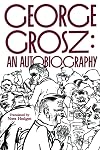
George Grosz was the quintessential artist of Berlin in the 20s, skewering everyone and everything around him, from the plutocrats driving the country to ruin to the beggars scraping for survival on the street. But sadly, the fire that made him such a strong artist had been dampened by the time he wrote this book. His new life in America was defined by the compromises he had to make to pay the bills and provide for his family, and you can feel his sense of defeat. The chapters on the German show more revolution of 1918 and his involvement with Dada in the 20s leaves you wishing you could have heard him before his anger had metastasized into bitterness. show less
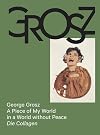
Published on the occasion of the exhibition, curated by Birgit Möckel and Rosa von der Schulenburg, which presented around 100 works from the art collection and archive of the Akademie der Künste, from the George Grosz Estate as well as from public and private collections.
Original, Playful and Satirical Artworks
The title "A Piece of My World in a World Without Peace" had already been used for a retrospective exhibition of the artist's work in New York in 1946 which features works from the show more beginning of the First World War to the end of the Second World War. These early photomontages with graphic elements are evidence of Grosz's artistic and political co-operation with John Heartfield and Wieland Herzfelde's Malik publishing house. Today, they still strike viewers as original, humorously playful and at the same time satirically accurate commentaries on "life and hustle and bustle" in the rapidly growing metropolis of Berlin.
Representing American Consumer Culture
Later, in the USA, it was above all the beautiful, new world of goods that provided Grosz with inspiration, motifs and themes. To represent and appropriate the "typically American", he collected photographic images with the aim of becoming a successful "businessman" as an artist. Looking at advertising brochures and print adverts, collecting seductive offers, cutting them up and collaging was a method of playfully and critically dealing with foreign cultural experiences for Grosz. He composes single-sheet collages and greetings on postcards from snippets and clippings from advertising adverts that affirmatively reflect the world of consumer goods. show less
Original, Playful and Satirical Artworks
The title "A Piece of My World in a World Without Peace" had already been used for a retrospective exhibition of the artist's work in New York in 1946 which features works from the show more beginning of the First World War to the end of the Second World War. These early photomontages with graphic elements are evidence of Grosz's artistic and political co-operation with John Heartfield and Wieland Herzfelde's Malik publishing house. Today, they still strike viewers as original, humorously playful and at the same time satirically accurate commentaries on "life and hustle and bustle" in the rapidly growing metropolis of Berlin.
Representing American Consumer Culture
Later, in the USA, it was above all the beautiful, new world of goods that provided Grosz with inspiration, motifs and themes. To represent and appropriate the "typically American", he collected photographic images with the aim of becoming a successful "businessman" as an artist. Looking at advertising brochures and print adverts, collecting seductive offers, cutting them up and collaging was a method of playfully and critically dealing with foreign cultural experiences for Grosz. He composes single-sheet collages and greetings on postcards from snippets and clippings from advertising adverts that affirmatively reflect the world of consumer goods. show less

An interesting little volume of illustrations by the Expressionist Grosz that can be used for 20th Century art lectures or for the Weimar period.

"Ich erhebe meine Hand und grüße das ewige menschliche Gesetz ... und die fröhliche nichtswürdige Unabänderlichkeit des Lebens!"
Lists
Awards

You May Also Like


Associated Authors
Statistics
- Works
- 70
- Also by
- 22
- Members
- 559
- Popularity
- #44,692
- Rating
- 4.1
- Reviews
- 11
- ISBNs
- 72
- Languages
- 6