
Ann Turnbull
Author of No Shame, No Fear
About the Author
Series
Works by Ann Turnbull
Associated Works
Tagged
Common Knowledge
- Birthdate
- 1943
- Gender
- female
- Nationality
- UK
- Birthplace
- Hertford, England, UK
- Places of residence
- Shropshire, England, UK
- Associated Place (for map)
- England, UK
Members
Discussions
Juvenile/YA..girl visits relatives, removes rowan branch above tunnel lets "witch" escape in Name that Book (August 2011)
Reviews

As if Noah didn't have enough on his mind: the Ark's about to embark. But where are those sloths - snoring away, can't be bothered to join the contingent of 2 x 2. Suspensful, larky, and one of this yea's most winsome offerings.

Susanna and Will (from No Shame, No Fear) may finally have a chance to get married. Will has job prospects and is looking for lodgings in London. But when the plague traps him in the city, their plans are thrown into question. And as their love story grows more complicated, it gets closer and closer to the summer of 1666 - and the Great Fire of London.
There were a lot of great things about this book. The characterization - particularly of Susannah - is three-dimensional and not in the least show more bit stereotypical. She is strong in her faith, but preoccupied with sex (in a very realistic teenager way). She is headstrong, independent, but devoted to Will. I love that she decides to get work, that she has moments of doubt about her choice to come to London. She's just a really well-rounded character. Will is less distinct in my eyes, but he still has his complexities. He's faithful with the zeal of the converted, but he misses his old life of music, beauty, and wealth.
The details of daily life - the sights and smells were well-described, but at the same time I didn't get the same sense of time and place that comes in the best historical fiction. Although the Great Fire happened in the background, it didn't seem to be as important or devastating as I felt it must have been to those who lived through it.
Plus the love story seemed a little off to me. After all, they only met once for an hour before determining they were madly in love. The rest of their relationship was built up through letters - but that was in a previous novel, so I had none of that sharing of hearts and souls. So the fact that they were so dedicated to one another seemed very weird to me. I mean, I know plenty about long-distance relationships, both how difficult they are and how intimate letters can be, but only one meeting just didn't seem like it would be enough to decide to wed. And under the circumstances, I wanted their relationship to hit more bumps. Once they were actually together and living together, their relationship was portrayed as completely blissful - when really that kind of move should have pulled some of the romantic glaze from their situation. It's hard suddenly being tied so exclusively to someone and being with them all the time. That should have showed.
I didn't much care for the portions where the narrative dwelled on the persecution of the Quakers - not because I don't think it's an important story to address, but at times it seemed remarkably self-righteous to preach of tolerance while refusing to even refer to St. Paul's as a church ('steeple-house', really?). I had issues with the language; the 'thees' and 'thous' just didn't seem quite right to me. The verbs weren't changed in the way I expected (thou WILT, people), and that's just one of my pet peeves.
So - I think this is a very nice story for young adults, but it just didn't gel with my worldview.
Also posted at my blog show less
There were a lot of great things about this book. The characterization - particularly of Susannah - is three-dimensional and not in the least show more bit stereotypical. She is strong in her faith, but preoccupied with sex (in a very realistic teenager way). She is headstrong, independent, but devoted to Will. I love that she decides to get work, that she has moments of doubt about her choice to come to London. She's just a really well-rounded character. Will is less distinct in my eyes, but he still has his complexities. He's faithful with the zeal of the converted, but he misses his old life of music, beauty, and wealth.
The details of daily life - the sights and smells were well-described, but at the same time I didn't get the same sense of time and place that comes in the best historical fiction. Although the Great Fire happened in the background, it didn't seem to be as important or devastating as I felt it must have been to those who lived through it.
Plus the love story seemed a little off to me. After all, they only met once for an hour before determining they were madly in love. The rest of their relationship was built up through letters - but that was in a previous novel, so I had none of that sharing of hearts and souls. So the fact that they were so dedicated to one another seemed very weird to me. I mean, I know plenty about long-distance relationships, both how difficult they are and how intimate letters can be, but only one meeting just didn't seem like it would be enough to decide to wed. And under the circumstances, I wanted their relationship to hit more bumps. Once they were actually together and living together, their relationship was portrayed as completely blissful - when really that kind of move should have pulled some of the romantic glaze from their situation. It's hard suddenly being tied so exclusively to someone and being with them all the time. That should have showed.
I didn't much care for the portions where the narrative dwelled on the persecution of the Quakers - not because I don't think it's an important story to address, but at times it seemed remarkably self-righteous to preach of tolerance while refusing to even refer to St. Paul's as a church ('steeple-house', really?). I had issues with the language; the 'thees' and 'thous' just didn't seem quite right to me. The verbs weren't changed in the way I expected (thou WILT, people), and that's just one of my pet peeves.
So - I think this is a very nice story for young adults, but it just didn't gel with my worldview.
Also posted at my blog show less
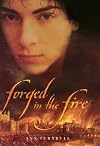
Reviewed by Mechele R. Dillard for TeensReadToo.com
The streets of 17th-Century London come alive in author Ann Turnbull's FORGED IN THE FIRE. The sequel to Turnbull's 2006 NO SHAME, NO FEAR, this well-written novel stands alone, dually answering readers' current questions while offering just enough ambiguity to pique their interest in the prequel.
Romance is alive and well in the plague-infested streets of 1665 London. But, times are hard and death is rampant, especially for Quakers such as show more Will and Susanna, who find themselves fighting against a close-minded religious establishment in addition to disease and poverty. Readers are left to breathlessly concede that a happy ending, no matter how deserved, is far from guaranteed.
Turnbull is skilled at entertaining readers while covertly educating them. Her scenes are full and powerful, bringing excitement and history to the forefront, yet never overpowering or heavy-handed. Readers will fall wholeheartedly into the love story of Will and Susanna, while simultaneously aching for the thousands of actual lives truly lost to sickness, disaster and ignorance in the London of yesteryear.
This, readers will understand, was a time of great fear, but not a time beyond equally great faith: "We ate with relish and felt glad to be alive," recalls Will. "The plague was in the city--but danger was always present. We must go about our lives as usual and trust in God" (p. 25). show less
The streets of 17th-Century London come alive in author Ann Turnbull's FORGED IN THE FIRE. The sequel to Turnbull's 2006 NO SHAME, NO FEAR, this well-written novel stands alone, dually answering readers' current questions while offering just enough ambiguity to pique their interest in the prequel.
Romance is alive and well in the plague-infested streets of 1665 London. But, times are hard and death is rampant, especially for Quakers such as show more Will and Susanna, who find themselves fighting against a close-minded religious establishment in addition to disease and poverty. Readers are left to breathlessly concede that a happy ending, no matter how deserved, is far from guaranteed.
Turnbull is skilled at entertaining readers while covertly educating them. Her scenes are full and powerful, bringing excitement and history to the forefront, yet never overpowering or heavy-handed. Readers will fall wholeheartedly into the love story of Will and Susanna, while simultaneously aching for the thousands of actual lives truly lost to sickness, disaster and ignorance in the London of yesteryear.
This, readers will understand, was a time of great fear, but not a time beyond equally great faith: "We ate with relish and felt glad to be alive," recalls Will. "The plague was in the city--but danger was always present. We must go about our lives as usual and trust in God" (p. 25). show less
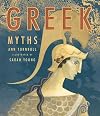
I read the second myth in this book: Persephone. Persephone is the protagonist in this myth. She is the daughter of Demeter, the corn goddess. Persephone is picking flowers when she is kidnapped by Hades. Hades had gone out to inspect his kingdom when he saw Persephone in the meadow. He was struck by Eros’ arrow and he was compelled to bring her to his underworld to be his queen. He tricks her into eating the fruit of the underworld, thereby keeping her with him forever.
Meanwhile, show more Demeter is looking everywhere for her daughter and fears the worst. She punishes the land and lets the crops and cattle die. People went hungry. Demeter soon learns from a Naiad about Persephone’s whereabouts and goes straight to her brother Zeus for help. They send Hermes to the underworld to retrieve Persephone. When they learn that Persephone has, in fact, already eaten fruit from the underworld, they feel helpless. But because they Demeter to do her job and keep the people fed, they work out a deal: Persephone lives two-thirds of the year above ground with her mother, and one-third of the year in the underworld as queen.
Patriarchy, in a couple of forms, is found in this myth. I believe this to be reflective of the culture of its origins. Persephone is taken, against her will, by her uncle. Hades then tricks Persephone by tempting her with fruit so that she will eat and be bound to him forever. Demeter is overcome with grief, but can only save her daughter by eliciting the help of her other brother, Zeus. While Zeus is helpful in brokering a deal with Hades and getting Persephone back (at least part-time) with Demeter, the fact still remains that all of this happened against Persephone’s will and both she and her mother were helpless to fix it without the help of the patriarchs of the family. show less
Meanwhile, show more Demeter is looking everywhere for her daughter and fears the worst. She punishes the land and lets the crops and cattle die. People went hungry. Demeter soon learns from a Naiad about Persephone’s whereabouts and goes straight to her brother Zeus for help. They send Hermes to the underworld to retrieve Persephone. When they learn that Persephone has, in fact, already eaten fruit from the underworld, they feel helpless. But because they Demeter to do her job and keep the people fed, they work out a deal: Persephone lives two-thirds of the year above ground with her mother, and one-third of the year in the underworld as queen.
Patriarchy, in a couple of forms, is found in this myth. I believe this to be reflective of the culture of its origins. Persephone is taken, against her will, by her uncle. Hades then tricks Persephone by tempting her with fruit so that she will eat and be bound to him forever. Demeter is overcome with grief, but can only save her daughter by eliciting the help of her other brother, Zeus. While Zeus is helpful in brokering a deal with Hades and getting Persephone back (at least part-time) with Demeter, the fact still remains that all of this happened against Persephone’s will and both she and her mother were helpless to fix it without the help of the patriarchs of the family. show less
Lists
Awards


You May Also Like


Associated Authors
Statistics
- Works
- 48
- Also by
- 3
- Members
- 1,728
- Popularity
- #14,879
- Rating
- 3.8
- Reviews
- 50
- ISBNs
- 170
- Languages
- 3