
Andy Collins
Author of Dungeons & Dragons Player's Handbook (4th Edition)
About the Author
Image credit: via boardgamegeek.com
Works by Andy Collins
Rules Compendium: An Essential Dungeons & Dragons Compendium (4th Edition D&D) (2010) — Contributor — 117 copies
Dungeons & Dragons Core Rulebook Set (Dungeons & Dragons d20 3.5 Fantasy Roleplaying, Three Book Slipcased Set) (2003) 82 copies
Cage 1 copy
Fenomenal 1 copy
Ayra 1 copy
Manuel des Monstres 3 1 copy
The Village of Hommlet 1 copy
In die Schattenflucht 1 copy
Associated Works
Dungeon Master's Guide: Core Rulebook II (3.5) (2003) — Author, some editions — 1,083 copies, 3 reviews
Dawn of the Overmind (Advanced Dungeons & Dragons/Monstrous Arcana) (1998) — Editor, some editions — 22 copies
Meyn Mamvro: Ancient Stones and Sacred Sites in Cornwall - No 27, Summer 1995 (1995) — Contributor — 1 copy
Tagged
Common Knowledge
Members
Reviews
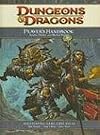
First Impressions: Well, they certainly dealt with 3.5's rules bloat. Which needed fucking doing, right enough, when the only way to tote around all the reference books you wanted to stew up a creditable encounter was to buy a laptop or a minivan. Obvs more books will come out, but the core mechanic still rules, and a stripped-down version of it even. So: Clean, crisp, nubile and built for speed - score one.
As we know, the game lives and dies by class balance, and I think taking the ad hoc show more advances in gaming theory - in party roles - that have been made by MMOers - tank, buffer, etc. - and systematizing them - striker, leader, controller, and whatever they're calling the fighter role - was a great thing. It discourages four-wizard parties, I suppose, but it brings out and makes explicitly exploitable - with feats and items and so on - a hardcore, small-scale tabletop strategy aspect to the game that has been present ever since Chainmail I suppose, but has been strongly inconsistent. Score two. The core races all remain, except gnomes, who were the poor man's dwarf or halfling depending on your poison (and I say that as a gnome fan), and they have high- and grey-elf surrogates, which is cool. More elves means more good times.
Build options? They are here, and at a cursory glance they really cover ground, without being a threat in their multitudes like in both 2e and 3e. I'm gonna look forward to pushing adorable feyborn wizard Ianire Zaitequi Llogbregas up the rungs of the net to "Deadly Trickster" and beyond. Result!
And here is where it falls down. the point of the D&D rules, to me, is to give you an easy way to clap together your character, resolve combats and situations, and then get out of the way and let "imagination practice" (thank you, Vin Diesel) reign. And the incredible, annoying combat-centredness of these rules just does not let that happen. It makes it easier to calculate good value for money when you're buying yer magic armour, but where's the wand of wonder? It gives you a hundred subtly different ways to ambush the shit out of foes and feel cleverer than DMsie, but where's a goofy-yet-awesome mainstay like "rope trick"? I'm not some conservative nerd who's all "I can't believe you took out _____", nor do I think they need to fill it all in for us - we can come up with out own hilarious magic and scenarios and characters choices - but when you take out all hints in the direction of whimsy and laffs in the core rules, even pushing us toward a straight diplomacy roll to resolve negotiations, it feels . . . yeah, mechanistic. Numbing. It makes D&D a great strategy game with some RP gracenotes that hopefully affect your decision-making, but not a role-playing adventure.
But hell, this is just the first book. Maybe that stuff will come with the DMG - a better division of content, really, when you think about it. And keeping it simple, stupid, and then making the other stuff all supplementary and blowing the minds of the eight-year-olds raised on video games who have no idea all the ways D&D can go, well, that sort of makes sense to me. Still, I can't help but feel like something is lost, at least until the first appearance of an Apparatus of Kwalish or Huggles, the psychic, psychedelic, psychotic pig.
I guess this is really a review of 4e. The book is laid out well and the art is bland in a 3e way, the end. show less
As we know, the game lives and dies by class balance, and I think taking the ad hoc show more advances in gaming theory - in party roles - that have been made by MMOers - tank, buffer, etc. - and systematizing them - striker, leader, controller, and whatever they're calling the fighter role - was a great thing. It discourages four-wizard parties, I suppose, but it brings out and makes explicitly exploitable - with feats and items and so on - a hardcore, small-scale tabletop strategy aspect to the game that has been present ever since Chainmail I suppose, but has been strongly inconsistent. Score two. The core races all remain, except gnomes, who were the poor man's dwarf or halfling depending on your poison (and I say that as a gnome fan), and they have high- and grey-elf surrogates, which is cool. More elves means more good times.
Build options? They are here, and at a cursory glance they really cover ground, without being a threat in their multitudes like in both 2e and 3e. I'm gonna look forward to pushing adorable feyborn wizard Ianire Zaitequi Llogbregas up the rungs of the net to "Deadly Trickster" and beyond. Result!
And here is where it falls down. the point of the D&D rules, to me, is to give you an easy way to clap together your character, resolve combats and situations, and then get out of the way and let "imagination practice" (thank you, Vin Diesel) reign. And the incredible, annoying combat-centredness of these rules just does not let that happen. It makes it easier to calculate good value for money when you're buying yer magic armour, but where's the wand of wonder? It gives you a hundred subtly different ways to ambush the shit out of foes and feel cleverer than DMsie, but where's a goofy-yet-awesome mainstay like "rope trick"? I'm not some conservative nerd who's all "I can't believe you took out _____", nor do I think they need to fill it all in for us - we can come up with out own hilarious magic and scenarios and characters choices - but when you take out all hints in the direction of whimsy and laffs in the core rules, even pushing us toward a straight diplomacy roll to resolve negotiations, it feels . . . yeah, mechanistic. Numbing. It makes D&D a great strategy game with some RP gracenotes that hopefully affect your decision-making, but not a role-playing adventure.
But hell, this is just the first book. Maybe that stuff will come with the DMG - a better division of content, really, when you think about it. And keeping it simple, stupid, and then making the other stuff all supplementary and blowing the minds of the eight-year-olds raised on video games who have no idea all the ways D&D can go, well, that sort of makes sense to me. Still, I can't help but feel like something is lost, at least until the first appearance of an Apparatus of Kwalish or Huggles, the psychic, psychedelic, psychotic pig.
I guess this is really a review of 4e. The book is laid out well and the art is bland in a 3e way, the end. show less
4E no longer should be referred to as Dungeons & Dragons, it has about as much in common with earlier editions of D&D as Chutes and Ladders has in common with Monopoly. It's a completely different game and WotC should be honest and admit as much.
Game balance has been put at a premium at the expense of both realism and role-playing potential. It's a fine game if you're looking for a balanced small-scale combat simulation, but I suggest role-players look elsewhere.
Game balance has been put at a premium at the expense of both realism and role-playing potential. It's a fine game if you're looking for a balanced small-scale combat simulation, but I suggest role-players look elsewhere.

This book puts everything you need to tell a Star Wars story into one volume: a good basic selection of all the possible character combinations, examples that relate to the films, rules for everything from space combat to droids, and a really good gamemastering section that even works in some basic economic ideas to use in worldbuilding. The class/feat/skill system is a bit of a jumble, but there's only so much you can do with the underlying d20 mechanics (I'm no fan of class/level systems); show more the writers have managed to do a good job despite it. show less
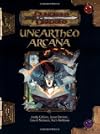
I loved Unearthed Arcana.
This book is the most recent in a tradition of books of the same title (check for other versions of Unearthed Arcana). It takes the mechanics of the d20/D&D roleplaying game and provides many options and alternatives to those systems.
While I have never used any of the options provided by this book exactly as they are presented, they have inspired my own tinkerings with this system in ways I probably never would have thought of before.
A wonderful book for those show more wishing they could run their D&D game somehow a bit differently.
- Peter K. show less
This book is the most recent in a tradition of books of the same title (check for other versions of Unearthed Arcana). It takes the mechanics of the d20/D&D roleplaying game and provides many options and alternatives to those systems.
While I have never used any of the options provided by this book exactly as they are presented, they have inspired my own tinkerings with this system in ways I probably never would have thought of before.
A wonderful book for those show more wishing they could run their D&D game somehow a bit differently.
- Peter K. show less
Lists
Awards


You May Also Like


Associated Authors
Statistics
- Works
- 24
- Also by
- 14
- Members
- 3,929
- Popularity
- #6,435
- Rating
- 3.9
- Reviews
- 14
- ISBNs
- 33
- Languages
- 6