
Eliza Clark (4) (1994–)
Author of Boy Parts
For other authors named Eliza Clark, see the disambiguation page.
Works by Eliza Clark
Tagged
Common Knowledge
- Canonical name
- Clark, Eliza
- Birthdate
- 1994
- Gender
- female
- Education
- Chelsea College of Art
- Nationality
- England
UK - Birthplace
- Newcastle upon Tyne, Tyne and Wear, England, UK
- Places of residence
- London, England, UK
- Associated Place (for map)
- England, UK
Members
Reviews
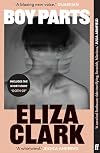
Eliza Clark's "She's Always Hungry" was one of my favourite reads of last year, and this (her debut novel) also blew me away, although it is very much not a book for everyone.
It is about Irina, a fine art photographer, who had a brief period of notoriety after her graduation show, but is now back in her home town - working in a skeezy bar and selling even more skeezy photos to wealthy customers. For her photos, she picks up men in the street, sets up a time for them to come to her studio, show more then directs their every move while she takes photos, gradually making them do sexualised and degrading things.
At first it seems that Irina is getting off on all this, but eventually I decided that she had no idea what she actually liked - it's just that her life (and experience of men) has turned her into someone brittle, cynical and manipulative - who scorns anyone who tries to look after her, and thinks that all relationships are about power so you might as well be the one on the top. This all started when as a teenager she was groomed and seduced by a teacher, something she describes matter-of-factly. ‘I mean, it just happens, doesn’t it? Practically a rite of passage.’
But something weird has started to happen - she's no stranger to violent sex but she starts to imagine that during it she has done some real serious damage to whatever man it is that she is with. Does this also come from something in her past?
I thought this was an incredibly sharp and powerful read, even though Clark couldn't quite bring it all together at the end.
Being mistaken for a Manic Pixie Dream Girl has served me well over the years. I’d go out disguised in a non-threatening sundress and flat sandals, slouching and leaning heavily on my left hip, shrinking myself down to a less intimidating height. Drop a niche interest here, and a little sass there, and they eat me up, every single time. show less
It is about Irina, a fine art photographer, who had a brief period of notoriety after her graduation show, but is now back in her home town - working in a skeezy bar and selling even more skeezy photos to wealthy customers. For her photos, she picks up men in the street, sets up a time for them to come to her studio, show more then directs their every move while she takes photos, gradually making them do sexualised and degrading things.
At first it seems that Irina is getting off on all this, but eventually I decided that she had no idea what she actually liked - it's just that her life (and experience of men) has turned her into someone brittle, cynical and manipulative - who scorns anyone who tries to look after her, and thinks that all relationships are about power so you might as well be the one on the top. This all started when as a teenager she was groomed and seduced by a teacher, something she describes matter-of-factly. ‘I mean, it just happens, doesn’t it? Practically a rite of passage.’
But something weird has started to happen - she's no stranger to violent sex but she starts to imagine that during it she has done some real serious damage to whatever man it is that she is with. Does this also come from something in her past?
I thought this was an incredibly sharp and powerful read, even though Clark couldn't quite bring it all together at the end.
Being mistaken for a Manic Pixie Dream Girl has served me well over the years. I’d go out disguised in a non-threatening sundress and flat sandals, slouching and leaning heavily on my left hip, shrinking myself down to a less intimidating height. Drop a niche interest here, and a little sass there, and they eat me up, every single time. show less
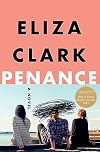
This novel is written in the form of a true crime book, and so effectively does she inhabit this space that I read the first few pages and couldn't figure out why I had picked up true crime by a disgraced journalist unwittingly. Even after reassuring myself, I would find myself googling names, trying to find out what wikipedia had to say about the murder. It's an unsettling format and all the more because Clark does such a convincing job of it.
The story follows that of five girls; the dead show more girl, the three teenage girls who murdered her, and another girl who knew the girls involved. It is structured as a non-fiction account of a famous crime, with the addition that the author of this work of non-fiction is a disgraced journalist who is accused of having stolen personal writing belonging to some of the girls and used that to write novelistic chapters. The murder is brutal and that the killers were three teen-age girls meant that there would be media interest, although the early interest in this case was spearheaded by a few particularly lurid true crime podcasts.
Clark is covering a lot of ground with this novel, ranging from an examination of the appeal of true crime podcasts and media, the dark underbelly of which is the canonization of mass murderers as well as a sense that the public deserves entry into the lives of those involved in a crime; the fine line between non-fiction and fiction and how to maintain the divide (there is no situation in which I am willing to accept the term "true crime novel"); and, at the heart of all of this, a sensitive story about growing up in a dead-end seaside town on the east coast of England, and all the complexities involved in being a teenager.
Clark took on an ambitious project with this novel and that she pulled it off so convincingly is impressive. show less
The story follows that of five girls; the dead show more girl, the three teenage girls who murdered her, and another girl who knew the girls involved. It is structured as a non-fiction account of a famous crime, with the addition that the author of this work of non-fiction is a disgraced journalist who is accused of having stolen personal writing belonging to some of the girls and used that to write novelistic chapters. The murder is brutal and that the killers were three teen-age girls meant that there would be media interest, although the early interest in this case was spearheaded by a few particularly lurid true crime podcasts.
Clark is covering a lot of ground with this novel, ranging from an examination of the appeal of true crime podcasts and media, the dark underbelly of which is the canonization of mass murderers as well as a sense that the public deserves entry into the lives of those involved in a crime; the fine line between non-fiction and fiction and how to maintain the divide (there is no situation in which I am willing to accept the term "true crime novel"); and, at the heart of all of this, a sensitive story about growing up in a dead-end seaside town on the east coast of England, and all the complexities involved in being a teenager.
Clark took on an ambitious project with this novel and that she pulled it off so convincingly is impressive. show less
FAR better than the cover lets on (the pink aisle of fiction thing will never not annoy me!). This is a very clear exploration of the true crime community, 2010s internet, British class divisions, and the horrors of adolescence all packaged in a well-wrought conflicting narrative. Perfect for other people who wasted their teen years in the trenches of Tumblr and want to read about morally dubious and honestly fucked up teen girls. I just could not put this down.
The deliciously named "Boy Parts" isn't the worst novel I've ever read, but it's far from the most pleasant. It's a prurient, drug-sodden, occasionally violent tour through the ruins of post-Brexit Britain and its shallow, money-driven contemporary art scene. Sometimes it reads like Brett Easton Ellis's "American Psycho." Sometimes it reads like that feature that Vice magazine -- which once ran a profile on the book's main character -- occasionally ran in which young people all over the show more English-speaking world described their nights out in detail and reported exactly how much they had spent on drink, drugs, and food. Blushing it isn't. If I hadn't been looking for exactly this sort of fun, guilty read, I'd probably complain. But that still doesn't mean that it's a good book.
I never took a film class in college, and I'm not a very visually oriented person, but one thing I do think that "Boy Parts gets right is the question of gaze. Irina, our beautiful, cold-hearted, and potentially talented main character is a former rising art star and a professional photographer who makes her living straddling the worlds of art and porn. She has a website and a social media presence, and most of her clients are anonymous, which should tell you everything you need to know about her work. Still, I'm glad to say that Clark goes deeper when she didn't necessarily have to. I don't know how much experience the author has with photography, but Irina seems to have the photographer's eye, and she's is good at describing how this works. Irina, for all faults, is an effective critic of her own pictures. She's honest about what she likes and doesn't like about her own work and what art she considers worthwhile and what she considers good for nothing but shock value. The author's descriptions of Irina's photo sessions are written with the precision you'd expect from a high-quality martial-arts fight scene. These are the scenes where "Boy Parts" seems to transcend its subject matter and turn into a pretty good novel about the artistic process.
Irina's behavior when it comes to the subjects of her photos is something else entirely. Her interest is almost wholly confined to the male form, and she approaches her subjects in public places: pubs, supermarkets, buses. Even if you like the fellahs, your taste might not match up with hers, as she likes them young, thin, delicate and vulnerable. These descriptions fairly ooze carnal longing, but Irina even takes the time to comment on men who she doesn't find terribly comely, an unexpected reversal of the constantly roving male gaze. What's more, Irina is also quite aware of how often the men look at her and how they're likely to react. Tall, conventionally attractive, and impeccably stylish, Irina is keenly aware of how much her looks can get her, and how close she is to losing them. In "Boy Parts", judgment constantly operates in both directions at the same time. Irina has -- some might demand a trigger warning here, but this entire novel is a big trigger warning -- chronic body image issues, but they often seem tied not to her self-perception but to her fears that an extra centimeter or three round the hips might damage her social standing. Sadly, I'm not sure that this aspect of the book is particularly far-fetched.
I can't say that for much of the rest of it, though. Irina is, to put it very mildly, not a nice person, and, regardless of whatever positive qualities "Boy Parts" might have, this gets rather tiresome after a while. Rini, whom one of the book's characters describes as a "reptile" at one point, may indeed have genuine psychopathic tendencies, but the problem with psychopaths -- both real and imaginary -- is that they're not terribly interesting. You can't make a meal out of nothing, and Clark makes it pretty clear that Irina's being consumed by a howling emptiness. Do some fun, shocking, and entertainingly gory things happen along the way? Oh, I suppose. But I had to push myself to finish this one, and I'm not sure I'd recommend it. Unless you like reading for shock value, as I admit I occasionally do. In that case, go right ahead and pick this one up. You'll likely find exactly what you're looking for. show less
I never took a film class in college, and I'm not a very visually oriented person, but one thing I do think that "Boy Parts gets right is the question of gaze. Irina, our beautiful, cold-hearted, and potentially talented main character is a former rising art star and a professional photographer who makes her living straddling the worlds of art and porn. She has a website and a social media presence, and most of her clients are anonymous, which should tell you everything you need to know about her work. Still, I'm glad to say that Clark goes deeper when she didn't necessarily have to. I don't know how much experience the author has with photography, but Irina seems to have the photographer's eye, and she's is good at describing how this works. Irina, for all faults, is an effective critic of her own pictures. She's honest about what she likes and doesn't like about her own work and what art she considers worthwhile and what she considers good for nothing but shock value. The author's descriptions of Irina's photo sessions are written with the precision you'd expect from a high-quality martial-arts fight scene. These are the scenes where "Boy Parts" seems to transcend its subject matter and turn into a pretty good novel about the artistic process.
Irina's behavior when it comes to the subjects of her photos is something else entirely. Her interest is almost wholly confined to the male form, and she approaches her subjects in public places: pubs, supermarkets, buses. Even if you like the fellahs, your taste might not match up with hers, as she likes them young, thin, delicate and vulnerable. These descriptions fairly ooze carnal longing, but Irina even takes the time to comment on men who she doesn't find terribly comely, an unexpected reversal of the constantly roving male gaze. What's more, Irina is also quite aware of how often the men look at her and how they're likely to react. Tall, conventionally attractive, and impeccably stylish, Irina is keenly aware of how much her looks can get her, and how close she is to losing them. In "Boy Parts", judgment constantly operates in both directions at the same time. Irina has -- some might demand a trigger warning here, but this entire novel is a big trigger warning -- chronic body image issues, but they often seem tied not to her self-perception but to her fears that an extra centimeter or three round the hips might damage her social standing. Sadly, I'm not sure that this aspect of the book is particularly far-fetched.
I can't say that for much of the rest of it, though. Irina is, to put it very mildly, not a nice person, and, regardless of whatever positive qualities "Boy Parts" might have, this gets rather tiresome after a while. Rini, whom one of the book's characters describes as a "reptile" at one point, may indeed have genuine psychopathic tendencies, but the problem with psychopaths -- both real and imaginary -- is that they're not terribly interesting. You can't make a meal out of nothing, and Clark makes it pretty clear that Irina's being consumed by a howling emptiness. Do some fun, shocking, and entertainingly gory things happen along the way? Oh, I suppose. But I had to push myself to finish this one, and I'm not sure I'd recommend it. Unless you like reading for shock value, as I admit I occasionally do. In that case, go right ahead and pick this one up. You'll likely find exactly what you're looking for. show less
Lists
Awards


You May Also Like


Associated Authors
Statistics
- Works
- 3
- Members
- 1,420
- Popularity
- #18,121
- Rating
- 3.7
- Reviews
- 43
- ISBNs
- 57
- Languages
- 2