
Klaus Janson
Author of Batman: The Dark Knight Returns
About the Author
Image credit: http://www.comicvine.com/klaus-janson/26-2069/
Series
Works by Klaus Janson
Batman : Death and the Maidens [OMNIBUS] (2004) — Illustrator; Cover artist, some editions — 154 copies, 3 reviews
Batman: The Dark Knight Returns #3: Hunt the Dark Knight (1987) — Illustrator — 43 copies, 2 reviews
Associated Works
9-11: The World's Finest Comic Book Writers & Artists Tell Stories to Remember (2002) — Illustrator — 256 copies, 1 review
Essential Howard The Duck (2002) — Art (16), Inks (Ta, 14, 15, 17-21, 25-27), Cover Inks (25-26) — 143 copies, 1 review
The Big Book of Little Criminals: 63 True Tales of the World's Most Incompetent Jailbirds! (1996) — Illustrator — 102 copies
Strip AIDS U.S.A.: A Collection of Cartoon Art to Benefit People With AIDS (1988) — Contributor — 65 copies
Marvel Treasury Edition #28, Featuring Superman and Spider-Man (1981) — Illustrator — 38 copies, 2 reviews
Marvel Masterworks, Volume 141: Black Panther Volume 1 [Jungle Action #6-24] (2010) — Illustrator — 32 copies, 2 reviews
Women of Marvel: Celebrating Seven Decades [Trade Paperback Collection] (2010) — Illustrator — 22 copies, 1 review
The Batman Chronicles #12 — Writer, Artist, some editions — 4 copies
Ghost Rider, Vol. 2 #20 — Cover artist — 2 copies
DC Sampler (1983—1984) #2 — Illustrator — 2 copies
Occupation Force — Illustrator — 1 copy
Werewolf By Night: Panic By Moonlight Part 2: Madness Under A Mid-summer Moon — Illustrator — 1 copy
Tagged
Common Knowledge
- Birthdate
- 1953-01-23
- Gender
- male
Members
Discussions
Short story? Time runs faster on this planet .. lifetime is 15 years or so. in Name that Book (March 2009)
Reviews

I'm not familiar with Batman comics, so maybe there was stuff here that would've held more meaning if I knew, say, what happened to Jason (I'm familiar with the broad strokes but haven't read the comic, itself) or what Oliver was spouting off about (yeah, I have no context for this at all). But most of this just seemed nonsensical.
Why return to crime-fighting at all, Bruce? Is it PTSD? If so, the deployment of that motivation needed to be a lot more consistent. Are you suffering from show more dementia? That would certainly be in keeping with all the harping on about how old and slow you've gotten, but you seem a little too sharp to be struggling with an age-eaten brain. Am I just supposed to assume you've lost your effing mind? Because there needed to be more Killing and Maiming (instead of navel-gaze-y philosophizing about it), if so.
Without any of this to go on, this entire comic feels like an excuse to plunge the Batman into DARKNESS. (No, really. Like DARK DARKNESS. Like we're not messing around. Like fighting crime means the ABYSS will STARE BACK. And shit.) Maybe I'm too old or have read too much Profiler!Mulder fanfiction or remember too clearly how it felt to read Watchmen early on in my comics-reading life, but this didn't feel like a fresh, startling take on crime-fighting or superheroes or violence or chaos or the corruption of power or...anything. It felt mostly like a treatise on how growing old in your career will make you bad at it.
...Which. I appreciate. Because there are way too many old-guard authors still writing books who need to be told to either stop writing or get a better editor. But this seems an odd focus for a Batman comic, let alone a legendary Batman comic. And the momentary glimpses of Bruce's realization that he kinda sucks at his job don't make for compelling literature.
And all that other stuff? The navel-gaze-y bits about how killing the killers might be the only way to stop the cycle of violence...or how the world only makes sense if you make it! (what? is that a serious existential question or just poor traumatized Bruce trying to sound tough?)...or how vigilantism is, like, too big to judge in crime-ridden Gotham. All of that seems so narrow in scope, so petulant and childish.
Reading this, I had the exact opposite experience that I had whilst reading Superman: Red Son. That book asks some serious and terrifying questions about power and how we justify its use and where those ideas originate from and how little control we might have over their formation. This book, on the other hand, was akin to being stuck with That Asshole at a cocktail party, ranting about his childhood and his therapy and how everyone who disagrees with him is automatically wrong. No big questions, no insights into the greater world...just a guy reveling in the muck so people will think he's edgy and gritty and, like, DARK. (And shit.) show less
Why return to crime-fighting at all, Bruce? Is it PTSD? If so, the deployment of that motivation needed to be a lot more consistent. Are you suffering from show more dementia? That would certainly be in keeping with all the harping on about how old and slow you've gotten, but you seem a little too sharp to be struggling with an age-eaten brain. Am I just supposed to assume you've lost your effing mind? Because there needed to be more Killing and Maiming (instead of navel-gaze-y philosophizing about it), if so.
Without any of this to go on, this entire comic feels like an excuse to plunge the Batman into DARKNESS. (No, really. Like DARK DARKNESS. Like we're not messing around. Like fighting crime means the ABYSS will STARE BACK. And shit.) Maybe I'm too old or have read too much Profiler!Mulder fanfiction or remember too clearly how it felt to read Watchmen early on in my comics-reading life, but this didn't feel like a fresh, startling take on crime-fighting or superheroes or violence or chaos or the corruption of power or...anything. It felt mostly like a treatise on how growing old in your career will make you bad at it.
...Which. I appreciate. Because there are way too many old-guard authors still writing books who need to be told to either stop writing or get a better editor. But this seems an odd focus for a Batman comic, let alone a legendary Batman comic. And the momentary glimpses of Bruce's realization that he kinda sucks at his job don't make for compelling literature.
And all that other stuff? The navel-gaze-y bits about how killing the killers might be the only way to stop the cycle of violence...or how the world only makes sense if you make it! (what? is that a serious existential question or just poor traumatized Bruce trying to sound tough?)...or how vigilantism is, like, too big to judge in crime-ridden Gotham. All of that seems so narrow in scope, so petulant and childish.
Reading this, I had the exact opposite experience that I had whilst reading Superman: Red Son. That book asks some serious and terrifying questions about power and how we justify its use and where those ideas originate from and how little control we might have over their formation. This book, on the other hand, was akin to being stuck with That Asshole at a cocktail party, ranting about his childhood and his therapy and how everyone who disagrees with him is automatically wrong. No big questions, no insights into the greater world...just a guy reveling in the muck so people will think he's edgy and gritty and, like, DARK. (And shit.) show less
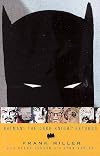
There's an interesting, seemingly neofascist strain in Frank Miller's graphic novels. 300 comes to mind as the most disturbing example of this, but The Dark Knight Returns isn't far behind. The story picks up around 15-20 years after Batman's heyday and he is in retirement. The world has gone amok and through a series of events, Bruce Wayne comes out of retirement. I won't go into the details, but by the end, Batman unites a group of street thugs into a coherent vigilante force who will show more "bring order" to the world.
This isn't a pretty vision of the world. It reminds me of a sort of Charles Bronson Deathwish universe where a solitary and borderline psychopathic hero will bring peace to the world through violence. I can't quite figure out Frank Miller's politics. He parodies Reagan and blatant militarism pretty harshly in The Dark Knight Returns, but also looks to extralegal solutions to crime and basks in ultraviolence. Miller's Gotham is hopelessly corrupt and he seems to think that only a fiery holocaust can cleanse it. He portrays liberals in a stereotypically Bronson-esque fashion -- always ready to coddle wrongdoers and let them off the hook. There are always horrific consequences to such actions. The hard-line, and only the hard-line, is the only real solution according to Miller. He recognizes the harvest of blood and terror that will ensue, but Miller feels this is necessary and justified.
Having said all this, The Dark Knight Returns warrants the praise it has received. It's storytelling is powerful and its vision of a corrupt world is appealing in a "Blade Runner" sort of way. The retelling of Batman is effective as a graphic narrative and there is a real sense of moral ambiguity. I disagree with pretty much everything Miller seems to believe in, but I felt engaged as a reader. I was willing to suspend my disbelief and horror and go along for the ride. In the end, I'm not sure that's such a good thing. I feel sort of corrupted and a bit more cynical about the world. show less
This isn't a pretty vision of the world. It reminds me of a sort of Charles Bronson Deathwish universe where a solitary and borderline psychopathic hero will bring peace to the world through violence. I can't quite figure out Frank Miller's politics. He parodies Reagan and blatant militarism pretty harshly in The Dark Knight Returns, but also looks to extralegal solutions to crime and basks in ultraviolence. Miller's Gotham is hopelessly corrupt and he seems to think that only a fiery holocaust can cleanse it. He portrays liberals in a stereotypically Bronson-esque fashion -- always ready to coddle wrongdoers and let them off the hook. There are always horrific consequences to such actions. The hard-line, and only the hard-line, is the only real solution according to Miller. He recognizes the harvest of blood and terror that will ensue, but Miller feels this is necessary and justified.
Having said all this, The Dark Knight Returns warrants the praise it has received. It's storytelling is powerful and its vision of a corrupt world is appealing in a "Blade Runner" sort of way. The retelling of Batman is effective as a graphic narrative and there is a real sense of moral ambiguity. I disagree with pretty much everything Miller seems to believe in, but I felt engaged as a reader. I was willing to suspend my disbelief and horror and go along for the ride. In the end, I'm not sure that's such a good thing. I feel sort of corrupted and a bit more cynical about the world. show less

B+ (Very good). Inconsistent. Book 1 (of 4) is remarkably great. But it's hard to get past the fascism - unavoidable in any Batman story, but Miller really leans into it.
(Sep. 2023)
(Sep. 2023)
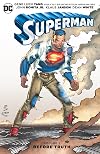
In a dark wood, Superman fights pitch-black attackers. His mysterious informant explains: “I seen guys like this before. One of Hordr’s allies developed the tech. They’re like zombies … corpses that’ve been made into solidified shadow.”
Solidified shadow is a fine metaphor for secrets that both give us strength and make us vulnerable. After Superman knocks the shadowy crap out of the zombie gang his own secret is outed. Drastic repercussions result.
When loved ones learn our show more secrets we feel understood, accepted, warm and fuzzy … for the moment. Then our solidified shadows take on a mindless, heartless life of their own and, horrified, we witness the unintended consequences. show less
Solidified shadow is a fine metaphor for secrets that both give us strength and make us vulnerable. After Superman knocks the shadowy crap out of the zombie gang his own secret is outed. Drastic repercussions result.
When loved ones learn our show more secrets we feel understood, accepted, warm and fuzzy … for the moment. Then our solidified shadows take on a mindless, heartless life of their own and, horrified, we witness the unintended consequences. show less
Lists
Awards


You May Also Like


Associated Authors
Statistics
- Works
- 56
- Also by
- 48
- Members
- 8,527
- Popularity
- #2,821
- Rating
- 4.0
- Reviews
- 154
- ISBNs
- 148
- Languages
- 14
- Favorited
- 1