

E. M. Butler (1885–1959)
Author of Ritual Magic
About the Author
Series
Works by E. M. Butler
The Tyranny of Greece over Germany: A Study of the Influence Exercised by Greek Art and Poetry over the Great German Writers of the Eighteenth, Nineteenth and Twentieth Centuries (2012) 57 copies, 2 reviews
Daylight in a Dream 1 copy
The Faust legend 1 copy
Goethe and Cagliostro 1 copy
Associated Works
Tagged
Common Knowledge
- Legal name
- Butler, Elizabeth Marian
- Birthdate
- 1885-12-29
- Date of death
- 1959-11-13
- Gender
- female
- Education
- Newnham College, Cambridge
- Occupations
- scholar of German language and literature
university professor
interpreter - Organizations
- Cambridge University
- Relationships
- Horner, Isaline Blew (domestic partner)
- Nationality
- UK
- Birthplace
- Bardsea, Lancashire, England, UK
- Places of residence
- Cambridge, England, UK
Hanover, Germany
Paris, France - Place of death
- Lancashire, England, UK
- Associated Place (for map)
- England, UK
Members
Reviews

A Mournful Paean to German Scholarship on Greece, July 23, 2006
This is a delightful book, first published, I believe, in 1935. It includes chapters on Winckelmann, Lessing and Herder, Goethe, Schiller, Holderlin, Heine and a concluding chapter that includes a section on Nietzsche. A fine examination of the (over) 200 year fascination of Germany with ancient Greece. This wonderfully sentimental and evocative work, that is tinged throughout with the spice of despair, both examines and show more exhibits said fascination. See especially the chapters on Holderlin and Heine in this regard. I was still quite young (in high school) when I first read this book and it left me yearning for more Greece, and also, I add somewhat sheepishly, a bit of Ms. Butler too! Yes, of course it is not really serious scholarship, but rather a romance with and about such scholarship. But nonetheless, it is filled with fine observations. I pick two at (or near) random:
"Goethe and Shakespeare, Homer and Dante, tower above their fellows but stand with them on the earth. Their range is immeasurably wider than Holderlin's, but no one has ever reached the same dizzy heights. [...] Then came the time when this life in poetry gradually changed to a life in prophecy"
"Dionysus, who came late into Greece, came late into Germany too. Heine ushered him in and then left it to Nietzsche..."
Thus the Germans went from admiring the Greek gods to wanting to be them, which would not have been a problem if their conception of the gods did not go from the light of Apollo to the shadows of Dionysus. - With results that even today, in our dumbed-down world, are studied in civics classes throughout the land. 'Whom the gods would destroy they first make mad.' ...It really is such a pity that this bittersweet study is so long out of print. show less
This is a delightful book, first published, I believe, in 1935. It includes chapters on Winckelmann, Lessing and Herder, Goethe, Schiller, Holderlin, Heine and a concluding chapter that includes a section on Nietzsche. A fine examination of the (over) 200 year fascination of Germany with ancient Greece. This wonderfully sentimental and evocative work, that is tinged throughout with the spice of despair, both examines and show more exhibits said fascination. See especially the chapters on Holderlin and Heine in this regard. I was still quite young (in high school) when I first read this book and it left me yearning for more Greece, and also, I add somewhat sheepishly, a bit of Ms. Butler too! Yes, of course it is not really serious scholarship, but rather a romance with and about such scholarship. But nonetheless, it is filled with fine observations. I pick two at (or near) random:
"Goethe and Shakespeare, Homer and Dante, tower above their fellows but stand with them on the earth. Their range is immeasurably wider than Holderlin's, but no one has ever reached the same dizzy heights. [...] Then came the time when this life in poetry gradually changed to a life in prophecy"
"Dionysus, who came late into Greece, came late into Germany too. Heine ushered him in and then left it to Nietzsche..."
Thus the Germans went from admiring the Greek gods to wanting to be them, which would not have been a problem if their conception of the gods did not go from the light of Apollo to the shadows of Dionysus. - With results that even today, in our dumbed-down world, are studied in civics classes throughout the land. 'Whom the gods would destroy they first make mad.' ...It really is such a pity that this bittersweet study is so long out of print. show less
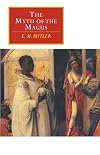
This is an excellent introduction to the mage role in the Western mind from its apex in antiquity forming the foundations of Judaeo-Christian belief (Solomon/Christ/magi) to descent into fraud and a rogues gallery of charlatans (Faust/Blavatsky/Rasputin). All this is underpinned by "ten stock features" of the magus biography.
This is an article which is extracted from the book "Ritual Magic" by E. M. Butler. Over half the pages are blank, a complete waste of paper. If you are curious about the article just buy the real book and not this.
Lists
You May Also Like


Statistics
- Works
- 18
- Also by
- 1
- Members
- 519
- Popularity
- #47,859
- Rating
- 4.0
- Reviews
- 4
- ISBNs
- 25
- Languages
- 1
- Favorited
- 1