

Richard Kieckhefer
Author of Magic in the Middle Ages
About the Author
Richard Kieckhefer is Sarah Rebecca Roland Professor of Religious Studies at Northwestern University and author of Forbidden Rites: A Necromancer's Manual of the Fifteenth Century, also published by Penn State University Press.
Works by Richard Kieckhefer
Hazards of the Dark Arts: Advice for Medieval Princes on Witchcraft and Magic (Magic in History Sourcebooks) (2017) 31 copies, 1 review
The Mystical Presence of Christ: The Exceptional and the Ordinary in Late Medieval Religion (Medieval Societies, Religions, and Cultures) (2022) 7 copies
Associated Works
New perspectives on witchcraft, magic and demonology. Volume 1, Demonology, religion, and witchcraft (2001) — Contributor — 4 copies
Tagged
Common Knowledge
- Canonical name
- Kieckhefer, Richard
- Legal name
- Kieckhefer, Richard Alan
- Birthdate
- 1946
- Gender
- male
- Education
- University of Texas, Austin (Ph.D|1972)
Saint Louis University (BA) - Occupations
- professor
historian of religion
religious studies scholar
medievalist - Organizations
- Northwestern University
American Society of Church History
Societas Magica - Awards and honors
- American Academy of Arts & Sciences (2006)
Medieval Academy of America (Fellow, 1998)
National Endowment for the Humanities Fellowship
Guggenheim Fellowship (1991) - Nationality
- USA
- Places of residence
- Chicago, Illinois, USA
- Associated Place (for map)
- Illinois, USA
Members
Reviews

Kieckhefer's Repression of Heresy in Medieval Germany is only incidentally concerned with heresy or heretics; it is focused on the activity and social apparatus of repression. His reason for not calling it Inquisitors and Inquisition in Medieval Germany was doubtless twofold. On the one hand, he focuses here chiefly on heresy as the object of inquisitional proceedings, as opposed to witchcraft, blasphemy, or or other possible crimes. On the other hand, it is his thesis that while there were show more instances and episodes of inquisition in Medieval Germany, there was no Inquisition as a durable institution that could either support or constrain individual inquisitors. It is this lack that Kieckhefer foregrounds as the reason for the relative failures of medieval inquisitors to eliminate or control heresy and its spread in Germany. This explanation is counter to the longstanding prior assumption (credited chiefly to Henry Charles Lea's 1888 History of the Inquisition in the Middle Ages) that inquisitors were hampered by local powers jealous of their prerogatives and jurisdictions.
In the absence of a durable institution of their own, inquisitors had two possible sources of authority: bishops or the pope. The former would necessarily be aligned with the diocesan clergy whom they supervised, and the latter typically appointed Dominicans. Still, cooperation between papal inquisitors and local bishops was the rule rather than the exception, according to Kieckhefer's account. The lack of institutional grounding made inquisitorial proceedings both less effectual and more prone to abuses than they would otherwise have been, and where there was genuine resistance of local authorities, it tended to arise from concern over the fairness and accuracy of the proceedings.
The book is organized chronologically, with different conspicuous heresies serving to characterize its periods: the rise of Waldensianism, the Free Spirit, beghards and beguines, the Waldensian "crisis" of the late fourteenth century, flagellants, and Hussites. Kieckhefer is careful to point out that his treatment of these heretics is far from comprehensive, being limited to the details bearing on his study of the inquisitors and their work, along with some general information for contextual purposes, and he refers the reader to other books for purposes of studying the heretical movements themselves. (Repression of Heresy is a scholarly work with a full apparatus, and the endnotes and bibliography are more than a third of the length of the body text.)
Although this book is now nearly forty years old, I suspect it has yet to be superseded with respect to its central focus. (For one with a somewhat wider geographic and conceptual scope, restricted to the earlier periods treated in Kiekhefer's study, see Moore's Formation of a Persecuting Society.) As Kieckhefer remarks at the outset, the study of medieval inquisition has traditionally drawn much of its impetus from "Protestant-Catholic polemics" which have been undermined by Christian ecumenism (ix). The relative lack of inquisitorial achievement in Germany means that it has not been an attractive object for study. The explanation proposed in this book, taking institutional development as its index, is one that might be applied to other historical problems. But in his closing, the author cautions that the relationship is unlikely to be a simple one, and that while too anemic an institution could lead to failure and abuse, overweening institutional development might do so as well, and the latter might be a more fitting consideration for our own time. show less
In the absence of a durable institution of their own, inquisitors had two possible sources of authority: bishops or the pope. The former would necessarily be aligned with the diocesan clergy whom they supervised, and the latter typically appointed Dominicans. Still, cooperation between papal inquisitors and local bishops was the rule rather than the exception, according to Kieckhefer's account. The lack of institutional grounding made inquisitorial proceedings both less effectual and more prone to abuses than they would otherwise have been, and where there was genuine resistance of local authorities, it tended to arise from concern over the fairness and accuracy of the proceedings.
The book is organized chronologically, with different conspicuous heresies serving to characterize its periods: the rise of Waldensianism, the Free Spirit, beghards and beguines, the Waldensian "crisis" of the late fourteenth century, flagellants, and Hussites. Kieckhefer is careful to point out that his treatment of these heretics is far from comprehensive, being limited to the details bearing on his study of the inquisitors and their work, along with some general information for contextual purposes, and he refers the reader to other books for purposes of studying the heretical movements themselves. (Repression of Heresy is a scholarly work with a full apparatus, and the endnotes and bibliography are more than a third of the length of the body text.)
Although this book is now nearly forty years old, I suspect it has yet to be superseded with respect to its central focus. (For one with a somewhat wider geographic and conceptual scope, restricted to the earlier periods treated in Kiekhefer's study, see Moore's Formation of a Persecuting Society.) As Kieckhefer remarks at the outset, the study of medieval inquisition has traditionally drawn much of its impetus from "Protestant-Catholic polemics" which have been undermined by Christian ecumenism (ix). The relative lack of inquisitorial achievement in Germany means that it has not been an attractive object for study. The explanation proposed in this book, taking institutional development as its index, is one that might be applied to other historical problems. But in his closing, the author cautions that the relationship is unlikely to be a simple one, and that while too anemic an institution could lead to failure and abuse, overweening institutional development might do so as well, and the latter might be a more fitting consideration for our own time. show less

What is the line between a religious practice, medicine and magic? Most of you are probably thinking, "I know it when I see it" and you're not wrong. "Magic in the Middle Ages" covers that period in history where all three overlapped or blended together. For example, a medieval individual might say a prayer to God over a mixture of healing herbs, to guarantee effectiveness - but only at sunset for three days. When the glitz and glamour are stripped away, Christian rituals tend to look very show more similar to pagan practices. How is wearing a cross different than wearing an amulet?
Suffice it to say, Christianity did not "replace" paganism overnight or "stole their holidays." To say otherwise is a gross oversimplification of a centuries-long process. Jesus openly practiced feats of magic, which were called "miracles," so as to assert a new, distinctive identity. Saint cults, healing by relics, alchemy, astrology, the use of holy objects - all these represent adaptation over time. Medieval "magic" was influenced more by social change and medical progress than the Church's authority.
But as I said, Kieckhefer does not come off as adversarial or obnoxiously contrarian. After all, medieval occultists were just as guilty as biblical interpreters - inventing "knowledge" when they could not find sources to suit their purposes. Ancient Egyptian, Jewish and Arabic texts were often casually exploited. Both sides pointed to women as the major perpetrators of "dark magic," yet it was mostly men who had access to holy or magical texts.
Kieckhefer's work is neither a failure nor groundbreaking. It's a solid introduction to the subject, but nothing I haven't read in other works. However, when it was published in 1989, I'm sure it ruffled plenty of conservative feathers. Kieckhefer is respectful, but firmly objective and I do recommend it. show less
Suffice it to say, Christianity did not "replace" paganism overnight or "stole their holidays." To say otherwise is a gross oversimplification of a centuries-long process. Jesus openly practiced feats of magic, which were called "miracles," so as to assert a new, distinctive identity. Saint cults, healing by relics, alchemy, astrology, the use of holy objects - all these represent adaptation over time. Medieval "magic" was influenced more by social change and medical progress than the Church's authority.
But as I said, Kieckhefer does not come off as adversarial or obnoxiously contrarian. After all, medieval occultists were just as guilty as biblical interpreters - inventing "knowledge" when they could not find sources to suit their purposes. Ancient Egyptian, Jewish and Arabic texts were often casually exploited. Both sides pointed to women as the major perpetrators of "dark magic," yet it was mostly men who had access to holy or magical texts.
Kieckhefer's work is neither a failure nor groundbreaking. It's a solid introduction to the subject, but nothing I haven't read in other works. However, when it was published in 1989, I'm sure it ruffled plenty of conservative feathers. Kieckhefer is respectful, but firmly objective and I do recommend it. show less
Hazards of the Dark Arts: Advice for Medieval Princes on Witchcraft and Magic (Magic in History Sourcebooks) by Richard Kieckhefer
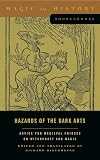
The title is a conscious reference to Harry Potter, but these are straightforward ytanslations of two fifteenth century texts denouncing a wide range of magical practices, both learned and popular one originally in German and the other originally in Latin. Hartlieb, the author of the German text, and the noble patron for whom he wrote it, Margrave Johann "the Alchemist" of Brandenburg-Kulmbach, both had a reputations for knowing more about the dark arts than was quite respectable, and show more Hartlieb' s main patron, Duke Albrecht III of Austria, had had a mistress (or wife) drowned as a witch, whose daughter Hartlieb may have married. The book combines very informed descriptions of magic (chiefly divination) with apparently earnest pleas to suppress it. Molitoris had a more conventional posito as a lcreical eemy of magic. show less

Loaned to John Dale. Who purchased a copy for himself. He is the architect who will design our new sanctuary.
Lists
You May Also Like


Associated Authors
Statistics
- Works
- 15
- Also by
- 4
- Members
- 1,354
- Popularity
- #18,990
- Rating
- 3.8
- Reviews
- 8
- ISBNs
- 58
- Languages
- 7
- Favorited
- 3