
Jean Anouilh (1910–1987)
Author of Antigone
About the Author
Jean Anouilh was born on June 23, 1910, in France. Anouilh studied law as a teenager and worked briefly in advertising. He soon became aware of his strong attraction to the theatre and became one of France's foremost playwrights and screenwriters. Anouilh's works are noted for their theatrical show more conventions. His plays, many of which are bleak dramas, feature characters facing highly moral dilemmas. He uses such conventions as flashbacks, role reversals, and play-within-a-play to achieve dramatic effects. Anouilh received a New York Drama Critics Circle Award for his play Waltz of the Toreadors and a Tony award for Thieves Carnival. Other well-known works include Antigone, Eurydice and the film Pattes Blanches. Anouilh suffered a heart attack and died in 1987. (Bowker Author Biography) show less
Image credit: Jean Anouilh
Series
Works by Jean Anouilh
Ardele / The Lark / Restless Heart / Time Remembered / Mademoiselle Colombe (1959) 80 copies, 1 review
Plays — Author — 33 copies
Ring Round the Moon / Mademoiselle Colombe / The Rehearsal / Cecile, or The School for Fathers (1951) 16 copies
Ardele / The Waltz of the Toreadors / It's Later Than You Think / Poor Bitos (1956) — Author — 12 copies
La Vicomtesse d'Eristal n'a pas reçu son balai mécanique : souvenirs d'un jeune homme (1987) 6 copies
Commedie amare e in costume 4 copies
The Collected Plays, Volume I: The Ermine; Thieves' Carnival; Restless Heart; Traveller Without Luggage; Dinner with the Family (1966) 4 copies
Five Plays Vol II - Restless Heart - Time Remembered - Adèle - Mademoiselle Colombe - The Lark (1978) 3 copies
Dear Antoine; or, The Love That Failed / Ne réveillez pas Madame ... / The Director of the Opera (2008) 3 copies
Μήδεια: Σε μία πράξη. Ιεζαβέλ: Σε τρεις πράξεις (Médée. Jésabel); (Greek edition) — Author — 2 copies
The Ermine 2 copies
Nouvelles pièces grinçantes 2 copies
PAPATYA FALI 1 copy
RING ROUND THE MOON. A Charade with Music. Translated by Christopher Fry. With a Preface by Peter Brook. (1950) 1 copy
Le boulanger, la boulangère et le petit mitron / Becket, or The Honor of God / Dear Antoine; or, The Love That Failed (1970) 1 copy
Shakespeare: Trois Comédies 1 copy
Becket ou l'honoeur de Dieu 1 copy
Жил-был каторжник 1 copy
Le Directeur de l'Opéra: [Paris, Comédie des Champs-Élysées-Claude Sainval, 27 septembre 1972] 1 copy
Μπέκετ ή η τιμή του Θεού 1 copy
Drei Stücke 1 copy
Antigone: Annotations 1 copy
Teatro 5 : piezas chirriantes — Author — 1 copy
Collected Plays: v. 2 (Time Remembered ~ Point of Departure ~ Antigone ~ Romeo and Jeannette ~ Medea) (1967) 1 copy
Teatro di Anouilh 1 copy
Den forelskede kamphane 1 copy
2 pièces brillantes c.1953 : /'Invitation au chateau - la Répétition ou l'amour puni — Author — 1 copy
Becket l'alouette — Author — 1 copy
Associated Works
Tagged
Common Knowledge
- Canonical name
- Anouilh, Jean
- Legal name
- Anouilh, Jean Marie Lucien Pierre
- Birthdate
- 1910-06-23
- Date of death
- 1987-10-03
- Gender
- male
- Education
- University of Paris (law - not completed)
Lycée Chaptal - Occupations
- playwright
screenwriter
advertising copywriter
director - Organizations
- Comédie des Champs-Élysées, Paris (Secrétaire général, 19 30
Agence de publicité Étienne Damour (Publicitaire, 19 28 | 19 30)
Grands Magasins du Louvre(Employé, 19 28) - Awards and honors
- Prix mondial Cino Del Duca (1970)
Grand Prix du Théâtre de l'Académie française (1980) - Relationships
- Anouilh, Caroline (daughter)
- Short biography
- Jean Anouilh est un écrivain et dramaturge français né le 13 juin 1910 à Bordeaux et mort le 3 octobre 1987 à Lausanne, en Suisse. Dès le lycée, Jean Anouilh se découvre une passion pour le théâtre mais c'est une représentation de Siegried de Jean Giraudoux, en 1928, qui le décide à écrire pour le théâtre, une activité qu’il poursuivra durant la guerre et l’occupation allemande (Antigone, en 1942, souleva d’ailleurs une violente polémique quant à la supposée dimension politique de l'oeuvre). À partir de 1961, il s’est davantage tourné vers la mise en scène et a contribué à faire connaitre Samuel Beckett et Eugène Ionesco. Il s'est également occupé de l'adaptation de pièces de théâtre étrangères, notamment plusieurs de Shakespeare.
Les pièces d’Anouilh oscillent entre comédie et drame, qu'il a lui-même classées en différentes catégories selon leurs thèmes et leur esprit : Pièces roses, Pièces noires, Pièces brillantes, Pièces grinçantes, Pièces costumées, Pièces baroques, Pièces secrètes et Pièces farceuses. Dans son oeuvre théâtrale et dans ses comédies, l’humour y est féroce et le cynisme omniprésent. L’œuvre d’Anouilh est avant tout empreinte d’un pessimisme profond. - Cause of death
- heart attack
- Nationality
- France (birth)
- Birthplace
- Cérisole, Bordeaux, Gironde, Nouvelle-Aquitaine, France
- Places of residence
- Bordeaux, France
- Place of death
- Lausanne, Switzerland
- Burial location
- Cimetière communal, Pully, Vaud, Switzerland
- Associated Place (for map)
- France
Members
Reviews

Anouilh's theme is said to be the quandary of the upright individual in a corrupt world. What makes this great literature is that it's not as simple as that. Becket is a complex figure incapable of love yet able to inspire the love of at least two others - his friend and adversary Henry II and his captive mistress Gwendolyn. Nor does he claim to love God. Yet he accepts martyrdom - indeed, it is as if he choreographs his martyrdom at the time and place of his choosing - because he has begun show more to love the honor of God. Good dialogue, just the right amount of cynical humor. The text doesn't read like a translation. Even the historical flaw of basing one level of the conflict on Becket's supposed Saxon origin doesn't detract from the power of the confrontation. show less
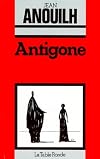
Read this French text while listening to an English-language audiobook. (translated by Christopher Nixon).
Luckily for me I got the audiobook as when I turned to the print edition I had checked out from the library, it turned out to be in French!! My French isn't good enough to have read this alone but was good enough to attempt reading it with the help of an English translation in audio :) It was an interesting experience! The L.A. TheatreWorks audiobook doesn't include stage directions so I show more would pause momentarily while I read these.
One thing that I noticed is that while Creon talks to Antigone in the familiar (tu), she responds to him in the formal (vous). This difference gives a spin to their relationship which cannot easily be duplicated in English.
Reading this knowing that it was written & first performed in Vichy France gives certain phrases and actions a special significance. However, even without that Anouilh's version of this story had some interesting twists to Sophocles' original. Creon is a more ambivalent character; he seems more reasonable, more caring and less stubborn than the one in either the Sophocles or Heaney versions. Antigone's relationships with Haemon (Creon's son) and her sister Ismene are both expanded but her motivation for her actions in this version is much more murky. By lessening the contrast between the 2 characters you would expect that the tension would be less but Anouilh manages to make their confrontation even more heartbreaking as it has overtones of a family feud (and of course, if you read into it Creon as the French colloborator acting for the Nazis and Antigone as the Resistance fighter, then the drama is heightened even further). show less
Luckily for me I got the audiobook as when I turned to the print edition I had checked out from the library, it turned out to be in French!! My French isn't good enough to have read this alone but was good enough to attempt reading it with the help of an English translation in audio :) It was an interesting experience! The L.A. TheatreWorks audiobook doesn't include stage directions so I show more would pause momentarily while I read these.
One thing that I noticed is that while Creon talks to Antigone in the familiar (tu), she responds to him in the formal (vous). This difference gives a spin to their relationship which cannot easily be duplicated in English.
Reading this knowing that it was written & first performed in Vichy France gives certain phrases and actions a special significance. However, even without that Anouilh's version of this story had some interesting twists to Sophocles' original. Creon is a more ambivalent character; he seems more reasonable, more caring and less stubborn than the one in either the Sophocles or Heaney versions. Antigone's relationships with Haemon (Creon's son) and her sister Ismene are both expanded but her motivation for her actions in this version is much more murky. By lessening the contrast between the 2 characters you would expect that the tension would be less but Anouilh manages to make their confrontation even more heartbreaking as it has overtones of a family feud (and of course, if you read into it Creon as the French colloborator acting for the Nazis and Antigone as the Resistance fighter, then the drama is heightened even further). show less

Inspired by current events I went back to read classics from an earlier Resistance that I first encountered in a university French class. The title character remains a compelling one, both staunch and uncertain, a little lost and wholly driven. (Re)discovering that Anouilh is pushing the whole existentialist idea of the Absurd, in which her sacrifice is meaningless even at last to her (and that there is perhaps an integrity in that meaningless choice, but no vindication of righteousness), show more feels like a betrayal. show less
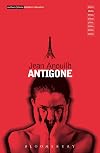
I’m so excited to finally be posting a mini review of one of my favourite french plays, Antigone! Antigone is a retelling of Sophocles’ Antigone from Ancient Greece, adapted by Jean Anouilh during World War II. While the play is close to eighty years old now, it fits the current trend of retelling ancient myths and examining classics from a modern perspective.
The play follows Antigone as she attempts to bury her dead brother even though it’s against the laws of her uncle’s show more authoritarian regime. As Antigone debates with her uncle the nature of happiness and freedom versus laws and order, the pair also explore the influence of nostalgia on memories from childhood. I loved the contrast between the idealism of youth and the reality of adulthood through the young character of Antigone, as well as the idea of destiny (Antigone’s father is the famed Oedipus, so she feels that she must follow in his footsteps.)
Antigone is a tragedy and despite knowing that all will not end well, Anouilh manages to suspend that to craft an amazing play. In my opinion, the play reads very well, and I don’t think you necessarily have to see it performed to appreciate the writing, though of course the adaption on Youtube I watched was equally amazing.
Rating 5/5: The play is a short and a simple read, the characters all incredibly written. If you ever have the chance to see Antigone in person (I wish I did!) I’d highly recommend it. If not, I’d recommend the read for anyone who is a fan of Madeline Miller or the musical Hadestown! show less
The play follows Antigone as she attempts to bury her dead brother even though it’s against the laws of her uncle’s show more authoritarian regime. As Antigone debates with her uncle the nature of happiness and freedom versus laws and order, the pair also explore the influence of nostalgia on memories from childhood. I loved the contrast between the idealism of youth and the reality of adulthood through the young character of Antigone, as well as the idea of destiny (Antigone’s father is the famed Oedipus, so she feels that she must follow in his footsteps.)
Antigone is a tragedy and despite knowing that all will not end well, Anouilh manages to suspend that to craft an amazing play. In my opinion, the play reads very well, and I don’t think you necessarily have to see it performed to appreciate the writing, though of course the adaption on Youtube I watched was equally amazing.
Rating 5/5: The play is a short and a simple read, the characters all incredibly written. If you ever have the chance to see Antigone in person (I wish I did!) I’d highly recommend it. If not, I’d recommend the read for anyone who is a fan of Madeline Miller or the musical Hadestown! show less
Lists
Awards


You May Also Like


Associated Authors
Statistics
- Works
- 147
- Also by
- 10
- Members
- 5,675
- Popularity
- #4,359
- Rating
- 3.9
- Reviews
- 66
- ISBNs
- 310
- Languages
- 13
- Favorited
- 12


