
Gerry Conway (1952–2026)
Author of Essential Spider-Man, Volume 6
About the Author
Image credit: Gerry Conway speaking at the 2019 Phoenix Fan Fusion in Phoenix, Arizona. By Gage Skidmore, CC BY-SA 3.0, https://commons.wikimedia.org/w/index.php?curid=79271999
Works by Gerry Conway
Webslinger: Unauthorized Essays On Your Friendly Neighborhood Spider-man (Smart Pop series) (2007) — Editor — 29 copies
Drácula 19 copies
Hardy Boys The New Case Files #1: Crawling with Zombies (Hardy Boys New Case Files) (2010) 17 copies, 1 review
Marvel Masterworks, Volume 155: The Amazing Spider-Man Volume 13 [#121-131] (2011) — Author — 16 copies, 1 review
Marvel Masterworks, Volume 192: The Amazing Spider-Man Volume 15 [#143-155] (2013) 16 copies, 1 review
Marvel Masterworks, Volume 182: The Amazing Spider-Man Volume 14 [#132-142 + Giant-Size Super-Heroes #1] (2012) 16 copies
Marvel Masterworks, Volume 233: The Avengers Volume 16 [#150-163 + Annual #6 + Super Villain Team-Up #9] (2016) 14 copies
Marvel Masterworks, Volume 206: Daredevil Volume 8 [#75-84 + Amazing Adventures #1-8] (2014) 12 copies
Marvel Masterworks, Volume 328: Werewolf By Night Volume 1 [Marvel Spotlight #2-4 + Werewolf by Night #1-8 + Marvel Team-Up #12] (2022) 11 copies
Marvel Masterworks, Volume 269: Marvel Team-Up Volume 4 [#31-40 + Giant-Size Spider-Man #4-5] (2019) 11 copies
Marvel Masterworks, Volume 188: The Fantastic Four Volume 14 [#142-150 + Giant-Size Super-Stars #1 + Giant-Size Fantastic Four #2 + Avengers #127] (2012) 9 copies, 1 review
Justice League of America: The Wedding of the Atom and Jean Loring (JLA (Justice League of America)) (2020) 9 copies
Savage Tales Vol 1 #7 Nov 1974 — Editor — 5 copies
Swamp Thing vol. 1 #20 4 copies
Unknown Worlds of Science Fiction #2 — Contributor — 4 copies
Spider-Man: Vidas Paralelas 4 copies
Batman Vol. 1 #359 4 copies
Batman Vol. 1 #358 4 copies
Batman Vol. 1 #357 — Author — 4 copies
Batman Vol. 1 #341 4 copies
Unknown Worlds of Science Fiction Giant Size Special — Contributor — 4 copies
Justice (1986) #13 3 copies
The Fury of Firestorm (1982) #50 3 copies
Batman Vol. 1 #338 3 copies
House of Mystery # 296 3 copies
Detective Comics # 525 3 copies
Detective Comics # 526 3 copies
House of Mystery # 294 3 copies
Legion of Super-Heroes [1980] #261 3 copies
Superboy and The Legion of Super-Heroes [1973] #258 — Author — 3 copies
The Fury of Firestorm (1982) #41 3 copies
The Fury of Firestorm (1982) #35 3 copies
Batman Vol. 1 #343 3 copies
Batman Vol. 1 #342 3 copies
Batman Vol. 1 #340 3 copies
Batman Vol. 1 #337 3 copies
The Amazing Spider-Man, Vol. 1, #149 3 copies
Legion of Super-Heroes [1980] #267 3 copies
Batman Vol. 1 #344 3 copies
The Amazing Spider-Man, Vol. 1, #137 3 copies
Marvel Team-Up [1972] #36 Featuring Spider-Man and The Frankenstein Monster — Author — 3 copies
The Amazing Spider-Man, Vol. 1, #112 3 copies
Legion of Super-Heroes [1980] #272 3 copies
Thor, Vol. 1, # 236 3 copies
Marvel Team-Up [1972] #37 Featuring Spider-Man and Man-Wolf — Author — 3 copies
Batman Vol. 1 #356 3 copies
Batman Vol. 1 #354 — Author — 3 copies
House of Secrets #140 — Author — 3 copies
The Fury of Firestorm (1982) #45 3 copies
Marvel Team-Up [1972] #32 Featuring The Human Torch and The Son of Satan — Author — 2 copies
Justice League of America [1960] #164 — Author — 2 copies
Secret Origins (1986-1990) #04 2 copies
The Titans # 10 2 copies
Thor, Vol. 1, # 213 2 copies
The Amazing Spider-Man, Vol. 1, #111 2 copies
Justice (1986) #10 2 copies
Wonder Woman, Vol. 1 #329 2 copies
Amazing Adventures, Vol. 2 #18 2 copies
Carnage, Vol. 3: What Dwells Beneath 2 copies
Atari Force #5 2 copies
The Amazing Spider-Man, Vol. 1, #143 2 copies
The Amazing Spider-Man, Vol. 1, #115 2 copies
The Amazing Spider-Man, Vol. 1, #119 2 copies
The Amazing Spider-Man, Vol. 1, #120 2 copies
The Amazing Spider-Man, Vol. 1, #134 2 copies
The Incredible Hulk "AT BAY" 1981 Book and Recording Set (with 45 RPM Record) (PR-11) (1981) 2 copies
The Amazing Spider-Man, Vol. 1, #142 2 copies
The Amazing Spider-Man, Vol. 1, #146 2 copies
Amazing Adventures, Vol. 2 #19 2 copies
Detective Comics # 520 2 copies
House of Mystery # 292 2 copies
Thor, Vol. 1, # 226 2 copies
A Duel Of Demons 2 copies
Freedom Fighters (1976) #2 2 copies
Thor, Vol. 1, # 194 2 copies
Thor, Vol. 1, # 221 2 copies
Thor, Vol. 1, # 230 2 copies
Thor, Vol. 1, # 231 2 copies
Thor, Vol. 1, # 232 2 copies
Thor, Vol. 1, # 233 2 copies
Thor, Vol. 1, # 234 2 copies
Thor, Vol. 1, # 235 2 copies
Thor, Vol. 1, # 237 2 copies
Thor, Vol. 1, # 238 2 copies
Countdown Special #2 Atom 2 copies
Countdown Special #1 Atom 2 copies
In The Wind 2 copies
Author’s Page 2 copies
Batman Vol. 1 #350 2 copies
Legion of Super-Heroes [1980] #269 2 copies
Legion of Super-Heroes [1980] #274 2 copies
The Phantom Stranger (1969) #11 2 copies
Savage Tales Vol 1 #10 May 1975 — Editor — 2 copies
Legion of Super-Heroes [1980] #263 2 copies
Legion of Super-Heroes [1980] #264 2 copies
Legion of Super-Heroes [1980] #270 2 copies
Legion of Super-Heroes [1980] #271 2 copies
Legion of Super-Heroes [1980] #273 2 copies
Legion of Super-Heroes [1980] #275 2 copies
Legion of Super-Heroes [1980] #276 2 copies
The Fury of Firestorm (1982) #47 2 copies
Legion of Super-Heroes [1980] #278 2 copies
The Roaches! 2 copies
The Man Who Cried Werewolf! 2 copies
Web of Spider-Man [1985] #70 2 copies
BB, 12: Laatste lach! — Author — 2 copies
BB, 02: Batman vs. Poison Ivy — Author — 2 copies
Batman Vol. 1 #349 2 copies
Detective Comics # 516 2 copies
The Spectacular Spider-Man Annual #8 2 copies
Batman Vol. 1 #348 2 copies
De spectaculaire Spider-man 2 copies
Detective Comics # 511 2 copies
Weird Western Tales #45 2 copies
Detective Comics # 522 2 copies
Detective Comics # 521 2 copies
Iron Man Vol. 1 #91 2 copies
Metal Men [1963] #56 2 copies
The Fury of Firestorm (1982) #19 2 copies
John Jameson : Hombre Lobo 2 copies
Kull the Conqueror # 5 — Author — 2 copies
Kull the Conqueror # 7 — Author — 2 copies
Action Comics # 457 2 copies
Marvel Spotlight [1971] #03 (Werewolf by Night) — Author — 2 copies
Kull the Conqueror # 9 — Author — 2 copies
Werewolf by Night [1972] #2 — Author — 2 copies
Thundercats (1986) #8 2 copies
The Fury of Firestorm (1982) #10 2 copies
Marvel Tales [1964] #108 1 copy
Werewolf by Night [1972] #9 — Author — 1 copy
Fox/O'Neil/Friedrich/Wein/Bates/Pasko/Conway/Others silver and bronze age Justice League of America runs (1982) 1 copy
ThunderCats No. 16 1 copy
ThunderCats No. 14 1 copy
The Mighty Thor No. 12 1 copy
Marvel Spotlight [1971] #02 (Werewolf by Night) — Author — 1 copy
Conan: Nattens skog 1 copy
Marvel Spotlight [1971] #04 (Werewolf by Night) — Author — 1 copy
Werewolf by Night [1972] #4 — Author — 1 copy
Werewolf by Night [1972] #3 — Author — 1 copy
The Secret Society of Super Villains (1976-1978) #12 — Author — 1 copy
Classic Punisher #1 1 copy
Justice (1986) #11 1 copy
Dracula Lives! #1 1 copy
Atari Force #s 1-9 1 copy
Amazing Spider-Man Epic Collection: Spider-Man Or Spider-Clone? (Amazing Spider-Man (1963-1998)) 1 copy
The Avengers 156 (CB) 1 copy
Teräsmies vastaan Hämähäkki 1 copy
O Homem-Aranha: Mary Jane 1 copy
Tiger-Man 1 1 copy
Book of the Dead 2 1 copy
Action Comics 457 1 copy
Ghost Rider, Vol. 2 #21 — Author — 1 copy
Marvel Tales [1964] #212 — Author — 1 copy
Spiderman (3) 1 copy
El poderoso Thor (3) 1 copy
Spiderman (4) 1 copy
Web of Spider-Man #63 1 copy
Spectacular Spider-Man #173 1 copy
Marvel Tales [1964] #209 — Author — 1 copy
Firestorm, The Nuclear Man 1-4 & The Fury of Firestorm, The Nuclear Man 1-100 (Gerry Conway and John Ostrander runs) (1982) 1 copy
Super-Team Family No. 3 1 copy
Ghost Rider, Vol. 2 #23 — Author — 1 copy
Firestorm 2 1 copy
Giant-Size Spider Man 05 1 copy
Satana: A Fire In Hell 1 copy
Deathwatch! 1 copy
Occupation Force 1 copy
Good News From The Vatican 1 copy
Iron Man Vol. 1 #35 1 copy
Iron Man Vol. 1 #37 1 copy
Iron Man Vol. 1 #38 1 copy
Iron Man Vol. 1 #40 1 copy
Iron Man Vol. 1 #41 1 copy
Freedom Fighters (1976) #1 — Author — 1 copy
Firestorm 3 1 copy
Kull the Conqueror # 10 — Author — 1 copy
Ka-zar (Series 2) 07 1 copy
Ka-zar (Series 2) 08 1 copy
Ka-zar (Series 2) 09 1 copy
Ka-zar (Series 2) 10 1 copy
Kull the Conqueror # 4 — Author — 1 copy
Kull the Conqueror # 6 — Author — 1 copy
Thor, Vol. 1, # 227 1 copy
Astonishing Tales (1970) #4 1 copy
Astonishing Tales (1970) #5 1 copy
Astonishing Tales (1970) #6 1 copy
Where Monsters Dwell # 33 1 copy
Worlds Unknown #6 1 copy
Thor, Vol. 1, # 228 1 copy
Thor, Vol. 1, # 225 1 copy
Firestorm 4 1 copy
Thor, Vol. 1, # 201 1 copy
Firestorm 5 1 copy
The Destructor # 4 1 copy
Thor, Vol. 1, # 195 1 copy
Thor, Vol. 1, # 203 1 copy
Thor, Vol. 1, # 223 1 copy
Thor, Vol. 1, # 212 1 copy
Thor, Vol. 1, # 215 1 copy
Thor, Vol. 1, # 217 1 copy
Thor, Vol. 1, # 218 1 copy
Thor, Vol. 1, # 219 1 copy
Thor, Vol. 1, # 220 1 copy
Web of Spider-Man [1985] #66 1 copy
Fantastic Four [1961] #151 — Author — 1 copy
Fantastic Four [1961] #148 — Author — 1 copy
Marvel Tales [1964] #104 1 copy
The Incredible Hulk [1968] #146 — Author — 1 copy
Fantastic Four [1961] #150 1 copy
Funeral Service 1 copy
Superman [1939] #350 1 copy
Astonishing Tales (1970) #8 — Contributor — 1 copy
The Avengers, Vol. 1 #154 1 copy
Iron Man Vol. 1 #92 1 copy
Web of Spider-Man [1985] #68 1 copy
Special Feature 1 copy
Thor, Vol. 1, # 206 1 copy
The Avengers, Vol. 1 #155 1 copy
Iron Man Vol. 1 #39 1 copy
King Conan: The God Below 1 copy
Dark Tomorrow 1 copy
The Unspoken Invitation 1 copy
1st Issue Special #12: Starman — Author — 1 copy
Batman Vol. 1 #351 1 copy
Countdown Special: Eclipso 1 copy
Countdown Special: Kamandi 1 copy
Countdown Special: Omac 1 copy
The Avengers, Vol. 1 #152 1 copy
Superman n. 17 1 copy
Superman n. 18 1 copy
Superman n. 21 1 copy
Superman n. 22 1 copy
Superman n. 23 1 copy
Superman n. 40 1 copy
Action Comics # 518 1 copy
Fantastic Four [1961] #134 1 copy
Wonder Woman, Vol. 1 #236 1 copy
Justice #9 - Haunted Heart 1 copy
Justice League of America [1960] Annual #2 — Author — 1 copy
Firestorm: The Nuclear Man #1 — Author — 1 copy
Fantastic Four [1961] #140 1 copy
"Curse of the Werewolf", By Herb Davidson & Charlotte Sanders, Power Records & Marvel Comics, 45 RPM, PR 17, Fine- — Author — 1 copy
Marvel Tales [1964] #126 1 copy
House of Mystery # 196 1 copy
Action Comics # 519 1 copy
Thor, Vol. 1, # 222 1 copy
New Gods 15 — Author — 1 copy
Wonder Woman, Vol. 1 #278 1 copy
Conan : Pedon henki 1 copy
Conan : Punaiset kivet 1 copy
Conan : Syvyyksien jumala 1 copy
Conan : Veljien veri 1 copy
House of Mystery # 188 1 copy
Weird Western Tales #66 1 copy
Ihmesarja 11: Hämähäkkimies 1 copy
Weird Western Tales #46 1 copy
Weird Western Tales #47 1 copy
Weird Western Tales #58 1 copy
Weird Western Tales #63 1 copy
Weird Western Tales #65 1 copy
Weird Western Tales #67 1 copy
Detective Comics # 510 1 copy
Associated Works
Crossover Classics: The Marvel/DC Collection, Volume One (1997) — Contributor — 80 copies, 2 reviews
Doctor Strange & Doctor Doom: Triumph & Torment [Collection] (2013) — Contributor — 68 copies, 2 reviews
Marvel Masterworks, Volume 211: Ms. Marvel Volume 1 [#1-14] (2014) — Contributor — 28 copies, 1 review
All-New, All-Different Point One #1 — Contributor — 4 copies
Legion of Monsters [1975] #1 — Author — 3 copies
Transformers 219: Recipe for Disaster! part three / Survivors! (part one) (1989) — Author — 1 copy, 1 review
The Transformers 87: Target: 2006 (Part 9: "Back to the Future!") (1986) — Author — 1 copy, 1 review
Transformers 218: Recipe for Disaster! part two / Race With The Devil (part four) (1989) — Author — 1 copy, 1 review
The Transformers 185: Space Pirates! (part four: The Tender Trap!) (1988) — Author — 1 copy, 1 review
Transformers 217: Recipe for Disaster! part one / Race With The Devil (part three) (1989) — Author — 1 copy, 1 review
The Transformers 187: Space Pirates! (part six: The End of the World!) (1988) — Author — 1 copy, 1 review
Tagged
Common Knowledge
- Canonical name
- Conway, Gerry
- Legal name
- Conway, Gerard Francis
- Birthdate
- 1952-09-10
- Date of death
- 2026-04-26
- Gender
- male
- Nationality
- USA
- Birthplace
- New York, New York, USA
- Place of death
- Thousand Oaks, California, USA
- Associated Place (for map)
- USA
Members
Reviews

By rights, I should have read this between Crisis on Multiple Earths, Volume 5 and Crisis on Infinite Earths: The Absolute Edition, but the Interlibrary Loan Office had some trouble in sourcing it, and rather than delay reading what came after, I plowed on ahead. But I'm glad I was able to come back to this: Gerry Conway turns out to probably be my favorite writer of these volumes, able to mix solid character work with great plots that actually have time and space to unfold.
The first story show more here isn't the greatest, but it's not the worst either: "Targets of Two Worlds"/"Countdown to Crisis!"/"Crisis in Limbo!" features the Ultra-Humanite (now in a gorilla body, apparently long after I last saw him in The Superman Chronicles, Volume One) putting together a new Secret Society of Super-Villains in order to take on ten superheros on Earths-One and -Two, the removal of which will apparently set off an historical chain reaction that will remove all superheroes from one of the two Earths. Why? Science, apparently. This results in one of those formulaic stories where (like in some of the Gardner Fox ones) we see villains take on heroes in turn. It's okay, but where it gets kinda fun is when the Ultra-Humanite cheats half of the villains out on their due and they turn on each other. I don't know why he does it-- it seems like a whole planet ought to be enough to split between ten villains-- but I liked the change of perspective, and the final throwdown in a delight. There's some George Pérez art here, but he's not well-served by John Beatty on inks, who obscures Pérez's trademark detail work.
The real fun of this volume is the five-part "Crisis on Earth-Prime!", which weaves between Justice League of America (set on 1980s Earth-One) and All-Star Squadron (set on 1940s Earth-Two), and also manages to work in Earth-Prime in the 1960s and 1980s and the villains of Earth-Three! It's a blast, and I read the whole thing nearly straight through because I was enjoying it so much. Gerry Conway and Roy Thomas give us a twisting, turning time travel tale, with three different groups of heroes bouncing backwards and forwards through time and dimensions to stop Per Degaton from destroying one Earth (our Earth, actually, the one of the readers!) and conquering another. For once, the time travel logic actually holds up for the most part, and with five issues, the story has time to breathe and not feel like a blob of incident.
There are five heroes apiece from the Justice League, Justice Society, and All-Star Squadron present, and Conway and Thomas prevent them from becoming indistinct; each gets character-appropriate dialogue and actions. (This seems like faint praise, but in the Gardner Fox era, you could have often switched the heroes' word balloon tails around, and I doubt anyone would have noticed.) The Crime Syndicate of Earth-Three even felt more like actual characters than they have in the past. Firestorm's attempts to make it with Power Girl were amusing, and I even felt sorry for Per Degaton at the story's end.
There's even some brief philosophizing here-- Per Degaton (seriously, he's supposed to be an ordinary guy from 1947, how did he get such a weird name?) uses nuclear warheads from the Cuban Missile Crisis in his plan, and the characters of both the 1980s and the 1940s comment on the amazing destructive power this presents-- including President Roosevelt himself. Small moments, perhaps, but nice ones that stop the story from being just another slugfest. This is the last Crisis on Multiple Earths volume (for now, hopefully; one more will collect all the existent Earth-One and -Two crossover stories), and it's nice to see the series end on a high note.
DC Comics Crises: « Previous in sequence | Next in sequence » show less
The first story show more here isn't the greatest, but it's not the worst either: "Targets of Two Worlds"/"Countdown to Crisis!"/"Crisis in Limbo!" features the Ultra-Humanite (now in a gorilla body, apparently long after I last saw him in The Superman Chronicles, Volume One) putting together a new Secret Society of Super-Villains in order to take on ten superheros on Earths-One and -Two, the removal of which will apparently set off an historical chain reaction that will remove all superheroes from one of the two Earths. Why? Science, apparently. This results in one of those formulaic stories where (like in some of the Gardner Fox ones) we see villains take on heroes in turn. It's okay, but where it gets kinda fun is when the Ultra-Humanite cheats half of the villains out on their due and they turn on each other. I don't know why he does it-- it seems like a whole planet ought to be enough to split between ten villains-- but I liked the change of perspective, and the final throwdown in a delight. There's some George Pérez art here, but he's not well-served by John Beatty on inks, who obscures Pérez's trademark detail work.
The real fun of this volume is the five-part "Crisis on Earth-Prime!", which weaves between Justice League of America (set on 1980s Earth-One) and All-Star Squadron (set on 1940s Earth-Two), and also manages to work in Earth-Prime in the 1960s and 1980s and the villains of Earth-Three! It's a blast, and I read the whole thing nearly straight through because I was enjoying it so much. Gerry Conway and Roy Thomas give us a twisting, turning time travel tale, with three different groups of heroes bouncing backwards and forwards through time and dimensions to stop Per Degaton from destroying one Earth (our Earth, actually, the one of the readers!) and conquering another. For once, the time travel logic actually holds up for the most part, and with five issues, the story has time to breathe and not feel like a blob of incident.
There are five heroes apiece from the Justice League, Justice Society, and All-Star Squadron present, and Conway and Thomas prevent them from becoming indistinct; each gets character-appropriate dialogue and actions. (This seems like faint praise, but in the Gardner Fox era, you could have often switched the heroes' word balloon tails around, and I doubt anyone would have noticed.) The Crime Syndicate of Earth-Three even felt more like actual characters than they have in the past. Firestorm's attempts to make it with Power Girl were amusing, and I even felt sorry for Per Degaton at the story's end.
There's even some brief philosophizing here-- Per Degaton (seriously, he's supposed to be an ordinary guy from 1947, how did he get such a weird name?) uses nuclear warheads from the Cuban Missile Crisis in his plan, and the characters of both the 1980s and the 1940s comment on the amazing destructive power this presents-- including President Roosevelt himself. Small moments, perhaps, but nice ones that stop the story from being just another slugfest. This is the last Crisis on Multiple Earths volume (for now, hopefully; one more will collect all the existent Earth-One and -Two crossover stories), and it's nice to see the series end on a high note.
DC Comics Crises: « Previous in sequence | Next in sequence » show less

I had been burning out on these collections, but volume 5 turned out to be the most successful one in a while. The first story here ("Crisis from Yesterday!"/"Crisis from Tomorrow!") is maybe not great-- more heroes fighting each other under mind control (seriously this is the dullest thing ever, stop writing it), but any story that gives a principal role to the Elongated Man is a story that gains my appreciation to some extent. The Huntress, too, which makes this some of my first real show more experience of the Earth-2 Huntress.
I did quite like "The Murderer Among Us: Crisis above Earth-One!"/"I Accuse...", which forgoes the usual throwdowns for a murder mystery aboard the JLA satellite during the joint JLA/JSA meeting. It's a fun idea, and it lets the personalities of the characters come to the fore more than they're usually able to in these stories.
The best story here, though, is "Crisis on New Genesis, or Where Have All the New Gods Gone?"/"Crisis between Two Earths, or Apokolips Now!"/"Crisis on Apokolips, or Darkseid Rising!" (yeah, really). It maybe is your standard throwdown, but with three issues, the story actually breathes a bit, and the characters' personalities actually do come through. Of course, it involves Darkseid and the New Gods, who are awesome, and I enjoy almost anything that plays with those concepts by default. It's perhaps a standard superhero story, but it's one well told; there's some great stuff in particular with the children in the underground resistance on Apokolips.
Conway gets Darkseid, too. He's resurrected in this story, having apparently been dead, and he observes: "My brief 'death' has given me a new perspective on life, gentlemen. As I floated in the spiritual limbo where Desaad's uni-cannon blast propelled me, I came to treasure the memory of living things... the soft glow of the sun at dawn, the gentle waft of a breeze across one's brow, even the scent of a flower in bloom. Yes, even a god may be affected by his own 'death.'" Darkseid then pauses for a moment, and smells a flower in his hand. "I shall never forgive myself for such weakness! Never!" he shouts, crushing the flower. Perfect.
DC Comics Crises: « Previous in sequence | Next in sequence » show less
I did quite like "The Murderer Among Us: Crisis above Earth-One!"/"I Accuse...", which forgoes the usual throwdowns for a murder mystery aboard the JLA satellite during the joint JLA/JSA meeting. It's a fun idea, and it lets the personalities of the characters come to the fore more than they're usually able to in these stories.
The best story here, though, is "Crisis on New Genesis, or Where Have All the New Gods Gone?"/"Crisis between Two Earths, or Apokolips Now!"/"Crisis on Apokolips, or Darkseid Rising!" (yeah, really). It maybe is your standard throwdown, but with three issues, the story actually breathes a bit, and the characters' personalities actually do come through. Of course, it involves Darkseid and the New Gods, who are awesome, and I enjoy almost anything that plays with those concepts by default. It's perhaps a standard superhero story, but it's one well told; there's some great stuff in particular with the children in the underground resistance on Apokolips.
Conway gets Darkseid, too. He's resurrected in this story, having apparently been dead, and he observes: "My brief 'death' has given me a new perspective on life, gentlemen. As I floated in the spiritual limbo where Desaad's uni-cannon blast propelled me, I came to treasure the memory of living things... the soft glow of the sun at dawn, the gentle waft of a breeze across one's brow, even the scent of a flower in bloom. Yes, even a god may be affected by his own 'death.'" Darkseid then pauses for a moment, and smells a flower in his hand. "I shall never forgive myself for such weakness! Never!" he shouts, crushing the flower. Perfect.
DC Comics Crises: « Previous in sequence | Next in sequence » show less

Access a version of the below that includes illustrations on my blog.
The story is set in June 1942 on Earth-Two, and involves Superman and Wonder Woman independently discovering the existence of the Manhattan Project, as well as an effort by the Axis powers to steal its secrets. Though both don't want the bomb in Nazi hands, Wonder Woman doesn't want it in any human hands, while Superman has greater faith in America to do the right thing, and in the end, the two come to blows over it all-- show more though of course, they set their differences aside to punch some Nazis.
The story, to be honest, is not the point. The point of this is to see Superman and Wonder Woman battling rendered in the beautiful art of José Luis García-López at an enormous size. In this regard, the book utterly delivers. Superman fights robot planes; Wonder Woman throws cars at Nazis; Diana Prince sneaks into military file rooms; Superman and Wonder Woman fight each other in Chicago and then on the moon. It all looks great.
Perhaps for this reason, the book fudges some Earth-Two details. Superman and Wonder Woman are drawn how their Earth-One versions looked in the 1970s, not how their Earth-Two versions looked in the 1940s. But given García-López created the style guide all DC merchandise was beholden to in the 1980s, why would you have him draw anything other than these characters' most iconic forms? The book also has things like Clark Kent working for Perry White at the Daily Planet, not-- as would be the case on Earth-Two-- him working for George Taylor at the Daily Star. On the other hand, it features Earth-Two villain Baron Blitzkrieg, and even includes a footnote referencing the Earth-Two-set World's Finest vol. 1 #246 for those who want to know his origin. So I think writer Gerry Conway is trying to have his Earth-Two cake and eat it too; use the iconic Earth-One versions of the characters because this is a story with broad appeal, but slip in some Earth-Two references for the dedicated comics nerds who worry about how such a story can exist in continuity. (Conway was at the time the writer of the adventures of the Earth-Two Wonder Woman in her self-titled comic and in World's Finest.) As far as weird continuity details go, we also learn that the moon of Earth-Two is home to the ruins of an extinct civilization, one that destroyed itself with the atomic bomb. Did any other comics writers pick up that weird nugget?
While the story doesn't need to be very good, it actually has some nice touches that elevate it. It's framed as a series of declassified reports, the moral conflict is a good one, the appearance by Albert Einstein is fun, the way Diana Prince infiltrates military records is a great sequences, and the ending has a sharp piece of irony with President Roosevelt declaring to both superheroes, "As long as I am president... America will never use the bomb to kill. Never." Ouch. I understand that Roy Thomas depicted a post-Crisis version of these events in the Young All-Stars storyline Atom and Evil (as of this writing, I am on YA-S #14, and Atom and Evil begins in issue #21), but I would have liked to have seen him weave the pre-Crisis version of All-Star Squadron into these events, which I'm sure was his long-term plan.
Anyway, if you are at all interested in this story, this oversized reprint is a gorgeous way to experience it, and I highly recommend it.
The Justice Society and Earth-Two: « Previous in sequence | Next in sequence » show less
The story is set in June 1942 on Earth-Two, and involves Superman and Wonder Woman independently discovering the existence of the Manhattan Project, as well as an effort by the Axis powers to steal its secrets. Though both don't want the bomb in Nazi hands, Wonder Woman doesn't want it in any human hands, while Superman has greater faith in America to do the right thing, and in the end, the two come to blows over it all-- show more though of course, they set their differences aside to punch some Nazis.
The story, to be honest, is not the point. The point of this is to see Superman and Wonder Woman battling rendered in the beautiful art of José Luis García-López at an enormous size. In this regard, the book utterly delivers. Superman fights robot planes; Wonder Woman throws cars at Nazis; Diana Prince sneaks into military file rooms; Superman and Wonder Woman fight each other in Chicago and then on the moon. It all looks great.
Perhaps for this reason, the book fudges some Earth-Two details. Superman and Wonder Woman are drawn how their Earth-One versions looked in the 1970s, not how their Earth-Two versions looked in the 1940s. But given García-López created the style guide all DC merchandise was beholden to in the 1980s, why would you have him draw anything other than these characters' most iconic forms? The book also has things like Clark Kent working for Perry White at the Daily Planet, not-- as would be the case on Earth-Two-- him working for George Taylor at the Daily Star. On the other hand, it features Earth-Two villain Baron Blitzkrieg, and even includes a footnote referencing the Earth-Two-set World's Finest vol. 1 #246 for those who want to know his origin. So I think writer Gerry Conway is trying to have his Earth-Two cake and eat it too; use the iconic Earth-One versions of the characters because this is a story with broad appeal, but slip in some Earth-Two references for the dedicated comics nerds who worry about how such a story can exist in continuity. (Conway was at the time the writer of the adventures of the Earth-Two Wonder Woman in her self-titled comic and in World's Finest.) As far as weird continuity details go, we also learn that the moon of Earth-Two is home to the ruins of an extinct civilization, one that destroyed itself with the atomic bomb. Did any other comics writers pick up that weird nugget?
While the story doesn't need to be very good, it actually has some nice touches that elevate it. It's framed as a series of declassified reports, the moral conflict is a good one, the appearance by Albert Einstein is fun, the way Diana Prince infiltrates military records is a great sequences, and the ending has a sharp piece of irony with President Roosevelt declaring to both superheroes, "As long as I am president... America will never use the bomb to kill. Never." Ouch. I understand that Roy Thomas depicted a post-Crisis version of these events in the Young All-Stars storyline Atom and Evil (as of this writing, I am on YA-S #14, and Atom and Evil begins in issue #21), but I would have liked to have seen him weave the pre-Crisis version of All-Star Squadron into these events, which I'm sure was his long-term plan.
Anyway, if you are at all interested in this story, this oversized reprint is a gorgeous way to experience it, and I highly recommend it.
The Justice Society and Earth-Two: « Previous in sequence | Next in sequence » show less
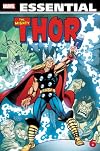
‘Essential Thor Vol. 6’ starts off with ‘Hercules Enraged’ from The Mighty Thor # 221 and ends with ‘The Flame And The Hammer’ from The Mighty Thor # 247. In between, there are plenty of pages of Marvel black and white action for a relatively small fee.
‘Hercules Enraged’ indulges in that slightly silly Marvel stand-by of having two heroes fight each other over a misunderstanding that a pair of sensible adults would have resolved in two minutes. Thor misunderstands that Herc show more has kidnapped an Asgardian woman. Does he question his trusted old ally about this? Does he give him a chance to explain his whereabouts at the time of the abduction? No! He goes in with fists flying until wise Zeus intervenes. Actually, compared to the ‘All-Wise’ Odin, who normally behaves like a spoilt six-year-old, Zeus is fairly sensible. One bonus of this tale is that Hercules hangs out with the Asgardian for several issues, until The Mighty Thor # 239 when he heads for California. Because the magazine is called ‘The Mighty Thor’, Hercules usually looks second best at fighting and has to be saved, too often, by the Thunder God. He’s a more likeable character though. It struck me reading this lot that Thor never smiles, never laughs and his dialogue mostly consists of boasting or ranting about valour and honour. He’s a pretty humourless chap overall.
Never mind. The opening stories are ably pencilled by John Buscema, usually unsuitably inked by Mike Esposito. Buscema’s work varies between good and superb and this stuff seems to be at the lower end of the spectrum. There are double-page spreads that don’t really suit his illustrative style. Perhaps he was getting bored after a long run on the magazine. Issue # 227 sees the advent of Rich Buckler on pencils with layouts by Jack Kirby. Unfortunately, Jack Kirby did the layouts several years before on earlier issues of Thor and Rich Buckler copied them. As Galactus, Hercules, Thor and Firelord battle Ego, a living planet gone mad, there is hardly a panel or a pose that is not swiped. To be fair, Buckler is capable of doing good work of his own – see ‘Deathlok The Demolisher’ – so this art is probably evidence of homage to King Kirby rather than a desperate lack of talent. Opinions vary. Personally, I incline to the homage theory and rather like it in small doses.
Buscema returns with issue # 231 and seems reinvigorated, an impression helped by some beautiful inking from Dick Giordano. Only for a couple of issues, though, and then it’s back to Buscema-Sinnott which means that Big John did the basic drawings and Joltin’ Joe did the finishes. As few can do layouts like Buscema, who is an excellent storyteller, and few inkers are as slick and competent as Sinnott, the end result is lovely to look at. One or the other, probably Sinnott, developed a nice line or blob on Asgardian helmets, making them look very metallic. It’s easy to take this art for granted, page after page, but if you put it next to some lesser work the quality really stands out.
The writing is pretty good, too. Most of it is by Gerry Conway, giving us old favourites like Pluto, Galactus, Loki, Ulik and, a new bad guy in an interesting story, the Dweller In Darkness. Roy Thomas takes over briefly for a tale involving Egyptian deities and then Len Wein handles the last few issues in this volume. His Time Twisters tale was excellent. My only criticism of Wein would be that mighty Mjolnir is not a ray-gun. Too often here Thor points it at people and a blast comes out. Worse, it comes out of the small surface on the side. Historically, I believe, Mjolnir could sometimes absorb energies hurled at its holder and then beam them back at the enemy, said energies being emitted from the top of the hammer where the circle is, in a line following through from the direction of the handle, not at right angles to it. But this was rare. Thor does not depend on ray-gun Mjolnir. He is mighty, damn it! He thumps his enemies so they fly away at sixty miles an hour and crash through a wall in that mighty Marvel manner which is so unlike real life. In real life, if you thump someone you hurt them, which isn’t nice. Often you hurt your hand. What’s worse, they thump you back. Fantasy fighting or ‘action’ is much more fun than the real thing.
Seventies Marvel is seen by some as a decline from the great days of the sixties but I’m not so sure that‘s true. The new hippy writers bought a new approach. Often they had read the old stuff and revived things that Lee and Kirby had forgotten about, like Jane Foster, Loki’s old sidekick Igron and Sif’s transporter powers. Harassed, perhaps, by feminist seventies girl-friends, they tended to give women a stronger role, so Jane Foster becomes more of an asset than a damsel in distress. Conway was making similar changes in ‘The Fantastic Four’ at this time. There’s still plenty of action and dastardly villains but with a new sensibility. It’s ‘traditional values in a modern setting’, as John Prescott MP used to say about New Labour in Nineties Britain.
I rather like it.
Eamonn Murphy
This review first appeared at https://www.sfcrowsnest.info/ show less
‘Hercules Enraged’ indulges in that slightly silly Marvel stand-by of having two heroes fight each other over a misunderstanding that a pair of sensible adults would have resolved in two minutes. Thor misunderstands that Herc show more has kidnapped an Asgardian woman. Does he question his trusted old ally about this? Does he give him a chance to explain his whereabouts at the time of the abduction? No! He goes in with fists flying until wise Zeus intervenes. Actually, compared to the ‘All-Wise’ Odin, who normally behaves like a spoilt six-year-old, Zeus is fairly sensible. One bonus of this tale is that Hercules hangs out with the Asgardian for several issues, until The Mighty Thor # 239 when he heads for California. Because the magazine is called ‘The Mighty Thor’, Hercules usually looks second best at fighting and has to be saved, too often, by the Thunder God. He’s a more likeable character though. It struck me reading this lot that Thor never smiles, never laughs and his dialogue mostly consists of boasting or ranting about valour and honour. He’s a pretty humourless chap overall.
Never mind. The opening stories are ably pencilled by John Buscema, usually unsuitably inked by Mike Esposito. Buscema’s work varies between good and superb and this stuff seems to be at the lower end of the spectrum. There are double-page spreads that don’t really suit his illustrative style. Perhaps he was getting bored after a long run on the magazine. Issue # 227 sees the advent of Rich Buckler on pencils with layouts by Jack Kirby. Unfortunately, Jack Kirby did the layouts several years before on earlier issues of Thor and Rich Buckler copied them. As Galactus, Hercules, Thor and Firelord battle Ego, a living planet gone mad, there is hardly a panel or a pose that is not swiped. To be fair, Buckler is capable of doing good work of his own – see ‘Deathlok The Demolisher’ – so this art is probably evidence of homage to King Kirby rather than a desperate lack of talent. Opinions vary. Personally, I incline to the homage theory and rather like it in small doses.
Buscema returns with issue # 231 and seems reinvigorated, an impression helped by some beautiful inking from Dick Giordano. Only for a couple of issues, though, and then it’s back to Buscema-Sinnott which means that Big John did the basic drawings and Joltin’ Joe did the finishes. As few can do layouts like Buscema, who is an excellent storyteller, and few inkers are as slick and competent as Sinnott, the end result is lovely to look at. One or the other, probably Sinnott, developed a nice line or blob on Asgardian helmets, making them look very metallic. It’s easy to take this art for granted, page after page, but if you put it next to some lesser work the quality really stands out.
The writing is pretty good, too. Most of it is by Gerry Conway, giving us old favourites like Pluto, Galactus, Loki, Ulik and, a new bad guy in an interesting story, the Dweller In Darkness. Roy Thomas takes over briefly for a tale involving Egyptian deities and then Len Wein handles the last few issues in this volume. His Time Twisters tale was excellent. My only criticism of Wein would be that mighty Mjolnir is not a ray-gun. Too often here Thor points it at people and a blast comes out. Worse, it comes out of the small surface on the side. Historically, I believe, Mjolnir could sometimes absorb energies hurled at its holder and then beam them back at the enemy, said energies being emitted from the top of the hammer where the circle is, in a line following through from the direction of the handle, not at right angles to it. But this was rare. Thor does not depend on ray-gun Mjolnir. He is mighty, damn it! He thumps his enemies so they fly away at sixty miles an hour and crash through a wall in that mighty Marvel manner which is so unlike real life. In real life, if you thump someone you hurt them, which isn’t nice. Often you hurt your hand. What’s worse, they thump you back. Fantasy fighting or ‘action’ is much more fun than the real thing.
Seventies Marvel is seen by some as a decline from the great days of the sixties but I’m not so sure that‘s true. The new hippy writers bought a new approach. Often they had read the old stuff and revived things that Lee and Kirby had forgotten about, like Jane Foster, Loki’s old sidekick Igron and Sif’s transporter powers. Harassed, perhaps, by feminist seventies girl-friends, they tended to give women a stronger role, so Jane Foster becomes more of an asset than a damsel in distress. Conway was making similar changes in ‘The Fantastic Four’ at this time. There’s still plenty of action and dastardly villains but with a new sensibility. It’s ‘traditional values in a modern setting’, as John Prescott MP used to say about New Labour in Nineties Britain.
I rather like it.
Eamonn Murphy
This review first appeared at https://www.sfcrowsnest.info/ show less
Lists
Awards


You May Also Like


Associated Authors
Statistics
- Works
- 957
- Also by
- 82
- Members
- 4,188
- Popularity
- #6,005
- Rating
- 3.5
- Reviews
- 108
- ISBNs
- 289
- Languages
- 12
- Favorited
- 1