
Sharon Lamb
Author of Packaging Girlhood: Rescuing Our Daughters from Marketers' Schemes
About the Author
Sharon Lamb is a licensed psychologist, and chair and professor in the Department of Counseling and School Psychology in the College of Education and Human Development at the University of Massachusetts Boston.
Works by Sharon Lamb
The Secret Lives of Girls: What Good Girls Really Do--Sex Play, Aggression, and Their Guilt (2002) 72 copies
Packaging Boyhood: Saving Our Sons from Superheroes, Slackers, and Other Media Stereotypes (2009) 36 copies, 2 reviews
Tagged
Common Knowledge
- Birthdate
- 1955-09-11
- Gender
- female
- Occupations
- psychologist
college professor - Organizations
- St. Michael's College
- Nationality
- USA
- Places of residence
- Vermont, USA
- Associated Place (for map)
- Vermont, USA
Members
Reviews
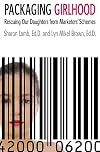
This book should be required reading for anyone who has a daughter, plans to someday have a daughter, or is at all concerned with the well-being of girls. It gives a detailed and insightful breakdown of all the things that can mess with girls' heads, both the obvious (Barbie, teen magazines) and the things you might not pay attention to (boxes for board games, the lack of girl central characters in picture books). What I really love about the book, though, is it doesn't just say "All these show more awful things are happening to girls oh no oh no!", it describes ways parents can actively engage their daughters, even really little ones, in conversations about this stuff and teach them to be critical consumers. It made me excited to have smart, self-confident, savvy girls one day. show less
From the preface: "we've been told our world empowers girls by offering them anyting they want, including infinite sights and endless ports of call. In reality, it's a world designed by media and marketing executives that targets children as consumers, channels girls' desires, and entices them into predictable types: 'pretty pink dolls,' 'cute little shoppers,' and 'hott teens'."
Packaging Girlhood covers the influences on girls from roughly ages 3 through 17. The chapters cover shopping (the show more products available and how they are marketed), TV and film, music, books and extra-curricular activities. The final chapter gives sample conversations for parents when discussing culture with their daughters.
Although I was familiar with a lot of the authors' concerns, and they did repeat themselves quite a bit, I found this to be an extremely interesting and inspiring read. I think what made this book different from others that I've read on this topic is that there was always a psychological POV involved (including what it is about these products that appeals to the girls, but also the psychology of the marketers and of parents). I especially enjoyed the chapter on books, and the literary critique from a psychological approach.
I borrowed this book from the library, but I am ordering my own copy to keep as a reference.
Recommended for: obviously the parents of girls, but also anyone who works with girls, and anyone interested in cultural studies or consumerism. The authors have also written Packaging Boyhood: Saving Our Sons from Superheroes, Slackers, and Other Media Stereotypes. show less
Packaging Girlhood covers the influences on girls from roughly ages 3 through 17. The chapters cover shopping (the show more products available and how they are marketed), TV and film, music, books and extra-curricular activities. The final chapter gives sample conversations for parents when discussing culture with their daughters.
Although I was familiar with a lot of the authors' concerns, and they did repeat themselves quite a bit, I found this to be an extremely interesting and inspiring read. I think what made this book different from others that I've read on this topic is that there was always a psychological POV involved (including what it is about these products that appeals to the girls, but also the psychology of the marketers and of parents). I especially enjoyed the chapter on books, and the literary critique from a psychological approach.
I borrowed this book from the library, but I am ordering my own copy to keep as a reference.
Recommended for: obviously the parents of girls, but also anyone who works with girls, and anyone interested in cultural studies or consumerism. The authors have also written Packaging Boyhood: Saving Our Sons from Superheroes, Slackers, and Other Media Stereotypes. show less
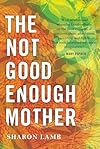
The Not Good Enough Mother by Sharon Lamb is a personal, highly recommended account pf a psychologist who evaluates the fitness of parents.
Psychologist and expert witness Dr. Sharon Lamb observes children and evaluates parents after the children have been removed from their custody. She observes and takes notes, assessing the fitness of parents in order to determine what is in the best interest of the child. Her evaluations will either recommend that the child be returned to their parent or show more that parental rights should be terminated, opening the children up for adoption. It is a decision that is not always clear.
As many of these parents struggle with addiction, Dr. Lamb's own son struggles with an opioid addiction, which makes evaluating other parents even more challenging on a personal level. Since mother's are often the ones being evaluated to determine if they are "good enough mothers," Dr. Lamb turns the question on herself, is she a "good enough mother?" She knows the daily struggle of an addict to remain clean. She knows the relapses, the lies, and the statistics as she tries to remain compassionate to those she is evaluating, while at the same time keeping above all else the best interest of the child. And, as a mother, she knows that mothers always look for blame in themselves when their children make bad life choices.
Individual situations and cases are discussed with an informative eye for detail and information about what she looks for and observes during various home visits and meetings. The result is a narrative that is both informative and heart-breakingly personal. As a professional, she needs to have boundaries and keep a sense of detachment while she also has a plethora of first hand personal experience with an addict. In concise language and succinct case/visit summaries, she provides details and information in a controlled, neutral manner, keeping her emotions in check, while informing readers what she does and of what she takes note. Her professional neutrality is almost at odds with her personal experiences, providing the reader with the sense of a dichotomy she experiences between her professional life and personal experiences.
Disclosure: My review copy was courtesy of Penguin Random House
http://www.shetreadssoftly.com/2019/06/the-not-good-enough-mother.html show less
Psychologist and expert witness Dr. Sharon Lamb observes children and evaluates parents after the children have been removed from their custody. She observes and takes notes, assessing the fitness of parents in order to determine what is in the best interest of the child. Her evaluations will either recommend that the child be returned to their parent or show more that parental rights should be terminated, opening the children up for adoption. It is a decision that is not always clear.
As many of these parents struggle with addiction, Dr. Lamb's own son struggles with an opioid addiction, which makes evaluating other parents even more challenging on a personal level. Since mother's are often the ones being evaluated to determine if they are "good enough mothers," Dr. Lamb turns the question on herself, is she a "good enough mother?" She knows the daily struggle of an addict to remain clean. She knows the relapses, the lies, and the statistics as she tries to remain compassionate to those she is evaluating, while at the same time keeping above all else the best interest of the child. And, as a mother, she knows that mothers always look for blame in themselves when their children make bad life choices.
Individual situations and cases are discussed with an informative eye for detail and information about what she looks for and observes during various home visits and meetings. The result is a narrative that is both informative and heart-breakingly personal. As a professional, she needs to have boundaries and keep a sense of detachment while she also has a plethora of first hand personal experience with an addict. In concise language and succinct case/visit summaries, she provides details and information in a controlled, neutral manner, keeping her emotions in check, while informing readers what she does and of what she takes note. Her professional neutrality is almost at odds with her personal experiences, providing the reader with the sense of a dichotomy she experiences between her professional life and personal experiences.
Disclosure: My review copy was courtesy of Penguin Random House
http://www.shetreadssoftly.com/2019/06/the-not-good-enough-mother.html show less
 This review was written for LibraryThing Early Reviewers.
A beautifully written, challenging memoir by a therapist who evaluates children and families for Vermont’s DCF to see where the children should stay or be placed. One of Lamb’s own sons struggles with a heroin addiction (which she denied for a while), influencing her musings on what it means to be a good enough mother and on when we should look at outcomes or behaviors, or some combination. I found it quite striking that she recounted an anecdote from Amy Chua’s well-known account of show more her “Tiger Mother” upbringing of her two children—Chua recalled ripping up a handmade Mother’s Day card because the art was too sloppy. If Lamb had been evaluating Chua, that could have cost her custody. But of course Yale Law professors don’t get the state evaluating their parenting in that way, and maybe it matters that they had stable employment and no obviously out-of-control addictions; maybe it matters that her daughters grew up to get good educations (hell, one of them is about to clerk for Kavanaugh). It was heartbreaking to read about “mothers who canot stand for their children to want them, to need them. In attachment terms, it brings to mind for them, to the unconscious mind, their own unreliable mothers.”
Lamb was surprisingly-to-me empathetic to men who were physically violent; at some points I felt she lumped yelling at, demeaning, and hitting children together. (She even says she doesn’t trust herself to gauge what’s an okay amount of male aggression—but what do we do with that?) I do think it’s a relevant question to ask whether a man who hits his partner can ever be trusted: is there really no coming back? Doesn’t it matter that his kids may well love him deeply and be harmed by being taken away from him, even if they also risk harm in staying?
The book got me to reflect on the vagaries of both fate and the state's attention. Life is unpredictable and so what happens may happen even if we do everything as well as we can (and nobody can, and there is no such thing as perfect mothering), and this extends to addiction as well. When Lamb notices that it’s almost impossible to distinguish between sham and real addiction treatment centers, if there’s even a distinction, it echoes her observations about the differences between good enough and not good enough mothers. show less
Lamb was surprisingly-to-me empathetic to men who were physically violent; at some points I felt she lumped yelling at, demeaning, and hitting children together. (She even says she doesn’t trust herself to gauge what’s an okay amount of male aggression—but what do we do with that?) I do think it’s a relevant question to ask whether a man who hits his partner can ever be trusted: is there really no coming back? Doesn’t it matter that his kids may well love him deeply and be harmed by being taken away from him, even if they also risk harm in staying?
The book got me to reflect on the vagaries of both fate and the state's attention. Life is unpredictable and so what happens may happen even if we do everything as well as we can (and nobody can, and there is no such thing as perfect mothering), and this extends to addiction as well. When Lamb notices that it’s almost impossible to distinguish between sham and real addiction treatment centers, if there’s even a distinction, it echoes her observations about the differences between good enough and not good enough mothers. show less
This review was written for LibraryThing Early Reviewers.Lists
Beacon Press (1)
Awards

You May Also Like


Associated Authors
Statistics
- Works
- 11
- Members
- 406
- Popularity
- #59,888
- Rating
- 3.8
- Reviews
- 25
- ISBNs
- 34
- Languages
- 2
