

Andrew Lycett
Author of Ian Fleming
About the Author
Andrew Lycett received a history degree from Oxford University before becoming a journalist at the Sunday Times where he served as a foreign correspondent in Africa and the Middle East. He continues to be a regular contributor to the Times and a wide range of newspapers and magazines. His previous show more acclaimed biographies include lives of Muammar Qadaffi, Ian Fleming, and Rudyard Kipling. He lives in London. show less
Image credit: Author photo: Susan Greenhill
Works by Andrew Lycett
The Worlds of Sherlock Holmes: The Inspiration Behind the World's Greatest Detective (2023) 42 copies, 1 review
Associated Works
Tagged
Common Knowledge
- Canonical name
- Lycett, Andrew
- Birthdate
- 1948
- Gender
- male
- Education
- Charterhouse, Godalming, Surrey, England
University of Oxford (Christ Church) - Occupations
- journalist
biographer - Nationality
- UK
- Associated Place (for map)
- UK
Members
Reviews
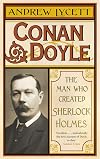
This was a very comprehensive and readable biography. While knowing this point already, I was struck again by the fact that Sherlock Holmes represents a fairly small portion of his life and output, and not one that he initially rated highly, until its great success changed his attitude to some extent. That said, it felt like the Holmes stories were what he wrote to bring in the financial security to enable him to focus on the things about which he cared most, chiefly his evolving show more spiritualist beliefs and accompanying lecture tours, and his attempts at military history. The development of those beliefs in the supernatural is a theme running throughout the book, from his early attempts to reconcile his scientifically-rooted medical knowledge with his instinctive belief in a God (though not necessarily the Catholic God of his upbringing and schooling), to his more determined pursuit of spiritualism especially during and after the First World War. The (in)famous Cottingley fairies incident is dealt with quite briefly, though. Doyle emerges as a man of contradictions who wasn’t afraid to face ridicule or unpopularity. He was a man of science with a passionate and utterly sincerely held belief in life after death; he was an Empire loyalist staunchly supporting Britain in the Boer war, but who passionately supported the plight of the native Congolese suffering under Belgian rule; he was a man of fairly conventional political views but who supported victims of miscarriages of justice such as Oscar Slater and George Edalji.
This contains a very full genealogical table –unusual for a biography of a non-Royal/aristocratic subject – but there are a number of discrepancies between it and dates given in the text. It also includes an afterword detailing the sordid attempts by his children and other literary heirs to profit from his estate. 5/5 show less
This contains a very full genealogical table –unusual for a biography of a non-Royal/aristocratic subject – but there are a number of discrepancies between it and dates given in the text. It also includes an afterword detailing the sordid attempts by his children and other literary heirs to profit from his estate. 5/5 show less
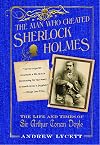
Almost a year after starting it, I’ve finished The Man Who Created Sherlock Holmes: The Life and Time of Sir Arthur Conan Doyle. Please don’t think, however, that the slowness of my reading in any way indicates that I found this biography uninteresting; it’s simply an incredibly comprehensive, well-researched biography that I think will leave you with a very good insight into the creator of Sherlock Holmes. But it is slow reading, especially if you’re reading six or seven or eight show more other books equally … comprehensive (like an annotated Pride and Prejudice or P.G. Wodehouse A Life in Letters or Michael Wood’s The Story of England).
Inevitably, when you’re reading a book like this biography once a week for only thirty minutes or so before you go to sleep, you’ll spend a lot of time flipping back through pages, trying to remember who’s who. After all, Conan Doyle knew a lot of people and once the famous author hits his stride, you realize he was friends, enemies and frenemies with a lot of other famous figures, including H.G. Wells, P.G. Wodehouse, Rudyard Kipling and Harry Houdini. He was related by marriage to E.W. Hornung, the creator of gentleman thief Arthur J. Raffles. He championed several causes, including overturning the wrongful conviction of two men, challenging England’s onerous divorce laws and, of course, spiritualism, which put him at odds with the church, skeptics and even other spiritualists.
All this is as nothing compared to Conan Doyle’s greatest creation, that exemplar of cold logic and reasoning, Sherlock Holmes. Biographer Andrew Lycett, however, has done an admirable job of balancing the importance of Holmes, something Sir Arthur probably would have appreciated, but which might disappoint a Sherlockian. It’s easy to see, however, that the Canon represents only a small fraction of Conan Doyle’s output, despite how much Holmes looms large with the public.
The resulting portrait of Conan Doyle seemed quite understandable to me. I’d always wondered how someone who’d created the rational Holmes—“no ghosts need apply”—could be so gullible as to believe in faeries, automatic writing and ectoplasmic manifestations, but the deaths of so many so close to Conan Doyle (from disease and the Great War) and the burden left him by his creative but alcoholic, depressive and epileptic father, make his need to believe understandable. Conan Doyle was an outsize character who needed things to make sense, either by his own doing or by a power greater than himself. One of the byproducts of his own greatness was that singular creation, Sherlock Holmes.
Another byproduct of portraying this fascinating subject, coupled with the wealth of material Lycett was able to use following the deaths of several Doyle relations, is this somewhat daunting biography. It’s amazing how much we know about Conan Doyle, based on the many letters, journals and published works. Perhaps a less detailed biography would have made for easier reading, but even though I sometimes forgot who was who, I’m glad of Lycett’s thorough job. show less
Inevitably, when you’re reading a book like this biography once a week for only thirty minutes or so before you go to sleep, you’ll spend a lot of time flipping back through pages, trying to remember who’s who. After all, Conan Doyle knew a lot of people and once the famous author hits his stride, you realize he was friends, enemies and frenemies with a lot of other famous figures, including H.G. Wells, P.G. Wodehouse, Rudyard Kipling and Harry Houdini. He was related by marriage to E.W. Hornung, the creator of gentleman thief Arthur J. Raffles. He championed several causes, including overturning the wrongful conviction of two men, challenging England’s onerous divorce laws and, of course, spiritualism, which put him at odds with the church, skeptics and even other spiritualists.
All this is as nothing compared to Conan Doyle’s greatest creation, that exemplar of cold logic and reasoning, Sherlock Holmes. Biographer Andrew Lycett, however, has done an admirable job of balancing the importance of Holmes, something Sir Arthur probably would have appreciated, but which might disappoint a Sherlockian. It’s easy to see, however, that the Canon represents only a small fraction of Conan Doyle’s output, despite how much Holmes looms large with the public.
The resulting portrait of Conan Doyle seemed quite understandable to me. I’d always wondered how someone who’d created the rational Holmes—“no ghosts need apply”—could be so gullible as to believe in faeries, automatic writing and ectoplasmic manifestations, but the deaths of so many so close to Conan Doyle (from disease and the Great War) and the burden left him by his creative but alcoholic, depressive and epileptic father, make his need to believe understandable. Conan Doyle was an outsize character who needed things to make sense, either by his own doing or by a power greater than himself. One of the byproducts of his own greatness was that singular creation, Sherlock Holmes.
Another byproduct of portraying this fascinating subject, coupled with the wealth of material Lycett was able to use following the deaths of several Doyle relations, is this somewhat daunting biography. It’s amazing how much we know about Conan Doyle, based on the many letters, journals and published works. Perhaps a less detailed biography would have made for easier reading, but even though I sometimes forgot who was who, I’m glad of Lycett’s thorough job. show less
The Worlds of Sherlock Holmes: The Inspiration Behind the World's Greatest Detective by Andrew Lycett
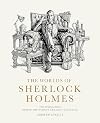
The Worlds of Sherlock Holmes by Andrew Lycett examines the character from the perspective of his times, which of course was Doyle's times as well.
To put it in terms similar to Lycett's, this looks at how Holmes is a reflection of that period, but a reflection specifically through the eyes (pen?) of Doyle. That isn't to say that Holmes is a stand-in for Doyle, but that there is simply no singular perspective on any period of history, so understanding the person through which we are given show more our glimpse is essential. This isn't, however, a biography of Doyle but rather focuses on the major strands of thought and belief of the time.
This is an excellent companion for someone working their way through the stories and would be ideal for someone considering revisiting them. In fact, this has made me want to reread some of them. It also sheds some interesting light on TV and film representations. The reader can consider what liberties were taken to make the character more likely to be embraced by viewers at various times.
As a bit of an aside, I think this could be a useful read for a writer who is thinking about creating a character that would reflect our current times. How did Doyle create a character who could both embody much of the time yet also question, explicitly or implicitly, some of the ideals? This book doesn't necessarily answer that question, but it does offer some examples that a writer could apply to their own work.
I would definitely recommend this to those in the, as Lycett calls it, Sherlockian world. Even a casual reader (or viewer) of the Holmes stories will enjoy seeing how the character is a product of not just a fertile mind but of the time as well.
Reviewed from a copy made available by the publisher via NetGalley. show less
To put it in terms similar to Lycett's, this looks at how Holmes is a reflection of that period, but a reflection specifically through the eyes (pen?) of Doyle. That isn't to say that Holmes is a stand-in for Doyle, but that there is simply no singular perspective on any period of history, so understanding the person through which we are given show more our glimpse is essential. This isn't, however, a biography of Doyle but rather focuses on the major strands of thought and belief of the time.
This is an excellent companion for someone working their way through the stories and would be ideal for someone considering revisiting them. In fact, this has made me want to reread some of them. It also sheds some interesting light on TV and film representations. The reader can consider what liberties were taken to make the character more likely to be embraced by viewers at various times.
As a bit of an aside, I think this could be a useful read for a writer who is thinking about creating a character that would reflect our current times. How did Doyle create a character who could both embody much of the time yet also question, explicitly or implicitly, some of the ideals? This book doesn't necessarily answer that question, but it does offer some examples that a writer could apply to their own work.
I would definitely recommend this to those in the, as Lycett calls it, Sherlockian world. Even a casual reader (or viewer) of the Holmes stories will enjoy seeing how the character is a product of not just a fertile mind but of the time as well.
Reviewed from a copy made available by the publisher via NetGalley. show less
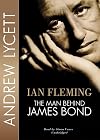
This is a fascinating investigation of a complex and accomplished life. It seems to me too much is made in the introduction of the recent research that allows undercutting of Fleming claims to any Bond-like escapades. It seems to me he was close enough to enough daring secret ops, if only as an administrative staff officer, to serve as the germ for the adolescent fantasy antics of James Bond. (My vision of Bond is from the movies, having never read any of the novels.) Indeed it does seem show more this imaginative writer had a penchant for exaggeration. He was also, to me, a privileged skirt-chasing jock and talented newsman. His out-sized self-marketing and gambler's bluffing allowed him to successfully promote endearing spy consistently to the end of his life from his perch in Jamaica despite a legal mess of ownership and a private life muddled with selfishness and betrayal. show less
Lists
Awards


You May Also Like


Associated Authors
Statistics
- Works
- 12
- Also by
- 4
- Members
- 833
- Popularity
- #30,660
- Rating
- 4.0
- Reviews
- 19
- ISBNs
- 56
- Languages
- 2