
Cicely Mary Barker (1895–1973)
Author of Fairyopolis: A Flower Fairies Journal
About the Author
Illustrator Cicely Mary Barker was born in Croydon, England in 1895. As a child she spent much of her time drawing and painting, and her father enrolled her in art courses at the age of 13. She sold her first work two years later to a stationery printer. Barker was elected a life member of Croydon show more Art Society a year after that. She is most famous for her Flower Fairy series of books and was greatly influenced artistically by Kate Greenaway and the Pre-Raphaelite Brotherhood. Barker used real-life models for her paintings, created only botanically accurate flowers, and worked primarily in watercolor with pen and ink. (Bowker Author Biography) show less
Series
Works by Cicely Mary Barker
The Complete Flower Fairies Library Boxed Set of 12 Hardcover Books 2007 Printing (1995) 27 copies, 1 review
The Flower Fairies Changing Seasons: A Sliding Picture Book (Flower Fairies) (1992) 27 copies, 1 review
Sweet Pea's Garden: Special Things to Make and DoA Flower Fairies Friends Book (Flower Fairies) (2005) 6 copies
El Gran Libro De Las Hadas Flores/ the Great Book of the Flower Fairies (Spanish Edition) (2006) 5 copies
Spring Songs 2 copies
AUTUMN SONGS WITH MUSIC 2 copies
SUMMER SONGS WITH MUSIC 1 copy
Groundsel and Necklaces 1 copy
ÊLe fate dei fiori 1 copy
FLOWER SONGS OF THE SEASONS 1 copy
Flower Fairies Address Book 1 copy
A Treasury of Flower Fairies 1 copy
Brambly Hedge Autumn Story 1 copy
Nel giardino incantato 1 copy
Elfengefluister 1 copy
Associated Works
Tagged
Common Knowledge
- Birthdate
- 1895-06-28
- Date of death
- 1973-02-16
- Gender
- female
- Education
- home schooled
Croydon Art Society - Occupations
- illustrator
artist
triptych painter - Organizations
- Croydon Art Society
Raphael Tuck
Blackie
Anglican Church - Awards and honors
- Croydon Art Society Life Member
- Relationships
- Oswald Barker, Dorothy (sister)
Barker, Walter (father)
Oswald, Mary Eleanor (mother)
Tidy, Gladys (model)
Major, Edith (friend) - Cause of death
- natural causes
- Nationality
- UK
- Birthplace
- Croydon, Surrey, England, UK
- Places of residence
- Croydon, Greater London, Middlesex, England, UK
Storrington, West Sussex, England, UK - Place of death
- Worthing, Sussex, England, UK
- Burial location
- Storrington, West Sussex, England, UK
- Map Location
- England, UK
Members
Reviews
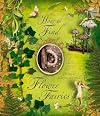
Okay, so we’re basically into winter here in Canada (ie the first proper snow has fallen), but that’s not going to stop me taking a wander through peak springtime vibes with Cicely Mary Barker’s pop-up fairy book! While technically pop-up books were available during Barker’s lifetime, I doubt she would have imagined in her wildest dreams that her classically-styled nature-based fairy illustrations would have been reimagined for the children of today in this fully immersive style. But show more thanks to the enterprising editors at Penguin, we get to traipse through the wayside and discover a myriad of fairies hiding in the not-so-far-away wilderness! While Barker’s fairies are far less prominent in this volume than in her own (where they take categorical front and centre attention), the hunt for their small forms among the pop-up scenery is delightfully fun. As we search under leaves, down paths in the swamp, and amongst the flower petals we get to feel like we’re momentarily entering the natural world from the comfort of our reading nooks due to the careful construction and elaborate artistry behind the pop-up environments. There may be more technically advanced pop-up books in this style (don’t even get me started on how expensive they are), but this is honestly one of the best I’ve ever gotten to explore due to its whimsical style and quiet narration. Whoever said pop-up books are for children clearly is missing the mark, and more importantly is missing out on this delightful art form! show less
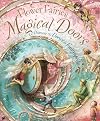
Just when I thought that I had found the perfect book of Flower Fairies (Flower Fairies Four Seasons) this book comes along and blows my mind even more! Where most of the other flower fairy books rly on simplicity for their charm, this book takes the opposite approach and gives us fairies to the max. Each page is absolutely saturated with illustrations, combining a myriad of Barker's fairies and flowers to create some truely wonderful scenes. The story starts out simply, with the discovery show more of a small door by Evie, but what she finds behind the door will change her (and her best friend Grace's) life forever - a fairy! As with all things magical, once you see them they begin to appear everywhere, and sure enough Grace and Evie begin finding more fairy doors. Each page has a new door behind which are revealed fairies, using a variety of pop-up techniques to tell the story and set the scene of discovery. Some of the designs are quite simple, using the movement of the opening panel to slowly disappear the fairy, but other doors utilize sliding panels to show action, pop-up effects for a 3-dimensional view, and shimmering effects to mimic a magical fairy mirage. The story culminates with the girls discovering a massive fairy party which is showcased in an extravagant multi-panel pop-up which really brings the story to life. There are lots of pop-up books which I'm sure are fun for kids but lack the true innovation to delight adult audiences, but this is truely one of the best examples of the medium that I've ever seen. It combines wonderful illustrations and an engaging story, while fully using the range of the pop-up medium, to give readers an excellent all around book! show less
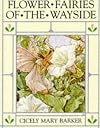
Even though the more complex fairies of Brian Frout, Arthur Packham, and Charles Vess are my favourite there's an intrinsic innocent charm to Cicely Mary Barker's flower-inspired fairies. Each fairy's design is drawn from the flowers of England, in this case specifically wayside flora, so Barker's fairies retain a realism that many of the other artists bypass entirely. Sure, fairies are creatures of myth and legend, but they have one foot in the real world, so having an essence of the show more recognizable human world allows readers to imagine their reality. Considering that Barker was writing and drawing during the mid-1900s, I was surprised how much of a Victorian sensibility she retained. The delicate costumes especially harken back to this era, when there was a veritable boom in children's illustrated books led by Kate Greenaway who featured children (and their costumes) prominently in her illustrations. Quite a few of the boy fairies remind me of hte puckish character of J.M. Barrie's Peter Pan, as well, who is the most prominent of the late-Victorian fairytale characters. The roguish (but still childlike) expression in the eyes of hte Jack-go-to-bed-at-noon fairy (aptly named as well), the marching agromony fairies, and the white bindweed fairy could be easily transformed into Peter Pan, the Lost Boys, and Wendy Darling respectively! I may have started off late in Cicely Mary Barker's set of illustrations, but the wayside was a wonderful entry point into exploring her world of flower fairies. show less
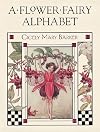
Most of the other flower fairies books hold their strength simply in their illustrations; their poems are weak and not particularly engaging. Yet, this alphabet breaks the trend, as Barker's short poems pair well with their fairies and read like a true alphabet book. Her fairies have always shown personality, but even more is revealed when we get language that matches the visuals properly. Even more surprising is that Barker engages the reader directly, breaking the fourth wall if you will, show more by discussing the hard choice of flower and fairy for some of the letters for which there is abundance. This breaks the narrative flow of the book a touch, but besides the illustrations which tie everything loosely together Barker has never really concerned herself with "story." WE're almost at the finale of the collection of flower fairy books, so I'll be sad to see them finish, but I'm sure I'll revisit these many times again for inspiration! show less
Lists
Awards

You May Also Like


Associated Authors
Statistics
- Works
- 182
- Also by
- 14
- Members
- 7,851
- Popularity
- #3,097
- Rating
- 4.2
- Reviews
- 92
- ISBNs
- 409
- Languages
- 7
- Favorited
- 13
