
Ann Weiser Cornell
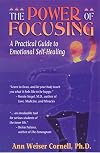
Author of The Power of Focusing: A Practical Guide to Emotional Self-Healing
About the Author
Works by Ann Weiser Cornell
Tagged
Common Knowledge
- Canonical name
- Cornell, Ann Weiser
- Gender
- female
- Education
- Shimer College (1966-1968)
University of Chicago (Ph.D.|Linguistics) - Short biography
- Ann Weiser Cornell is a leading practitioner and theorist of the psychological discipline of focusing. She is particularly known for her own technique known as Inner Relationship Focusing, or IRF. Her works include The Power of Focusing (1996) and The Radical Acceptance of Everything (2005).} She received her undergraduate education at Shimer College, and her graduate education at the University of Chicago, where in the course of pursuing her Ph.D. in linguistics she became involved with Eugene Gendlin's work on focusing. In the 1980s she co-facilitated many workshops with Gendlin and rose to prominence as a teacher of focusing. In keeping with her doctoral specialization, Cornell is particularly known for her work on the language of focusing. (from Shimer College Wiki)
Members
Reviews
I learned Focusing from Gendlins’s book of that title but never got into it until relatively recently when meeting others of the Focusing Community. Who knew there was one? Most of them learned from Ann Weiser Cornell and used her language and techniques. I remained a bit skeptical and stuck with Gendlin’s writings. I began reading his philosophy papers and books and preferred his way of phrasing things.
And so it was a surprise to find this book so readable and practically useful. It show more begins with a description of how she learned about Focusing , including the difficulties she had to overcome. I realized I had some similar problems starting out. Her explanations were uniformly clear (something I can’t say for Gene Gendlin’s philosophy papers) and I especially liked her chapter on trouble shooting.
Even she admits that for some, saying hello to a bodily felt sense, seems peculiar (suggesting one “acknowledge it” if saying hello feels too weird.) Nowadays, with therapy modalities like Internal Family Systems and Inner child work, treating yourself as a relationship of parts isn’t that far outside the mainstream.
In the end, Focusing is a practice and an experiential system and those who insist on approaching it through theory are missing out. I am therefore recommending that you put aside your fears of looking new agey and read this book and give it a try. show less
And so it was a surprise to find this book so readable and practically useful. It show more begins with a description of how she learned about Focusing , including the difficulties she had to overcome. I realized I had some similar problems starting out. Her explanations were uniformly clear (something I can’t say for Gene Gendlin’s philosophy papers) and I especially liked her chapter on trouble shooting.
Even she admits that for some, saying hello to a bodily felt sense, seems peculiar (suggesting one “acknowledge it” if saying hello feels too weird.) Nowadays, with therapy modalities like Internal Family Systems and Inner child work, treating yourself as a relationship of parts isn’t that far outside the mainstream.
In the end, Focusing is a practice and an experiential system and those who insist on approaching it through theory are missing out. I am therefore recommending that you put aside your fears of looking new agey and read this book and give it a try. show less
The author was a graduate student a University of Chicago in 1972, and attended a "Focusing" program conducted by Gene Gendlin in a community center. She had "difficulties" learning it. She helped develop how it was taught. This book is very precise, linquistically precise.
An intriguing aspect of Focusing is that it is not a skill or therapeutic technique. Perhaps it's like listening to the body/mind. Body-oriented self-awareness in a conversational way, interior. And Cornell teaches it like show more it is a "birthright". Everyone. Exactly.
"The gift of the body is that it is always in present time, always here." Listen to the inner sense of rightness. [9]
>>mental note: use this to stop nibbling my lip.....{wow, seems to work} show less
An intriguing aspect of Focusing is that it is not a skill or therapeutic technique. Perhaps it's like listening to the body/mind. Body-oriented self-awareness in a conversational way, interior. And Cornell teaches it like show more it is a "birthright". Everyone. Exactly.
"The gift of the body is that it is always in present time, always here." Listen to the inner sense of rightness. [9]
>>mental note: use this to stop nibbling my lip.....{wow, seems to work} show less
Lists
Tom's Bookstore (1)
You May Also Like


Associated Authors
Statistics
- Works
- 12
- Members
- 306
- Popularity
- #76,933
- Rating
- 4.0
- Reviews
- 3
- ISBNs
- 15
- Languages
- 4
- Favorited
- 1