
Laurel Corona
Author of The Four Seasons: A Novel of Vivaldi's Venice
About the Author
Works by Laurel Corona
Tagged
Common Knowledge
- Canonical name
- Corona, Laurel
- Legal name
- Corona, Laurel Ann Weeks
- Birthdate
- 1949
- Gender
- female
- Education
- Bishop's School (1967)
University of California, Davis (BA, English)
University of Chicago (MA, 1972)
University of California, Davis (PhD, 1982) - Occupations
- professor (English, humanities)
- Agent
- Meg Ruley (Jane Rotrosen Agency)
- Nationality
- USA
- Places of residence
- San Diego, California, USA
- Associated Place (for map)
- California, USA
Members
Reviews
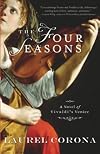
I don't often read historical fiction so was surprised at how much I enjoyed this story of two orphan sisters in 18th century Venice. The story begins in the Pieta, an unusual orphanage oriented towards musical training at the highest level where Chiaretta and Maddalena, abandoned at birth, must find their way in a world of highly restricted choices for women. Enjoyed the re-imagining of the role of Vivaldi in the Pieta, and insights into marriage - Venetian style.
I not only enjoyed this novel, but like all good historicals, I learned a lot about a time and place that I knew nothing about. I read this book because my father, gone now for 5 years, loved Vivaldi's "The Four Seasons" and the music was part of my childhood background. But I found it fascinating to discover that in 17th-century Venice, bastard daughters of the nobility [from their courtesans] were raised in convent-like music academies, but they were not sworn to poverty or chastity. show more Corona's writing totally brings this obscure culture to life, made even more interesting by its female pov. show less
3.75 stars
Sisters Maddalena and Chiaretta are left with the Pietra in Venice during the late 17th century. This is an orphanage that brings up girls, in many cases to play music or to sing. Chiaretta grows to be a beautiful singer, but they don’t seem to see any talent in Maddalena, until a priest with red hair, Antonio Vivaldi, plays with her in a lesson and sees something no one else does. He takes her under his wing (at least when he is welcomed at the Pietra for lessons or anything show more else), but after a while, they both feel something they shouldn’t. As the sisters grow, things change further when Chiaretta is given a choice to marry to enter a convent.
I quite liked this. I love Vivialdi’s music and this was set mostly leading up to him composing “The Four Seasons”. I did have a bit of trouble with some of the vocabulary, not sure if some of it was Italian or musical vocabulary that I didn’t know (I don’t sing, nor did I ever learn to play an instrument). There was a detailed author’s note at the end that explained that many of the characters were real people (though they don’t know much about them, nor about any of the girls who were raised at the Pietra), even if the timelines were played with a little bit. There was much I didn’t know about Vivaldi himself that I learned (even that he was a priest). There was also a pronunciation guide and a glossary at the end (I would have loved to see that at the beginning of the book, though). show less
Sisters Maddalena and Chiaretta are left with the Pietra in Venice during the late 17th century. This is an orphanage that brings up girls, in many cases to play music or to sing. Chiaretta grows to be a beautiful singer, but they don’t seem to see any talent in Maddalena, until a priest with red hair, Antonio Vivaldi, plays with her in a lesson and sees something no one else does. He takes her under his wing (at least when he is welcomed at the Pietra for lessons or anything show more else), but after a while, they both feel something they shouldn’t. As the sisters grow, things change further when Chiaretta is given a choice to marry to enter a convent.
I quite liked this. I love Vivialdi’s music and this was set mostly leading up to him composing “The Four Seasons”. I did have a bit of trouble with some of the vocabulary, not sure if some of it was Italian or musical vocabulary that I didn’t know (I don’t sing, nor did I ever learn to play an instrument). There was a detailed author’s note at the end that explained that many of the characters were real people (though they don’t know much about them, nor about any of the girls who were raised at the Pietra), even if the timelines were played with a little bit. There was much I didn’t know about Vivaldi himself that I learned (even that he was a priest). There was also a pronunciation guide and a glossary at the end (I would have loved to see that at the beginning of the book, though). show less
The Four Seasons is a beautiful story about Venice. There may be other main characters (Vivaldi being one of them), but make no mistake - Venice is the draw in the story. Corona lays bare Venice's beauty, as well as her ugliness. Beautiful music vies for attention next to abandoned children and marriages arranged for money and convenience. The two faces of Venice as exemplified by Carnivale...and by Maddalena and her sister Chiaretta.
I was drawn right into this story of the two sisters who show more were abandoned very young (their mother was a courtesan who was unable to keep them). They then became wards of the state, and were raised by nuns in the Pieta. One goes on to become a singer of some reknown, while the other becomes a gifted violin player. The details in the story are wonderful - in one instance, Corona describes Maddalena learning to play the violin:
" By now, when she drew the bows across the strings, the tone was so sweet and rich that she sometimes forgot to breathe. Long after her lessons, she remembered how her fingers had flown and fluttered on the strings, part of something mysterious and sacred."
I enjoyed this novel - it is sensuous without being sexual, and the characters truly seem to come alive in within the imagination. The story of the sisters is so completely intertwined with that of Venice herself that to imagine one without the other would be too difficult. I now find myself looking for other stories that depict Vivaldi and/or the Venice that he knew. I hope that this will not be the last novel that Ms. Corona gives us!
Brava! show less
I was drawn right into this story of the two sisters who show more were abandoned very young (their mother was a courtesan who was unable to keep them). They then became wards of the state, and were raised by nuns in the Pieta. One goes on to become a singer of some reknown, while the other becomes a gifted violin player. The details in the story are wonderful - in one instance, Corona describes Maddalena learning to play the violin:
" By now, when she drew the bows across the strings, the tone was so sweet and rich that she sometimes forgot to breathe. Long after her lessons, she remembered how her fingers had flown and fluttered on the strings, part of something mysterious and sacred."
I enjoyed this novel - it is sensuous without being sexual, and the characters truly seem to come alive in within the imagination. The story of the sisters is so completely intertwined with that of Venice herself that to imagine one without the other would be too difficult. I now find myself looking for other stories that depict Vivaldi and/or the Venice that he knew. I hope that this will not be the last novel that Ms. Corona gives us!
Brava! show less
Lists
Awards

You May Also Like


Statistics
- Works
- 25
- Members
- 796
- Popularity
- #32,018
- Rating
- 3.5
- Reviews
- 32
- ISBNs
- 40
- Languages
- 6