
Sara Poole
Author of Poison: A Novel of the Renaissance
Series
Works by Sara Poole
Tagged
Common Knowledge
- Legal name
- Seger, Maura
- Birthdate
- 1951-09-16
- Gender
- female
- Nationality
- USA
- Places of residence
- Connecticut, USA
- Map Location
- USA
Members
Reviews
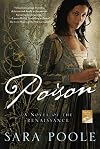
In recent years, the Borgias have become the next great historical fiction fad, with good reason. They represent everything that was corrupt within the Catholic Church while simultaneously supporting those subjects that helped make Rome one of the most powerful cities in Europe for so long. Their history reads like a soap opera, albeit one with a much deadlier demise for its villains. In Poison, Sara Poole’s entry into this intrigue-filled, dangerous world capitalizes on its fascinating show more subject matter while presenting a heroine that can more than hold her own among one of the most intriguing families in Italy.
Francesca Giordano is something of an enigma. On the one hand, she is extremely well-versed in the matter of plant toxicology and proves herself more than capable of following in her father’s footsteps as poisoner to the Borgia household. On the other hand, for someone with such advanced knowledge, she is extremely naïve, sheltered, and unworldly, still taking refuge in the protective world her father created for her. This becomes extremely apparent as she fumbles her way towards avenging her father’s death. Her missteps are costly, but Francesca can only be described as someone with pluck. She does not give up, and nor is she afraid to own up to her mistakes. Her youth and relative innocence make it easy for readers to all but fall in love with her as they root her on towards her ultimate goal. The fact that she is not afraid to take chances and is as pragmatic as she is ruthless only endears her more to the reading audience.
In Poison, Ms. Poole creates a bygone era with the most vivid of details. Readers will appreciate her attention to historical accuracy, even if the historical elements do read more like fiction than fact. She does not try to beautify what was one of the most corrupt periods in modern history but benefits from it by showing the dangers of power and hatred, especially when money is plentiful. Her ability to weave together fact and fiction creates a vibrant story that brings the entire Borgia clan back to life and, more impressively, makes them sympathetic characters against the madness of the Inquisition.
Poison is an intriguing, fast-paced piece of historical fiction that engages the reader from the very beginning. The introduction of Francesca is a brilliant piece of fiction, showcasing her heroine’s desires, skills, bravado, and unworldliness and charming readers into following her search for her father’s killer. The dying art of poisoning others comes back to life with a vengeance through Francesca’s knowledge and ministrations. Combined with the ruthlessness of the Borgia clan and the corruption within the Church, the world in which Francesca is suddenly thrust is as exciting as it is dangerous. Poison is an admirable entry within the world of historical fiction, and the fact that it is the first novel of a new series makes it that much better, for a reader will not get tired of reading about Francesca, her chosen profession, or her employer.
Acknowledgments: Thank you to Eileen Rothschild at St. Martin's Press for my review copy! show less
Francesca Giordano is something of an enigma. On the one hand, she is extremely well-versed in the matter of plant toxicology and proves herself more than capable of following in her father’s footsteps as poisoner to the Borgia household. On the other hand, for someone with such advanced knowledge, she is extremely naïve, sheltered, and unworldly, still taking refuge in the protective world her father created for her. This becomes extremely apparent as she fumbles her way towards avenging her father’s death. Her missteps are costly, but Francesca can only be described as someone with pluck. She does not give up, and nor is she afraid to own up to her mistakes. Her youth and relative innocence make it easy for readers to all but fall in love with her as they root her on towards her ultimate goal. The fact that she is not afraid to take chances and is as pragmatic as she is ruthless only endears her more to the reading audience.
In Poison, Ms. Poole creates a bygone era with the most vivid of details. Readers will appreciate her attention to historical accuracy, even if the historical elements do read more like fiction than fact. She does not try to beautify what was one of the most corrupt periods in modern history but benefits from it by showing the dangers of power and hatred, especially when money is plentiful. Her ability to weave together fact and fiction creates a vibrant story that brings the entire Borgia clan back to life and, more impressively, makes them sympathetic characters against the madness of the Inquisition.
Poison is an intriguing, fast-paced piece of historical fiction that engages the reader from the very beginning. The introduction of Francesca is a brilliant piece of fiction, showcasing her heroine’s desires, skills, bravado, and unworldliness and charming readers into following her search for her father’s killer. The dying art of poisoning others comes back to life with a vengeance through Francesca’s knowledge and ministrations. Combined with the ruthlessness of the Borgia clan and the corruption within the Church, the world in which Francesca is suddenly thrust is as exciting as it is dangerous. Poison is an admirable entry within the world of historical fiction, and the fact that it is the first novel of a new series makes it that much better, for a reader will not get tired of reading about Francesca, her chosen profession, or her employer.
Acknowledgments: Thank you to Eileen Rothschild at St. Martin's Press for my review copy! show less

Summary: Francesca Giordano is the daughter of the poisoner employed by Rodrigo Borgia. When her father is murdered in the street, she petitions Borgia to allow her to take his place. While her secret motivation is vengeance for her father, her main responsibilities are making sure Borgia and his household remain safe from the poisons of his rivals, and occasionally using her knowledge to help further Borgia's ambitions... ambitions that stop at nothing short of the papacy. But what show more Francesca uncovers is a plot that ranges far wider than the Borgias and their rivals, a plot that will take Francesca from the heart of the Jewish Ghetto to the depths of the catacombs beneath the Vatican, a plot of unspeakable evil that could change the face of Europe forever.
Review: I haven't read a ton of historical fiction this year, but a lot of what I have read has been really, really good, and Poison is up at the top of the pack. If all of the historical fiction novels on my shelf were as good as this, I'd be a very happy camper indeed.
Let's run down the checklist of what I want out of my historical fiction, shall we? An well-evoked and interesting setting with which I am not overly familiar? Poison's got it. I've read plenty of books set in the early Renaissance, plenty set in Rome (this was my third in a row, actually), and at least one that features the Borgias (Gregory Maguire's Mirror, Mirror), but this was the first I've read that involves the papacy and the upper echelons of the Catholic Church so directly. Its plot involving anti-semitism, the Inquisition, the machinations of the Borgias, and the early stirrings of the Renaissance was completely fascinating. In addition, Poole's great at bringing her settings to life, to the point where I could practically feel the Roman summer heat and the creeping chill of the crypts.
Next on the checklist: a complex, well-developed, and relatable main character? Check! Francesca's got a great voice, and I really enjoyed her point of view; she's probably somewhat anachronistically independent-minded, but she was so much fun to read that I didn't really mind. Poole's other characters were equally well-drawn, and I particularly enjoyed her interpretations of Cesare and the young Lucrezia Borgia - not traditionally villainous, but still within the realm of historical believability. (Also appreciated is the author's note in which she separates historical fact from authorial invention.)
Pretty much the only thing I didn't love was the habit Poole had of starting a scene or digression, and then having Francesca demur from telling us more, citing discretion or protection from a poisoner's knowledge or whatever. Used sparingly, it would have been cute and charming and helped to develop Francesca's character. However, after a while, it started to feel like Poole's way of getting around a scene she didn't want to write, or research she hadn't done.
But in the grand scheme of things, that's a pretty minor issue. Other than that, I enjoyed the heck out of this book, and can't wait to read the sequel. 4.5 out of 5 stars.
Recommendation: Fans of historical fiction, mysteries involving the Catholic church, or the Borgias should definitely check this out. show less
Review: I haven't read a ton of historical fiction this year, but a lot of what I have read has been really, really good, and Poison is up at the top of the pack. If all of the historical fiction novels on my shelf were as good as this, I'd be a very happy camper indeed.
Let's run down the checklist of what I want out of my historical fiction, shall we? An well-evoked and interesting setting with which I am not overly familiar? Poison's got it. I've read plenty of books set in the early Renaissance, plenty set in Rome (this was my third in a row, actually), and at least one that features the Borgias (Gregory Maguire's Mirror, Mirror), but this was the first I've read that involves the papacy and the upper echelons of the Catholic Church so directly. Its plot involving anti-semitism, the Inquisition, the machinations of the Borgias, and the early stirrings of the Renaissance was completely fascinating. In addition, Poole's great at bringing her settings to life, to the point where I could practically feel the Roman summer heat and the creeping chill of the crypts.
Next on the checklist: a complex, well-developed, and relatable main character? Check! Francesca's got a great voice, and I really enjoyed her point of view; she's probably somewhat anachronistically independent-minded, but she was so much fun to read that I didn't really mind. Poole's other characters were equally well-drawn, and I particularly enjoyed her interpretations of Cesare and the young Lucrezia Borgia - not traditionally villainous, but still within the realm of historical believability. (Also appreciated is the author's note in which she separates historical fact from authorial invention.)
Pretty much the only thing I didn't love was the habit Poole had of starting a scene or digression, and then having Francesca demur from telling us more, citing discretion or protection from a poisoner's knowledge or whatever. Used sparingly, it would have been cute and charming and helped to develop Francesca's character. However, after a while, it started to feel like Poole's way of getting around a scene she didn't want to write, or research she hadn't done.
But in the grand scheme of things, that's a pretty minor issue. Other than that, I enjoyed the heck out of this book, and can't wait to read the sequel. 4.5 out of 5 stars.
Recommendation: Fans of historical fiction, mysteries involving the Catholic church, or the Borgias should definitely check this out. show less
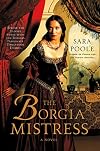
Summary: Francesca Giordano is the chief poisoner to Pope Alexander IV, Rodrigo Borgia: an unlikely position for a woman to hold, but Francesca is an unusual woman. Borgia has enemies on all sides, and when he orders the papal enclave to travel to a small town north of Rome, Francesca must be extra vigilant. For she has heard rumors that there is an assassin on his way, an assassin who threatens not the life of the pope, but rather his alliance with Spain, an alliance that is critical to his show more continued reign. But will Francesca be able to protect the Spanish ambassador, when she is slowly being driven to distraction by her continual nightmares of blood and death? As her mind begins to unravel, Francesca is no longer sure who she can trust - not her friends, not her lover Cesare Borgia - or if she can even trust herself.
Review: I had a friend spot this book on my end table, glance at the cover, and ask "Really?" And while I see her point - the title is rather misleading, and the cover art makes it look more lurid than I think the book actually is - the truth is that this book absolutely is escapist historical fiction. But it's very well-done, non-trashy, well-written escapist historical fiction, and I enjoyed it every bit as much as I expected to.
Poole is just as good at evoking her settings and atmosphere as she was in the previous two books, and I enjoyed having the time period brought so vividly to life for me. She's also very good with her characterizations; I really enjoy her depiction of Cesare Borgia, and Francesca is sympathetic as ever. Poole has also mostly abandoned Francesca's narrative tics that were my biggest complaint about the first novel, perhaps because Francesca is maturing, or more likely because Poole's more confident in her character and her story. It also may help that this is a much more inward-turned book than the previous two; there's the assassin to be dealt with, but much of the conflict in the story is Francesca versus herself.
There were some elements that kept this book from being entirely great, however. I figured out the big reveal long, long before anyone in the story managed to, which left me wishing that the mystery had been a little more complicated. Also, this book features a prologue depicting the massacre of the Cathars several hundred years before Francesca's time, but it's not at all clear for most of the book how that one scene fits in with anything else, and the theme only reappears briefly near the end. I think the church's suppression of the Cathars is an interesting topic with a lot of story potential, and I wish it had been incorporated more centrally throughout the book, especially after an introduction that suggests that was going to be the case.
Overall, though, The Borgia Mistress is well-written and absorbing piece of fiction, and I will be looking forward to the next installment of Francesca's story. (And re-watching The Borgias in the meantime. Heh.) 4 out of 5 stars.
Recommendation: Although the action in this one is relatively stand-alone, the characterizations are less so, and Poison is good enough that I can't recommend starting anywhere but there. But the series as a whole is definitely recommended to historical fiction fans, particularly those who like the Borgias, or who are just tired of the Tudors. show less
Review: I had a friend spot this book on my end table, glance at the cover, and ask "Really?" And while I see her point - the title is rather misleading, and the cover art makes it look more lurid than I think the book actually is - the truth is that this book absolutely is escapist historical fiction. But it's very well-done, non-trashy, well-written escapist historical fiction, and I enjoyed it every bit as much as I expected to.
Poole is just as good at evoking her settings and atmosphere as she was in the previous two books, and I enjoyed having the time period brought so vividly to life for me. She's also very good with her characterizations; I really enjoy her depiction of Cesare Borgia, and Francesca is sympathetic as ever. Poole has also mostly abandoned Francesca's narrative tics that were my biggest complaint about the first novel, perhaps because Francesca is maturing, or more likely because Poole's more confident in her character and her story. It also may help that this is a much more inward-turned book than the previous two; there's the assassin to be dealt with, but much of the conflict in the story is Francesca versus herself.
There were some elements that kept this book from being entirely great, however. I figured out the big reveal long, long before anyone in the story managed to, which left me wishing that the mystery had been a little more complicated. Also, this book features a prologue depicting the massacre of the Cathars several hundred years before Francesca's time, but it's not at all clear for most of the book how that one scene fits in with anything else, and the theme only reappears briefly near the end. I think the church's suppression of the Cathars is an interesting topic with a lot of story potential, and I wish it had been incorporated more centrally throughout the book, especially after an introduction that suggests that was going to be the case.
Overall, though, The Borgia Mistress is well-written and absorbing piece of fiction, and I will be looking forward to the next installment of Francesca's story. (And re-watching The Borgias in the meantime. Heh.) 4 out of 5 stars.
Recommendation: Although the action in this one is relatively stand-alone, the characterizations are less so, and Poison is good enough that I can't recommend starting anywhere but there. But the series as a whole is definitely recommended to historical fiction fans, particularly those who like the Borgias, or who are just tired of the Tudors. show less

Summary: If Francesca Giordano had thought that her job as chief poisoner to Rodrigo Borgia would get any easier once he achieved his life's ambition - to ascend to the papacy, it was just wishful thinking. Because it appears that someone is out to poison the Pope, and they are not shy about attacking Borgia through those that are closest to him. Francesca has a sick feeling she knows who's behind it - the same man who murdered her father, and against whom she has sworn vengeance - but he is show more a clever opponent, and Francesca may not be able to draw him out... not without risking everything.
Review: I was surprised by how much I enjoyed Poison - I like historical fiction as a rule, but even so, it was a definite stand-out. So I was hoping for equally good things from The Borgia Betrayal... and for the most part, I got them. Francesca's still a very engaging protagonist; capable and intelligent and layered and maybe a little anachronistically feminist, but fun and relatable all the same. Poole also does a great job evoking 1490s Rome, and I loved that Columbus's discovery of the New World played a part in the political underpinnings of this book. The writing in The Borgia Betrayal is even smoother than it was in Poison, and the "I could tell you more but I wouldn't want to lead you into sin" bits that annoyed me in the first book are toned down enough that they didn't bother me this time around.
My problem with this book was that it didn't feel as fresh as the first book did. The plot wasn't quite as complex, and it felt like it was covering a lot of familiar ground. Granted, Poole's storylines are at least highly enjoyable familiar ground. But with the same bad guy, same basic danger, quite a few of the same locations, etc., I wound up feeling like the story and the plot hadn't grown as much as I'd expect from a second novel, and like Poole maybe wasn't pushing herself as an author as much as she could... and therefore it wasn't quite as engaging for me as a reader. Still a lot of fun to read, just not quite as great as I'd been hoping. 4 out of 5 stars.
Recommendation: While this book involves the same characters as Poison, it's written so as to be mostly self-contained, and could be read independently. Either of the Poisoner Mysteries should definitely appeal to fans of historical fiction, particularly Sarah Dunant's books on a woman's life in Renaissance Italy. show less
Review: I was surprised by how much I enjoyed Poison - I like historical fiction as a rule, but even so, it was a definite stand-out. So I was hoping for equally good things from The Borgia Betrayal... and for the most part, I got them. Francesca's still a very engaging protagonist; capable and intelligent and layered and maybe a little anachronistically feminist, but fun and relatable all the same. Poole also does a great job evoking 1490s Rome, and I loved that Columbus's discovery of the New World played a part in the political underpinnings of this book. The writing in The Borgia Betrayal is even smoother than it was in Poison, and the "I could tell you more but I wouldn't want to lead you into sin" bits that annoyed me in the first book are toned down enough that they didn't bother me this time around.
My problem with this book was that it didn't feel as fresh as the first book did. The plot wasn't quite as complex, and it felt like it was covering a lot of familiar ground. Granted, Poole's storylines are at least highly enjoyable familiar ground. But with the same bad guy, same basic danger, quite a few of the same locations, etc., I wound up feeling like the story and the plot hadn't grown as much as I'd expect from a second novel, and like Poole maybe wasn't pushing herself as an author as much as she could... and therefore it wasn't quite as engaging for me as a reader. Still a lot of fun to read, just not quite as great as I'd been hoping. 4 out of 5 stars.
Recommendation: While this book involves the same characters as Poison, it's written so as to be mostly self-contained, and could be read independently. Either of the Poisoner Mysteries should definitely appeal to fans of historical fiction, particularly Sarah Dunant's books on a woman's life in Renaissance Italy. show less
 This review was written for LibraryThing Early Reviewers.
Awards

You May Also Like


Statistics
- Works
- 5
- Members
- 849
- Popularity
- #30,130
- Rating
- 3.6
- Reviews
- 85
- ISBNs
- 19
- Languages
- 5
- Favorited
- 1
