
Benjamin Wiker
Author of The Mystery of the Periodic Table
About the Author
Benjamin Wiker, a husband and the father of seven children, holds a Ph.D. in theological ethics from Vanderbilt University. He has taught at Marquette University. St. Mary's University, and Thomas Aquinas College and is now a professor of political science and the director of human life studies at show more Franciscan University in Steubenville, Ohio. His twelve books include 10 Books Every Conservative Must Read: Plus Four Not to Miss and One Impostor, The Reformation 500 Years Later: 12 Things You Need to Know, and Worshipping the State: How Liberalism Became Our State Religion. show less
Image credit: Benjamin Wiker.
Works by Benjamin Wiker
10 Books Every Conservative Must Read: Plus Four Not to Miss and One Impostor (2010) 117 copies, 1 review
The Catholic Church & Science: Answering the Questions, Exposing the Myths (2011) 57 copies, 1 review
In Defense of Nature: The Catholic Unity of Environmental, Economic, and Moral Ecology (2017) 17 copies
Seven Myths about the Catholic Church & Science - DVD: A Refutation of Popular Errors (2011) 3 copies
Neo Atheism 1 copy
Intelligent Design 1 copy
Associated Works
Tagged
Common Knowledge
- Birthdate
- 1960
- Gender
- male
- Education
- Vanderbilt University (Ph.D, Theological Ethics)
- Occupations
- professor (college)
- Organizations
- St. Paul Center for Biblical Theology
- Nationality
- USA
- Places of residence
- Ohio, USA
- Associated Place (for map)
- Ohio, USA
Members
Reviews

"When we look at these nice, neat, and straight rows of elements on the Periodic Table of the Elements we might think that it was a nice, neat, and straight road to their discovery. Nothing could be further from the truth. It was a long and difficult journey much like the perilous wanderings of Odysseus in Homer's great epic tale, 'The Odyssey'. Of course the wanderings made it an adventure, and an adventure is always an exciting thing to retell."
Author Benjamin Wiker leads the reader on a show more delightful and absorbing journey through the ages, on the trail of the elements of the Periodic Table as we know them today. He introduces the young reader to people like Von Helmont, Boyle, Stahl, Priestly, Cavendish, Lavoisier, and many others, all incredibly diverse in personality and approach, who have laid the groundwork for a search that is still unfolding to this day. The first part of Wiker's witty and solidly instructive presentation is most suitable to middle school age, while the later chapters are designed for ages 12-13 and up, with a final chapter somewhat more advanced. show less
Author Benjamin Wiker leads the reader on a show more delightful and absorbing journey through the ages, on the trail of the elements of the Periodic Table as we know them today. He introduces the young reader to people like Von Helmont, Boyle, Stahl, Priestly, Cavendish, Lavoisier, and many others, all incredibly diverse in personality and approach, who have laid the groundwork for a search that is still unfolding to this day. The first part of Wiker's witty and solidly instructive presentation is most suitable to middle school age, while the later chapters are designed for ages 12-13 and up, with a final chapter somewhat more advanced. show less
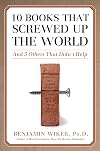
It's not very often that a book makes me want to go out and commit physical violence on the author, but this book definitely takes the cake. I was seriously pissed off only one chapter in, and the only reason I finished at all is to write a review online and warn people about this sorry excuse for a book.
To be fair, the author does a good job of exposing the fallacies in the arguments he writes about, and showing just how ludicrous and/or dangerous the philosophies and theories would be when show more applied to real life. But his fine use of logic was tainted with bias and his own fallacies.
Dr. Wiker equates atheism with immorality, even evil. He doesn't seem to realize that you can be moral and not believe in God. One of the books he names, a book by Sigmund Freud, is only on his list because it repudiates religion. With almost every book he notes that the author was an atheist or simply rejected Christianity. In fact, Dr. Wiker continuously sneers at anything outside the conservative Christian framework. He has no use for liberal values and even for liberal Christianity -- in fact, he says liberal Christianity is a good tool for dictators because of its "flexibility." (I can't think of a single dictator who's a liberal Christian.)
I also noticed some glaring misconceptions in Wiker's writing which tie back to his bias against atheists and liberals. For instance, he claims that people who say "I have the right to control over my body" really mean "I want to have an abortion" and people who say "I have the right to privacy" are actually perverts who want to commit nasty sexual practices. That is absolute nonsense. Hasn't he ever heard the catchphrase, "I may not agree with what you say but I will defend to the death your right to say it"? There are plenty of people, myself included, who believe in a woman's right to have an abortion if she chooses, but who have never had an abortion themselves and probably wouldn't even if faced with a crisis pregnancy.
This book, I think, could only be liked by people like Wiker himself: that is, conservative evangelical Christians with very narrow minds. I was disgusted by it. show less
To be fair, the author does a good job of exposing the fallacies in the arguments he writes about, and showing just how ludicrous and/or dangerous the philosophies and theories would be when show more applied to real life. But his fine use of logic was tainted with bias and his own fallacies.
Dr. Wiker equates atheism with immorality, even evil. He doesn't seem to realize that you can be moral and not believe in God. One of the books he names, a book by Sigmund Freud, is only on his list because it repudiates religion. With almost every book he notes that the author was an atheist or simply rejected Christianity. In fact, Dr. Wiker continuously sneers at anything outside the conservative Christian framework. He has no use for liberal values and even for liberal Christianity -- in fact, he says liberal Christianity is a good tool for dictators because of its "flexibility." (I can't think of a single dictator who's a liberal Christian.)
I also noticed some glaring misconceptions in Wiker's writing which tie back to his bias against atheists and liberals. For instance, he claims that people who say "I have the right to control over my body" really mean "I want to have an abortion" and people who say "I have the right to privacy" are actually perverts who want to commit nasty sexual practices. That is absolute nonsense. Hasn't he ever heard the catchphrase, "I may not agree with what you say but I will defend to the death your right to say it"? There are plenty of people, myself included, who believe in a woman's right to have an abortion if she chooses, but who have never had an abortion themselves and probably wouldn't even if faced with a crisis pregnancy.
This book, I think, could only be liked by people like Wiker himself: that is, conservative evangelical Christians with very narrow minds. I was disgusted by it. show less
This is pure conservative/religious right propaganda dressed up as some kind of literary critique. Were this published by a more reputable publisher, I'd say they should be ashamed; as it is, perhaps one should expect no better from an admittedly conservative imprint blissfully free of the ravages of facticity.
As for the author, Wiker's bias shows pretty much from page one, and never lets up. Associating atheism (or anything not in line with his seemingly narrow view of 'proper Christian show more morality'), with a lack of ethics (if not outright evil), Wiker denounces some of the most important, and yes, ethical, books ever written. It's not that Wiker isn't reasonably eloquent or well informed - if he were simply a dullard, as so many of those who quake in fear of Marx, Machiavelli, Darwin and the like tend to be, this book wouldn't be so infuriating. It would just be dumb. Sadly, Wiker seems fairly intelligent generally, just criminally ignorant of his subject matter and fatally biased.
Let me take, for example, his view on Machiavelli (I'm sure the others like Marx and Darwin have been argued to death, and Machiavelli is a favorite of mine, with whose work The Prince I am quite familiar). Machiavelli himself Wiker calls "the most profound teacher of evil the world has ever known" (p7), and says of The Prince that it is "a monument of wicked counsel, meant for rulers who have shed all moral and religious scruples and were therefore daring enough to believe that evil—deep, dark, and almost unthinkable evil—is often more effective than good." (p8). If you haven't already gotten a sense for Wiker histrionics, read on; he doesn't ever really dial back on the hand-wringing drama.
He does nod to more recent reading of Machiavelli as a sincere and ethical statesman, but tosses such modernity out and chooses (typical of the social movement he seems to represent) to revert to a less informed and older view. The problem is, he is simply wrong. Firstly, Machiavelli favored the Republic above all as the best form of government. However, the reality to which he addressed himself was that of a monarchy. That being the case,The Prince is Machiavelli's way of urging DeMedici to be a strong, effective leader FOR THE SAKE OF THE COMMON GOOD.I cannot emphasize that enough, because Machiavelli makes it clear, over and over again, that the primary, indeed only, concern of the ruler is the good of the state, and thereby its people. Machiavelli was actually deeply ethical, and nowhere does he advise tyranny, greed, violence, or needless cruelty; in fact he is at great pains to condemn them on both political and ethical grounds throughout The Prince.
But he understood that a leader, a monarch in particular, if he is to act for the good of the state, must often take actions that a private individual would not want to. And Machiavelli knew full well (a victim of political violence and torture himself) that he did not live in a nation of peaceful, shiny, happy people. He recognized that Individual morality is not a luxury a monarch can afford; if the good of the people requires that the monarch take a personally distasteful action, Machiavelli contended that the ruler had more than his own ethical niceties at stake, and sometimes, rulers have to take lives, imprison dissenters, wage war, even be ruthless. If a ruler shrinks from doing so when the good of the nation is at stake, he's a bad leader.
Whether Wiker possesses enough self-reflection to know it or not, I am positive he agrees. After all, we do not think it is ethically right to kill, but when we put a man on the front lines, we sure as heck hope he's ready to set aside his personal ethical concerns and do what he needs to for the common good. If he can't, he's not much good as a soldier (which is why we created the conscientious objector status!) Machiavelli saw the same to be true of the leader of a war-torn country; if he wasn't ready to set aside his personal ethical concerns and do what needed to be done for the common good, he wouldn't be much of a Prince. But Wiker misses this entirely on the way to introducing his own trite and narrowly viewed moralizing.
If I've spent too much time on chapter one, I have at least given you a clear idea of how it is that Wiker bludgeons his targets (yes, I believe I can call them such without fear of my own hyperbole), with his 'FOXNews' brand of simplistic and surface morality. I can assure you that he is no less hyperbolic, nor one whit less shallow, in his treatment of any of the intellectual greats at whose assassinations he thankfully fails. Unless you want a laugh (albeit a bitter one, if you love any of the authors Wiker attacks), save your money and a few trees. show less
As for the author, Wiker's bias shows pretty much from page one, and never lets up. Associating atheism (or anything not in line with his seemingly narrow view of 'proper Christian show more morality'), with a lack of ethics (if not outright evil), Wiker denounces some of the most important, and yes, ethical, books ever written. It's not that Wiker isn't reasonably eloquent or well informed - if he were simply a dullard, as so many of those who quake in fear of Marx, Machiavelli, Darwin and the like tend to be, this book wouldn't be so infuriating. It would just be dumb. Sadly, Wiker seems fairly intelligent generally, just criminally ignorant of his subject matter and fatally biased.
Let me take, for example, his view on Machiavelli (I'm sure the others like Marx and Darwin have been argued to death, and Machiavelli is a favorite of mine, with whose work The Prince I am quite familiar). Machiavelli himself Wiker calls "the most profound teacher of evil the world has ever known" (p7), and says of The Prince that it is "a monument of wicked counsel, meant for rulers who have shed all moral and religious scruples and were therefore daring enough to believe that evil—deep, dark, and almost unthinkable evil—is often more effective than good." (p8). If you haven't already gotten a sense for Wiker histrionics, read on; he doesn't ever really dial back on the hand-wringing drama.
He does nod to more recent reading of Machiavelli as a sincere and ethical statesman, but tosses such modernity out and chooses (typical of the social movement he seems to represent) to revert to a less informed and older view. The problem is, he is simply wrong. Firstly, Machiavelli favored the Republic above all as the best form of government. However, the reality to which he addressed himself was that of a monarchy. That being the case,The Prince is Machiavelli's way of urging DeMedici to be a strong, effective leader FOR THE SAKE OF THE COMMON GOOD.I cannot emphasize that enough, because Machiavelli makes it clear, over and over again, that the primary, indeed only, concern of the ruler is the good of the state, and thereby its people. Machiavelli was actually deeply ethical, and nowhere does he advise tyranny, greed, violence, or needless cruelty; in fact he is at great pains to condemn them on both political and ethical grounds throughout The Prince.
But he understood that a leader, a monarch in particular, if he is to act for the good of the state, must often take actions that a private individual would not want to. And Machiavelli knew full well (a victim of political violence and torture himself) that he did not live in a nation of peaceful, shiny, happy people. He recognized that Individual morality is not a luxury a monarch can afford; if the good of the people requires that the monarch take a personally distasteful action, Machiavelli contended that the ruler had more than his own ethical niceties at stake, and sometimes, rulers have to take lives, imprison dissenters, wage war, even be ruthless. If a ruler shrinks from doing so when the good of the nation is at stake, he's a bad leader.
Whether Wiker possesses enough self-reflection to know it or not, I am positive he agrees. After all, we do not think it is ethically right to kill, but when we put a man on the front lines, we sure as heck hope he's ready to set aside his personal ethical concerns and do what he needs to for the common good. If he can't, he's not much good as a soldier (which is why we created the conscientious objector status!) Machiavelli saw the same to be true of the leader of a war-torn country; if he wasn't ready to set aside his personal ethical concerns and do what needed to be done for the common good, he wouldn't be much of a Prince. But Wiker misses this entirely on the way to introducing his own trite and narrowly viewed moralizing.
If I've spent too much time on chapter one, I have at least given you a clear idea of how it is that Wiker bludgeons his targets (yes, I believe I can call them such without fear of my own hyperbole), with his 'FOXNews' brand of simplistic and surface morality. I can assure you that he is no less hyperbolic, nor one whit less shallow, in his treatment of any of the intellectual greats at whose assassinations he thankfully fails. Unless you want a laugh (albeit a bitter one, if you love any of the authors Wiker attacks), save your money and a few trees. show less
(Reprinted from the Chicago Center for Literature and Photography [cclapcenter.com]. I am the original author of this essay, as well as the owner of CCLaP; it is not being reprinted here illegally.)
This is book I didn't get the chance to finish, which to tell you the truth almost made the "too awful to finish" list; which is a real shame, because at first it seems like it's going to be a delightful little nonfiction romp, a series of essays by one of these pop-culture intellectuals show more concerning ten infamous books like Mein Kampf and Beyond Good and Evil, whose names have been cited over the centuries to justify all manner of evil. Ah, but then very quickly into it, the smart reader starts noticing a whole plethora of odd details about this manuscript: for example, that the main argument behind most of the essays seems to be that these books all go against the word of the Christian God, which is what made them "screw up the world;" that the entire second half of the book is a condemnation of such liberal touchstones as Darwin, Kinsey, and The Feminine Mystique; that the author currently teaches at a biblical theology center, and that all the people providing quotes for the dust jacket are prominent conservative Christians as well; that even the publishing company is a small press specializing in conservative Christian books. (And this is to say nothing, of course, of the embedded unattributed Christian Bible verses found scattered throughout this manuscript, their attributions deliberately removed so as to not cause attention to themselves.) Add it all together, and the resulting view is pretty clear; this is a book very plainly trying to secretly further a conservative Christian agenda, one that has the gall to directly compare Betty Friedan to Adolph Hitler, with every single usual stereotypical trait of "Christian publishing" deliberately stripped out in this case, obviously to try to "sneak" the book into mainstream popular culture as much as possible. It's deceitful, ethically shady, and I won't be a part of it; the whole thing leaves a bad taste in my mouth, frankly, and I wish now I had never come across this book to begin with. Regnery and Wiker, please save the sermons for Sunday morning, and leave the rest of us alone.
Out of 10: 0.0 show less
This is book I didn't get the chance to finish, which to tell you the truth almost made the "too awful to finish" list; which is a real shame, because at first it seems like it's going to be a delightful little nonfiction romp, a series of essays by one of these pop-culture intellectuals show more concerning ten infamous books like Mein Kampf and Beyond Good and Evil, whose names have been cited over the centuries to justify all manner of evil. Ah, but then very quickly into it, the smart reader starts noticing a whole plethora of odd details about this manuscript: for example, that the main argument behind most of the essays seems to be that these books all go against the word of the Christian God, which is what made them "screw up the world;" that the entire second half of the book is a condemnation of such liberal touchstones as Darwin, Kinsey, and The Feminine Mystique; that the author currently teaches at a biblical theology center, and that all the people providing quotes for the dust jacket are prominent conservative Christians as well; that even the publishing company is a small press specializing in conservative Christian books. (And this is to say nothing, of course, of the embedded unattributed Christian Bible verses found scattered throughout this manuscript, their attributions deliberately removed so as to not cause attention to themselves.) Add it all together, and the resulting view is pretty clear; this is a book very plainly trying to secretly further a conservative Christian agenda, one that has the gall to directly compare Betty Friedan to Adolph Hitler, with every single usual stereotypical trait of "Christian publishing" deliberately stripped out in this case, obviously to try to "sneak" the book into mainstream popular culture as much as possible. It's deceitful, ethically shady, and I won't be a part of it; the whole thing leaves a bad taste in my mouth, frankly, and I wish now I had never come across this book to begin with. Regnery and Wiker, please save the sermons for Sunday morning, and leave the rest of us alone.
Out of 10: 0.0 show less
Lists
You May Also Like


Associated Authors
Statistics
- Works
- 15
- Also by
- 1
- Members
- 2,460
- Popularity
- #10,416
- Rating
- 3.5
- Reviews
- 23
- ISBNs
- 51
- Languages
- 4