
Denis Cosgrove (1948–2008)
Author of The Iconography of Landscape: Essays on the Symbolic Representation, Design and Use of Past Environments
About the Author
Denis Cosgrove is Alexander von Humboldt Professor of Georgraphy at the University of California, Los Angeles
Works by Denis Cosgrove
The Iconography of Landscape: Essays on the Symbolic Representation, Design and Use of Past Environments (1988) 67 copies
Apollo's Eye: A Cartographic Genealogy of the Earth in the Western Imagination (2001) 46 copies, 1 review
Geography and Vision: Seeing, Imagining and Representing the World (International Library of Human Geography) (2008) 38 copies
The Palladian Landscape: Geographical Change and Its Cultural Representations in Sixteenth-Century Italy (1993) 13 copies
High Places: Cultural Geographies of Mountains, Ice and Science (International Library If Human Geography) (2008) 12 copies
Millennial Geographics 1 copy
The Iconology of Landscape 1 copy
Associated Works
Imperial Cities: Landscape, Display and Identity (Studies in Imperialism) (1999) — Contributor — 7 copies
Tagged
Common Knowledge
- Birthdate
- 1948-05-03
- Date of death
- 2008-03-21
- Gender
- male
- Education
- University of Toronto (MA)
University of Oxford (St Catherine's College) - Occupations
- geographer
professor - Organizations
- University of California, Los Angeles
University of London (Royal Holloway College)
Loughborough University - Nationality
- England
UK - Birthplace
- Liverpool, Merseyside, England, UK
- Place of death
- Los Angeles, California, USA
- Associated Place (for map)
- Liverpool, Merseyside, England, UK
Members
Reviews

Some of the articles make no damn sense unless you are in the "cartographic philosophy" world. Others, however, are excellent. Most, though, are pedantic and pretentuous, telling you nothing about cartography but alot about the people who write the articles.

Denis Cosgrove’s Apollo’s Eye: A Cartographic Genealogy of the Earth in the Western Imagination is a grand tour, complete with visuals and comment, through a museum of Western intellectual history wherein the exhibits are all cartographic in nature. Cosgrove’s thesis, which can be distilled from his theme and narrative, is that the intellectual spirit of the times is reflected in how the earth is portrayed and thought about. Through a vast array of primary sources — documents, maps, show more globes, illustrations, and various other examples — Cosgrove demonstrates that mankind’s knowledge, speculation, and hopes at any given era in the past are imported into their cartographic work. Thus Apollo’s Eye emphasizes that maps can tell us as much about their author and the author’s society as more commonly thought of windows into the past such as verbal literature and visual art.
Cosgrove begins with an introductory chapter that examines his interpretations of terms and offers a hint at his methodological framework. He first defines terms that are often used interchangeably today: earth, world, and globe. Cosgrove notes that although they are used as if they are the same, they connote discrete meanings. Usage of the word “earth” captures the planet’s physicality, “world” imparts a social universality, and the word “globe” is an abstract idea, one that is “distanciated as a concept and image rather than directly touched or experienced.” He then defines and discusses terms he uses through the rest of the book such as “cosmography,” “empire,” and “humanity,” tracing the growth and evolution of such ideas over time. Like all intellectual historians, Cosgrove must divine what past men thought based on the material objects and texts that have survived into modern times, and this is no easy task (nor perhaps truly possible). Throughout his book Cosgrove analyzes his sources well, but does make a few unsubstantiated leaps. For instance, Cosgrove notes in his introductory chapter that Western maps from antiquity onward place “monstrous races” (hybrid human and non-human creatures) in unknown areas, stating baldly that:
Their physical forms denote the moral tensions between the universalism inherent in the Judeo-Christian idea of global creation and a single human, on the one hand, and the apprehensions of a European localism whose limited geographical knowledge denied the ascription of humanity to the inhabitants of “other” places.
The supposition presented as fact (or, at best, theory) is not cited, and he gives no further evidence for his claim. Could it not be more plausible that Europeans heard and read of creatures in far-off lands that, though real, were fancifully and monstrously endowed in their ignorant imaginations?
Cosgrove then narrates the history of maps, globes, and other cartographic images through time, using as his framework the standard eras utilized in intellectual histories of mankind. Beginning with the classical world (chapter two), he follows ideas used in mapmaking through Christian times (chapter three), the Renaissance and Exploration eras (chapters four and five), the era of European empire and nation building (chapters five and six), the Enlightenment era (chapter seven), and beyond (chapters eight and nine). One such cartographic image that evolves as the intellectual character of the Western world changes is the archetype of “Apollo’s Eye” – an all-seeing divinity that makes the world whole by casting his eye over creation. In classical times it was Apollo the sun god himself, often times in his chariot. Roman Christianity exchanged Christ the Creator for Apollo, Renaissance thinkers brought back Apollo, mapmakers of the exploration era often placed great thinkers and explorers atop their maps, while in modern times propagandists placed average people above representations of the earth during the Second World War, perhaps signifying that earth was ruled by democratic (and equal) peoples. Other ideas change significantly over time, signifying their evolution in differing eras. Medieval Christian maps placed Jerusalem at the center of the TO-shaped landmass which mirrored their belief that the Holy City was at the center of the universe. Mapmakers of the exploration age (and on into the Enlightenment era) surmised that a great terra australis must balance out the large northern landmass, believing, as they did, in some sort of aesthetic symmetry and scientific equilibrium.
In Apollo’s Eye Cosgrove manages to make his point that maps can be fruitful tools that historians may use to elucidate the intellectual history of Western man. He does this generally well, basing his thoughts on the evidence very evenhandedly. Even so, at times he makes some leaps in thought that are incorrect and perhaps unwarranted. Discussing the painting Vanitas by Magnus Jörgensen, a Dane, he links the words “bubble” as a spherical object like the globe and the word “bauble” as a distracting trinket. While this makes for great wordplay, the words “bubble” and “bauble” are etymologically unlinked, one is of Germanic and the other of old French derivation, respectively, and could hardly have been on the mind of a Danish painter.
Nevertheless, Cosgrove’s work stands as a great example of utilizing cartography as a necessary and important adjunct to intellectual history and other areas of history in its many forms. show less
Cosgrove begins with an introductory chapter that examines his interpretations of terms and offers a hint at his methodological framework. He first defines terms that are often used interchangeably today: earth, world, and globe. Cosgrove notes that although they are used as if they are the same, they connote discrete meanings. Usage of the word “earth” captures the planet’s physicality, “world” imparts a social universality, and the word “globe” is an abstract idea, one that is “distanciated as a concept and image rather than directly touched or experienced.” He then defines and discusses terms he uses through the rest of the book such as “cosmography,” “empire,” and “humanity,” tracing the growth and evolution of such ideas over time. Like all intellectual historians, Cosgrove must divine what past men thought based on the material objects and texts that have survived into modern times, and this is no easy task (nor perhaps truly possible). Throughout his book Cosgrove analyzes his sources well, but does make a few unsubstantiated leaps. For instance, Cosgrove notes in his introductory chapter that Western maps from antiquity onward place “monstrous races” (hybrid human and non-human creatures) in unknown areas, stating baldly that:
Their physical forms denote the moral tensions between the universalism inherent in the Judeo-Christian idea of global creation and a single human, on the one hand, and the apprehensions of a European localism whose limited geographical knowledge denied the ascription of humanity to the inhabitants of “other” places.
The supposition presented as fact (or, at best, theory) is not cited, and he gives no further evidence for his claim. Could it not be more plausible that Europeans heard and read of creatures in far-off lands that, though real, were fancifully and monstrously endowed in their ignorant imaginations?
Cosgrove then narrates the history of maps, globes, and other cartographic images through time, using as his framework the standard eras utilized in intellectual histories of mankind. Beginning with the classical world (chapter two), he follows ideas used in mapmaking through Christian times (chapter three), the Renaissance and Exploration eras (chapters four and five), the era of European empire and nation building (chapters five and six), the Enlightenment era (chapter seven), and beyond (chapters eight and nine). One such cartographic image that evolves as the intellectual character of the Western world changes is the archetype of “Apollo’s Eye” – an all-seeing divinity that makes the world whole by casting his eye over creation. In classical times it was Apollo the sun god himself, often times in his chariot. Roman Christianity exchanged Christ the Creator for Apollo, Renaissance thinkers brought back Apollo, mapmakers of the exploration era often placed great thinkers and explorers atop their maps, while in modern times propagandists placed average people above representations of the earth during the Second World War, perhaps signifying that earth was ruled by democratic (and equal) peoples. Other ideas change significantly over time, signifying their evolution in differing eras. Medieval Christian maps placed Jerusalem at the center of the TO-shaped landmass which mirrored their belief that the Holy City was at the center of the universe. Mapmakers of the exploration age (and on into the Enlightenment era) surmised that a great terra australis must balance out the large northern landmass, believing, as they did, in some sort of aesthetic symmetry and scientific equilibrium.
In Apollo’s Eye Cosgrove manages to make his point that maps can be fruitful tools that historians may use to elucidate the intellectual history of Western man. He does this generally well, basing his thoughts on the evidence very evenhandedly. Even so, at times he makes some leaps in thought that are incorrect and perhaps unwarranted. Discussing the painting Vanitas by Magnus Jörgensen, a Dane, he links the words “bubble” as a spherical object like the globe and the word “bauble” as a distracting trinket. While this makes for great wordplay, the words “bubble” and “bauble” are etymologically unlinked, one is of Germanic and the other of old French derivation, respectively, and could hardly have been on the mind of a Danish painter.
Nevertheless, Cosgrove’s work stands as a great example of utilizing cartography as a necessary and important adjunct to intellectual history and other areas of history in its many forms. show less
Social Formation and Symbolic Landscape (Originally Croom Helm Historical Geogra) by Denis E. Cosgrove
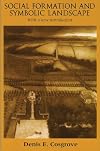
"Hailed as a landmark in its field since its first publication in 1984, Denis E. Cosgrove’s Social Formation and Symbolic Landscape has been influential well beyond geography. It has continued to spark lively debate among historians, geographers, art historians, social theorists, landscape architects, and others interested in the social and cultural politics of landscape." From Amazon.
Awards

You May Also Like


Associated Authors
Statistics
- Works
- 17
- Also by
- 2
- Members
- 316
- Popularity
- #74,770
- Rating
- 3.9
- Reviews
- 3
- ISBNs
- 31
- Languages
- 1